
The AMT Dental Assisting Radiography (DAR) certification validates a dental assistant's essential competencies in performing dental radiography safely and effectively. This crucial credential from the American Medical Technologists (AMT) signifies a commitment to professional standards and patient care within dental practices. Pursuing this certification is a strategic move for dental assistants aiming to enhance their skills, expand their professional responsibilities, and secure their standing in a competitive healthcare landscape. This comprehensive guide is designed to empower candidates by demystifying the DAR exam process, outlining preparation strategies, and building the confidence needed to succeed.

Grasping the Purpose of AMT DAR Certification
Becoming a certified Dental Assisting Radiographer through the American Medical Technologists (AMT) demonstrates a specialized skill set vital for modern dental practices. The AMT DAR credential ensures that professionals are proficient in capturing high-quality diagnostic images while strictly adhering to radiation safety protocols. This certification is primarily intended for dental assistants who wish to formalize their expertise in dental radiography, often mandated by state regulations for expanded functions or to simply elevate their professional profile. It serves as a benchmark for employers, assuring them of a candidate's competency and dedication to patient well-being and diagnostic accuracy.
Defining the Role of a Certified Dental Assisting Radiographer
A certified dental assisting radiographer plays an indispensable role in the dental care team, directly impacting treatment planning and patient outcomes. Their primary responsibility lies in executing various dental radiographic procedures, from traditional intraoral films to advanced panoramic and cephalometric imaging. Beyond merely operating equipment, these professionals are entrusted with selecting appropriate techniques, positioning patients correctly, and ensuring the radiation exposure is kept to a minimum. They also manage image processing, quality control, and maintain meticulous records, all while prioritizing infection control to prevent cross-contamination in the clinical setting. The certification solidifies these critical skills, making the individual an invaluable asset to any dental office.
Unpacking the AMT DAR Exam Structure and Details
Navigating the specifics of the AMT Dental Assisting Radiography (DAR) exam is the first step toward a well-structured preparation plan. This certification examination, identified by the exam code DAR, is meticulously designed to assess a candidate's knowledge across critical domains of dental radiography. Understanding its format, duration, and scoring mechanism provides a clear roadmap for study focus and time management during the test itself.
The AMT DAR exam comprises 100 multiple-choice questions, challenging candidates to apply their theoretical knowledge to practical scenarios encountered in dental assisting. You will have 120 minutes to complete the examination, allowing approximately 1.2 minutes per question. The passing score is set at 70% on a scaled score of 0-100, which means candidates must correctly answer approximately 70 questions to achieve certification. The exam fee is $125 (USD), an investment towards a recognized professional credential. Familiarizing yourself with these details can significantly reduce pre-exam jitters and allow for more efficient preparation.
Mapping Key Knowledge Domains: Decoding the AMT Dental Assisting Radiography Syllabus
A thorough understanding of the AMT Dental Assisting Radiography (DAR) syllabus is paramount for effective study. The exam content is strategically divided into several key knowledge domains, each weighted differently to reflect its importance in daily practice. By allocating study time proportionate to these percentages, candidates can optimize their learning and ensure comprehensive coverage of all critical topics. For more in-depth information about the AMT certification process and standards, candidates can visit the
official AMT dental assisting radiography page.
The DAR exam covers the following domains, indicating the percentage of questions drawn from each area:
- Principles of Dental Radiography (33%): This foundational section assesses understanding of basic radiation physics, characteristics of X-rays, image formation, and the various components of X-ray equipment. It delves into historical context, types of radiation, and the biological effects, laying the groundwork for safe and effective practice.
- Imaging Techniques and Evaluation (26%): Focus here is on the practical application of radiography. It includes mastering intraoral techniques like paralleling and bisecting angle, as well as extraoral methods such as panoramic and cephalometric imaging. Candidates must understand patient positioning, exposure settings, and criteria for evaluating image quality for diagnostic value.
- Radiation Safety and Legal Considerations (23%): This critical domain emphasizes patient and operator safety. It covers radiation protection principles (ALARA), use of shielding, monitoring devices, and emergency procedures. Furthermore, it addresses federal and state regulations, patient consent, record-keeping, and ethical responsibilities related to radiation exposure.
- Radiograph Processing (9%): This section, though smaller, is vital for producing diagnostic images. It covers both manual and automatic film processing, the chemistry involved, darkroom procedures, and common processing errors and their solutions. Digital imaging techniques, including sensors, software, and image manipulation, are also part of this domain.
- Infection Control (9%): Essential for any clinical setting, this domain focuses on preventing the spread of infectious diseases during radiographic procedures. It includes sterilization, disinfection protocols for equipment, handling of contaminated films or sensors, and proper use of personal protective equipment (PPE).
Each domain contributes to the overall competency of a certified dental assisting radiographer, ensuring they possess a well-rounded skill set from patient preparation to image analysis and safety compliance.
Eligibility Pathways for a Certified Dental Assisting Radiographer Credential
Accessing the AMT Dental Assisting Radiography (DAR) certification requires candidates to meet specific eligibility criteria, designed to ensure a foundational level of experience and knowledge. The American Medical Technologists (AMT) outlines several pathways, typically involving a combination of education, experience, and sometimes prior certification. It's essential for prospective candidates to review these requirements meticulously on the official AMT website to confirm their eligibility before applying. Meeting these prerequisites is not merely a formality but a foundational step, ensuring that individuals entering the certification process are adequately prepared for the rigor of the examination and the responsibilities of the role.

While specific state requirements for dental assistants can vary, generally, candidates for the AMT DAR exam must demonstrate competence through one of the following common routes:
- Formal Education: Completion of a formal dental assisting program accredited by an agency recognized by the U.S. Department of Education or the Council for Higher Education Accreditation (CHEA) that includes radiography coursework.
- On-the-Job Training and Experience: A specified number of hours of direct work experience in dental assisting, with a significant portion dedicated to performing radiographic procedures under supervision. This pathway often requires documentation from a supervising dentist or employer.
- Prior Certification: Holding an existing recognized dental assisting certification (e.g., CDA) may fulfill some educational or experience components, particularly if it included a comprehensive radiography module.
It is crucial that all candidates verify their exact eligibility path directly with AMT, as requirements are subject to change and specific documentation will be needed to prove qualification. Ensuring you meet these criteria prevents delays in your application and allows you to focus purely on exam preparation.
Realizing Professional Growth: Benefits of Dental Assisting Radiology Certification
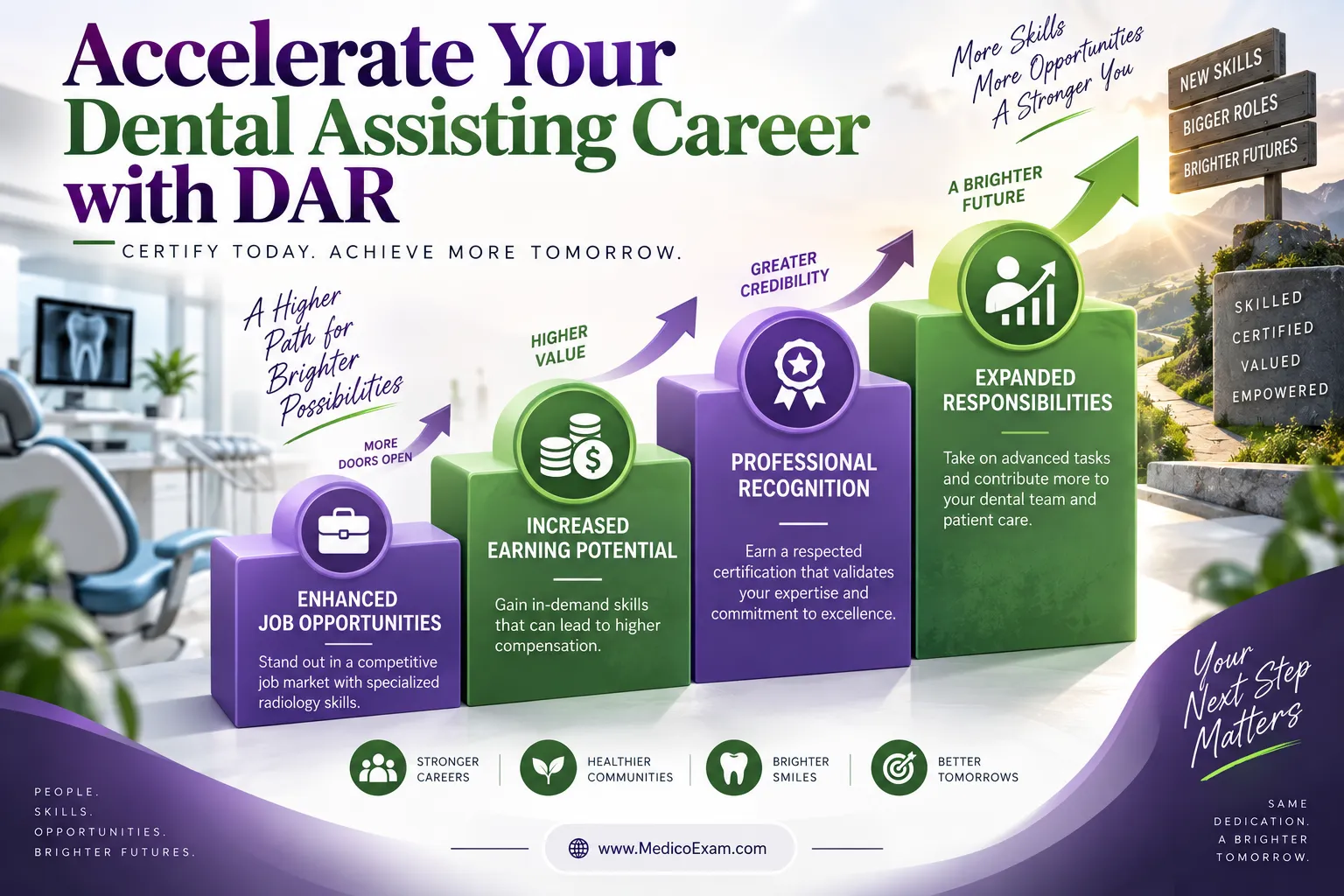
Earning the AMT Dental Assisting Radiography (DAR) certification provides a multitude of professional advantages, significantly enhancing a dental assistant's career trajectory and value within any dental practice. Beyond mere compliance, this credential signals an advanced level of expertise, opening doors to expanded responsibilities and improved compensation. It is a tangible representation of a commitment to professional development, patient safety, and diagnostic excellence, setting certified individuals apart in a competitive job market.

The benefits extend across various aspects of a dental assistant's professional life:
- Enhanced Career Opportunities: Certified individuals are often preferred candidates for positions that require advanced radiographic skills. The DAR certification can lead to roles with greater responsibility, potentially specializing in imaging or training other assistants.
- Increased Earning Potential: With specialized skills and official validation, certified dental assistants are frequently positioned to command higher salaries compared to their uncertified counterparts. This credential often justifies premium compensation.
- Validation of Expertise: The DAR certification serves as concrete proof of your proficiency in dental radiography, instilling confidence in both employers and patients regarding your capabilities and adherence to professional standards.
- Improved Patient Safety and Care: Mastery of radiation safety protocols and optimal imaging techniques ensures that patients receive the highest quality of care with minimal radiation exposure. This competence directly contributes to better diagnostic outcomes.
- Professional Recognition: Being AMT certified offers a sense of pride and professional identity. It aligns you with a network of respected healthcare professionals and establishes your dedication to your craft.
- Compliance with State Regulations: Many states have specific regulations regarding who can perform dental radiography. The DAR certification often fulfills or exceeds these requirements, allowing for broader practice privileges.
Investing in the AMT DAR certification is not just about passing an exam; it's about investing in a future of professional excellence, greater job satisfaction, and a more impactful contribution to dental healthcare.
Structuring Your Preparation Strategy for the DAR Exam
A well-defined preparation strategy is indispensable for succeeding on the AMT DAR exam. Given the breadth of topics, from fundamental principles to advanced techniques and stringent safety measures, a systematic approach ensures comprehensive coverage and effective retention. This strategy should encompass diverse learning modalities, including official study materials, structured online courses, and regular self-assessment, to address every facet of the Dental Assisting Radiography (DAR) exam preparation. For those seeking to broaden their understanding of vital certifications, exploring resources like those for essential AMT MLS certification can also be beneficial in appreciating the value of robust credentialing.
Consider these integral components for your study regimen:
- Review the Official Syllabus: Begin by thoroughly analyzing the syllabus provided by AMT. This document is your blueprint, detailing all content areas and their respective weights. Prioritize your study efforts based on these percentages, dedicating more time to heavily weighted domains like "Principles of Dental Radiography" and "Imaging Techniques and Evaluation."
- Utilize an AMT Dental Assisting Radiography Study Guide: Invest in a reputable study guide specifically designed for the AMT DAR exam. These guides typically break down complex topics into digestible sections, often include practice questions, and provide strategies for approaching the exam.
- Enroll in Online Courses for AMT DAR Certification: Many educational platforms offer online courses tailored to the AMT DAR syllabus. These courses can provide structured learning, often with video lectures, interactive modules, and instructor support, which can be particularly beneficial for self-paced learners.
- Create a Study Schedule: Develop a realistic study timetable that allocates specific hours each week to different topics. Consistency is key, so breaking down study into manageable daily or weekly sessions is more effective than cramming.
- Focus on Conceptual Understanding: Beyond memorization, strive to understand the underlying principles and rationale behind each technique and safety measure. This deeper comprehension will allow you to answer application-based questions more effectively.
By combining these elements, you can build a robust preparation framework that not only helps you pass the exam but also solidifies your knowledge for real-world application.
Mastering Radiation Safety and Dental X-ray Techniques
At the core of the AMT Dental Assisting Radiography (DAR) exam and the profession itself is the imperative to master radiation safety in dental assisting certification, alongside a deep proficiency in dental X-ray techniques. These two domains are inextricably linked; effective imaging must always be balanced with the highest standards of protection for both patients and practitioners. The DAR exam topics heavily emphasize these areas, requiring candidates to demonstrate both theoretical knowledge and practical application principles to ensure optimal diagnostic outcomes without compromising health.

Applying Radiation Safety Protocols
Radiation safety is a non-negotiable aspect of dental radiography. Candidates must be thoroughly familiar with the ALARA principle ("As Low As Reasonably Achievable"), which guides all radiation protection efforts. This includes understanding the appropriate use of lead aprons and thyroid collars, implementing proper shielding in the operatory, and employing optimal exposure factors to minimize dose. Knowledge of patient selection criteria, particularly for pediatric and pregnant patients, is also critical. Beyond equipment, dental assistants must be able to calculate and communicate radiation risks, handle and dispose of radiographic waste responsibly, and maintain accurate records of exposures and quality assurance tests. This comprehensive approach to safety not only safeguards patients but also protects the entire dental team from unnecessary exposure.
Refining Dental X-ray Techniques Certification
Proficiency in various dental X-ray techniques is another cornerstone of the DAR certification. This involves understanding the principles and applications of:
- Intraoral Radiography: This includes the paralleling technique, considered the gold standard for its accuracy, and the bisecting angle technique, used in situations where paralleling is not feasible. Mastering patient and film/sensor positioning for periapical, bitewing, and occlusal projections is fundamental.
- Extraoral Radiography: This covers panoramic imaging, essential for a broad view of the maxilla and mandible, and cephalometric imaging, used primarily in orthodontics and oral surgery. Understanding the specific equipment, patient positioning, and diagnostic capabilities of each is vital.
- Digital Imaging: With the widespread adoption of digital radiography, candidates must be adept with digital sensors, phosphor plates, image acquisition software, and basic image enhancement tools. This includes understanding the advantages of digital systems, such as reduced radiation dose and instant image retrieval.
Combining meticulous technique with rigorous safety protocols ensures that every radiograph produced is both diagnostically valuable and ethically sound.
Effective Study Resources and Practice for DAR Success
Achieving success on the AMT Dental Assisting Radiography (DAR) exam relies heavily on utilizing high-quality study resources and engaging in consistent practice. Beyond reviewing core concepts, active preparation involves testing your knowledge under simulated exam conditions and identifying areas that require further attention. The right AMT Dental Assisting Radiography study guide, coupled with targeted practice questions, can significantly boost confidence and refine test-taking skills, helping you to pass the AMT Dental Assisting Radiography exam.
When selecting your study materials, prioritize resources that align directly with the AMT DAR syllabus. Comprehensive textbooks on dental radiography, specific to dental assisting, can provide the depth of knowledge needed for complex topics. Additionally, consider:
- Official AMT Resources: The American Medical Technologists often provides suggested reading lists or study outlines on their website, which are invaluable starting points for any candidate. Visit the official AMT site to explore resources.
- Reputable Online Platforms: Many platforms offer structured courses or comprehensive study packages that include review materials, quizzes, and full-length practice exams. These can be excellent for reinforcing learning and tracking progress.
- Peer Study Groups: Collaborating with other candidates can offer different perspectives, clarify difficult concepts through discussion, and provide a supportive environment for shared learning.
For DAR exam practice questions, incorporating a variety of sources is beneficial. Practice tests help you become familiar with the exam format, question styles, and time constraints. A strong set of practice questions, like those offered by MedicoExam for the AMT DAR, can provide detailed explanations for correct and incorrect answers, transforming errors into learning opportunities. Remember, ethical preparation is key; focus on understanding concepts rather than rote memorization of question banks. Consistent practice, coupled with a solid study guide, is the most reliable path to confidently pass the AMT Dental Assisting Radiography exam.
Sustaining Your Credential: AMT DAR Certification Validity
Maintaining professional credentials is a vital aspect of a dental assistant's career, and understanding the AMT DAR certification validity is key to continuous professional standing. Certifications are not typically a one-time achievement but rather a commitment to ongoing learning and competency. The American Medical Technologists (AMT) establishes specific requirements for credential renewal, ensuring that certified Dental Assisting Radiographers remain current with advancements in technology, best practices, and regulatory changes in the field. Adhering to these renewal criteria is essential to keep your certification active and your professional recognition intact.
While specific renewal requirements can vary, they generally involve:
- Continuing Education (CE) Credits: AMT typically requires certified professionals to accumulate a certain number of continuing education credits over a defined period (e.g., every one to three years). These credits ensure that individuals stay updated on new techniques, equipment, and safety protocols in dental radiography. CE activities can include attending workshops, seminars, online courses, or reading professional journals and completing associated quizzes.
- Active Practice: Some certifications may require proof of active engagement in the field during the certification period, confirming that the professional is regularly applying their skills.
- Annual Fees: Maintaining your AMT membership and certification often involves paying annual renewal fees.
It is the individual's responsibility to track their CE activities and renewal deadlines to avoid letting their AMT DAR certification lapse. Proactive planning for renewal not only preserves your credential but also reinforces your commitment to lifelong learning and excellence in dental assisting radiography.
Conquering Exam Anxiety and Cultivating Confidence
Exam anxiety can be a significant hurdle for even the most prepared candidates, yet it is a challenge that can be effectively managed. For the AMT Dental Assisting Radiography (DAR) exam, cultivating a mindset of confidence and preparedness is as important as mastering the content itself. Strategies that address both mental and logistical aspects of test-taking can transform apprehension into assured readiness, enabling you to perform at your best when it matters most.
Building confidence for the DAR exam involves more than just studying hard; it requires a holistic approach:
- Strategic Review: Instead of focusing on what you don't know, solidify your understanding of core concepts. Reviewing previously answered practice questions and their explanations can reinforce correct reasoning.
- Positive Visualization: Mentally walk through the exam day experience – arriving prepared, calmly reading questions, selecting answers, and finishing confidently. This can help normalize the experience and reduce unknown fears.
- Time Management Practice: During your practice sessions, strictly adhere to the actual exam's time limits. This builds pacing skills and reduces the stress of running out of time during the real test.
- Physical Well-being: Ensure you get adequate sleep, eat nutritious meals, and engage in light exercise leading up to the exam. A healthy body supports a calm and focused mind.
- Mindfulness and Relaxation Techniques: Simple breathing exercises or short meditation practices can be invaluable for centering yourself before and during the exam, especially if you feel overwhelmed by a particular question or section.
- Focus on Progress, Not Perfection: Acknowledge your learning journey and celebrate small victories. Understand that the goal is to pass the exam, not to get every single question right.
By proactively addressing anxiety and consciously building confidence, you can approach the AMT DAR exam not with dread, but with a clear, focused, and empowered mindset.
The AMT Dental Assisting Radiography (DAR) certification represents a powerful step forward for dental assistants dedicated to excellence in patient care and diagnostic imaging. From understanding the rigorous exam structure and detailed syllabus to implementing comprehensive preparation strategies and managing test-day anxiety, every aspect of this journey is an opportunity for professional growth. This credential not only validates specialized skills in radiation safety and imaging techniques but also opens doors to enhanced career opportunities and professional recognition.
Embarking on the path to AMT DAR certification is a significant investment in your professional future. By leveraging robust study resources, engaging in focused practice, and cultivating a confident mindset, you can effectively prepare for and pass the AMT Dental Assisting Radiography exam. Take control of your career trajectory and ensure you are equipped with the knowledge and confidence to meet the demands of modern dental practice. For additional insights and resources on professional development and certification, explore articles by Tonyapintos to further enrich your career journey.
Frequently Asked Questions
1. What is the AMT DAR credential, and why is it important for dental assistants?
The AMT DAR (Dental Assisting Radiography) credential is a certification from the American Medical Technologists that validates a dental assistant's competency in performing dental radiographic procedures. It's important because it demonstrates specialized skills, enhances career opportunities, ensures patient safety through adherence to radiation protocols, and often meets state-specific requirements for expanded functions.
2. What topics are covered in the AMT Dental Assisting Radiography (DAR) exam?
The AMT DAR exam covers five main topics: Principles of Dental Radiography, Imaging Techniques and Evaluation, Radiograph Processing, Radiation Safety and Legal Considerations, and Infection Control. These domains assess both theoretical knowledge and practical application skills essential for dental radiography.
3. How long is the AMT DAR certification valid, and what are the renewal requirements?
The AMT DAR certification validity period typically requires renewal every few years. Renewal generally involves accumulating a specific number of continuing education (CE) credits and paying an annual fee to ensure certified professionals remain current with industry advancements and best practices.
4. Are there online courses available for AMT DAR certification preparation?
Yes, many reputable educational platforms and institutions offer online courses specifically designed to prepare candidates for the AMT DAR certification exam. These courses often include structured modules, video lectures, practice questions, and study guides aligned with the official AMT syllabus.
5. How can I effectively prepare for the AMT Dental Assisting Radiography exam?
Effective preparation for the AMT DAR exam involves reviewing the official AMT syllabus, utilizing an AMT Dental Assisting Radiography study guide, enrolling in online courses, creating a structured study schedule, and practicing with DAR exam practice questions. Focusing on conceptual understanding, radiation safety, and imaging techniques is crucial for success.


























Sign in to leave a comment.