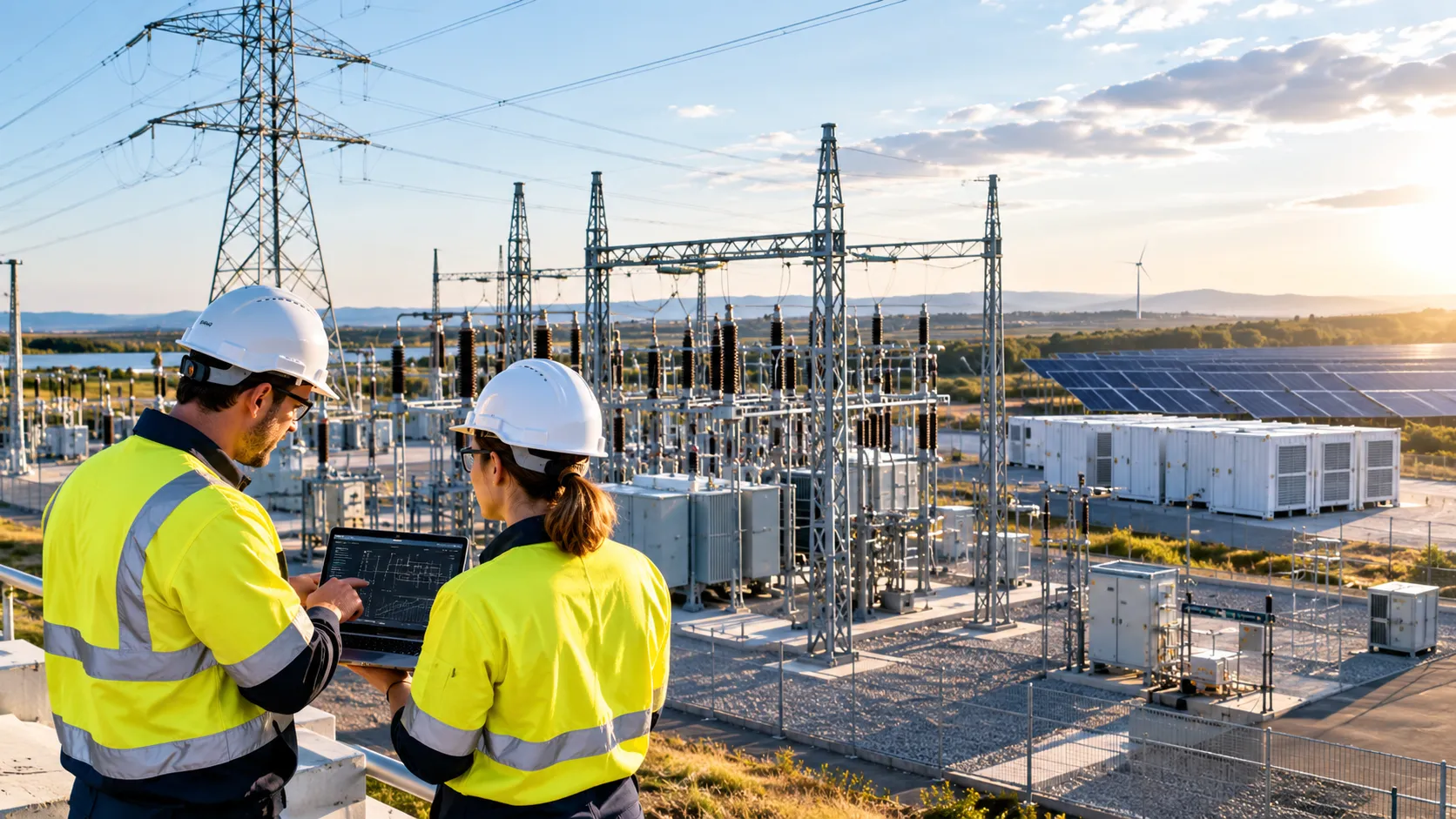

Modern economies depend on energy infrastructure that can deliver power safely, efficiently, and consistently. From renewable generation and transmission networks to substations, protection systems, and industrial electrical assets, every part of the energy system must work together. As electricity demand grows and energy technologies continue to evolve, engineering has become increasingly important in creating infrastructure that is both dependable today and adaptable for the future.
Developing reliable grid infrastructure requires more than installing equipment with high performance specifications. Engineers must consider system design, protection, asset condition, operational requirements, environmental conditions, maintenance, and future expansion. A coordinated engineering approach can help reduce operational risks while improving efficiency and supporting the transition toward more sustainable energy systems.
1. Designing Infrastructure Around Reliability
Reliability begins at the design stage. Engineers need to understand how an energy system will operate under normal conditions as well as during faults, equipment failures, extreme weather, and changing demand patterns.
Modern engineering studies can assess electrical loading, voltage performance, short-circuit levels, protection coordination, power quality, and system stability. These assessments help identify potential weaknesses before infrastructure is constructed or commissioned.
Good design also considers redundancy. Critical assets may require alternative supply paths or appropriately designed backup systems so that a single equipment failure does not unnecessarily interrupt service. The objective is not simply to make individual components reliable, but to develop an interconnected system capable of continuing to perform when unexpected events occur.
This system-level approach is fundamental to reliable grid infrastructure, particularly as networks become more complex and incorporate diverse generation technologies.
2. Integrating Renewable Energy With Existing Networks
The rapid growth of renewable generation is transforming traditional electricity networks. Solar farms, wind projects, battery energy storage systems, and other distributed energy resources introduce new technical requirements for grid operators and engineers.
Renewable projects need to connect safely and effectively with existing electrical infrastructure. Engineers may need to evaluate connection studies, protection requirements, fault levels, reactive power performance, power quality, and network capacity.
Energy storage adds another dimension. Batteries can support grid flexibility, but their integration requires careful consideration of electrical protection, control systems, thermal management, communications, and operating strategies.
Effective energy infrastructure engineering helps ensure that renewable projects are not treated as isolated assets. Instead, they are designed as part of a wider electrical system, allowing generation, storage, transmission, distribution, and loads to operate together.
3. Protection and Control for a More Resilient Grid
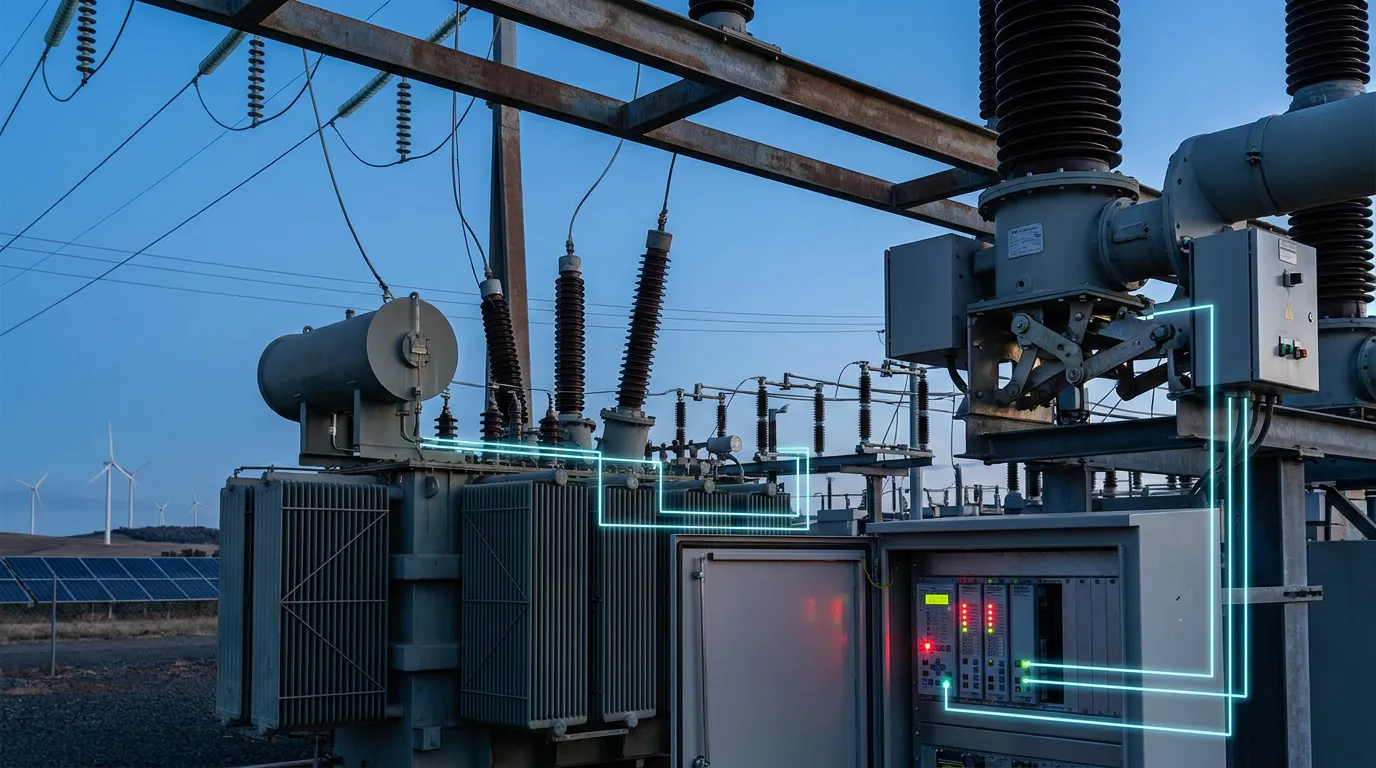
Electrical protection systems play a critical role in limiting the impact of faults. A well-engineered protection system can identify abnormal conditions and isolate affected equipment while allowing healthy sections of the network to continue operating.
Protection engineering typically involves selecting appropriate protection functions, developing settings, conducting coordination studies, and validating the operation of protection schemes. Engineers must ensure that protective devices respond appropriately without unnecessary tripping.
Control systems are equally important. Modern substations and energy facilities increasingly depend on automation, communications, monitoring, and remote-control capabilities. These technologies can improve visibility of network conditions and support faster operational decisions.
However, sophisticated systems also require careful engineering and testing. Incorrect settings, configuration errors, communication failures, or poorly coordinated control logic can introduce new risks. Comprehensive testing and commissioning therefore remain essential components of reliable infrastructure development.
4. Commissioning, Testing, and Verification
Even a well-designed energy project can experience problems if equipment is not correctly installed, configured, and commissioned. Commissioning provides an opportunity to verify that systems operate according to their engineering requirements before entering service.
Testing can cover protection relays, switchgear, transformers, control systems, communications, metering, and other critical equipment. Functional tests can confirm that individual components work correctly, while integrated testing verifies how different systems interact.
For complex projects, commissioning engineers may also simulate operating scenarios and fault conditions. This helps identify discrepancies between engineering designs and actual field performance.
A structured commissioning process can reduce the likelihood of unexpected failures after energisation. It also creates valuable documentation that can support future maintenance and troubleshooting.
In this respect, energy infrastructure engineering extends beyond design calculations. It includes the practical verification required to turn an engineering concept into a functioning and dependable energy asset.
5. Improving Efficiency Through Asset and Data Management
Reliability and efficiency are closely connected. Equipment that operates outside its intended conditions may experience increased losses, accelerated deterioration, or reduced performance.
Engineers can improve efficiency by evaluating equipment loading, operating conditions, energy losses, maintenance requirements, and asset performance. Monitoring technologies can provide useful information about equipment behaviour and help operators identify emerging issues.
Data-driven asset management is becoming increasingly valuable. Condition monitoring, inspection results, historical maintenance records, and operational data can be combined to support more informed maintenance planning.
Instead of relying solely on fixed maintenance schedules, asset owners can increasingly use condition-based approaches where appropriate. This can help focus engineering and maintenance resources on assets requiring greater attention while reducing unnecessary intervention.
Efficient infrastructure is therefore not only about reducing energy losses. It also involves improving asset utilisation, reducing avoidable downtime, managing maintenance resources effectively, and extending useful equipment life.
6. Planning for Resilience and Future Energy Demand
Energy infrastructure must be designed with the future in mind. Electricity demand, generation technologies, regulatory requirements, environmental conditions, and network operating practices can all change throughout an asset's lifetime.
Engineers can address this uncertainty through scalable designs and forward-looking network studies. Infrastructure may need sufficient capacity to accommodate future loads, renewable generation, energy storage, electrification, or changes in network configuration.
Resilience planning is another important consideration. Infrastructure can be exposed to extreme weather, equipment failures, changing operating conditions, and other external challenges. Engineering assessments can identify vulnerabilities and support practical measures to improve system resilience.
Digital technologies can also contribute to future-ready infrastructure. Advanced monitoring, automation, communications, and data analysis can provide operators with greater visibility and help engineers make better-informed decisions.
The goal is not to predict every future development. Rather, effective engineering creates infrastructure with enough flexibility and robustness to adapt as requirements evolve.
Engineering for a More Dependable Energy Future
Reliable energy infrastructure is the result of coordinated decisions across design, protection, equipment selection, commissioning, operation, maintenance, and long-term planning. Each discipline contributes to the performance of the overall system.
As energy networks become more interconnected and renewable technologies continue to expand, engineering expertise will remain essential. Reliable grid infrastructure requires engineers to look beyond individual assets and understand how electrical, protection, control, communication, and operational systems interact.
At the same time, effective energy infrastructure engineering can help organisations improve efficiency, manage technical risks, and prepare their assets for changing energy requirements.
For energy developers, asset owners, network operators, and industrial organisations, a coordinated engineering approach provides a practical foundation for building infrastructure that is safe, efficient, resilient, and capable of supporting long-term energy needs.






















Sign in to leave a comment.