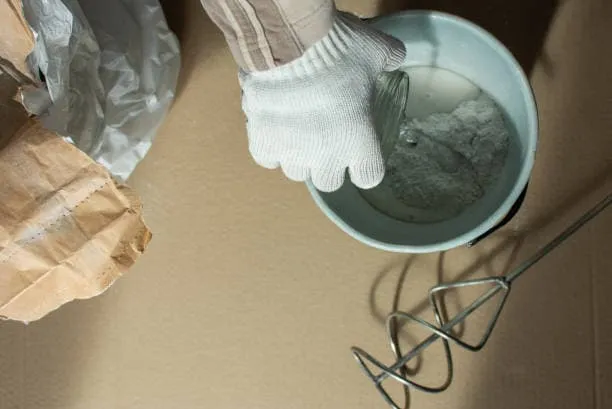

Dry mix mortar production depends on carefully balanced powders that must deliver predictable performance after water is added. During mixing, transportation, pumping, and application, unwanted air can become trapped within the mortar system and create excessive foam. This can influence density, spreading behavior, adhesion, and final surface appearance. A powder defoamer for dry mix mortar can help control unwanted foam and entrained air while supporting consistent formulation performance. Selecting a suitable defoamer requires consideration of powder composition, mixing conditions, dosage requirements, storage stability, and the intended properties of the finished mortar.
Why Foam Control Matters in Mortar
Foam can develop when surfactants, polymers, additives, and fine mineral particles interact with water and mechanical energy. Although some air may be naturally incorporated during mixing, excessive bubbles can remain throughout the mortar and affect its physical structure. Persistent foam may reduce density, create pinholes, weaken surface uniformity, or interfere with adhesion. Effective foam management therefore becomes an important part of formulation control. A properly selected powder defoamer can reduce unwanted bubbles without unnecessarily changing the flow, setting behavior, water retention, or other characteristics required from the mortar.
Role of Powder Defoamers in Formulation
Powder defoamers are designed to disperse within dry formulations before water is introduced. Their solid form makes them convenient for dry blending with cement, fillers, polymers, and other powdered ingredients. Once the formulation is mixed with water, the defoamer becomes active within the system and helps destabilize unwanted foam. This action can support faster bubble collapse and reduce persistent air pockets. The performance of a powder defoamer depends on its composition, particle distribution, dosage, compatibility, and ability to remain uniformly distributed throughout the dry mortar mixture.
Selecting the Right Defoamer Type
Different dry mix mortar formulations create different foam conditions, so a single defoamer cannot necessarily deliver the same performance across every application. Cement based products, tile adhesives, repair mortars, grouts, renders, and leveling compounds may contain different polymers, fillers, and additives. These ingredients influence surface tension and bubble stability. Selection should therefore consider the complete formulation rather than focusing only on foam reduction. Laboratory screening can help determine whether a powder defoamer provides the desired balance between foam control, workability, dispersion, density, adhesion, and final appearance.
Considering Raw Material Interactions
Raw materials have a major influence on foam formation in dry mortar systems. Cement, mineral fillers, cellulose ethers, redispersible powders, pigments, and other additives can interact differently with water and mixing energy. Some ingredients may increase air incorporation while others stabilize bubbles. Understanding these interactions helps formulators identify where foam originates and how it behaves during production. A suitable powder defoamer should work effectively within the specific raw material combination without causing unwanted changes. Testing the complete formulation is more useful than evaluating the defoamer with individual ingredients alone.
Supporting Efficient Dry Blending
Uniform distribution is essential when incorporating a powder defoamer into dry mix mortar. If the additive is not dispersed evenly, some portions of the finished mixture may contain excessive amounts while others receive insufficient foam control. This variation can result in inconsistent performance after water addition. Proper blending procedures help distribute the defoamer throughout the formulation and support reliable activation during mixing. Production teams should consider mixer design, blending duration, powder loading, ingredient sequence, and material flow characteristics when establishing an effective dry blending process.
Managing Water Addition During Mixing
Water addition can strongly influence foam development in dry mortar. Rapid wetting, high shear, and intensive mechanical mixing may introduce substantial air into the system. The sequence and speed of water incorporation can therefore affect how efficiently bubbles form and collapse. A properly selected powder defoamer can assist during this stage by reducing bubble persistence. However, foam control should work alongside suitable mixing practices. Controlled water addition, appropriate mixing duration, and suitable equipment settings can collectively improve consistency and allow the defoamer to perform more effectively.
Establishing Appropriate Dosage Levels
Defoamer dosage requires careful optimization because more additive does not always produce better results. Excessive levels can sometimes influence workability, surface characteristics, adhesion, or other formulation properties. Insufficient dosage may fail to control persistent foam under actual production conditions. Formulators can begin with controlled laboratory trials using several dosage levels and then compare foam reduction with other important performance indicators. The selected dosage should provide reliable control while maintaining the intended mortar characteristics. Production validation is also important because laboratory mixing conditions may differ from full manufacturing conditions.
Maintaining Compatibility With Additives
Compatibility is another important factor when selecting a powder defoamer for dry mix mortar. Mortar formulations commonly contain several functional additives designed to control water retention, adhesion, flexibility, setting, and workability. These components may interact with the defoamer and influence its performance. A compatible product should reduce unwanted foam without significantly disrupting the behavior of other ingredients. Compatibility testing can examine fresh mortar properties as well as cured performance. Evaluating the complete formulation helps identify potential interactions before the product moves into routine manufacturing.
Controlling Mortar Density
Entrapped air can influence the density of fresh mortar and may create differences between production batches. When excessive foam remains in the mixed material, the resulting mortar may become lighter than intended and show inconsistent physical characteristics. Foam reduction can help support a more predictable density when other formulation and mixing conditions remain controlled. Density measurements during development and production trials provide useful information about defoamer performance. Consistent density can also contribute to more predictable material consumption and application behavior across different batches.
Improving Workability and Application Behavior
Mortar must provide suitable workability so that workers can mix, spread, level, or apply the material efficiently. Excessive foam can sometimes make the mixture appear overly light, creamy, or unstable, potentially affecting how it responds during application. Appropriate foam control can support a more uniform structure and predictable handling characteristics. However, workability depends on many formulation variables, including water demand, polymer content, particle size, and rheology modifiers. Defoamer selection should therefore be evaluated alongside these factors to maintain the desired balance between foam control and application performance.
Supporting Surface Appearance
Surface appearance can be an important quality consideration for finished mortar products. Excessive air and persistent foam may contribute to pinholes, voids, craters, or uneven surfaces after application and curing. These defects can become especially noticeable in decorative, leveling, or finishing applications. A suitable powder defoamer can help reduce the amount of persistent air available to create such defects. Careful testing should examine both fresh and cured samples because surface performance can change during drying and curing. Visual inspection combined with physical testing can provide a clearer picture of overall performance.
Evaluating Storage Stability
Dry mortar products are often stored before use, making storage stability an important consideration for every formulation ingredient. A powder defoamer should remain stable during storage and should not create significant segregation or handling problems. Moisture exposure can also affect powdered materials, so packaging and storage conditions need appropriate control. Formulators should assess whether the defoamer remains evenly distributed and effective after realistic storage periods. Testing stored samples can help confirm that foam control performance remains consistent and that the additive does not introduce unexpected changes into the dry mixture.
Considering Production Equipment
Manufacturing equipment can influence the behavior of both the dry formulation and the defoamer. Different mixers provide different levels of shear and blending efficiency, while conveying and feeding systems can affect powder distribution. Foam may become more significant when water is introduced through high energy mixing equipment. Understanding the production environment helps formulators select and dose the defoamer appropriately. Trials using representative equipment can provide more reliable information than small scale testing alone. Equipment settings, mixing duration, ingredient sequence, and material loading should all be considered during process evaluation.
Monitoring Foam During Quality Control
Routine quality control can help identify changes in foam behavior before they create larger production problems. Measurements may include fresh mortar density, visual foam level, spreading behavior, air content, and surface appearance. Comparing these observations between batches can reveal whether raw materials, dosage, mixing conditions, or storage have changed. Consistent testing also provides a practical way to confirm that the selected powder defoamer continues to perform as expected. Quality teams can use defined acceptance criteria to maintain repeatability and support dependable production results.
Conducting Laboratory Performance Trials
Laboratory trials provide an effective starting point for evaluating powder defoamer performance. Small batches can be prepared using the intended cement, fillers, polymers, and other additives, followed by controlled water addition and mixing. Different defoamer concentrations can then be compared for foam reduction and overall mortar behavior. Tests should not focus solely on the visual disappearance of foam. Workability, density, adhesion, setting, surface quality, and cured properties may also need evaluation. A balanced testing program can identify formulations that provide effective foam control without compromising important product characteristics.
Optimizing Formulation Through Process Data
Process data can help manufacturers understand how formulation changes affect foam generation and defoamer performance. Recording mixing conditions, raw material batches, water levels, dosage, density, and application observations can reveal useful patterns over time. This information supports more informed adjustments and can reduce dependence on trial and error. When foam behavior changes, production teams can investigate whether the cause relates to formulation ingredients, equipment settings, storage conditions, or dosage. Data based optimization can help establish more stable manufacturing procedures and improve consistency across repeated production cycles.
Balancing Performance and Cost
Economic considerations are important when selecting any functional additive for dry mix mortar. The objective is not simply to minimize the amount of defoamer used, but to identify an efficient dosage that delivers dependable performance. Poor foam control can create quality issues, rework, application defects, or customer dissatisfaction, potentially increasing overall production costs. Conversely, excessive dosage can add unnecessary material expense. A balanced evaluation should therefore consider additive cost alongside processing efficiency, product quality, consistency, and performance. Such an approach helps manufacturers make decisions based on total formulation value.
Developing a Reliable Foam Management Strategy
Effective foam management is most successful when it becomes part of the broader formulation and production strategy. The defoamer should be selected according to the mortar type, raw materials, mixing conditions, application method, and required final properties. Regular performance checks can confirm whether the chosen approach remains suitable as formulations or production conditions change. Collaboration between formulation, production, and quality teams can further improve consistency. By treating foam control as an integrated process requirement, manufacturers can reduce unwanted variability and support dependable performance across different dry mortar products.
Conclusion
Dry mix mortar performance depends on careful control of formulation, mixing, air incorporation, and application characteristics. A suitable powder defoamer can help reduce persistent foam, support consistent density, improve surface appearance, and maintain predictable workability when properly selected and dosed. Laboratory testing, compatibility evaluation, equipment trials, and routine quality monitoring all contribute to reliable results. By applying a structured approach to foam management, manufacturers can strengthen production consistency and product quality. PMC Ouvrie can support the development of suitable foam control approaches for demanding dry mix mortar applications through formulation focused expertise and technical evaluation.























Sign in to leave a comment.