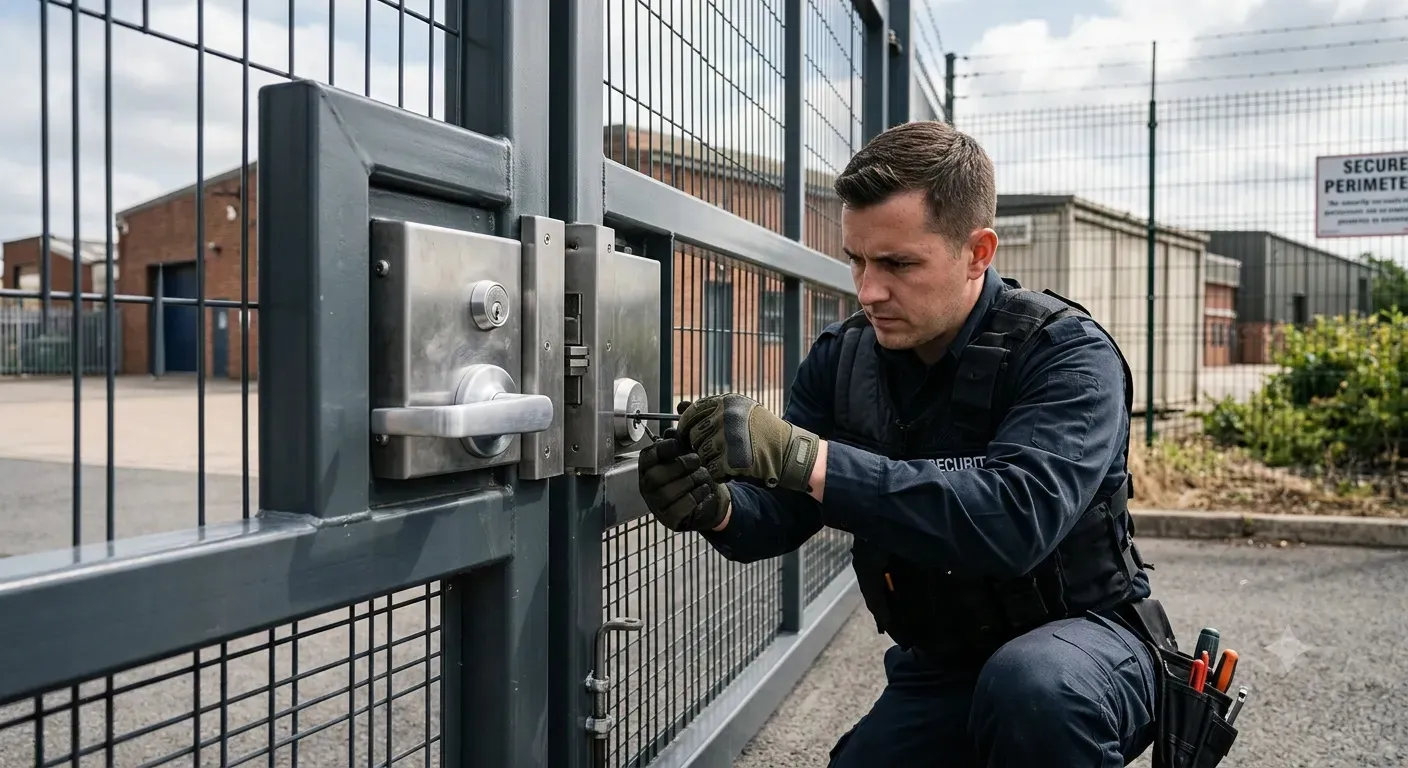

Perimeter security starts with dependable entry points. Heavy-duty commercial locks must withstand regular use and security threats, but strong hardware still needs proper maintenance. Small issues can become larger security gaps when ignored. A consistent maintenance routine helps keep these locks reliable and effective over time.
Inspect Locks Before Problems Become Disruptions
Regular inspections help identify early signs of wear. Check the lock, strike, hinges, and surrounding door hardware. Look for loose components or changes in locking performance. A door that suddenly feels different deserves attention and difficulty turning a key can signal an emerging issue. Misalignment will also affect how securely a door closes, which matters most at frequently used perimeter entrances. Retail stores and warehouses may experience constant daily traffic so their locking hardware faces repeated use throughout operating hours.
Keep Key Control Under Tight Management
Physical lock strength is only part of perimeter security. Key control also determines who can access protected areas and staff changes can create unexpected access risks. Contractors may also retain keys after completing their work. Lost keys create another reason to review access. High-security systems can help address these challenges. Restricted keyways are able to limit unauthorized duplication. The systems can also support customized access across multiple locations. For example, a business with several locations can customize locks with each location having its own specific locking arrangement. This provides greater control over who has access.
Use Resettable Systems When Access Changes
Replacing every lock after a lost key can become expensive, which is why resettable systems can be attractive. They offer another approach for changing access. High-security locks can support resetting keys after loss or theft and master and grand master keys can also be reset. This reduces the need for complete lock replacement. Consider an industrial site with several controlled entrances - one lost master key could affect multiple access points. A resettable system can help restore control without replacing everything. Key management should be part of ongoing security maintenance and not only considered after a security incident.
Match Lock Strength To The Actual Risk
Not every perimeter door faces the same threat. Some entrances may be exposed to vandalism, others may be hidden from public view. Force-resistant high-security locks can suit higher-risk external doors. Grade 1 standards can also help when selecting suitable hardware. For example, a concealed warehouse entrance may face greater break-in risk. A stronger lock can provide added resistance at that location. Ultimately, lock selection should reflect the risk around each entrance.
Consider Monitoring Where Appropriate
Physical locks can also work alongside modern security technology. Some high-security systems offer remote monitoring capabilities. Remote systems can allow authorized users to manage locking functions. They can also provide notifications when tampering occurs, which can help businesses managing multiple commercial locations. Security teams can respond without being physically present at every door. However, technology should support the locking system, not replace proper hardware maintenance.
Make Maintenance Part Of Security Planning
Perimeter security should be reviewed as building needs change. New employees may require different access, or contractors may need temporary permissions. Business expansion can also create new entry points, which is why commercial locks should be reviewed alongside access requirements. Check their condition and review who can operate them. Update systems when access arrangements change. A strong security plan is not a one-time installation - it requires regular attention and practical adjustments.
Protect The Perimeter With Consistent Maintenance
Reliable perimeter security depends on more than heavy-duty hardware. It also requires inspections, controlled access, and timely updates. Businesses should assess each entrance according to its risks. They should also review keys whenever personnel or access needs change. Well-maintained commercial locks can then remain part of a stronger perimeter strategy, with the goal of keeping every important entrance secure, functional, and properly controlled.






















Sign in to leave a comment.