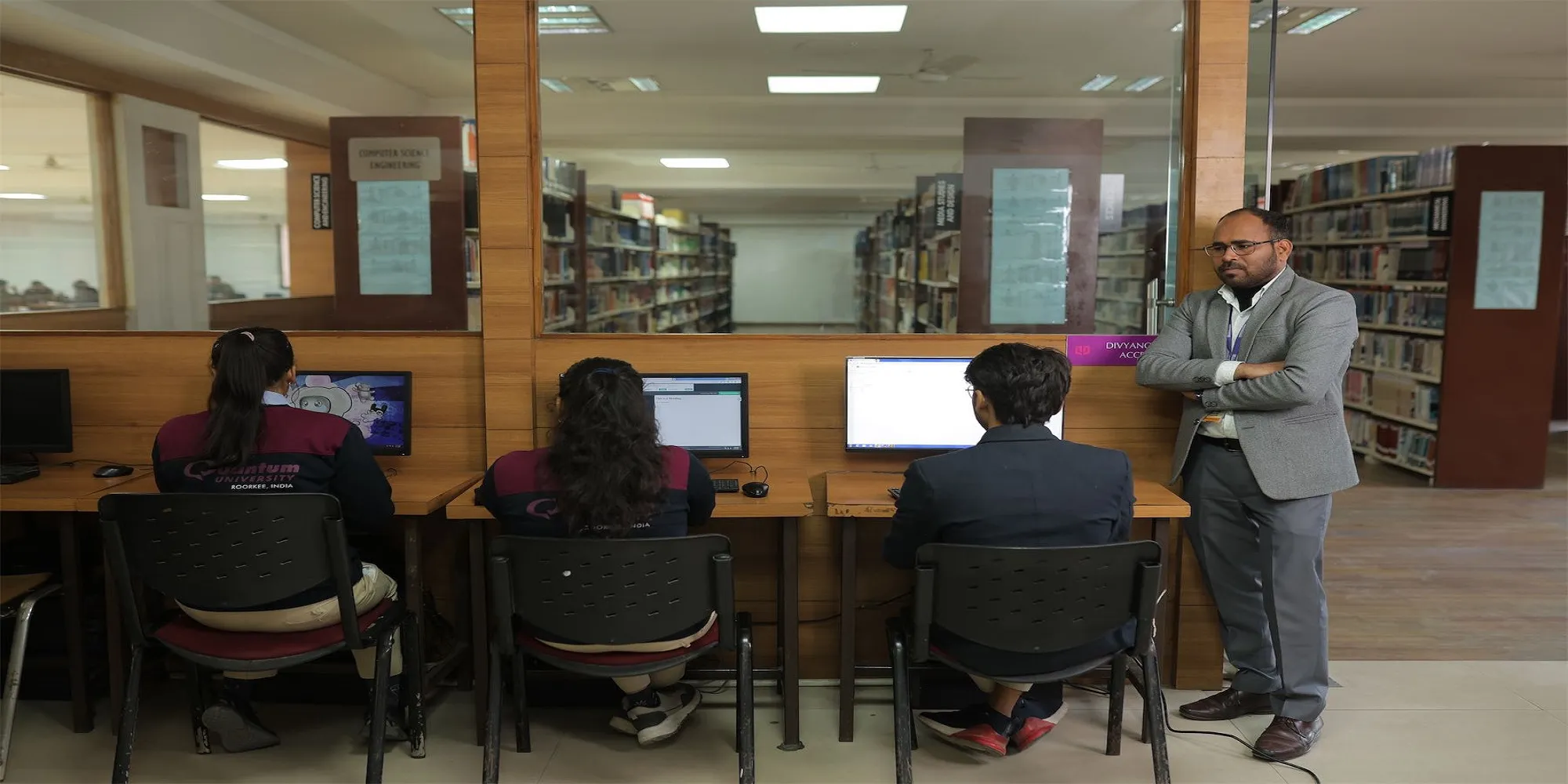

A generation of students now arrives on campus already thinking about building something rather than only joining something. India's startup ecosystem has made founding a company a visible, legitimate career path, and universities have had to respond with more than an annual business plan competition.
For a student who wants to start up during or shortly after their degree, the choice of institution matters in a specific way. The right campus shortens the distance between an idea and a first customer. The wrong one leaves that distance entirely to the student.
What Campus Entrepreneurship Support Actually Requires
Real support has four components, and a university that offers only one of them is offering encouragement rather than infrastructure.
The first is physical space — a working incubation area where student teams can sit, build and meet visitors without booking a classroom. The second is mentorship, meaning access to people who have built businesses and can review a pricing model or a go-to-market plan honestly. The third is capital, even at a modest scale: a seed grant that covers a prototype, a domain, a trial run of inventory. The fourth is academic flexibility — credit for entrepreneurial work, attendance accommodation for founders travelling to meet clients, and faculty who treat a startup as legitimate output.
The Role of an Innovation and Incubation Centre
An incubation centre is where those four components come together. Its practical value is not the office furniture but the concentration of activity: a first-year student overhearing a third-year team debug their payment gateway learns something no lecture delivers.
Quantum University's entrepreneurship and innovation initiatives are built around this model, connecting student teams with mentors, industry contacts and structured programmes that move an idea through validation, prototyping and early customer testing. Students from any discipline can participate, which matters because strong founding teams are rarely single-discipline.
Why the Best University in India Treats Failure as Part of the Curriculum
Most student ventures do not become companies. That is not a failure of the programme — it is the programme working. A student who builds a product nobody wanted has learned customer discovery in a way no case study teaches. A student who managed a small team and lost two members has learned something about hiring. These lessons transfer into corporate careers as readily as into second attempts at founding.
The institutions that handle this well normalise iteration. They celebrate the attempt, run structured post-mortems, and make it easy for a student to fold one venture and start another. Students weighing institutions on culture as much as facilities will find the broader evaluation framework for the best university in India a helpful starting point.
Entrepreneurship Beyond the Tech Startup
Campus entrepreneurship is often discussed as though it means software. In practice, the strongest student ventures in India span far wider. Mechanical and diploma students build fabrication and repair businesses. Civil engineering graduates move into contracting, interior execution and project consultancy. Management students launch retail, food, logistics and service businesses. Computing students build applications and services.
This range is why entrepreneurship support works best as a university-wide function rather than a departmental one. A student in the diploma in mechanical engineering programme and an MBA student may well end up as co-founders — one who can build the product and one who can sell it.
Balancing a Venture with a Degree
The honest advice to student founders is that the degree still matters. A completed qualification is the fallback that makes risk-taking rational, and the structure of coursework often improves a founder's discipline rather than competing with it. The workable approach is to treat the venture as a serious extracurricular in the early years, scale it during breaks and internship windows, and make the full-time decision with a degree in hand.
Frequently Asked Questions
Do I need a technical background to start a company at university? No. Founding teams benefit from a mix of technical, commercial and design skills, and many successful student ventures are led by management or commerce students paired with technical co-founders.
What kind of funding can a university incubation centre provide? Typically small seed grants for prototyping and early validation, along with introductions to external investors, government schemes and startup competitions.
Will running a startup affect my academic performance? It can if unmanaged. Students who do well usually pick defined build phases around semester breaks and rely on faculty mentors to help balance workload.
Can students from non-engineering programmes use the incubation centre? At universities with a campus-wide centre, yes — and cross-disciplinary teams generally produce more complete ventures.
Is entrepreneurship experience useful if I eventually take a job? Very. Recruiters value ownership, customer-facing experience and the ability to operate without supervision, all of which a venture demonstrates concretely.
Explore More Quantum University Programmes
- best engineering colleges in Dehradun
- civil engineering courses after btech
- Best Computer Science & Engineering colleges
- civil engineering courses after btech
- mba colleges in Dehradun
- diploma in mechanical engineering college in Dehradun
- Best college in Dehradun
- Quantum University
- bca colleges in Dehradun
- Best Ph.D College in Dehradun

























Sign in to leave a comment.