Escape Proof Cat Harness: How to Choose One That Actually Works


If you've ever watched your cat slip out of a harness like a tiny furry Houdini, you know the feeling. One second you're standing at the door ready for a calm backyard stroll, and the next your cat is free, the harness is lying limp on the floor, and your heart is in your throat.
That's why so many cat owners go looking for an escape proof cat harness. Cats are flexible, strong for their size, and surprisingly clever. A harness designed for dogs, or a poorly fitted one, simply won't hold.
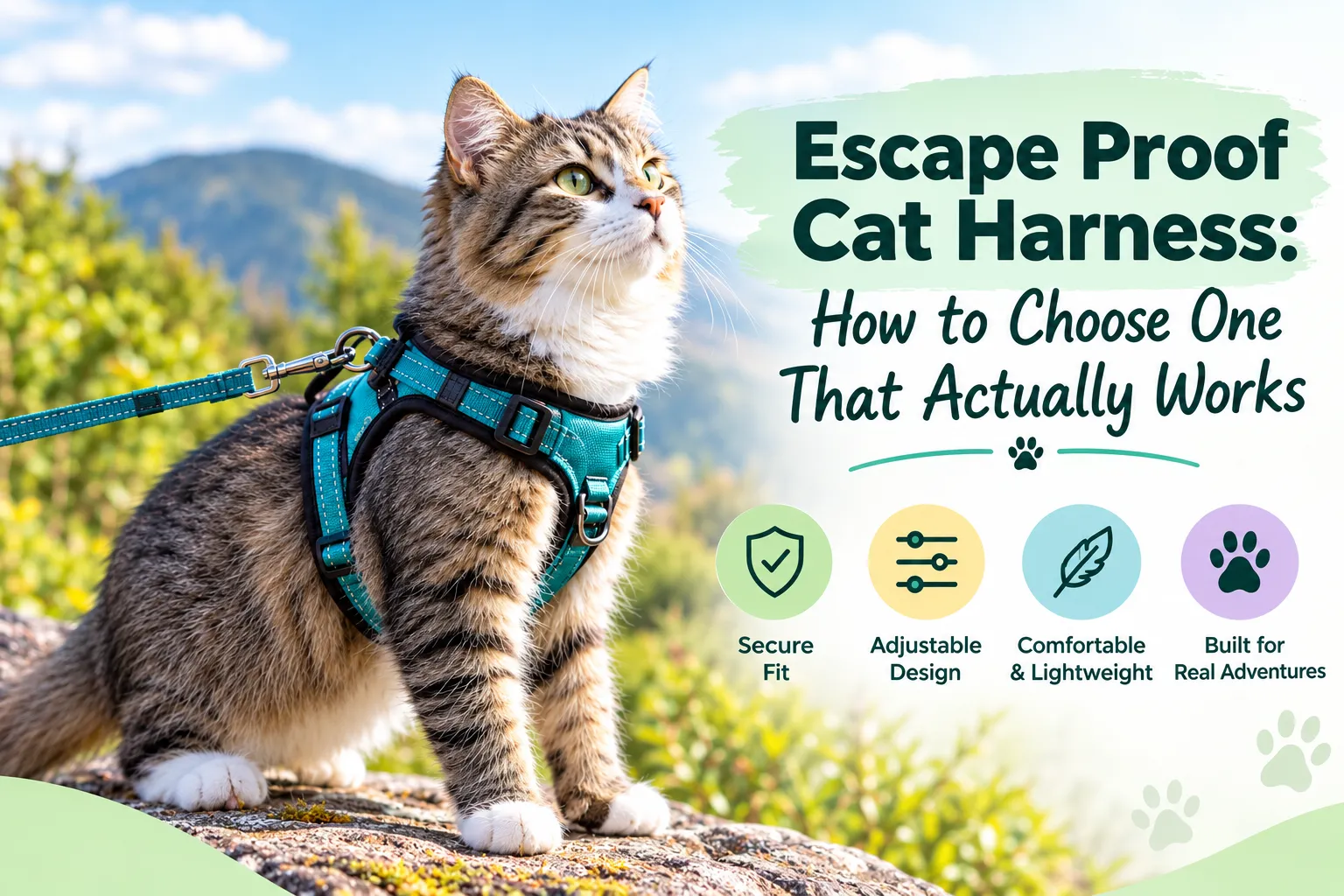
In this guide, we'll cover what "escape proof" really means, which features matter most, how to fit a harness correctly, and how to get your cat comfortable wearing one.
What Does "Escape Proof" Actually Mean ?
Let's be honest up front: no harness is 100% escape proof if it's fitted badly or if your cat is panicking. A better way to think about it is escape resistant by design. A good escape proof cat harness is built to make it as difficult as possible for your cat to back out, wriggle free, or slip a leg through.
Cats escape harnesses in a few common ways:
- Backing out: They pull straight backward and slide the harness over their head.
- Shoulder wriggling: They roll and twist until a front leg pops free.
- Chewing or pulling at straps: Thin or weak materials can fail.
- Buckle failure: Cheap clips can pop open under tension.
A well-designed harness addresses every one of these.
Key Features of an Escape Proof Cat Harness
When you're shopping, look past the cute colors and focus on the construction.
1. A Secure, Adjustable Fit
The single most important factor is adjustability. A good harness should have multiple adjustment points, usually around the neck, chest, and sometimes the belly. This lets you fine-tune the fit to your cat's exact shape. Cats come in all builds, from slim Siamese to fluffy Maine Coons, so a one-size-fits-all approach rarely works.
2. Vest Style or H-Style Design
Many cat owners find that vest-style harnesses hold up better than simple strap designs. The fabric spreads pressure across your cat's chest and makes it harder to wriggle out. Some owners prefer an H-style or figure-eight harness because it's lightweight and easy to put on, but these need especially careful fitting.
3. Sturdy Buckles and Hardware
Look for metal D-rings and high-quality buckles. Plastic hardware can crack, especially if your cat gives a sudden lunge after a bird or a rustling leaf. A quality escape proof cat harness will have reinforced stitching where the leash attaches.
4. Breathable, Comfortable Material
A harness your cat hates is a harness your cat will fight, and that leads to escapes. Soft mesh, padded edges, and lightweight fabric help your cat stay calm and comfortable, especially in warm weather.
5. Reflective Details
If you walk at dawn or dusk, reflective trim is a nice safety bonus. It's not about escaping, but it helps keep your cat visible if the worst does happen.
How to Fit a Cat Harness Properly ?
Even the best escape proof cat harness will fail if it's put on wrong. Follow these steps for a secure fit:
- Measure first. Use a soft tape measure around your cat's neck and the widest part of the chest, just behind the front legs. Compare these numbers to the manufacturer's size chart.
- Adjust before you buckle. Loosen all straps, put the harness on, then tighten gradually.
- Use the two-finger rule. You should be able to slide two fingers, but not three, between the harness and your cat's body. Any looser and your cat can back out; any tighter and it's uncomfortable.
- Check the neck and chest. Make sure the harness doesn't rotate or slide when you gently tug the leash.
- Re-check often. Fur, weight changes, and even a growing kitten can alter the fit.
If you can easily lift the harness over your cat's head while it's fastened, it's too loose. Tighten it before heading out.
Training Your Cat to Wear a Harness
Here's something many people skip: the harness is only half the equation. Training matters just as much. A calm cat is much less likely to escape than a frightened one.
Start indoors. Let your cat sniff the harness and associate it with good things. Place it near their food bowl or bed, and offer treats.
Go slow. Drape the harness over their back without fastening it. Reward them. Once they're comfortable, fasten it for a few seconds, then a few minutes.
Add the leash inside the house. Let your cat drag a light leash around while you supervise. This helps them get used to the sensation.
Move outdoors gradually. Begin in a quiet, enclosed area like a patio or a calm backyard. Avoid busy streets and loud environments, which can trigger panic.
Patience is the secret. Some cats take to harnesses in a day, while others need weeks. Never force it, because a negative experience can make future training much harder.
Safety Tips for Walking Your Cat
Even with a reliable escape proof cat harness, a few habits will keep your adventures safe:
- Make sure vaccinations are current, and talk to your vet about flea and tick prevention before outdoor time.
- Use a microchip and ID tag. A harness is a backup, but identification is essential.
- Pair the harness with a lightweight leash. Retractable leashes can be risky because sudden slack and snaps can startle your cat.
- Stay alert. Watch for dogs, cars, and other triggers, and keep your cat close.
- Never leave your cat unattended while wearing a harness, as it can snag on objects.
Common Mistakes to Avoid
Buying a harness that's too big "to grow into." A loose harness is the number one reason cats escape.
Choosing a dog harness. Cats have a different body structure and flexibility. A cat-specific design is always the better choice.
Skipping training. Putting a harness on a cat for the first time and heading straight outside is a recipe for stress.
Ignoring wear and tear. Check straps, stitching, and buckles regularly. Replace anything that looks frayed.
Is an Escape Proof Cat Harness Worth It?
For most cat owners, absolutely. A well-made, properly fitted harness opens up a safe way for your indoor cat to enjoy fresh air, sunshine, and new smells. It can reduce boredom, encourage exercise, and strengthen your bond. It also gives you peace of mind, which is priceless when you're holding the other end of the leash.
Just remember that the "escape proof" part comes from three things working together: a quality design, a precise fit, and a patient, positive training routine.
Final Thoughts
Finding the right escape proof cat harness takes a little research, but it's worth the effort. Measure your cat carefully, choose a secure and comfortable design with sturdy hardware, and take your time introducing it. Before long, your cat may be the one dragging you toward the door.
Safe adventures to you and your four-legged explorer!





Sign in to leave a comment.