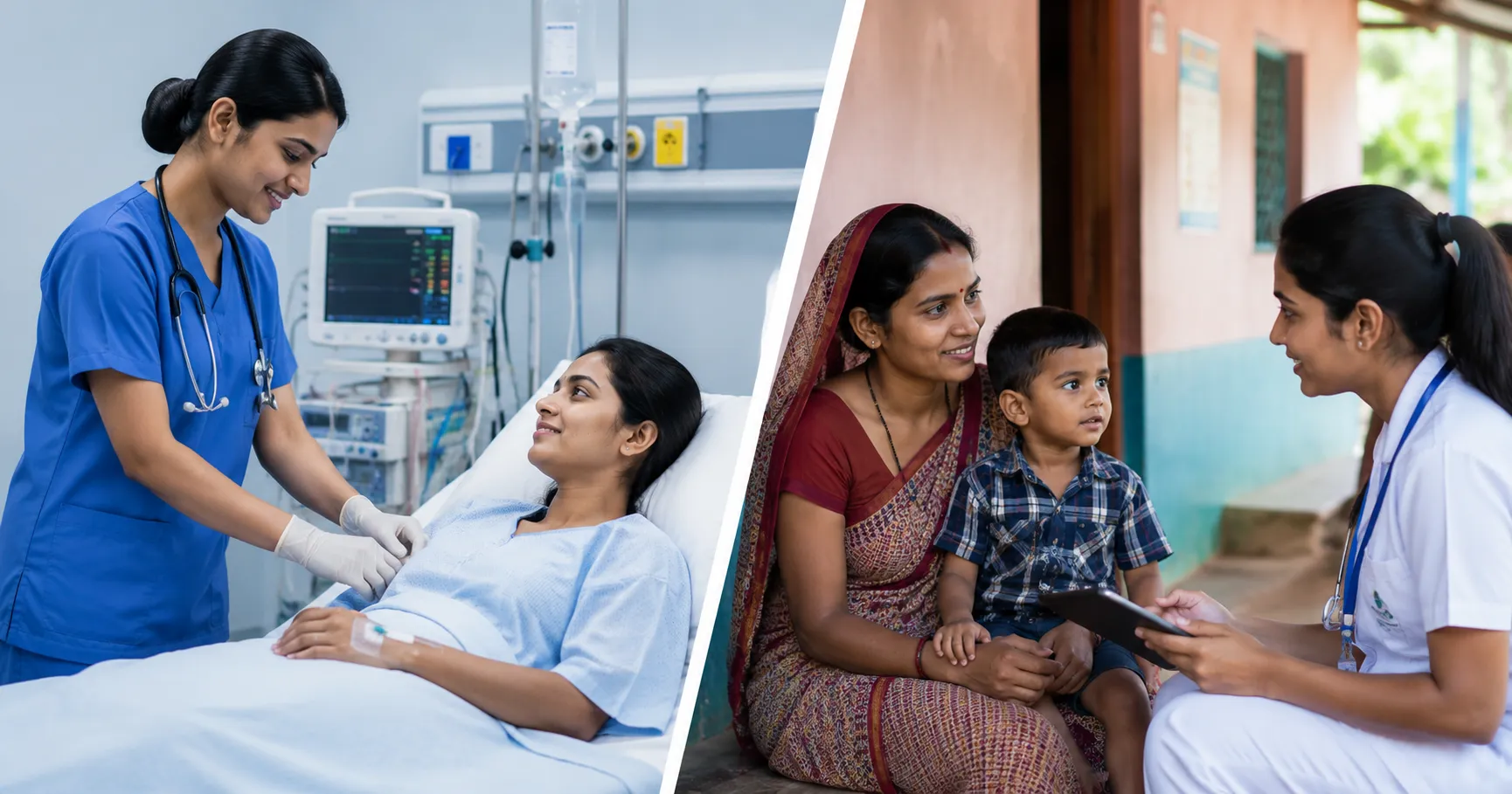

A nursing profession encompasses many career options such as general nursing, critical care nursing, neonatal nursing, oncology nursing, cardiothoracic nursing, orthopedics, rehabilitation, community nursing, among others. Getting into specialized nursing positions often entails much more than experience in general nursing practice. Clinicians need to possess adequate clinical skills, interpersonal communication skills, educational qualifications, and the ability to work in specialized teams. To those looking for Nurse Jobs in India, possessing the above-listed skills will give a good basis to build their careers.
Build Strong Clinical Fundamentals
Specialization begins with a strong foundation in general nursing practice. Before taking on advanced responsibilities, nurses need to understand patient assessment, medication safety, infection prevention, documentation, clinical communication, and basic emergency care.
Specialized departments can involve complex patients and procedures, making sound clinical judgement particularly important. A nurse should be able to recognize changes in a patient's condition, respond appropriately within their scope of practice, and communicate concerns promptly to the healthcare team.
The Indian Nursing Council's specialty programmes emphasize competency-based education and practical training for nurses moving into specialized areas. For example, its cardiothoracic specialty nursing programme combines specialized theoretical knowledge with extensive clinical and laboratory practice.
Develop Specialized Clinical Skills
Different nursing specialties require different competencies. A nurse interested in critical care may need skills related to intensive monitoring and critically ill patients, while a neonatal nurse requires knowledge specific to newborn care.
Similarly, nurses working in oncology, cardiothoracic care, orthopedic rehabilitation, or other specialties require focused knowledge and practical skills. The Indian Nursing Council currently recognizes several specialty nursing programmes, including post-basic diploma programmes in areas such as neonatal nursing, oncology nursing, orthopedic and rehabilitation nursing, cardiothoracic nursing, and hematology nursing.
This highlights an important point for nurses considering specialization: career progression should be supported by training that is relevant to the intended area of practice.

Strengthen Communication Skills
Technical knowledge is only one part of specialized nursing. Communication becomes particularly important when caring for patients with complex conditions. Specialized nurses may need to communicate with physicians, other nurses, allied healthcare professionals, patients, and family members. They must be able to communicate clinical information accurately and explain relevant care instructions in an understandable manner.
The Indian Nursing Council's specialty nursing framework includes communication and parental education among foundational competencies for neonatal specialty nursing, demonstrating the importance of communication alongside clinical knowledge. Good communication can also support teamwork, reduce misunderstandings, and improve continuity of care.
Develop Clinical Decision-Making Skills
Specialised nursing environments can require nurses to make timely decisions within their professional scope. This means developing the ability to assess information, recognize priorities, identify potential problems, and escalate concerns appropriately.
Clinical decision-making should be based on professional knowledge, established protocols, patient information, and evidence-based practice rather than assumptions.
Nurses should also learn to distinguish between situations they can manage within their responsibilities and those requiring immediate escalation to a senior nurse or medical professional.
Learn to Work With Technology
Healthcare technology is increasingly integrated into nursing practice. Specialized departments may use advanced monitoring equipment, electronic health records, infusion systems, diagnostic technologies, and other digital tools.
The World Health Organization's 2025 nursing report identifies education capacity and advanced practice nursing among important areas for strengthening the nursing workforce.
Nurses therefore benefit from being comfortable with digital documentation, electronic records, monitoring equipment, and technology relevant to their specialty.
Technology should support clinical practice rather than replace professional judgement. Nurses still need to understand what the information means and recognize when a result or observation requires further assessment.
Develop Evidence-Based Practice Skills
Healthcare practices continue to change as new research becomes available. Nurses who want to progress into specialized roles should develop the ability to understand clinical guidelines, evaluate relevant evidence, and apply appropriate practices within their scope.
Evidence-based practice does not necessarily mean conducting research independently. It can involve staying informed about updated protocols, understanding why particular interventions are recommended, and applying reliable evidence to patient care.
The Indian Nursing Council has incorporated evidence-based and applied research into the foundational competencies of specialty nursing education.
Improve Leadership and Teamwork
Specialization can eventually lead to senior clinical or supervisory responsibilities. Leadership skills can therefore be valuable even for nurses who do not immediately intend to move into management.
A nurse may coordinate patient care, support junior colleagues, communicate with other departments, or contribute to maintaining standards within a clinical unit. The Indian Nursing Council's specialty curriculum identifies clinical leadership and resource management as relevant competencies for specialist nurses.
Effective leadership in nursing is not simply about giving instructions. It involves accountability, communication, organization, delegation within appropriate responsibilities, and supporting safe patient care.
Develop Emotional Intelligence and Professionalism
Specialized nursing can involve patients with serious or long-term health conditions. Nurses may therefore encounter emotionally demanding situations involving patients and families.
Empathy, patience, professional boundaries, confidentiality, and respectful communication are essential. Nurses also need to manage workplace stress appropriately while maintaining professional standards. The ability to remain calm and respectful during difficult situations can be particularly valuable in high-pressure departments.
Commit to Continuing Professional Development
Specialization is not a one-time achievement. Healthcare technologies, treatment approaches, clinical guidelines, and professional expectations continue to evolve.
The Indian Nursing Council maintains continuing nursing education regulations, while WHO identifies education, employment, leadership, and service delivery as important areas for strengthening the nursing workforce.
Nurses can therefore benefit from relevant workshops, continuing education, formal specialty programmes, conferences, simulation training, and other recognized learning opportunities.

Additional qualifications should be selected carefully. A certificate is most useful when it develops skills relevant to the nurse's intended role rather than simply adding another credential to a resume.
Gain Relevant Practical Experience
Experience can help nurses understand whether a particular specialty is genuinely suitable for them. Working in a relevant department under appropriate supervision can provide exposure to its patient population, procedures, equipment, and workflow.
Some formal specialty programmes also require substantial clinical training. The INC cardiothoracic specialty programme, for example, specifies a residency structure with 90% of the curriculum devoted to clinical and laboratory practice.
Nurses should therefore consider both theoretical education and hands-on experience when planning a transition into a specialized role.
Frequently Asked Questions
1) Do nurses need additional qualifications to enter a specialized role?
Requirements vary by specialty and employer. Some specialized positions may require additional recognized education or certification, while others may place greater emphasis on relevant experience and competency.
2) Which skills are most important for specialized nursing?
Strong clinical knowledge, specialty-specific competencies, communication, teamwork, clinical judgement, technology skills, and continuing professional development are all important.
3) Can a nurse specialize after gaining general nursing experience?
Yes. Relevant clinical experience can provide a useful foundation, and nurses can pursue recognized specialty education or training depending on their career goals and eligibility.
4) Does specialization guarantee career advancement?
No. Specialization can strengthen a nurse's qualifications and skills, but progression also depends on experience, competency, employer requirements, available positions, performance, and further professional development.
Conclusion
Progressing into a specialized nursing role requires a combination of clinical expertise, relevant training, communication, technology skills, leadership, evidence-based practice, and practical experience. Nurses should identify the specialty they want to pursue and then develop competencies specifically relevant to that area. As healthcare systems continue to evolve, lifelong learning will remain important for professional growth. For nurses evaluating nurse vacancy in India, building specialized and transferable skills can help them pursue opportunities that align with their experience and long-term career goals.




























Sign in to leave a comment.