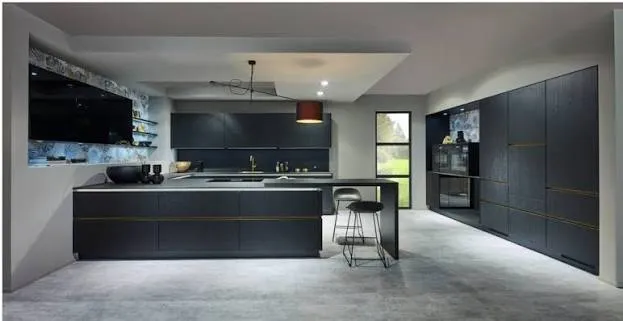

If you've been browsing kitchen designs lately, you've probably noticed the same look everywhere: flat, seamless doors, no visible handles, and storage that seems to swallow everything. That's the signature of European kitchen cabinets, and it's one of the fastest-growing choices for modern remodels and new builds.
This guide explains what makes European cabinetry different, how German and Italian lines compare, what to look for in materials and hardware, and how to budget for your project.
What Are European Kitchen Cabinets?
European kitchen cabinets use frameless (full-access) construction. American-style cabinets have a wooden face frame across the front of the box. European cabinets skip it. The door mounts directly to the cabinet side and covers the entire opening.
That single change has big consequences:
- More usable storage. Nothing narrows the opening, so drawers can be wider and pull-outs slide out fully.
- A cleaner look. Doors sit flush with tight, even gaps, which gives the kitchen a calm, uninterrupted line.
- Precision engineering. Most European cabinets are built on the 32mm system, a standardized grid that keeps hinges, drawers, and interior fittings perfectly aligned.
European cabinetry is also typically factory pre-assembled and made to order. The cabinets are built to your layout in a controlled factory environment rather than assembled by hand on site, which improves consistency and shortens installation.
European vs. American Cabinets
| European (Frameless) | Standard American (Face Frame) | |
| Construction | No face frame; door covers full box | Wood frame on the cabinet front |
| Interior access | Full, unobstructed | Slightly reduced by the frame |
| Style | Sleek, minimal, often handleless | Often traditional, framed, paneled |
| Hardware | Concealed soft-close hinges and full-extension drawers | Varies widely |
| Manufacturing | Factory-built, made to order | Often built or assembled locally |
Neither is "better" for everyone. If you love raised panels and crown molding, a traditional style may fit. If you want a modern, efficient, low-maintenance kitchen, European cabinetry is hard to beat.
German vs. Italian Kitchen Cabinets
Most people searching for European kitchen cabinets end up choosing between two traditions.
German cabinetry is known for engineering precision, durability, and consistency. Brands like Nobilia, the world's largest kitchen manufacturer, offer a huge range of finishes and configurations, with cabinets delivered pre-assembled and ready to install. German kitchens are a strong fit if you value reliability, storage function, and a wide selection at different price points. Explore German cabinetry and Nobilia kitchens.
Italian cabinetry leans toward design expression: distinctive materials, bold finishes, and a more architectural feel. It suits homeowners who want the kitchen to be a statement piece. Explore our Italian cabinetry and the Composit collections, including Code, Touch, Lounge, Pepper, and Linea.
A simple way to decide: choose German for proven engineering and range, Italian for signature design. Many homeowners mix them, using one style in the kitchen and another in the closets or bathrooms.
Popular European Cabinet Styles and Finishes
Handleless doors. Integrated channels or push-to-open mechanisms create a seamless surface. This is the defining European look.
Matte and soft-touch finishes. Ultra-matte surfaces resist fingerprints and feel refined. They're one of the most requested finishes in modern kitchens.
High-gloss. Reflects light and makes compact kitchens feel larger. Best for homeowners who don't mind more frequent wiping.
Wood-grain and natural textures. Oak, walnut, and ash-inspired finishes add warmth and balance a minimalist layout.
Two-tone combinations. Dark lower cabinets with lighter uppers, or a contrasting tall pantry wall, add depth without clutter.
What to Look For in Quality European Cabinets
Not all frameless cabinets are equal. Check these before you buy:
- Cabinet box construction. Look for moisture-resistant boards and precisely sealed edges, especially around the sink.
- Hinges and drawer systems. Soft-close and full-extension hardware should be standard, and adjustable so doors can be realigned years later.
- Interior fittings. Pull-out pantries, corner solutions, and drawer organizers are where you'll feel the quality every day. See our interior fittings.
- Sustainability. Ask where the wood comes from. Blackbox cabinetry uses wood from sustainably managed forests and factories with environmental and energy management programs.
Warranty and support. A strong warranty and a responsive service team matter more than the brochure.
Building the Whole Kitchen: Worktops, Handles, and Appliances
European cabinets work best as part of a complete system. Worktops, handles, and integrated appliances should be planned together with the cabinet layout so everything lines up. Options to consider:
- Worktops in materials that match your finish and usage
- Handles if you prefer visible hardware over a handleless look
- Integrated cooking such as the TULIP cooking system or Invisacook
Accessories for pantry and cabinet organization
How Much Do European Kitchen Cabinets Cost?
Cost depends on brand, finish level, kitchen size, and how much customization you need. Broadly:
- Entry to mid-range German lines offer the best balance of price, quality, and finish selection.
- Premium finishes and fully custom layouts cost more, particularly with specialty materials or unusual dimensions.
- Installation, countertops, appliances, and delivery are separate line items, so budget for the full project, not just cabinets.
For real numbers, see our price examples, or download our catalogs to compare price groups and finishes.
How to Choose the Right European Kitchen Cabinets
- Measure and plan your layout first. Cabinets are made to order, so accurate dimensions prevent delays.
- Pick a finish that fits your lifestyle. Gloss looks dramatic; matte is more forgiving.
- Prioritize storage function. Decide where you need drawers, pull-outs, and tall pantry units.
- Plan appliances early. Integrated appliances affect cabinet sizing.
- See it in person. Visit a showroom or take our virtual exhibition to judge finishes and proportions before ordering.
Frequently Asked Questions
What is the difference between European kitchen cabinets and standard cabinets?
European cabinets are frameless, with doors that cover the full cabinet opening. That gives them a sleeker look, more usable interior space, and a modern, minimal style. Standard American cabinets typically have a face frame and a more traditional appearance.
Are European kitchen cabinets worth the investment?
For most homeowners, yes. You get better storage efficiency, high-quality hardware, and a design that stays current for years. A well-planned European kitchen can also add to your home's value.
Do European kitchen cabinets only come in modern styles?
No. Handleless slab doors are the best known, but German and Italian manufacturers also offer shaker, wood-grain, and transitional looks in frameless construction.
How long do European kitchen cabinets last?
With quality materials and correct installation, they can last decades. Adjustable hinges and drawer systems let you realign doors as the home settles.
How long does it take to get European cabinets?
Because they're made to order, lead times depend on the line and availability. Ask for an estimate when you finalize your layout so you can schedule installation and other trades around it.
Can I mix German and Italian cabinetry?
Yes. Many homeowners use one line for the kitchen and another for closets, laundry, or bathrooms, as long as finishes are coordinated.
Ready to Plan Your European Kitchen?
Blackbox Kitchens brings German and Italian cabinetry together with design support, factory pre-assembled delivery, and installation guidance from first sketch to final walkthrough. Contact us for a design consultation, or visit a showroom to see the finishes in person.
























Sign in to leave a comment.