Event Traffic Management: Planning Safer and Smoother Events


Organising a successful event involves much more than choosing a venue, arranging entertainment and welcoming guests. When an event is expected to attract a large number of vehicles and pedestrians, traffic needs to be carefully planned before the first attendee arrives. Event Traffic Management helps organisers manage vehicle movements, pedestrian access, parking, road closures and congestion while creating a safer environment around the event.
From sporting events and festivals to concerts, community gatherings and large public occasions, professional planning can make a significant difference. CRG Traffic Management provides event traffic management services across Perth and Western Australia, helping organisers develop practical arrangements that suit their event, venue and surrounding roads.
What Is Event Traffic Management?
Event traffic management involves planning and controlling traffic around an event to help vehicles and pedestrians move safely and efficiently.
Large events can create temporary changes to normal traffic conditions. Roads may become busier, parking areas may reach capacity, pedestrians may cross roads in large numbers, and vehicles may arrive and leave at similar times.
A professional approach considers these factors before the event begins.
Depending on the event, traffic management may include:
- Vehicle entry and exit arrangements
- Pedestrian movement
- Temporary road closures
- Traffic controllers
- Parking and drop-off areas
- Temporary traffic signs
- Emergency access
- Public transport interaction
- Traffic diversions
- Event vehicle access
- Crowd movement
- Post-event traffic flow
The exact requirements depend on the size, location and nature of the event.
Why Is Event Traffic Management Important?
When hundreds or thousands of people attend an event, normal traffic patterns can change quickly.
Vehicles may queue outside the venue, pedestrians may cross roads unexpectedly, and nearby streets can experience higher traffic volumes than usual.
Without proper planning, these conditions can create confusion and increase risks for drivers, pedestrians, event staff and contractors.
Effective Event Traffic Management helps organisers prepare for these situations before they occur.
Rather than reacting to congestion on the day, traffic arrangements can be planned in advance so everyone involved understands how vehicles and pedestrians should move around the venue.
Planning Traffic Before the Event
One of the most important parts of event traffic management is preparation.
Before developing traffic arrangements, the site and surrounding road network should be considered. This can include nearby intersections, parking facilities, pedestrian routes, public transport stops, access roads and potential congestion points.
The expected number of attendees is also important.
An event attracting a few hundred people may require a very different approach from a major event attracting thousands of visitors.
The expected arrival and departure times should also be considered because traffic can increase rapidly when large groups arrive or leave at the same time.
Managing Event Arrivals
The arrival period is often the first major traffic challenge.
Attendees may arrive by private vehicle, taxi, rideshare, public transport, bicycle or on foot. If too many vehicles use the same entrance at the same time, queues can quickly form.
Event traffic planning can help establish suitable entry points and vehicle routes.
Traffic controllers may also be positioned at important locations to guide motorists and help manage interactions between vehicles and pedestrians.
Clear signage can further assist drivers by directing them towards parking, drop-off areas and event entrances.
Managing Traffic After the Event
The end of an event can create just as much traffic as the beginning.
When a large crowd leaves at approximately the same time, surrounding roads can experience a sudden increase in vehicle movements.
This can lead to queues at exits, intersections and nearby roads.
Professional planning considers the departure period as part of the overall event traffic strategy.
Depending on the event, temporary traffic control may be used to manage vehicle exits, pedestrian crossings and traffic movements around the venue.
Pedestrian Safety Around Events
Events often involve large numbers of pedestrians moving between parking areas, public transport stops, entrances and surrounding streets.
Pedestrian movement therefore needs to be considered alongside vehicle traffic.
A suitable traffic arrangement can identify safe pedestrian routes and crossing locations while reducing unnecessary interaction between people and moving vehicles.
Traffic controllers can assist where pedestrian and vehicle movements intersect, particularly during busy arrival and departure periods.
For larger events, pedestrian management may also need to consider queues, temporary walkways, road crossings and access for people with mobility requirements.
Parking and Drop-Off Areas
Parking is another important part of event traffic planning.
If parking arrangements are unclear, drivers may circulate around surrounding streets looking for spaces, which can increase congestion.
Event traffic management can help establish clear vehicle routes to parking areas and separate drop-off and pick-up movements where possible.
Temporary signs can direct drivers towards the appropriate areas and help reduce confusion.
For busy venues, traffic controllers can also assist with vehicle movements at entrances, exits and designated drop-off zones.
Emergency Access Must Remain Available
Emergency access should always be considered when planning traffic around an event.
Emergency vehicles may need to reach the venue or surrounding areas quickly, even when roads are busy with event traffic.
Traffic arrangements should therefore account for emergency access and avoid creating unnecessary obstructions.
Event organisers, contractors, venue operators and traffic management personnel should understand the relevant emergency arrangements before the event begins.
Choosing Event Traffic Management Companies
When searching for event traffic management companies, organisers should consider more than simply the number of personnel a provider can supply.
The traffic management company should understand the event environment and be capable of developing practical arrangements for the site.
Important considerations can include:
- Experience with different types of events
- Traffic management planning capability
- Trained traffic control personnel
- Understanding of local traffic conditions
- Ability to manage pedestrian movements
- Temporary traffic control equipment
- Communication with event organisers
- Ability to respond to changing site conditions
- Planning for both arrival and departure periods
A professional provider should work with the organiser to understand the event rather than simply applying a standard traffic arrangement.
How CRG Traffic Management Can Help
CRG Traffic Management provides professional traffic management solutions for events across Perth and Western Australia.
Our team can assist with planning traffic movements around event sites, including vehicle access, pedestrian movements, traffic control and temporary traffic arrangements.
We understand that every event has different requirements. A community event in a local area may need a different solution from a major sporting event, festival or large public gathering.
Our approach focuses on practical planning and safety while helping minimise unnecessary disruption to surrounding roads and communities.
Professional Traffic Controllers for Events
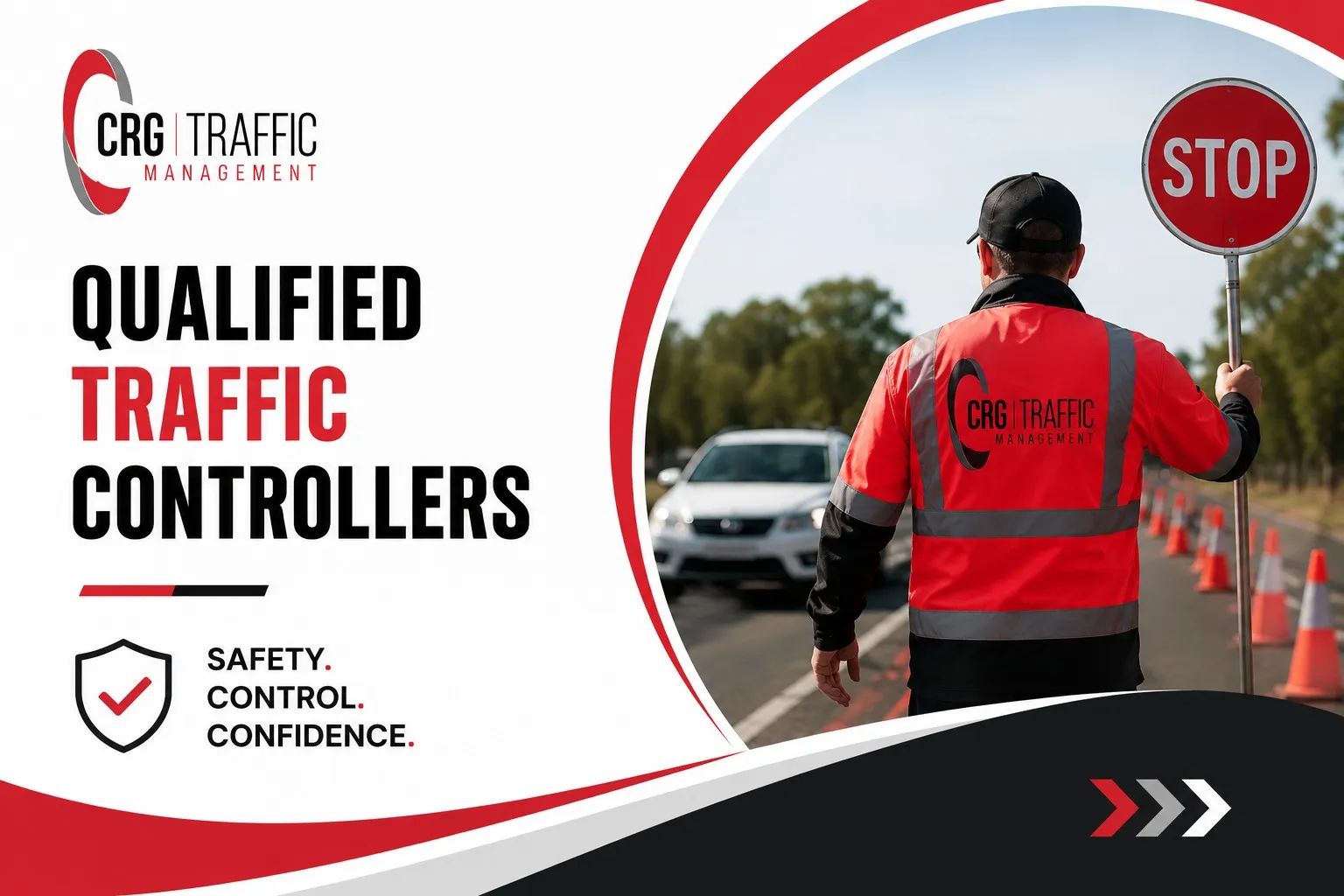
Traffic controllers can play an important role in putting event traffic arrangements into practice.
They can assist with vehicle movements, pedestrian crossings, entry and exit points, parking areas and other locations where active traffic control is required.
Having trained personnel in the right locations can help provide clearer direction to road users and support the traffic arrangements established during the planning stage.
At CRG, traffic control forms part of our wider traffic management services, allowing event organisers to access both planning and on-site support.
Planning for Different Types of Events
Traffic requirements can vary considerably depending on the event.
Sporting Events
Sporting events can attract large crowds within a short period and may require parking, pedestrian and vehicle management.
Festivals and Community Events
Festivals may involve temporary road closures, market stalls, entertainment areas and significant pedestrian activity.
Concerts and Entertainment Events
Concerts can create concentrated traffic before and after performances, making entry and departure planning particularly important.
Corporate and Special Events
Corporate events, exhibitions and special occasions may require controlled access, parking arrangements and visitor management.
Whatever the event, planning should reflect the expected attendance, venue layout and surrounding traffic environment.
Why Start Planning Early?
Waiting until the week of an event to consider traffic can leave little time to identify potential problems.
Starting early provides an opportunity to assess the site, understand expected traffic volumes, coordinate with event organisers and develop practical traffic arrangements.
It also gives organisers time to communicate traffic information to staff, contractors and other relevant parties.
Early planning can make the event day more organised and reduce the likelihood of last-minute changes.
Final Thoughts
Event Traffic Management is an important part of organising any event where large numbers of vehicles and pedestrians will be using the surrounding area.
From arrival and parking to pedestrian movement and post-event departures, every stage can influence traffic conditions. Professional planning helps identify potential risks and establishes practical arrangements before the event begins.
When comparing event traffic management companies, organisers should look for a provider with practical planning experience, trained traffic controllers and an understanding of the specific requirements of the venue and event.




Sign in to leave a comment.