
Jaisalmer stands as a golden sentinel in the heart of the Thar Desert, where centuries of royal heritage meet rippling golden dunes. Crafting an itinerary that balances living history with desert exploration requires thoughtful pacing. This verified, three-day guide brings together authentic architectural discoveries, cultural encounters, and desert stays curated through hands-on hospitality insight at Rajwada Desert Camp.
Day 1: Living Heritage and Architectural Splendor
Start your expedition within the golden ramparts of the historic center. Unlike most fortress complexes in India, the Jaisalmer Fort (Sonar Qila) is a living heritage site where roughly a quarter of the old city's population still resides. Built in 1156 AD by Rawal Jaisal, its golden-yellow sandstone walls appear to shift color as the sun moves across the horizon.
Begin by exploring the labyrinthine alleys of the fort early in the morning around 8:30 AM before foot traffic builds. The royal complex houses the Maharaja’s Palace and seven interconnected Jain temples constructed between the 12th and 15th centuries. These shrines showcase delicate marble and sandstone carvings dedicated to Tirthankaras like Parshvanatha and Rishabhanatha.
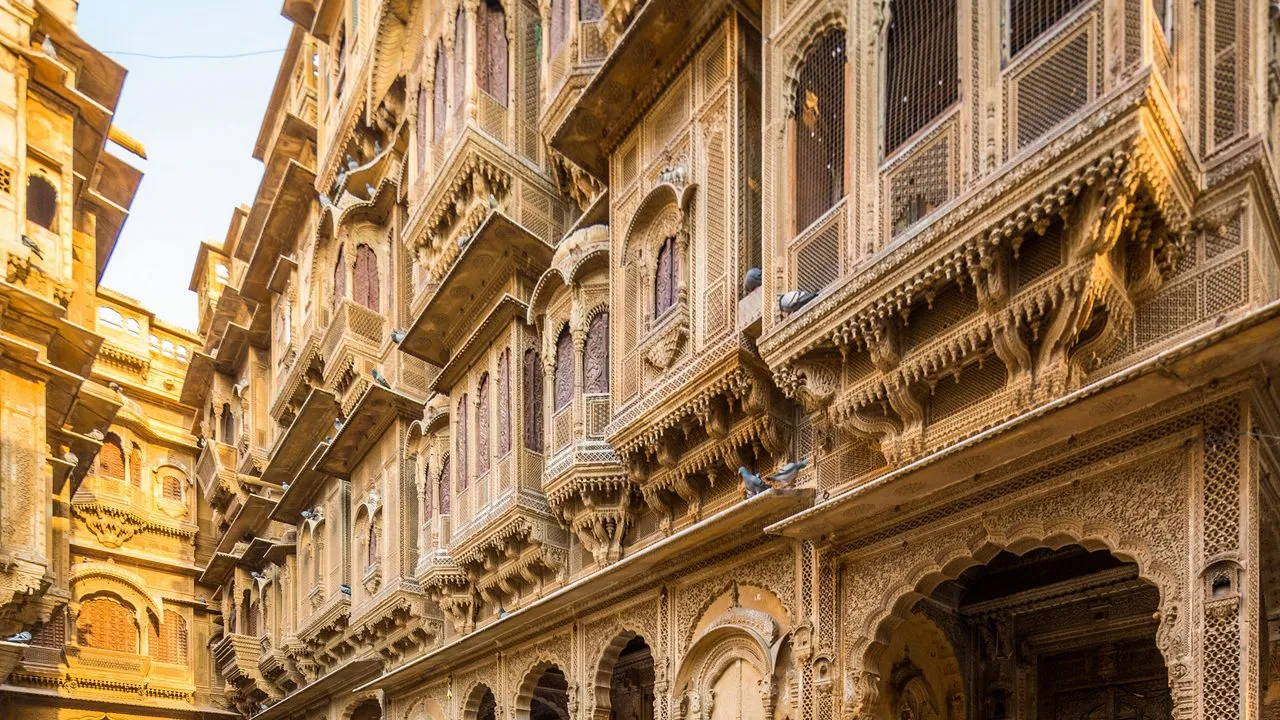
Step outside the fort gates by midday toward the historic havelis built by wealthy Marwari merchants. Patwon Ki Haveli is an elaborate cluster of five individual residences constructed between 1800 and 1860, famous for its stone-latticed jharokhas (balconies). Follow this with a brief stop at Salim Singh Ki Haveli, recognizable by its peacock-shaped roofline, and Nathmal Ki Haveli, carved by two architect brothers who worked on opposite wings simultaneously.
Conclude your first day at Gadisar Lake during the golden hour. Built by Maharawal Gadsi Singh as a water conservation tank in the 14th century, it is surrounded by chhatris, shrines, and the ornate Tilon Ki Pol gateway. A peaceful evening boat ride here provides the perfect transition from city architecture to desert tranquility.
Day 2: Haunting Legends and Dunes Exploration
Dedicate your second day to moving westward toward the rolling sands of the Thar. Leave the town center after breakfast and take the road toward the abandoned village of Kuldhara, located roughly 18 kilometers southwest of the city.
Kuldhara was once a prosperous settlement inhabited by Paliwal Brahmins until the early 19th century. According to local historical accounts, the entire population evacuated overnight to protect their honor and freedom from a tyrannical prime minister, leaving behind a curse that prevents resettlement. Walking through the roofless stone homes, streets, and surviving temple provides a tangible connection to Rajasthan’s folk memory.
Continue further west past Khaba Fort, an ancient checkpoint on the desert trade route that offers wide views across the arid plains. By early afternoon, make your way toward the sweeping ridges of Sam.
Choosing a reputable camp in sam sand dunes such as Rajwada Desert Camp gives you front-row access to the desert without sacrificing personal comfort. Check into a furnished Swiss tent equipped with modern amenities and attached washrooms.
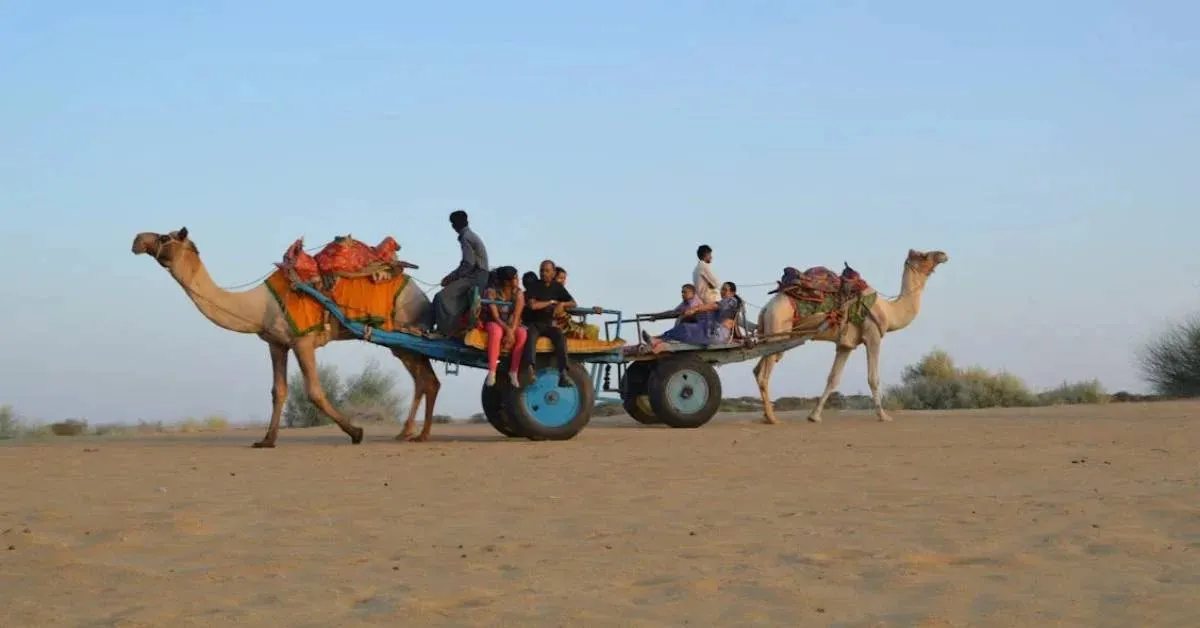
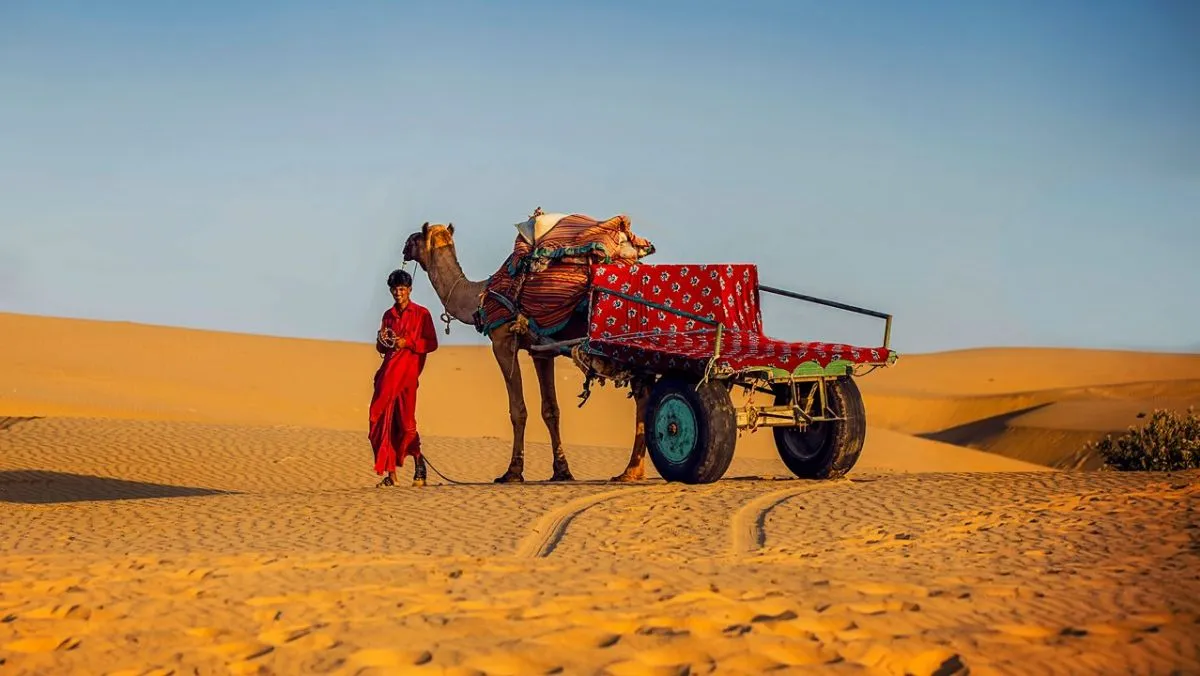
As the afternoon heat subsides, head out into the dunes for sunset camel trekking and photography. Nightfall in the desert brings vibrant Kalbelia dance performances, Manganiyar vocal music around a central bonfire, and an authentic Rajasthani dinner featuring slow-cooked Dal Baati Churma, Gatte ki Sabzi, and Ker Sangri.
Day 3: Desert Thrills, Stargazing, and Local Crafts
Embrace the cooler desert morning by exploring the active side of the Thar. The wide sand valleys provide natural terrain for outdoor pursuits. Participating in curated Jaisalmer advanture activities such as 4x4 dune bashing, quad biking across crests, and paramotoring gives you an unforgettable perspective on the expanse of the desert terrain.
After breakfast at the camp, head toward the Desert National Park to witness the delicate ecosystem of the Thar. Keep watch for the critically endangered Great Indian Bustard, chinkaras (Indian gazelles), desert foxes, and migratory eagles.
Head back toward the town periphery during the afternoon to explore Bada Bagh, a serene garden complex housing royal cenotaphs (chhatris) of the Bhatti dynasty. The amber domes set against open skies offer a contemplative spot to reflect on the region’s royal lineage.
Conclude your 3-day journey browsing local handicraft markets around Sadar Bazaar and Manak Chowk. Look for hand-embroidered textiles, mirror-work quilts, camel leather craft, and fossils carved into local yellow stone. This completes a balanced three-day circuit of history, culture, and outdoor life in Rajasthan's Golden City.




























Sign in to leave a comment.