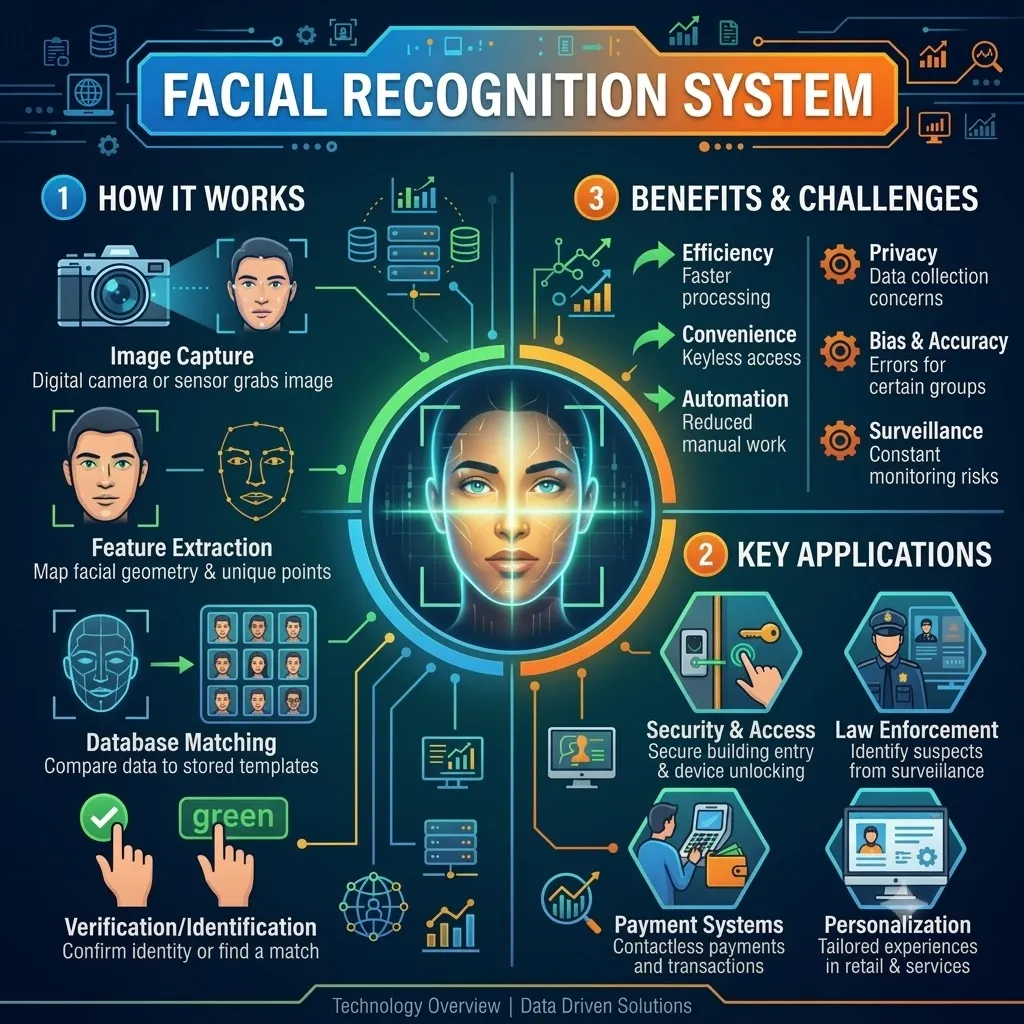

The UAE is rapidly emerging as a global leader in adopting a Facial Recognition System across government, commercial, and residential infrastructure. From Dubai's smart-city vision to Abu Dhabi's public safety programs, biometric identification technology is reshaping how organisations protect people, assets, and data. This shift is not a passing trend — it reflects a deeper transformation in how security is designed, deployed, and trusted across the region.

Why the UAE Is Investing Heavily in Facial Recognition Technology
The UAE's ambition to become one of the world's safest and most digitally advanced nations has placed biometric security at the centre of national strategy. Government entities, airports, banks, hospitals, and residential communities are integrating computer-vision-based identity verification to reduce fraud, prevent unauthorised access, and streamline daily operations. Unlike traditional key-card or PIN-based systems, modern biometric platforms authenticate individuals in real time, removing the vulnerabilities associated with lost cards, shared credentials, or forgotten passwords.
This momentum is supported by robust digital infrastructure, favourable smart-city regulations, and a business culture that values early adoption of artificial intelligence. As a result, demand for a reliable Facial Recognition System UAE provider has grown steadily among enterprises, developers, and government contractors alike.
Key Benefits Driving Enterprise Adoption
Beyond the headline promise of stronger security, organisations across the UAE are adopting biometric identity verification for a range of measurable operational gains. Faster throughput at entry points reduces queuing during peak hours in office towers and mixed-use developments. Automated attendance eliminates buddy-punching and manual timesheet errors on large construction and logistics sites. Centralised reporting gives facilities managers a single view of who entered which zone and when, supporting both day-to-day operations and post-incident investigation.
Cost efficiency is another driver. While the upfront investment in cameras and software licensing is real, the long-term savings from eliminating card reprints, reducing security-guard headcount at low-traffic entrances, and preventing losses from unauthorised access frequently offset the initial outlay within a reasonable payback period — a calculation that UAE facilities teams increasingly build into their annual security budgets.
Understanding Face Detection and Facial Identification
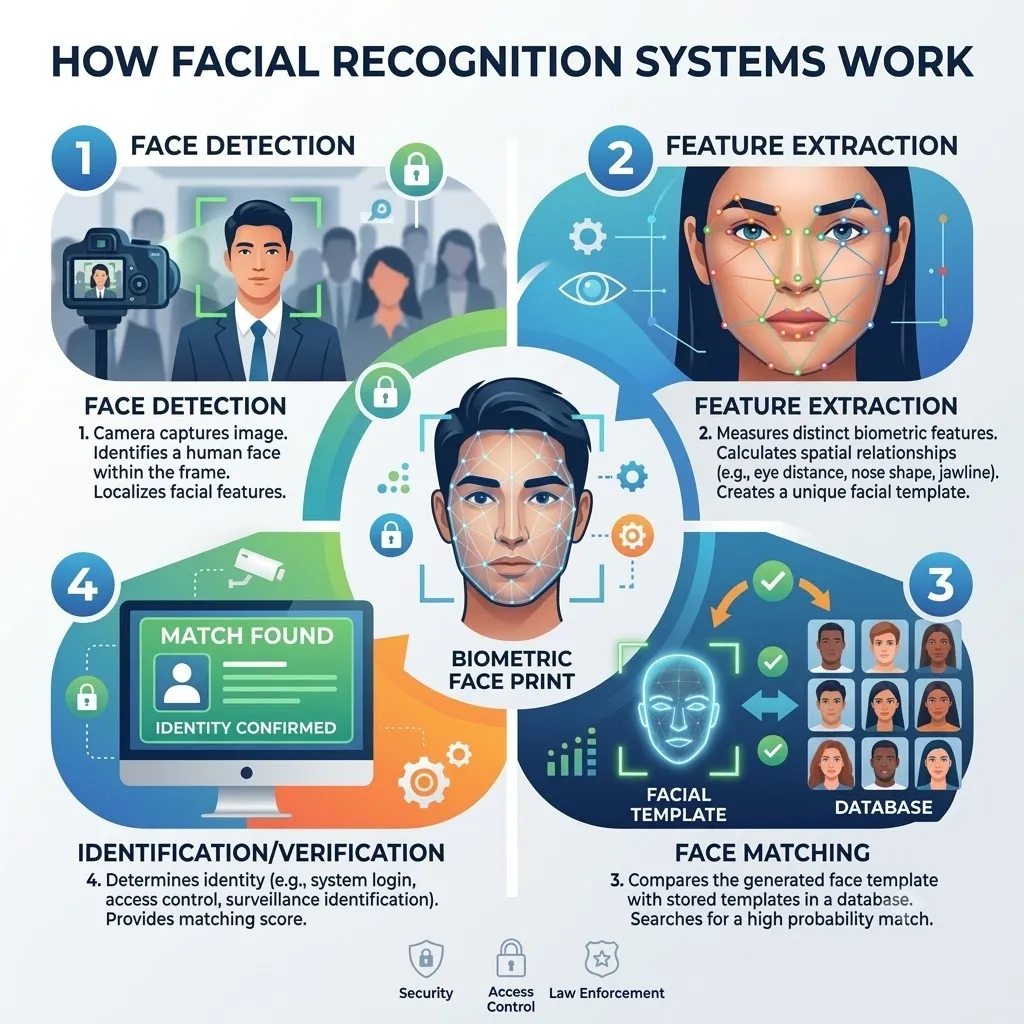
Before any access decision is made, a device must first perform Face Detection — the process of locating a human face within a video frame or still image. Once detected, the system moves to Facial Identification, comparing unique facial landmarks such as eye spacing, jawline structure, and nose contour against a stored database to confirm identity. These two processes work together within milliseconds, powered by deep-learning algorithms trained on millions of facial data points.
Modern platforms distinguish between identification (matching a face against a database of many identities) and verification (confirming a face matches one specific enrolled profile). This distinction matters for organisations designing layered security: a corporate lobby may rely on identification for general monitoring, while a server room may require one-to-one Facial Authentication before granting entry.
Facial Recognition Access Control: Redefining Perimeter Security
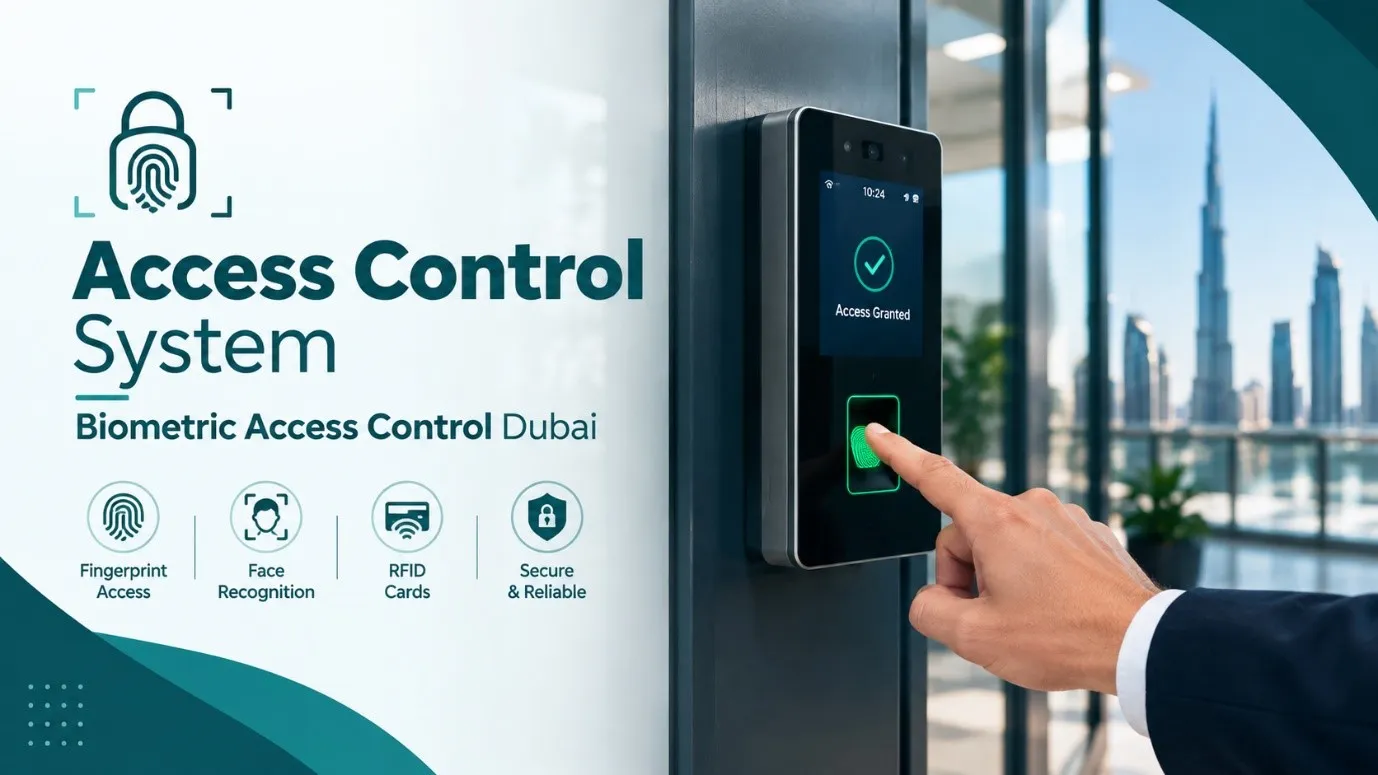
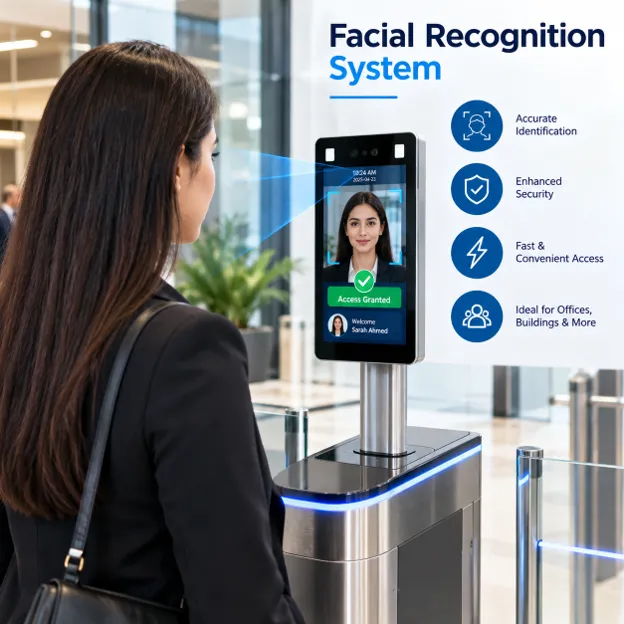
Facial Recognition Access Control has become one of the most requested upgrades for offices, factories, gated communities, and government buildings across the Emirates. Instead of issuing physical cards that can be duplicated or lost, organisations enrol employee and visitor faces into a secure database. When someone approaches a controlled door, the system captures their face, verifies it against enrolled records, and releases the lock — all within a fraction of a second.
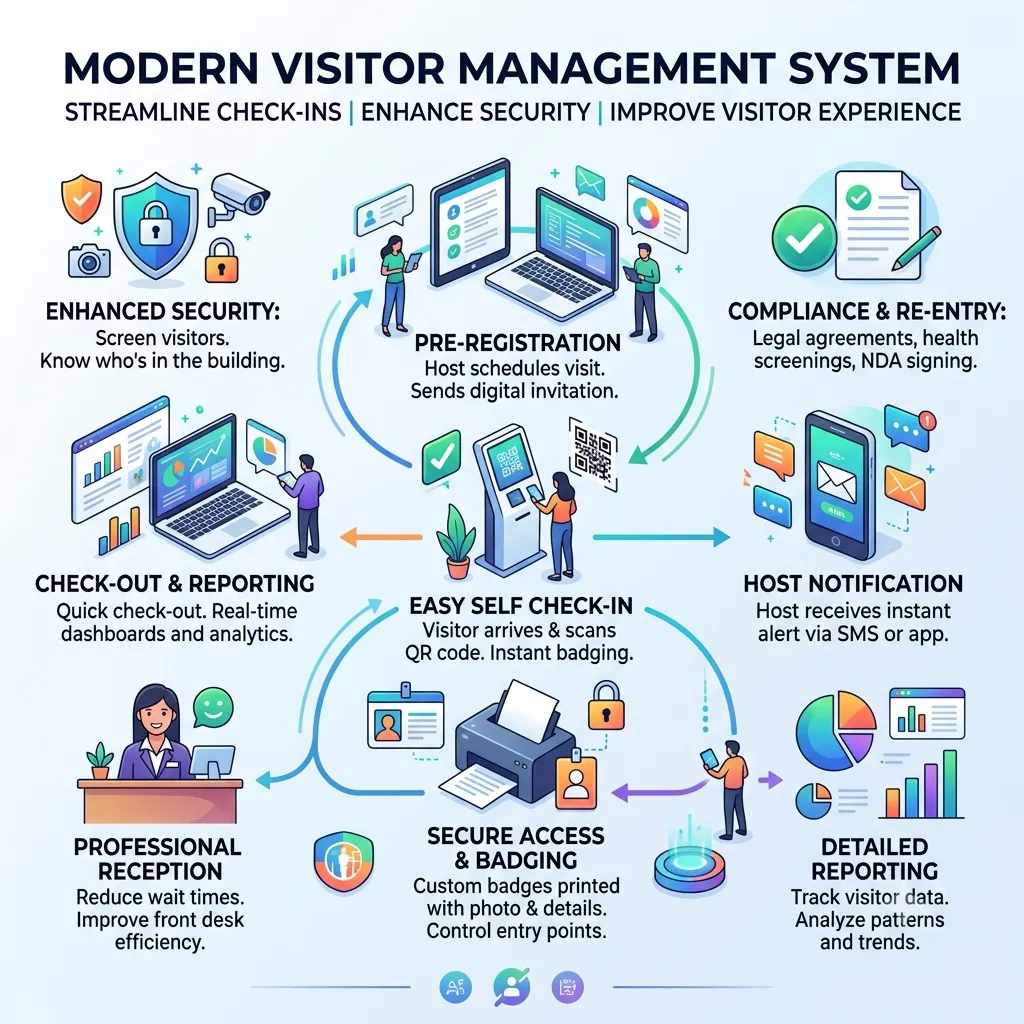
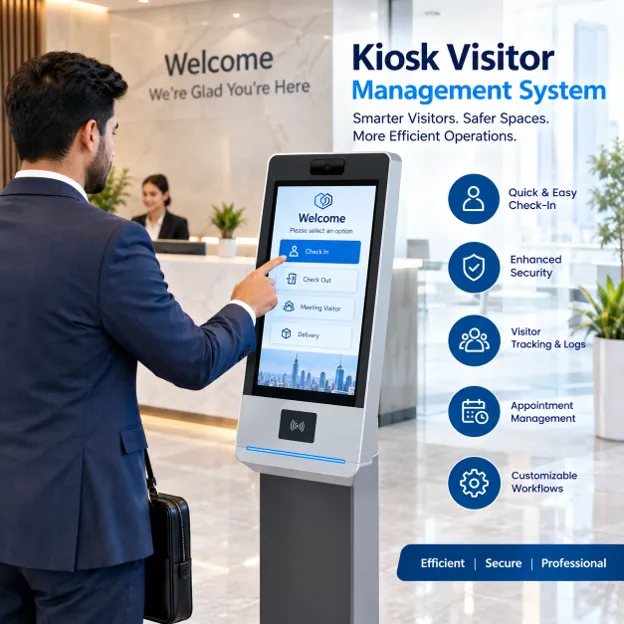
This approach offers several operational advantages. Attendance logs become automatic and tamper-proof. Visitor management is faster, since guests no longer need manual sign-in at reception. Multi-site organisations can centralise access permissions from a single dashboard, instantly revoking or granting entry rights across every branch in Dubai, Abu Dhabi, Sharjah, or the wider GCC.
Where Facial Recognition Access Control Fits in a Layered Security Plan
Security consultants rarely recommend biometric access as a standalone measure; instead, it typically forms one layer within a broader defence-in-depth strategy that also includes perimeter fencing, CCTV monitoring, intrusion alarms, and manned guarding. Placed at the right checkpoints — main entrances, server rooms, executive floors, and loading docks — biometric verification closes the specific gap that cards and PINs leave open: confirming that the person presenting credentials is genuinely who they claim to be.
Integrators in the UAE increasingly combine biometric checkpoints with visitor-management software and mobile credentials, allowing a single platform to manage employees, contractors, and short-term visitors under one policy engine. This convergence reduces the number of disconnected systems a security team must monitor and simplifies compliance reporting during audits.
Facial Authentication vs Traditional Security Methods
Traditional security relies on something a person carries (a card) or knows (a password) — both of which can be stolen, shared, or forgotten. Facial Authentication instead relies on something a person is, making impersonation significantly harder. Liveness-detection features further prevent spoofing attempts using photographs, videos, or masks by analysing depth, texture, and micro-movements of the face.
For UAE businesses operating in finance, healthcare, logistics, and critical infrastructure, this level of assurance directly supports compliance with data-protection and physical-security regulations, while reducing the administrative burden of managing thousands of access cards and passwords.
Choosing the Right Facial Recognition Device and Software
Selecting an effective Facial Recognition Device involves more than comparing camera resolution. Buyers should evaluate recognition speed in varying light conditions, accuracy under partial face obstruction (masks, sunglasses, or Emirati headwear), integration compatibility with existing CCTV and access-control infrastructure, and on-device edge-processing capability that reduces reliance on cloud bandwidth.
Equally important is the Facial Recognition Software layer that manages enrolment, matching, reporting, and system administration. Enterprise-grade software should support role-based dashboards, audit trails, multi-site synchronisation, and API integration with HR, time-attendance, and visitor-management platforms — turning a single device into part of a connected security ecosystem.
A Complete Facial Recognition Solution for UAE Enterprises
Forward-thinking organisations no longer purchase isolated hardware; they invest in a complete facial recognition solution that bundles cameras, servers, software licensing, installation, and after-sales support into a single accountable package. This approach shortens deployment timelines, simplifies vendor management, and ensures every component — from device firmware to database encryption — is tested to work together rather than assembled from mismatched suppliers.
Data Privacy and Compliance Considerations in the UAE
As biometric data is inherently personal, UAE organisations deploying identity-verification technology must align with the country's data-protection framework, including sector-specific guidance for government, healthcare, and financial entities. Best practice involves encrypting stored facial templates rather than raw images, limiting data retention to what is operationally necessary, clearly informing employees and visitors that biometric capture is in use, and restricting administrative access to enrolment databases on a least-privilege basis.
Vendors who build these safeguards into their platforms from the outset — rather than treating privacy as an afterthought — give UAE enterprises far greater confidence when rolling out biometric infrastructure across multiple sites, particularly in regulated industries such as banking, healthcare, and critical national infrastructure.
Industries in the UAE Already Benefiting from Biometric Security
Adoption is no longer confined to flagship government projects. Corporate offices use biometric checkpoints to protect data centres and executive floors. Educational institutions use them to manage student and staff attendance while restricting campus access after-hours. Healthcare facilities use them to control entry to pharmacies, records rooms, and restricted wards. Retail and hospitality brands use them to personalise guest experiences and monitor loss prevention. Industrial and warehousing operators use them to manage rotating shift workers across large sites where manual ID checks would be impractical at scale.
Facial Recognition System Dubai: Industry-Wide Adoption
Dubai continues to lead regional adoption of biometric identity verification. Airports use it to speed up immigration processing, retail malls use it to understand footfall and prevent theft, hospitality groups use it for contactless guest check-in, and residential towers use it to replace traditional intercom and key systems. This widespread rollout reflects Dubai's broader Smart City roadmap, which prioritises frictionless, technology-driven public services.
Construction, logistics, and industrial facilities across the emirate are also deploying biometric attendance and access systems to manage large, rotating workforces safely and transparently — an area where manual verification previously created bottlenecks and compliance risk.
Why Experience and Expertise Matter in Biometric Security
Deploying biometric infrastructure correctly requires far more than installing a camera. It demands experience in UAE building codes, data-privacy regulation, network architecture, and large-scale enrolment management. Providers with a proven regional track record understand the practical challenges of dust, heat, backlighting, and high pedestrian volume that are unique to Gulf environments — factors that directly affect recognition accuracy in real-world conditions rather than laboratory settings.
Trustworthy vendors also maintain transparent data-handling practices, ensuring biometric templates are encrypted, stored securely, and used strictly for the purpose the client has authorised — a standard increasingly expected by UAE regulators and enterprise clients alike.
Tektronix Technologies: A Trusted Name in UAE Security Technology
Tektronix Technologies has supported organisations across the UAE and Saudi Arabia with end-to-end security deployments, combining hardware selection, software configuration, and long-term technical support under one roof. Their engineering teams work directly with facilities managers and IT departments to design access-control architecture suited to each site's layout, workforce size, and compliance requirements.
Businesses exploring advanced facial recognition access control in Dubai can rely on Tektronix's regional experience to plan enrolment, integration, and staff training so that new biometric infrastructure performs reliably from day one, rather than requiring costly rework after installation.
The Future of Smart Security in the UAE
Looking ahead, biometric identity verification will increasingly converge with broader smart-building ecosystems — linking access control to elevators, parking systems, visitor apps, and even payment terminals. Advances in edge-AI processing will make devices faster and less dependent on constant cloud connectivity, while continued investment from UAE authorities will push adoption from flagship developments into everyday commercial and residential buildings.
Organisations that adopt these systems today are not simply upgrading a lock on a door — they are laying the foundation for a more connected, data-driven, and resilient security infrastructure that will define how the UAE protects its people and assets for the next decade.
Conclusion
The UAE's rapid shift toward advanced Facial Recognition System deployment reflects its broader ambition to become a global smart-security leader. From Facial Recognition Access Control in offices to biometric checkpoints at airports, Face Detection and Facial Identification technologies are now core to everyday safety. Choosing the right Facial Recognition Device and Facial Recognition Software ensures long-term reliability, while a complete Facial Recognition Solution future-proofs enterprise security. As adoption of the Facial Recognition System UAE and Facial Recognition System Dubai markets accelerates, businesses partnering with experienced providers will be best positioned to benefit from stronger Facial Authentication and smarter, safer facilities.
Facial Recognition System
Facial Recognition Access Control
Face Detection




























Sign in to leave a comment.