
Introduction
Security requirements are changing rapidly across the Kingdom of Saudi Arabia (KSA). Businesses, government facilities, commercial buildings, educational institutions, healthcare centers, residential communities, and large-scale developments are increasingly looking for smarter ways to protect people, property, and sensitive information. Traditional identification methods such as access cards, PINs, and physical credentials can be lost, shared, copied, or misused. This is where a Facial Recognition System in KSA provides a modern and intelligent approach to identity verification and access management.

A facial recognition system uses advanced cameras, biometric technology, and intelligent software to identify or verify individuals based on their facial characteristics. Instead of depending entirely on physical credentials, organizations can use a person's face as a convenient biometric identifier. When properly designed and deployed, this technology can improve security, simplify access procedures, reduce unauthorized entry, and create a more efficient user experience.
With Saudi Arabia investing heavily in smart cities, digital transformation, infrastructure, and advanced technologies, facial recognition is becoming an increasingly relevant component of modern security strategies. From corporate offices and airports to residential compounds and industrial facilities, facial recognition technology in Saudi Arabia can support a wide range of security and operational requirements.
What Is a Facial Recognition System?
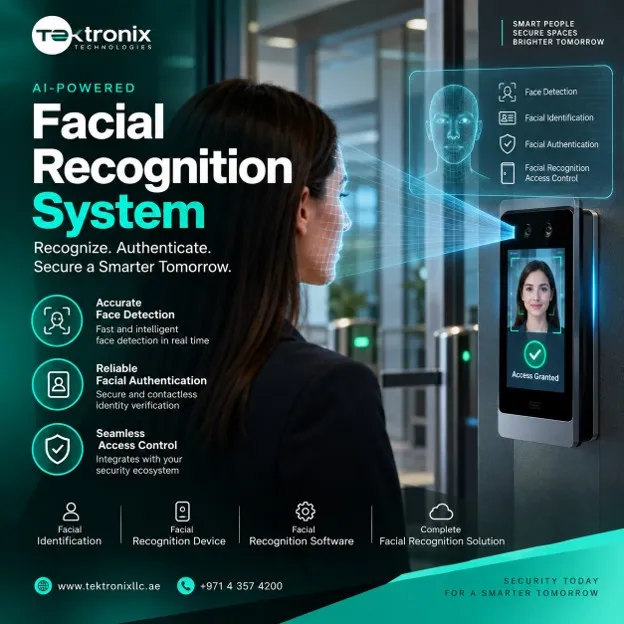
A Facial Recognition System is a biometric security solution designed to recognize or verify a person's identity by analyzing facial characteristics captured by a camera. The system typically uses specialized cameras and facial recognition software to capture an image, process facial features, and compare the captured information with authorized records.
The technology can examine characteristics such as the distance between facial features, facial contours, and other measurable patterns. Depending on the system and application, it can perform verification—confirming that a person is who they claim to be—or identification, determining which registered person matches the captured face.
Modern systems may incorporate artificial intelligence and machine-learning technologies to improve recognition performance under different environmental conditions. Factors such as lighting, viewing angle, movement, and changes in appearance can affect performance, so selecting suitable hardware and software is essential.
For organizations in KSA, a well-planned biometric access control system can integrate facial recognition with doors, gates, turnstiles, visitor management platforms, surveillance systems, and other security technologies.
How Does Facial Recognition Technology Work?
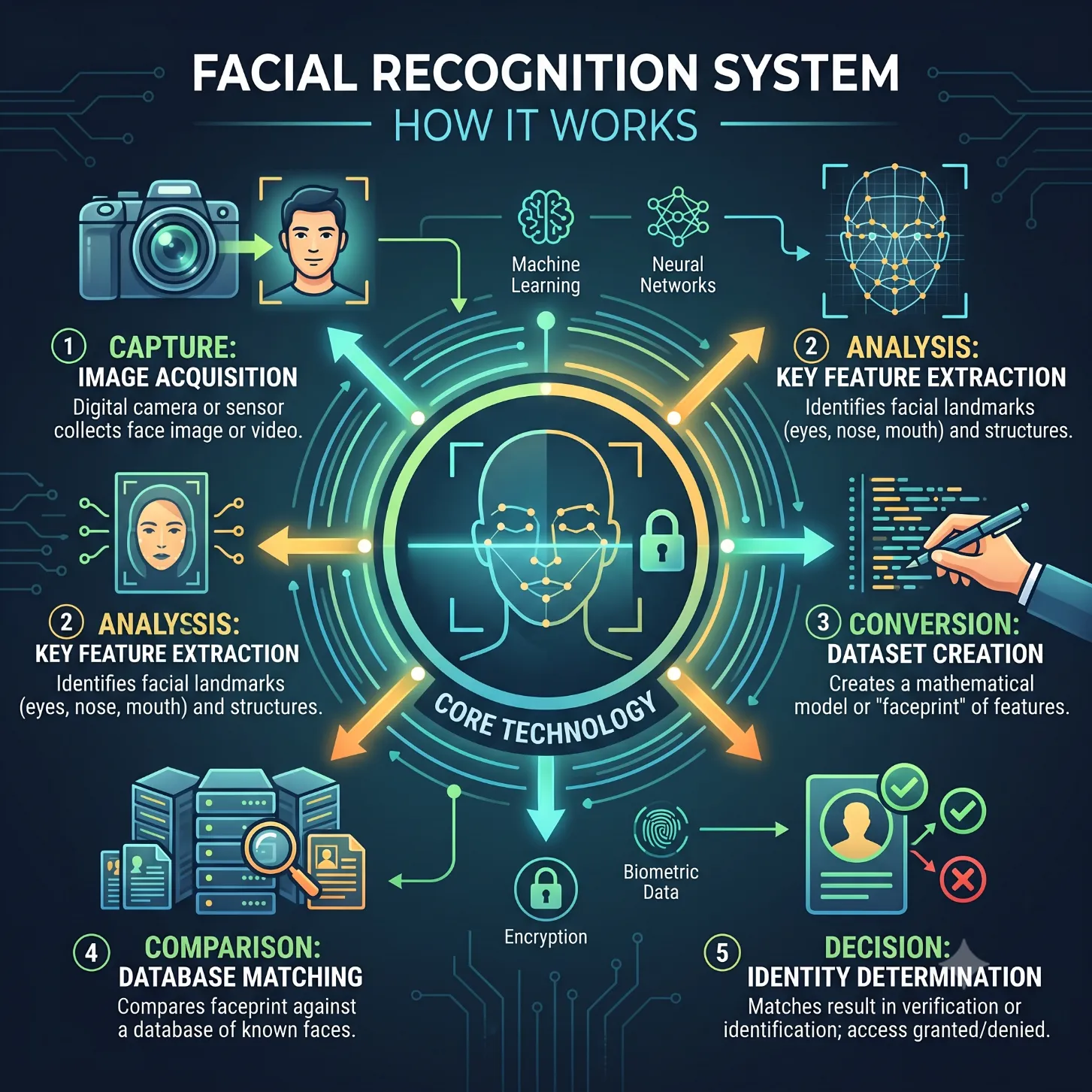
The process is designed to be fast and largely automatic. A typical facial recognition system works through several stages.
1. Face Detection
A camera captures a person's image and detects whether a recognizable face is present within the camera's field of view.
2. Facial Feature Analysis
The system analyzes specific characteristics of the detected face and creates a digital representation that can be compared with authorized records.
3. Identity Verification
The captured facial information is compared with previously registered information. Depending on the configuration, the system can verify a claimed identity or search a database for a matching profile.
4. Access Decision
If the individual is authorized, the system can send a signal to an integrated access control device. A door, gate, turnstile, or other controlled entry point can then permit access.
5. Record and Monitoring
Many systems can maintain event records, including successful and unsuccessful access attempts. This information can help security teams monitor activity and investigate incidents when necessary.
The exact capabilities depend on the selected technology, system configuration, database architecture, and integration requirements.
Why Is Facial Recognition Important for KSA?
Saudi Arabia is experiencing significant growth in smart infrastructure, technology-driven businesses, and large-scale development projects. As organizations manage increasingly complex facilities and higher volumes of visitors, efficient identity verification is becoming more important.
A facial recognition system in Saudi Arabia can help organizations move toward more automated and intelligent security operations. Instead of relying exclusively on cards or passwords, organizations can introduce biometric verification as an additional security layer.
Facial recognition can also improve convenience. Employees may be able to enter authorized areas without searching for access cards, while visitors can experience faster verification when the system is integrated with an appropriate visitor management platform.
For high-security facilities, facial recognition can work alongside other technologies rather than replacing them. Combining biometrics with surveillance, access control, alarms, and security management software can create a more comprehensive security environment.
Key Features of a Modern Facial Recognition System
When choosing a facial recognition system KSA businesses should evaluate both technical capabilities and practical requirements.
AI-Powered Recognition
Modern systems can use artificial intelligence to analyze facial characteristics quickly and consistently. AI capabilities can help improve recognition performance and support automated security workflows.
High-Quality Cameras
Camera quality is essential. Suitable resolution, image processing, field of view, and low-light performance can significantly influence system effectiveness.
Fast Authentication
A professional system should provide rapid verification so authorized users can enter without unnecessary delays, particularly in locations with high traffic.
Access Control Integration
Facial recognition can be integrated with access control systems, electronic locks, turnstiles, gates, and other security devices. This allows identity verification to trigger an appropriate access decision.
Visitor Management Integration
Organizations can connect facial recognition with a visitor management system to streamline registration and authentication processes for guests, contractors, and temporary personnel.
Anti-Spoofing and Liveness Detection
Security is not only about recognizing a face; the system should also be capable of distinguishing a genuine person from an attempted presentation using a photograph or other unauthorized representation, where supported by the technology.
Centralized Management
For organizations operating multiple locations, centralized software can simplify user management, monitoring, reporting, and administration.
Audit and Reporting
Detailed access records can help security teams review activity, identify unusual events, and maintain better operational visibility.
Major Benefits of Facial Recognition Systems in KSA
Enhanced Security
One of the most important advantages is stronger identity verification. Unlike conventional cards, a person's face cannot simply be handed to another employee in the same way as a physical access credential.
A biometric security system can therefore provide an additional layer of protection for restricted areas.
Faster Access
Employees and authorized users can be authenticated without manually presenting a card or entering a PIN. This can reduce queues and improve movement through busy entry points.
Improved User Convenience
A properly implemented facial recognition solution can create a contactless and convenient authentication experience. Users do not need to remember passwords or repeatedly search for access cards.
Reduced Credential-Related Problems
Lost, forgotten, damaged, or shared access cards can create administrative work and security risks. Biometric authentication can reduce dependence on physical credentials.
Better Security Monitoring
Integration with access control and security management platforms can provide organizations with improved visibility into who is entering controlled areas and when.
Scalability
A professionally designed facial recognition solution in KSA can be expanded as an organization grows. Additional users, doors, access points, and facilities can potentially be incorporated into the overall architecture.
Operational Efficiency
Automated authentication can reduce repetitive manual security processes, allowing security personnel to focus on monitoring, incident response, and other important responsibilities.
Applications of Facial Recognition Systems in Saudi Arabia
Corporate Offices
Businesses can use facial recognition for employee access, restricted departments, server rooms, and other sensitive areas.
Government Facilities
Government buildings may require controlled access and reliable identity verification. Facial recognition can support secure entry when deployed in accordance with applicable requirements.
Airports and Transportation Facilities
High-traffic transportation environments require efficient identity verification and security management. Facial recognition can potentially support controlled access and passenger-related workflows where appropriate and legally permitted.
Hotels and Hospitality
Hotels can explore facial recognition for staff access, selected guest services, restricted areas, and integrated security applications.
Healthcare Facilities
Hospitals and medical centers have areas containing sensitive equipment, records, medications, and restricted information. Biometric access can help control entry to designated areas.
Educational Institutions
Universities, colleges, and schools can use controlled biometric access for authorized staff, students, laboratories, research areas, and administrative facilities, subject to applicable privacy and regulatory requirements.
Residential Communities
Gated communities and residential developments can integrate facial recognition with access control barriers, gates, and visitor management systems to simplify authorized entry.
Industrial and Construction Sites
Industrial facilities and large projects often contain hazardous or restricted zones. Facial recognition can help organizations control access to designated areas and improve security administration.
Facial Recognition and Access Control Integration
The real value of facial recognition can increase when it operates as part of a broader security ecosystem.
For example, a facial recognition access control system can be connected to an electronic door. When an authorized individual is verified, the access controller receives the appropriate signal and unlocks the door.
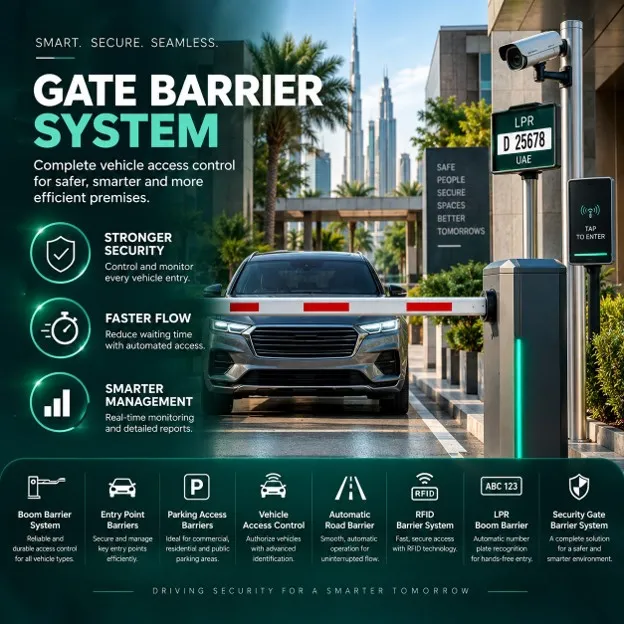
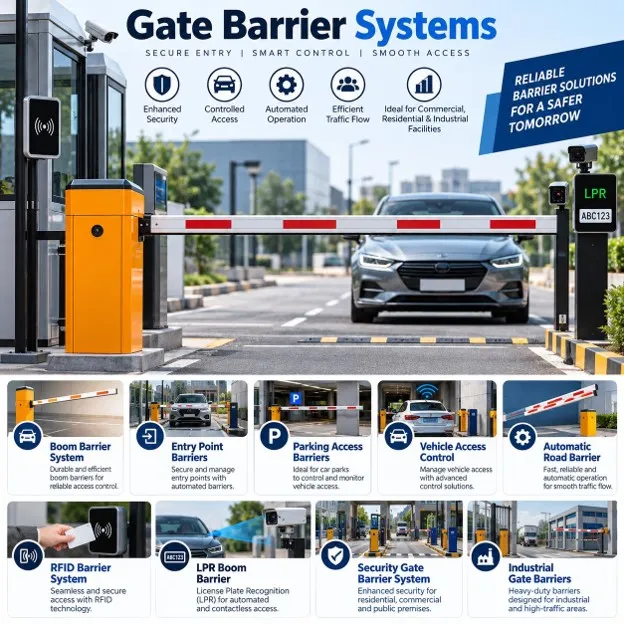
The same principle can be applied to turnstiles, speed gates, parking entrances, and vehicle barriers. In a large facility, multiple systems can potentially be managed through centralized security software.
Integration can also connect facial recognition with CCTV and visitor management technologies. This creates a more unified approach to security rather than relying on isolated devices.
Choosing the Right Facial Recognition System Provider in KSA
Selecting the right technology is only one part of a successful implementation. The system provider is equally important.
Businesses should look for an experienced facial recognition system provider in Saudi Arabia that understands the organization's security requirements, site conditions, integration needs, and applicable regulations.
Before selecting a solution, consider the following:
- Recognition accuracy and reliability
- Camera quality and environmental performance
- Processing speed
- Liveness detection capabilities
- Access control compatibility
- Software management features
- Scalability
- Data protection and privacy requirements
- Installation and commissioning expertise
- Technical support and maintenance
A professional provider should also conduct a site assessment before recommending equipment. Factors such as entrance layout, lighting, user volume, network infrastructure, and security objectives can influence the appropriate system design.
Privacy and Responsible Deployment
Facial recognition involves biometric information, making responsible deployment particularly important. Organizations in Saudi Arabia should consider applicable privacy, cybersecurity, data-management, and regulatory requirements when designing and operating such systems.
Businesses should establish appropriate policies for data collection, storage, access, retention, and security. They should also ensure that employees and users are informed where required and that biometric information is handled responsibly.
A professional implementation should therefore consider not only security performance but also data privacy and compliance from the beginning of the project.
The Future of Facial Recognition in Saudi Arabia
As smart infrastructure and digital transformation continue to develop in Saudi Arabia, biometric technologies are likely to become increasingly integrated with intelligent security platforms.
Future systems may combine facial recognition with artificial intelligence, cloud or centralized management, advanced analytics, mobile credentials, visitor management, and other security technologies.
For organizations, this means facial recognition should be viewed not simply as a camera-based identification tool but as a potential component of a broader smart security system.
Conclusion
A Facial Recognition System in KSA can provide businesses and organizations with a modern approach to identity verification, access control, and security management. By combining biometric recognition with intelligent software and integrated security devices, organizations can improve protection while creating a faster and more convenient experience for authorized users.
From offices and government facilities to healthcare centers, educational institutions, residential communities, and industrial sites, facial recognition has diverse applications across Saudi Arabia. However, successful implementation depends on selecting reliable technology, designing the system around the site's requirements, integrating it correctly, and managing biometric information responsibly.
As Saudi Arabia continues its journey toward smarter infrastructure and digital transformation, investing in a professionally designed facial recognition security system can help organizations build more efficient, secure, and future-ready facilities.
Frequently Asked Questions
1. What is a facial recognition system?
A facial recognition system is a biometric technology that uses cameras and specialized software to detect, analyze, and verify or identify individuals based on their facial characteristics. It can be integrated with access control systems to manage entry into authorized areas.
2. What are the benefits of facial recognition in Saudi Arabia?
Key benefits include faster identity verification, improved access security, reduced dependence on physical credentials, contactless authentication, better monitoring, and integration with other security technologies.
3. Where can facial recognition systems be used in KSA?
They can be used in corporate offices, government buildings, airports and transportation facilities, hotels, healthcare centers, educational institutions, residential communities, industrial facilities, and other locations requiring controlled access.
4. Can facial recognition integrate with access control systems?
Yes. Depending on the equipment and software, facial recognition can integrate with electronic locks, turnstiles, speed gates, parking systems, gates, barriers, visitor management platforms, and centralized security management solutions.
5. What should businesses consider before installing a facial recognition system?
Businesses should evaluate recognition performance, camera quality, environmental conditions, system integrations, scalability, cybersecurity, privacy requirements, installation expertise, technical support, and compliance with applicable Saudi regulations. A professional site assessment can help determine the most suitable solution.
Facial Recognition Device
Facial Recognition Software































Sign in to leave a comment.