
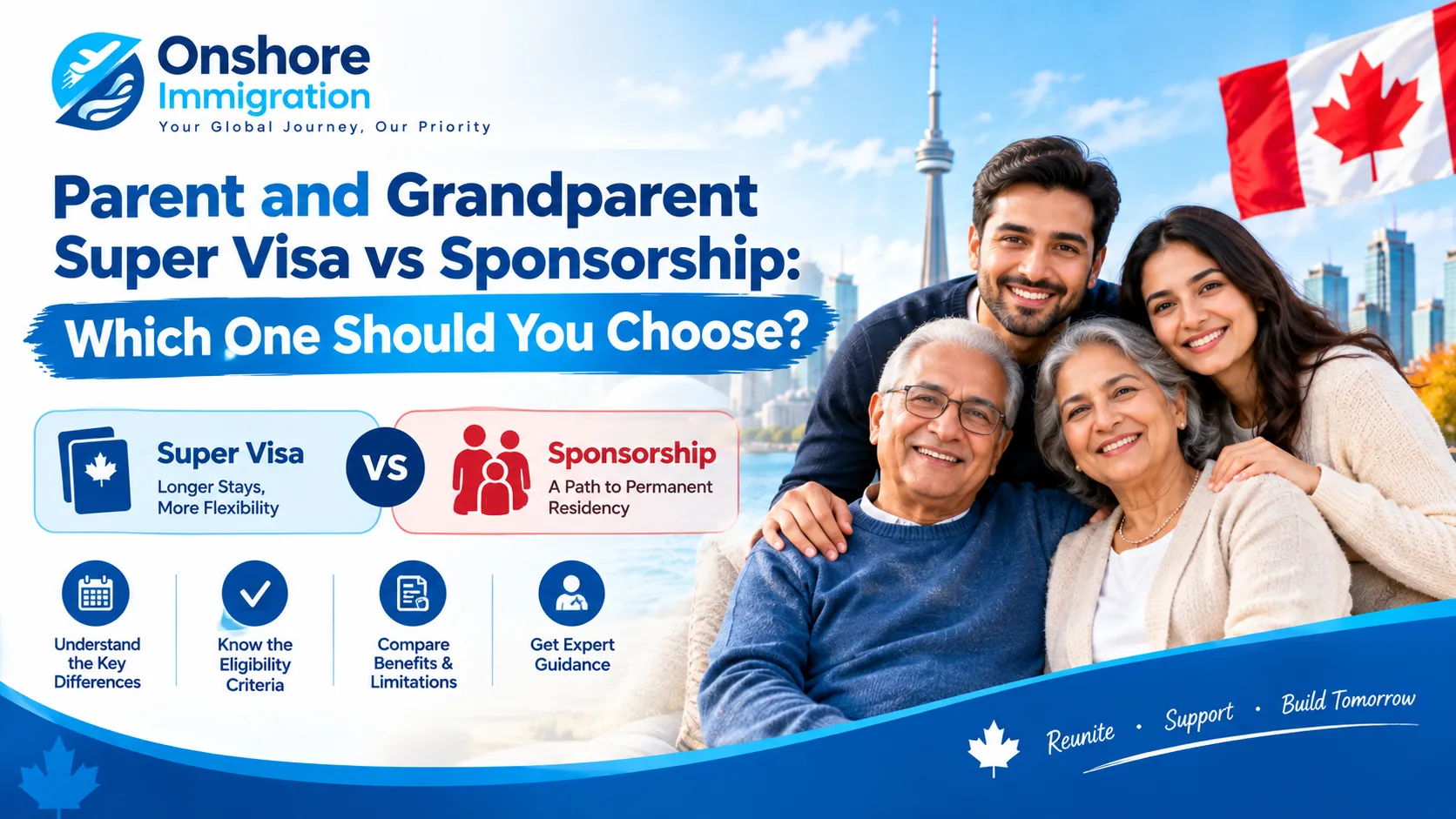
Canada's immigration system is built on the belief that families should be together. Through family sponsorship, Canadian citizens and permanent residents can help spouses, partners, children, parents, and grandparents become permanent residents themselves. But the program has strict eligibility rules, financial obligations, and processing timelines that catch many applicants off guard. Here's what you need to know before you start.
What Is Family Sponsorship?
Family sponsorship allows a Canadian citizen or permanent resident (the sponsor) to support a family member's application for permanent residency. In exchange, the sponsor signs an undertaking — a legal commitment to financially support that family member for a set period, ensuring they don't need to rely on government social assistance.
This isn't a formality. The undertaking is binding even if your relationship changes, so it's worth understanding fully before you sign.
Who Can Be Sponsored?
Canada's family class sponsorship generally covers:
- Spouses, common-law partners, and conjugal partners
- Dependent children (typically under 22 and without a spouse or partner of their own)
- Parents and grandparents, through the dedicated Parents and Grandparents Program (PGP)
- In limited circumstances, other relatives if you have no living close family member who could otherwise qualify
Each category comes with its own documentation requirements and, in some cases, separate intake processes — the PGP, for example, typically opens through a lottery-style invitation system rather than year-round applications.
Who Can Sponsor?
To sponsor a family member, you generally must:
- Be a Canadian citizen or permanent resident aged 18 or older
- Live in Canada, or demonstrate you intend to return once your family member becomes a permanent resident (for citizens living abroad)
- Meet minimum income requirements for certain categories, particularly parents and grandparents
- Not be in default on a previous sponsorship undertaking or receiving social assistance for reasons other than disability
Income requirements are reassessed annually and vary depending on family size, so check the current thresholds before applying, especially for parent and grandparent sponsorship, which has higher financial bars than spousal sponsorship.
The Application Process
- Confirm your eligibility as a sponsor and your family member's eligibility as the person being sponsored.
- Complete the sponsorship application, which typically includes two parts: your sponsorship undertaking and your family member's permanent residence application.
- Gather supporting documents, such as proof of relationship (marriage certificates, birth certificates, photos, communication history for spousal cases), identity documents, and police certificates.
- Submit your application and pay fees, including processing fees, the right of permanent residence fee, and biometrics fees where applicable.
- Respond to any requests for additional evidence or interviews.
- Wait for a decision, which can range from several months to well over a year depending on the category and application volume.
Spousal Sponsorship: Inland vs. Outland
If you're sponsoring a spouse or partner, you'll typically choose between two application streams:
- Inland sponsorship, used when the partner is already living in Canada, which may allow them to apply for an open work permit while the application is processed
- Outland sponsorship, used when the partner lives outside Canada, which can sometimes process faster and allows the applicant to travel more freely during processing
The right choice depends on your specific living situation and travel needs, so it's worth thinking through the trade-offs before submitting.
Common Reasons Sponsorship Applications Get Delayed or Refused
- Insufficient proof of a genuine relationship, particularly in spousal cases where IRCC screens carefully for relationships of convenience
- Missing or inconsistent documentation
- Sponsor not meeting income requirements, especially in parent and grandparent applications
- Incomplete medical or security background checks
Careful preparation upfront is almost always faster than trying to fix problems after IRCC flags them.
FAQ
How long does family sponsorship take? Timelines vary widely by category. Spousal sponsorship often moves faster than parent and grandparent sponsorship, but current processing times should always be checked directly, as they shift with application volume.
Can I sponsor more than one family member at a time? Yes, but each sponsorship has its own income and eligibility requirements, and taking on multiple undertakings increases your financial responsibility.
What happens if my relationship ends during processing? This can significantly complicate a spousal sponsorship application and may lead to refusal, since IRCC assesses whether the relationship is genuine at the time of decision.
Is there an age limit for sponsoring parents or grandparents? No age limit applies to the sponsor beyond being 18+, but the Parents and Grandparents Program has limited annual intake, so timing your application to invitation rounds matters.
Work With an Experienced Family Sponsorship Consultant
Family sponsorship applications involve significant paperwork, financial commitments, and strict evidentiary standards — and mistakes can mean years of delay. Onshore Immigration helps families navigate every category of sponsorship, from spousal applications to the Parents and Grandparents Program, with a focus on getting it right the first time. Contact us to start bringing your family together in Canada.
























Sign in to leave a comment.