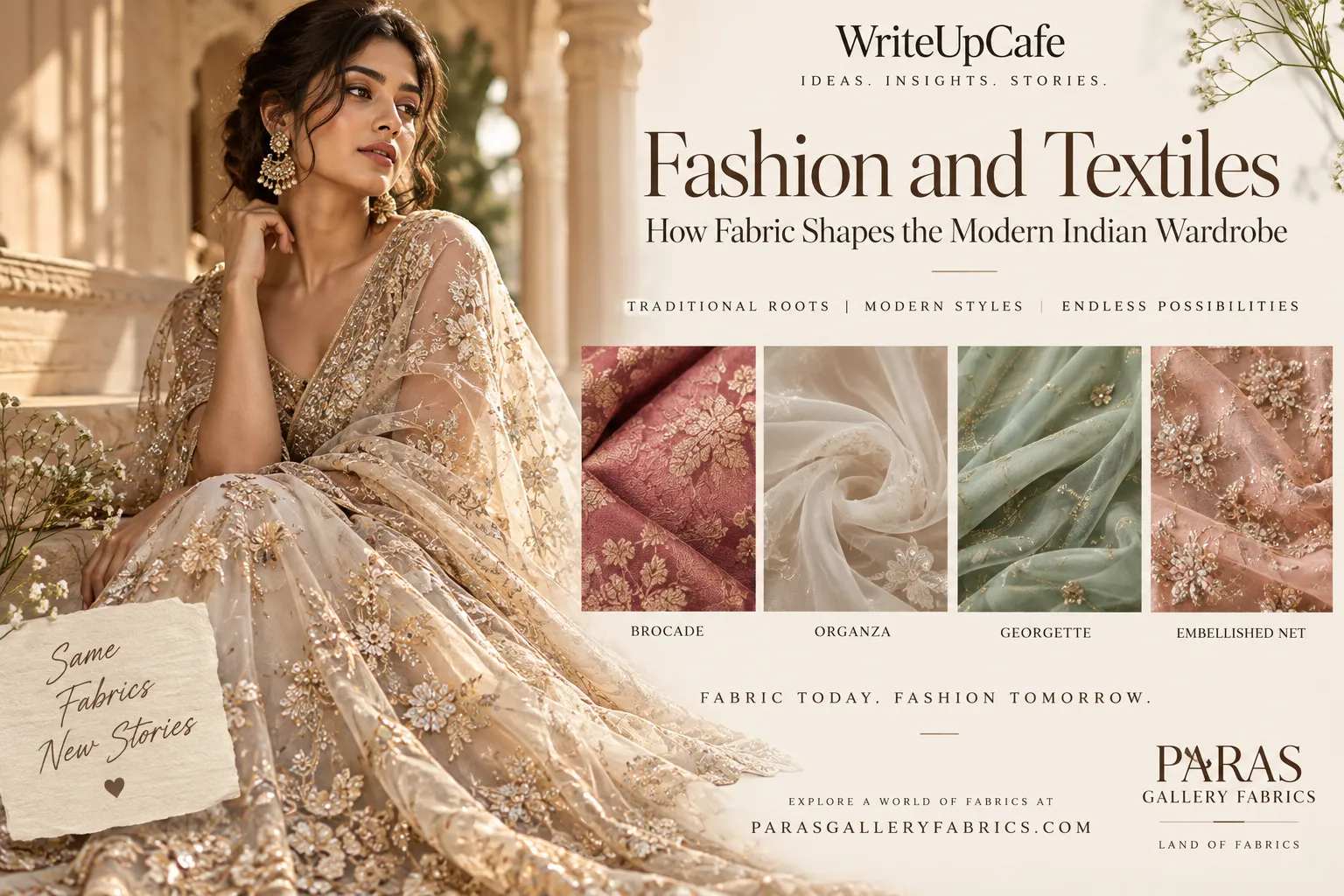

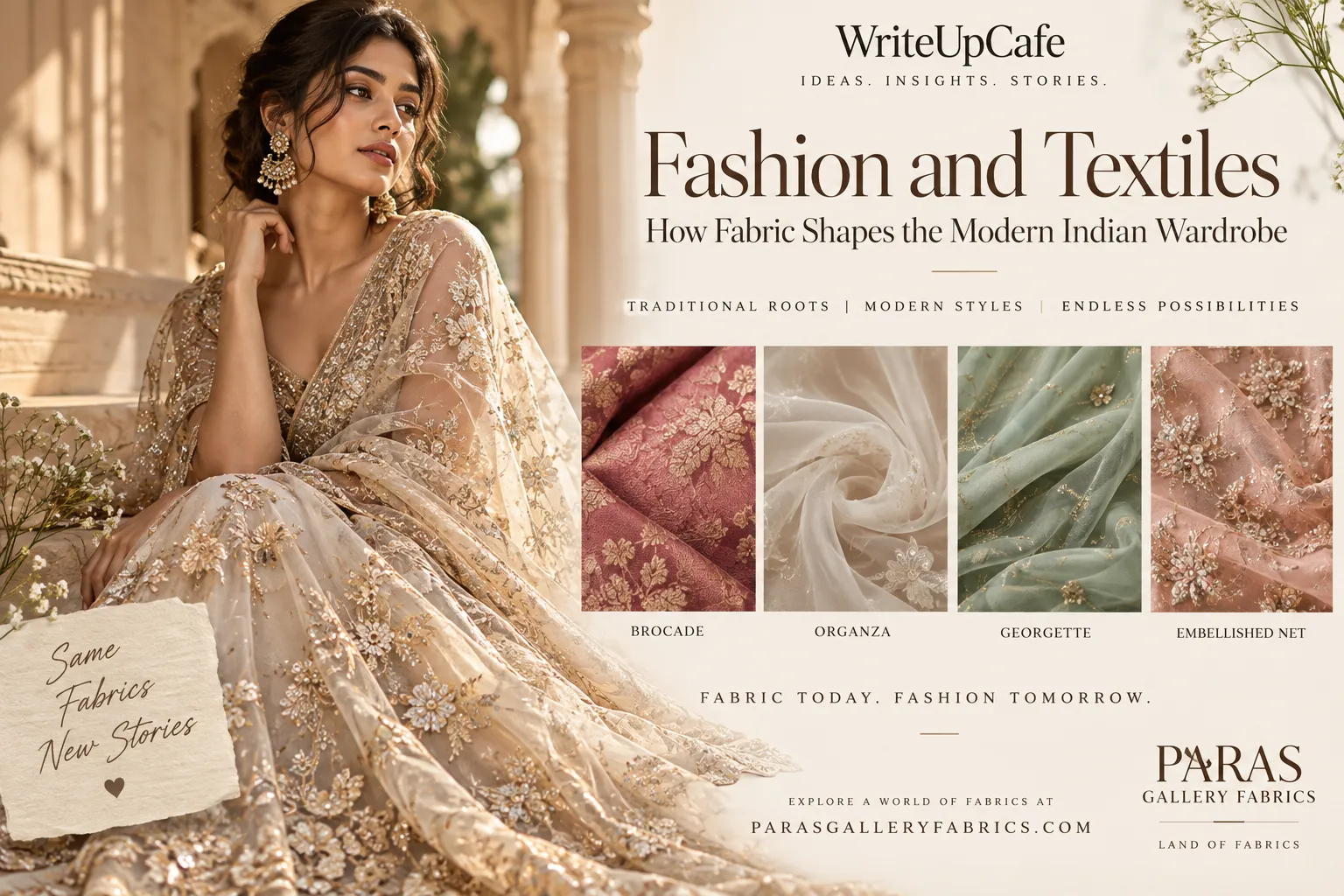
Fashion is often discussed through silhouettes, colours, designers and trends. Yet behind every well-made outfit is something even more fundamental: fabric.
The textile chosen for a garment influences how it falls, moves, photographs and feels. A structured brocade can give a traditional outfit a regal character, while organza creates volume and crispness. Georgette brings fluid movement, silk introduces richness, and embroidered net can transform a relatively simple silhouette into occasion wear.
As Indian fashion continues to evolve, the relationship between fashion and textiles is becoming increasingly important. Designers, boutiques and individual shoppers are looking beyond the appearance of a fabric and paying closer attention to its texture, construction, drape and suitability for the final garment.
The Role of Textiles in Fashion
Textiles are more than the raw material of clothing. They are part of the design language.
The same outfit can look completely different when made from different fabrics. A lehenga constructed in a lightweight fabric may have a softer, more fluid movement, while a heavier textile can create a more structured silhouette. Similarly, a saree made from organza creates a very different visual effect from one made from georgette or silk.
This is why experienced designers usually consider fabric selection at the beginning of the design process rather than treating it as the final step.
Factors such as:
- Weight and GSM
- Drape
- Surface texture
- Transparency
- Sheen
- Embellishment
- Fibre composition
- Colour absorption
- Durability
can all influence the final appearance of a garment.
Indian Fashion and the Revival of Traditional Textiles
India has one of the world's richest textile traditions. Banarasi brocades, Chanderi, silk, tissue, organza, cotton and numerous regional weaving traditions have influenced Indian clothing for generations.
Modern fashion is not necessarily replacing these textiles. Instead, designers are frequently reinterpreting them.
A traditional textile may appear in a contemporary blouse, structured jacket, pre-draped saree or modern lehenga. This combination of traditional craftsmanship and contemporary silhouettes allows heritage fabrics to remain relevant to newer generations.
Brocade, for example, is particularly effective when a garment needs visual richness. Woven motifs and metallic detailing can provide enough character for the fabric to become the focal point of an outfit.
For those exploring different options, a curated Banarasi brocade fabric collection can be a useful starting point when comparing traditional woven textiles.
Organza: Structure Meets Lightness
Organza has become increasingly visible in contemporary Indian occasion wear.
Its crisp hand and translucent appearance make it particularly useful for garments where designers want volume without excessive visual heaviness. It can be used for dupattas, sarees, overlays, sleeves and layered silhouettes.
Embroidered organza takes this further by combining the fabric's naturally crisp character with decorative surface work.
Because organza behaves differently from softer fabrics, the garment's construction becomes particularly important. The right lining, finishing and tailoring can determine whether the final outfit looks polished or loses the intended shape.
For designers and fashion enthusiasts experimenting with this textile, exploring different organza fabrics can help demonstrate how embroidery, colour and texture change the character of the material.
Georgette and the Importance of Drape
If organza is associated with structure, georgette is often appreciated for movement.
Georgette has a characteristic crepe texture and fluid drape, making it suitable for sarees, dupattas, dresses, anarkalis and other silhouettes where movement is important.
Its versatility is one reason the textile continues to feature prominently in Indian occasion wear.
However, not all georgettes behave identically. Fibre composition, construction, weight and finishing can significantly influence the final result.
This is particularly important when purchasing fabric for a specific garment. A textile that looks attractive on a roll may behave very differently once cut and stitched.
A detailed guide to georgette fabric can help buyers understand some of these differences before making a purchase.
Embellishment Is Changing the Way Fabrics Are Used
Another important development in contemporary Indian fashion is the growing variety of embellished textiles.
Instead of purchasing a plain fabric and adding all the embellishment during garment production, designers can now work with fabrics that already incorporate elements such as:
- Sequins
- Zari
- Katdana
- Beads
- Pearls
- Thread embroidery
- Cutwork
- Gota Patti
- Mirror-style detailing
This can dramatically reduce the amount of additional surface work required during garment construction.
It also changes the design process. Rather than starting with a blank textile, the designer works around an existing motif, border or embellishment pattern.
For wedding and occasion wear, this can be particularly useful when creating garments that need to make an immediate visual impact.
Fabric Selection for Wedding Fashion
Few areas of fashion demonstrate the importance of textiles as clearly as Indian wedding wear.
A wedding wardrobe may include several completely different textile requirements. A lightweight fabric may be appropriate for a daytime ceremony, while a heavier embellished textile could be more suitable for an evening reception.
For example:
Daytime celebrations:
Organza, Chanderi, lightweight silk and selected georgettes can create an elegant appearance without making the outfit feel visually heavy.
Sangeet and cocktail events:
Georgette, crepe, tissue and embellished net can work well for silhouettes that need movement and surface sparkle.
Reception and evening wear:
Brocade, velvet, silk and heavily embellished textiles can create a richer and more dramatic appearance.
There is no single "best" wedding fabric. The appropriate choice depends on the event, silhouette, season, embellishment, styling and desired movement.
The Growing Importance of Fabric Knowledge
The modern fashion consumer has access to more textile choices than ever before. That makes understanding fabrics increasingly valuable.
Instead of simply asking whether a fabric looks good, buyers can ask more useful questions:
How does it drape?
Is it transparent?
How much structure does it have?
Will the embroidery affect its weight?
Does the fabric require lining?
How will it behave after stitching?
Is it appropriate for the intended climate and occasion?
These questions can prevent expensive mistakes, particularly when purchasing fabric for custom garments.
For people who are still learning the differences between textiles, a practical fabric guide covering different types, uses and quality considerations can be a useful reference.
Fashion's Future May Be More Textile-Led
Fashion trends change quickly, but textiles often have a much longer life.
A particular silhouette may disappear after a season, while the underlying fabric can continue to be interpreted in new ways. This is especially true in Indian fashion, where traditional textiles coexist with contemporary design.
The future of fashion is therefore unlikely to be driven by silhouettes alone. Fabric innovation, textile craftsmanship, surface development and responsible sourcing will continue to influence how designers create clothing.
For consumers, this also means becoming more textile-literate.
Understanding the difference between a crisp organza and a fluid georgette, or between a woven brocade and a printed design, allows buyers to make more informed fashion choices.
Conclusion
Fashion begins long before a garment reaches the runway, boutique or wardrobe. It begins with the textile.
The fabric determines movement, structure, texture and much of the visual personality of an outfit. From traditional brocades and silks to contemporary organza, georgette, embroidered net and embellished textiles, India's fashion landscape demonstrates how closely clothing and textiles are connected.
As designers and consumers become more conscious of material, craftsmanship and construction, fabric knowledge is becoming an essential part of fashion knowledge.
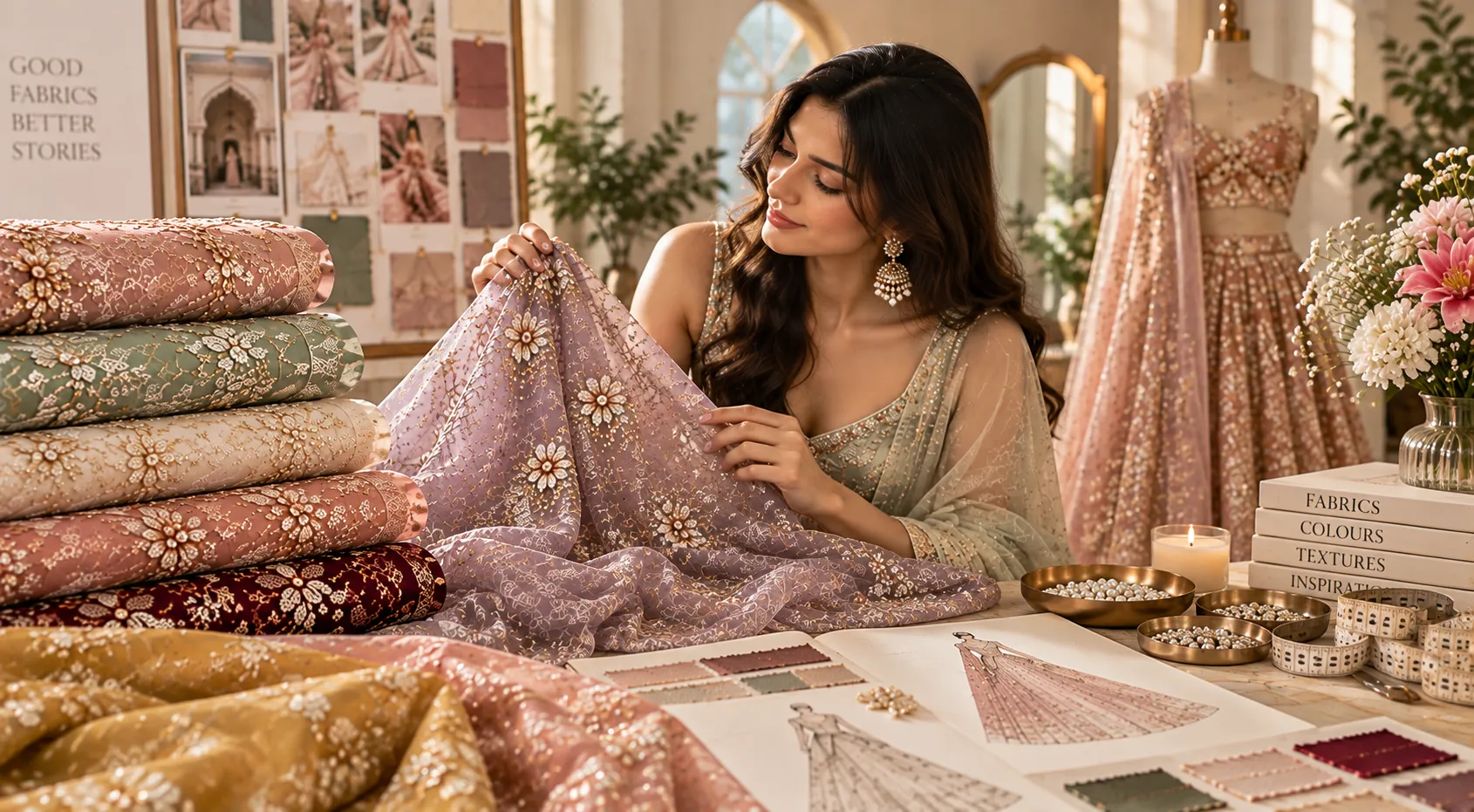
For anyone exploring fabrics for a new collection, occasion-wear outfit or custom garment, browsing a diverse collection of Indian and contemporary fashion fabrics is a practical way to understand how different textiles can translate into different design possibilities.
Explore fabrics at Paras Gallery Fabrics:
https://parasgalleryfabrics.com/























Sign in to leave a comment.