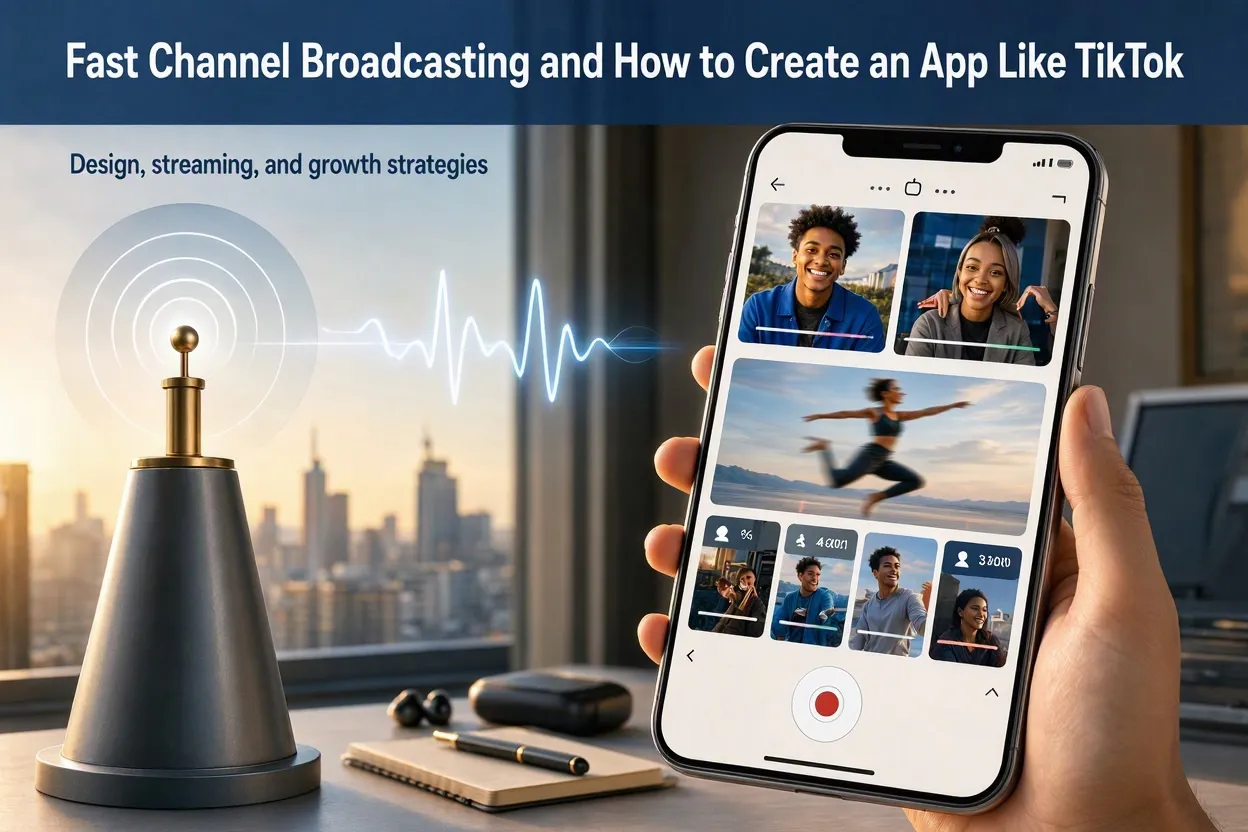

The way audiences consume digital content has changed dramatically over the last few years. Viewers are no longer limited to traditional television schedules, while mobile users increasingly expect content to be available instantly, continuously, and in a format that feels personal. This shift has created new opportunities for broadcasters, media companies, and entrepreneurs who want to build modern streaming services.
Two developments are particularly important in this changing environment: fast channel broadcasting and short-form social video platforms. Fast channels provide a continuous viewing experience similar to traditional television, while TikTok-style applications focus on personalized, highly engaging video feeds. Understanding how these models work can help businesses develop stronger strategies for digital broadcasting and streaming.
Understanding Fast Channel Broadcasting
Fast channel broadcasting refers to the delivery of continuously scheduled streaming channels that viewers can access through internet-connected devices. The concept combines the familiar structure of linear television with the accessibility of online streaming.
Instead of requiring viewers to choose individual videos, a fast channel presents a scheduled sequence of programs. Content can include movies, television programs, documentaries, news, interviews, sports-related programming, educational shows, or specialized niche content.
The experience is particularly attractive because it removes some of the decision-making associated with on-demand platforms. A viewer can open a channel, see what is currently playing, and continue watching without having to search through a large library.
How the Broadcasting Model Works
Behind a fast channel is a carefully organized workflow. Content must be prepared, scheduled, encoded, delivered, and monitored so that the stream remains available to viewers.
A typical workflow begins with a media library. Broadcasters organize video assets and determine when each program should appear. Scheduling software then creates the channel's programming timeline. Playout technology delivers the selected content in the correct order, while streaming infrastructure distributes the resulting feed to connected viewers.
This process can be automated extensively. Modern broadcasting platforms allow operators to schedule programming days or weeks in advance, insert advertising, manage content transitions, and monitor channel performance without manually controlling every broadcast.
Why Fast Channels Are Becoming Important
The growth of connected televisions, smartphones, tablets, and streaming devices has created a larger audience for internet-based linear channels. Viewers can discover specialized programming without subscribing to traditional cable or satellite services.
For content owners, the model also provides a practical way to monetize existing video libraries. Instead of treating every piece of content as a separate on-demand asset, a company can combine related programs into a continuous channel.
This can be especially useful for niche audiences. A business focused on cooking, travel, entertainment, fitness, education, regional programming, or independent films can create a channel around a specific interest.
Creating a Consistent Viewer Experience
A successful channel needs more than a large video library. Programming should have a clear identity and predictable structure. Viewers should understand what the channel represents and why they should return.
Scheduling therefore becomes an important part of the broadcasting strategy. A well-planned schedule can create recognizable viewing patterns while allowing new programs to be introduced at appropriate times.
Metadata also matters. Titles, descriptions, artwork, program information, and electronic programming information help viewers understand what they are watching and what is coming next.
The Connection Between Broadcasting and Social Video
Traditional linear broadcasting and social video may appear to be completely different models, but they share an important objective: keeping viewers engaged.
Fast channels create engagement through continuous programming. Social video applications create engagement through personalized recommendations and rapid content discovery.
This leads many media entrepreneurs to consider building platforms that combine elements of both experiences. A service could provide scheduled channels while also allowing users to discover short videos, follow creators, interact with content, and receive personalized recommendations.
That is where the question of how to create an app like tiktok becomes relevant to modern streaming businesses.
How to Create an App Like TikTok
Building a TikTok-style application requires more than creating a scrolling video interface. The platform needs several connected systems working together, including user accounts, video uploading, content processing, recommendations, engagement tools, moderation, notifications, and scalable delivery infrastructure.
The first step is to define the application's purpose. A platform designed for entertainment creators will have different requirements from one designed for broadcasters, educators, musicians, or professional communities.
Designing the Core User Experience
The central experience of a short-video application is usually a vertical video feed. Users can move from one video to another with minimal friction, while actions such as liking, commenting, sharing, following, or saving content remain easily accessible.
The interface should be simple enough that users understand it immediately. At the same time, the platform needs to provide creators with practical tools for uploading and managing their videos.
A strong first version does not need every possible social feature. It should focus on the essential viewing and publishing experience before expanding into more advanced functionality.
Building Video Upload and Processing
Video management is one of the most technically important parts of a social streaming application. Uploaded videos may arrive in different formats, resolutions, frame rates, and file sizes.
A processing system can convert these files into streaming-friendly formats and generate multiple quality levels. This allows the application to deliver an appropriate version depending on the viewer's device and network conditions.
The platform should also generate thumbnails and store useful metadata. Efficient storage and content delivery are essential because video files can consume significant amounts of infrastructure capacity as the user base grows.
Recommendation and Personalization
One of the defining characteristics of short-form video platforms is personalized content discovery. A basic application can begin with chronological or category-based recommendations, but a larger platform may require a more sophisticated recommendation system.
The recommendation engine can consider signals such as viewing duration, likes, skips, shares, follows, searches, and repeated interactions. These signals help determine which content is likely to interest each viewer.
The goal is not simply to show popular videos. A strong recommendation system attempts to understand individual viewing behavior and continuously improve the feed.
Combining Social Features With Broadcasting
There is an interesting opportunity to combine fast channel broadcasting with short-form social functionality. A streaming service could offer continuous channels while allowing viewers to interact with individual programs and related clips.
For example, a sports channel could broadcast a continuous schedule while simultaneously offering short highlights. A music service could run a programmed channel while allowing artists to publish short promotional videos. A news platform could provide scheduled coverage alongside short updates.
This combination can create multiple ways for users to discover content.
Infrastructure for a Growing Platform
Scalability should be considered from the beginning. A small application may operate with a limited number of users, but successful video platforms can experience rapid growth.
Cloud infrastructure can provide flexible computing, storage, database, and content delivery resources. A content delivery network can distribute video closer to viewers, reducing latency and improving playback performance.
Monitoring is equally important. Operators need visibility into playback failures, upload errors, processing delays, server performance, and other technical problems.
Security and Content Moderation
Any platform that allows users to upload content needs clear policies and effective moderation systems. User-generated video can introduce copyright concerns, inappropriate material, spam, abuse, and other risks.
Moderation can combine automated detection with human review. Reporting tools should also allow users to flag content that violates platform rules.
Account security is another important consideration. Authentication, password protection, access controls, and appropriate data handling should be part of the platform architecture rather than added as an afterthought.
Monetization Opportunities
Both broadcasting and social video platforms can support multiple revenue models. Advertising is one of the most common options, particularly when the platform has a large and engaged audience.
Subscription plans, premium channels, sponsorships, creator partnerships, and paid content can provide additional revenue opportunities. The most suitable approach depends on the target audience and the type of content being distributed.
A platform can also experiment with different models over time. Starting with one clear monetization strategy can make the initial product easier to manage.
Building a Strong Content Strategy
Technology alone will not make a streaming platform successful. Content remains the foundation of viewer retention.
For fast channel broadcasting, programming should be organized around a clear theme and consistent schedule. For a TikTok-style application, the platform needs a steady flow of interesting creator content.
Encouraging creators to publish regularly can help maintain activity. Discovery tools, creator profiles, analytics, and audience engagement features can make the platform more attractive to content producers.
The Future of Internet-Based Video
Fast channel broadcasting represents the evolution of linear television for connected audiences, while short-form social platforms represent a different approach built around personalization and user participation.
Businesses do not necessarily have to choose between these models. Modern streaming technology makes it possible to combine scheduled channels, on-demand libraries, creator content, and personalized discovery inside one ecosystem.
For companies entering the digital media market, the opportunity is not simply to reproduce traditional television or copy an existing social platform. The larger opportunity is to identify what viewers enjoy about each experience and build a service around those behaviors.
Final Thoughts
Fast channel broadcasting provides a structured and familiar viewing experience while taking advantage of internet distribution. At the same time, understanding how to create an app like tiktok can help businesses explore personalized video discovery, creator participation, and social engagement.
The strongest digital video platforms will likely combine reliable technology with compelling content and a thoughtful user experience. Whether the goal is to operate a continuous streaming channel, build a social video application, or develop a platform that brings both concepts together, careful planning is essential.
As audiences continue moving toward connected devices and personalized media experiences, internet-based broadcasting will remain an important part of the changing television and streaming landscape.





















Sign in to leave a comment.