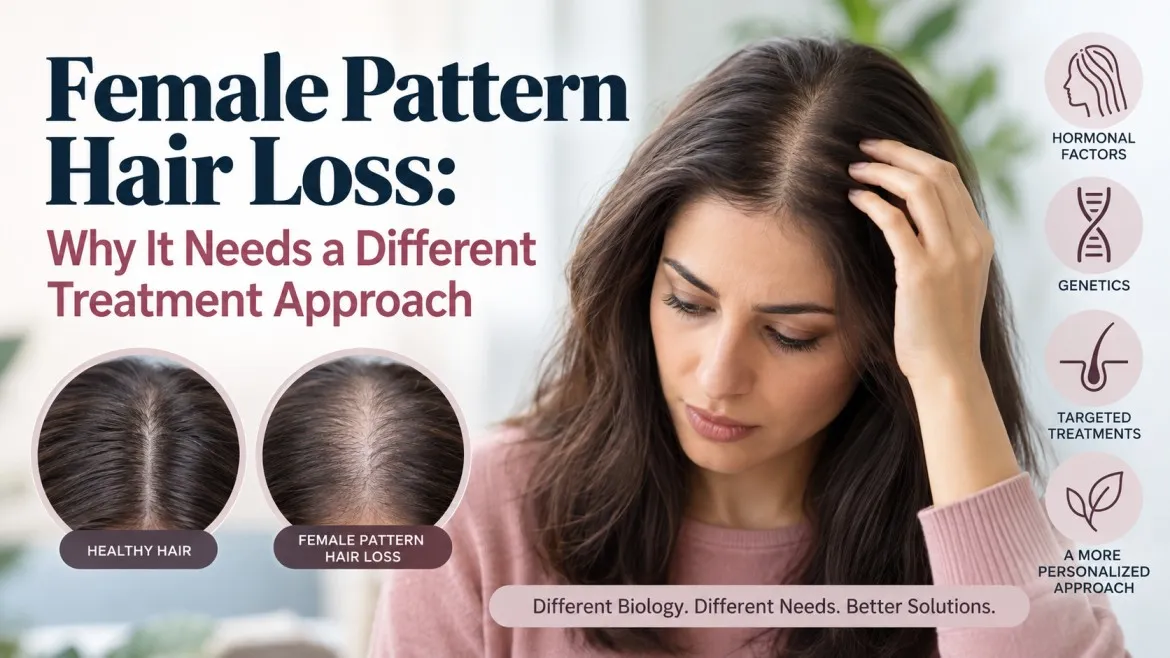

Hair loss discussions often default to male pattern baldness, with receding hairlines and visible crown thinning serving as the familiar image most people picture. Female pattern hair loss works quite differently, and treating it the same way as male hair loss often leads to disappointing, ineffective results.
Why Female Hair Loss Looks So Different
Unlike men, who typically experience a receding hairline and bald patches, women with pattern hair loss usually notice diffuse thinning across the top and crown of the scalp, while the hairline itself generally remains intact. This difference in pattern means women often do not recognise their hair loss as the same medical condition men experience, sometimes mistaking it for simple hair shedding or stress-related thinning rather than a genuine, progressive condition requiring proper treatment.
Why the Underlying Causes Differ Significantly
Male pattern baldness is primarily driven by a specific hormone-related process affecting hair follicles in a predictable pattern. Female pattern hair loss, while still influenced by genetics and hormones, often involves a more complex combination of factors, including hormonal fluctuations from pregnancy, menopause, thyroid conditions, nutritional deficiencies, and sometimes underlying health conditions that require proper medical investigation before treatment can even begin.
This complexity means female hair loss genuinely requires a more thorough diagnostic approach compared to the relatively straightforward pattern typically seen in men.
Why Treatments Designed for Men Do Not Always Work the Same Way
Some hair loss treatments developed primarily with male pattern baldness in mind are not appropriate, or not as effective, for women. Certain oral medications commonly prescribed for men carry specific risks for women, particularly those who are pregnant or planning pregnancy, making careful medical guidance essential before considering any treatment option.
This is exactly why dermatologists emphasise the importance of proper diagnosis first, understanding whether a woman's hair loss stems from genetic pattern baldness, hormonal imbalance, nutritional deficiency, or another underlying cause entirely, since each of these requires a genuinely different treatment approach.
Why Hormonal Factors Require Closer Investigation
Since hormonal fluctuations play such a significant role in female hair loss, doctors often recommend blood tests to check thyroid function, iron levels, and hormone balance before finalizing a treatment plan. Addressing an underlying hormonal imbalance sometimes resolves hair loss more effectively than focusing purely on topical scalp treatments alone.
Why Topical Treatments Remain a Common Starting Point
Topical minoxidil remains one of the more commonly recommended treatments for female pattern hair loss, since it works locally on the scalp without the same hormonal risks associated with certain oral medications. However, even topical treatment requires proper guidance on concentration and application frequency, since women's scalp sensitivity and hair texture can respond differently compared to typical male usage patterns.
Why Nutritional Support Plays a Bigger Role for Women
Nutritional deficiencies, particularly iron, vitamin D, and biotin, contribute to hair loss more frequently in women compared to men, often linked to menstrual cycles, pregnancy, or dietary patterns. Addressing these deficiencies through proper supplementation, alongside other treatment approaches, often improves results significantly compared to focusing purely on topical or hormonal treatment alone.
Why Specialised Product Formulation Matters
Given these genuine differences, working with an experienced Trichology products manufacturer in India that understands female specific hair loss patterns becomes particularly important. Formulations designed with these differences in mind tend to address the actual underlying concerns more effectively than generic products not specifically developed with female pattern hair loss considerations in formulation.
Why Emotional Impact Deserves Genuine Acknowledgement
Hair loss affects women emotionally in ways that sometimes differ from how men experience similar concerns, often tied closely to cultural expectations around femininity and appearance. Dermatologists treating female patients increasingly recognize this emotional dimension, approaching treatment conversations with sensitivity alongside clinical guidance.
Why Consistency With Proper Hair care products Matters Long Term
Regardless of the specific treatment approach chosen, maintaining a consistent routine with properly formulated Hair care products supports overall scalp health alongside any targeted treatment, creating a better environment for hair regrowth and reducing further unnecessary damage from harsh, unsuitable products.
Why Patience and Realistic Expectations Remain Essential
Like most hair loss treatments, addressing female pattern hair loss takes time, often several months before meaningful improvement becomes visible. Understanding this realistic timeline upfront helps prevent discouragement that might otherwise lead someone to abandon treatment prematurely before it has had sufficient time to work.
Why Proper Dermatologist Consultation Remains Essential
Given how many different factors can contribute to female hair loss, genetics, hormones, nutrition, and underlying health conditions- consulting a dermatologist for proper diagnosis remains the most reliable first step before starting any treatment plan.
Final Thoughts
Female pattern hair loss genuinely differs from male hair loss in both presentation and underlying causes, making a tailored, properly diagnosed treatment approach essential rather than simply applying male focused solutions to a fundamentally different condition. With proper medical guidance, nutritional support, and well-formulated treatment products designed specifically with these differences in mind, women experiencing hair loss have genuine options for meaningful, lasting improvement.






























Sign in to leave a comment.