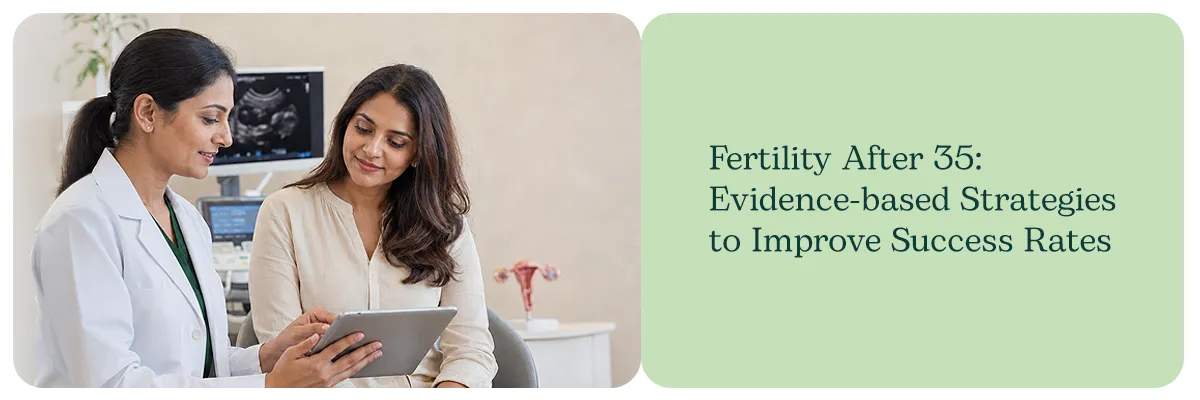

As life priorities shift, many women are choosing to conceive after the age of 35. This shift can be due to career goals, personal growth, or relationship stability. Regardless of the reason, it’s essential for women to know that conception is possible at this age. However, concerns, myths, and medical jargon can make the process overwhelming.
To successfully conceive at this age and not get confused by misinformation, it’s essential for women to understand a few things about fertility.
Here, we explore those factors, along with IVF transfer success rate and evidence-based strategies that can significantly improve the chances of conception after the age of 35.
Age-related fertility changes explained
As women age, fertility naturally begins to decline, especially after the age of 35. This decline is primarily due to two factors: the quantity and quality of eggs.
- Egg quantity: Women are born with a fixed number of eggs, and as they age, the number of eggs in the ovaries gradually decreases. By the mid-30s, this decline becomes more pronounced.
- Egg quality: In addition to a decrease in the number of eggs, the quality of the eggs also declines with age. Older eggs are more likely to have chromosomal abnormalities, which can lead to difficulties with fertilisation.
- Hormonal changes: Hormonal fluctuations become more noticeable in the 30s, which can impact the menstrual cycle and ovulation. Irregular cycles can make it harder to predict ovulation and the best time to conceive.
There are several other factors that impact fertility after 35. It includes fallopian tube function, the sperm quality and the age of the partner, lifestyle changes, psychological and stress factors.
Despite these age-related changes, many women over 35 successfully conceive with the right support, personalised treatment, and lifestyle adjustments.
Common myths vs. medically accurate facts
Myth 1: Fertility stops at 35
Fact: Fertility doesn’t stop at 35. While there is a gradual decline in fertility after this age, many women conceive naturally or with minimal assistance well into their late 30s and early 40s. The key is understanding a body's unique situation and seeking professional advice early if needed.
Myth 2: Egg quality can’t be improved after 35
Fact: While it's true that egg quality diminishes with age, there are several lifestyle changes, supplements, and fertility treatments that can optimise the health of the eggs one has.
Myth 3: IVF guarantees success
Fact: IVF success rate in India and across the world decreases steadily with age. However, it is still a viable option. Tailored treatments can help increase the chances of success by selecting embryos without genetic abnormalities.
Evidence-based strategies to improve success rates
Lifestyle interventions
1. Nutrition and diet
Maintaining a balanced, nutrient-rich diet can help support hormonal balance and reproductive health. A diet rich in healthy fats, antioxidants, fruits, vegetables, and whole grains is often recommended for improving fertility.
2. Exercise and physical activity
Regular physical activity is important for overall health and fertility. Research indicates that moderate exercise improves fertility outcomes by supporting healthy body weight and reducing stress.
3. Stress management
Chronic stress can have a negative impact on fertility as high levels of cortisol (the stress hormone) can disrupt hormone production and ovulation. Mindfulness techniques, such as yoga, and meditation have been linked to improved fertility outcomes.
4. Sleep hygiene
Adequate and quality sleep plays a crucial role in reproductive health. Poor sleep can disrupt hormonal balance, which can affect ovulation and fertility.
5. Environmental factors and toxin exposure
Reducing exposure to environmental toxins, such as endocrine-disrupting chemicals, can improve reproductive health. Prolonged exposure to these chemicals may decrease the chances of fertility.
Medical evaluations and timely treatment planning
1. Ovarian reserve testing
To understand one’s fertility potential, they can consider undergoing tests such as AMH (Anti-Müllerian Hormone) levels or an ultrasound to count antral follicles. These tests provide insights into the number of eggs available and help guide fertility treatment options.
2. Hormonal and health screening
Comprehensive testing of thyroid function, prolactin levels, and other hormones is an essential part of assessing fertility, especially after 35. Conditions, such as hypothyroidism, can interfere with fertility and may require medical intervention.
3. Ovulation tracking
Tracking ovulation using ovulation predictor kits can help pinpoint the most fertile days. For women with irregular cycles, hormone-based treatments can help stimulate ovulation.
Assisted reproductive technologies (ART)
If natural conception is proving difficult, assisted reproductive technologies (ART) offer various options:
- IVF with tailored protocols can significantly improve the chances of conception by increasing the quality and quantity of eggs retrieved.
- Egg freezing enables women to preserve eggs for later use, maintaining their reproductive options in the future.
- Preimplantation Genetic Testing (PGT) allows doctors to select embryos that are free from genetic abnormalities to reduce the risk of miscarriage.
When to seek professional help?
For women over 35 who have been trying to conceive for 6 months without success, it’s advisable to seek professional help. Early intervention can provide a better chance of successful conception, whether through lifestyle changes, medical treatment, or ART.
Also, if someone experiences irregular periods, pain during menstruation, or known fertility issues such as endometriosis or fibroids, seeking advice early can be beneficial.
- Emotional readiness and realistic expectations
The journey to conception can be emotionally challenging. It’s essential to have realistic expectations and understand that success may take time. Being open to multiple treatment cycles is necessary in some cases.
It’s equally important to have emotional support throughout the process. Whether through counselling, support groups, or discussing fertility plans with close family and friends, having a solid emotional foundation can help tackle the ups and downs of fertility treatment.
Fertility after 35 presents unique challenges, but with the right knowledge, support, and medical guidance, many women successfully conceive. By debunking myths, understanding the biological changes that occur with age, and employing evidence-based strategies, women can optimise their fertility journey.
Looking for more information on fertility treatments or IVF transfer success rate?
For women over 35, fertility challenges can often require more than just lifestyle changes. For women facing difficulties conceiving naturally or dealing with age-related fertility concerns, Oval Advanced Fertility Care offers advanced IVF techniques that can help overcome these challenges. IVF, a safe and effective assisted reproductive method. In addition to IVF, they provide other proven treatments for female fertility, such as IUI and ICSI. They also offer fertility preservation and testing services, such as egg freezing, sperm freezing, and genetic and fertility testing.

























Sign in to leave a comment.