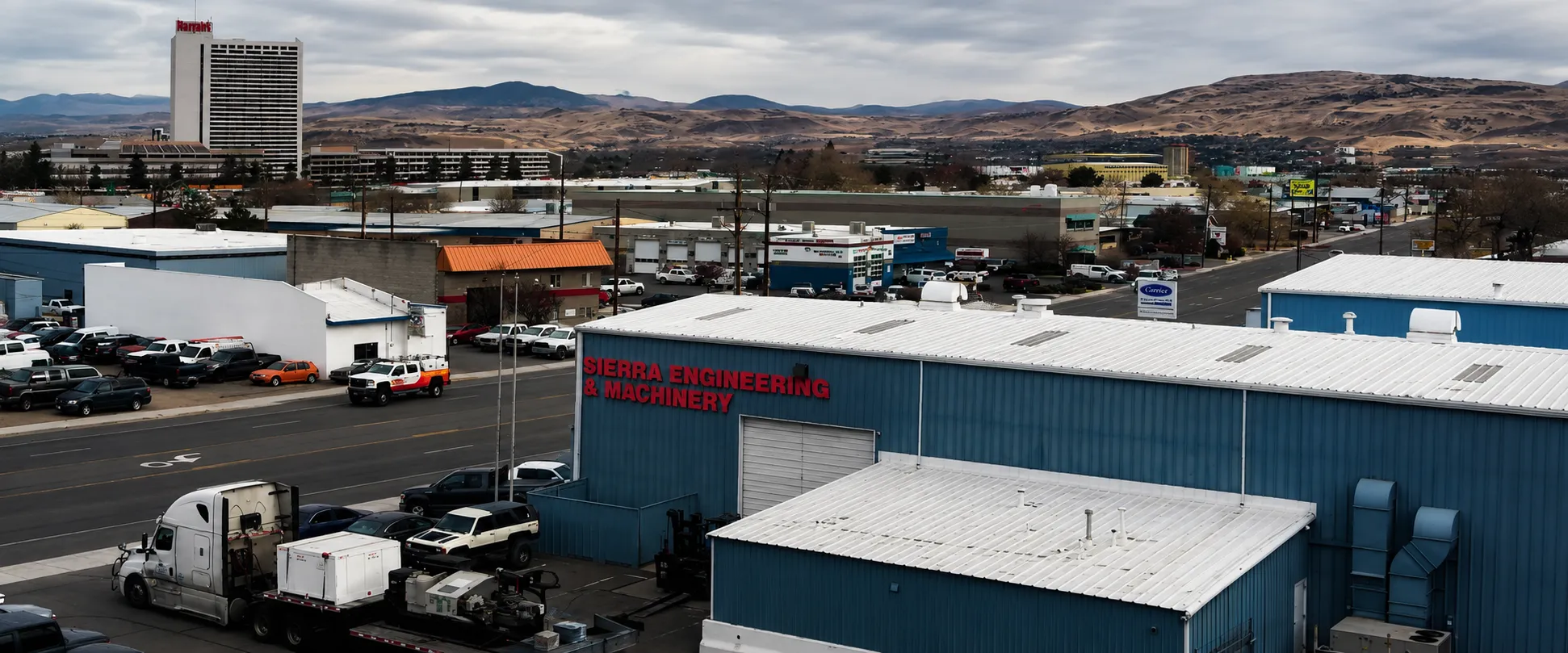

If you have ever held a part that fits together perfectly, down to a fraction of a millimeter, you have seen the result of CNC machining. It is the quiet workhorse behind aerospace parts, medical devices, mining equipment, and thousands of everyday products. And if your business is looking for CNC machining in Reno, Nevada, you are in one of the best regions in the country to find it.
Reno and the surrounding Sparks area have grown into a real manufacturing hub over the past two decades. Between the logistics advantages, a skilled labor pool, and a business-friendly climate, more companies are choosing local shops over out-of-state or overseas suppliers. In this guide, we will walk through what CNC machining actually involves, how the process works step by step, real examples of where it is used, and why working with an experienced local partner like Sierra Machinery makes a difference.
Let's get into it.
What Is CNC Machining?
CNC stands for Computer Numerical Control. In plain terms, it means a computer program tells a machine exactly how to cut, drill, or shape a piece of material. Instead of a machinist manually turning knobs and dials, the machine follows precise digital instructions.
This matters because it removes a lot of the guesswork and human error from manufacturing. A CNC mill or lathe can repeat the exact same cut a thousand times in a row without drifting off spec. That kind of consistency is hard, if not impossible, to get from manual machining alone.
CNC Machining & Precision Manufacturing covers a wide range of processes, including:
- CNC milling
- CNC turning
- CNC drilling and boring
- Multi-axis machining for complex shapes
- Precision grinding and finishing
Each of these methods has its own strengths, and a good machine shop will know which one fits your project best.
Why Reno, Nevada Is a Great Place for CNC Machining
You might be wondering why location even matters for a manufacturing process. It turns out it matters quite a bit.
- Central location – Reno sits close to major West Coast markets, making shipping faster and cheaper than working with a shop on the other side of the country.
- Skilled workforce – Nevada's manufacturing and mining history left behind a deep bench of machinists and engineers who understand metal.
- Business-friendly environment – Lower taxes and fewer regulatory hurdles mean local shops can often price more competitively.
- Growing industry base – Aerospace, defense, mining, and tech companies have been expanding in the region, which keeps local machine shops sharp and up to date.
If you are sourcing parts, CNC machining in Reno, Nevada gives you the quality of a big-city shop with the responsiveness of a local partner.
Step-by-Step: How the CNC Machining Process Works
Here is a simple breakdown of what actually happens when a part gets made.
Step 1: Design and CAD Modeling
Everything starts with a digital design, usually a CAD (Computer-Aided Design) file. This is the blueprint that tells the machine what the finished part should look like.
Step 2: Programming (CAM)
The CAD file gets converted into a CAM (Computer-Aided Manufacturing) program. This is where the actual toolpaths are created, telling the machine exactly where to cut and how fast to move.
Step 3: Material Selection
Next comes choosing the right material, whether that is aluminum, steel, stainless steel, brass, or a plastic like Delrin. The material affects tool choice, cutting speed, and overall cost.
Step 4: Machine Setup
The machinist loads the material (called stock) into the CNC machine, secures it properly, and loads the correct cutting tools.
Step 5: Machining
The machine runs the program, cutting, drilling, or shaping the part according to the digital design. This can take minutes or hours depending on complexity.
Step 6: Quality Inspection
Once the part is machined, it gets checked against the original specs using precision measuring tools like calipers, micrometers, or coordinate measuring machines (CMMs).
Step 7: Finishing
Some parts need additional steps like deburring, anodizing, powder coating, or polishing before they are ready to ship.
That is the process in a nutshell. Simple to describe, but it takes years of hands-on experience to do it well and consistently.
Real-World Examples of CNC Machining in Action
It helps to see how this plays out in the real world.
- Aerospace brackets – A local aerospace supplier needs a batch of aluminum brackets machined to tolerances tighter than a human hair. CNC milling handles this with ease, and every single unit comes out identical.
- Mining equipment parts – Nevada's mining industry regularly needs custom replacement parts for heavy equipment. Instead of waiting weeks for an out-of-state supplier, a local CNC shop can turn around a replacement part in days.
- Medical device components – Small, intricate parts used in surgical tools or diagnostic equipment require extremely tight tolerances, something CNC turning and milling are built for.
- Prototype development – A startup with a new product idea needs a handful of prototype parts before committing to a full production run. CNC machining lets them test and refine the design quickly without expensive tooling.
These are not rare or unusual cases. This is the everyday work happening inside precision machine shops across Reno and Sparks.
Key Benefits of CNC Machining
Why do so many industries rely on this process? A few reasons stand out.
- Accuracy – Tolerances as tight as a few thousandths of an inch are standard, not exceptional.
- Repeatability – Part one and part one thousand come out the same.
- Speed – Once a program is set, production can move quickly compared to manual methods.
- Material versatility – Metals, plastics, and composites can all be machined.
- Cost efficiency at scale – The more parts you need, the more the setup cost gets spread out, lowering the price per unit.
- Complex geometries – Multi-axis machines can create shapes that would be nearly impossible by hand.
For businesses that depend on precise, reliable parts, these benefits are not nice extras. They are the whole reason CNC machining exists.
Common Mistakes to Avoid When Sourcing CNC Parts
Even experienced buyers run into trouble when working with a new machine shop. Here are a few mistakes worth avoiding.
- Skipping the design-for-manufacturability review. A part that looks fine on a screen might be difficult or expensive to machine. A good shop will flag this early.
- Choosing the lowest bid without checking quality control. Cheap parts that fail inspection cost more in the long run than paying a fair price upfront.
- Not specifying tolerances clearly. Vague specs lead to vague results. Be specific about what actually matters for your part's function.
- Ignoring material certifications. For industries like aerospace or medical, material traceability is not optional.
- Underestimating lead times. Rushing a quote request without giving the shop enough detail often leads to delays later.
- Overlooking local suppliers. Some buyers assume overseas manufacturing is always cheaper, but once you factor in shipping time, communication issues, and quality risk, a trusted local shop often wins out.
Professional Tips From the Shop Floor
According to you (the reader) wanting the best results, here is what experienced machinists would tell you before you send out your next quote request:
- Send a complete drawing package. Include tolerances, surface finish requirements, and material specs, not just a 3D model.
- Ask about tooling costs upfront. For low-volume runs, tooling and setup can be a big chunk of the total cost.
- Request a first-article inspection on new parts before committing to a full production run.
- Build a relationship, not just a transaction. A shop that understands your product over time will catch issues before they become expensive problems.
- Plan for tolerance stack-up in assemblies with multiple machined parts, not just individual pieces.
Small steps like these save real time and money down the line.
Why Choose Sierra Machinery for CNC Machining in Reno, Nevada
There are plenty of machine shops out there, so what makes a difference when you are choosing a partner?
- Local roots, real accountability – Being based in the Reno and Sparks area means direct communication and faster turnaround, without the delays that come with distant suppliers.
- Decades of hands-on manufacturing experience – Experience in precision machining and tooling means fewer surprises and more reliable results.
- Attention to detail – Every part matters, whether it is a one-off prototype or part of a long production run.
- Flexibility across industries – From aerospace to mining to general manufacturing, a team with broad experience can adapt to your specific needs.
- A genuine partnership approach – Good shops do not just take orders. They ask questions, flag potential issues, and help you get a better part, not just a finished one.
If you are searching for CNC Machining & Precision Manufacturing near you, working with a team that treats your project like their own reputation is on the line makes all the difference.
Conclusion
CNC machining might sound technical from the outside, but at its core, it is about turning an idea into a precise, reliable, physical part. Whether you need a single prototype or a production run of ten thousand units, the process depends on the same fundamentals: good design, the right materials, careful programming, and a shop that cares about getting it right.
For businesses across Nevada and beyond, CNC machining in Reno, Nevada offers a rare combination of quality, speed, and local accountability that is hard to beat.
Ready to Get Your Parts Made Right?
If you have a project that needs precision, reliability, and a team that actually picks up the phone, reach out to Sierra Machinery today. Whether it is a prototype, a production run, or a tricky replacement part, let's talk about how we can help bring your design to life.
Contact Sierra Machinery for a quote and see what real precision manufacturing looks like.
Frequently Asked Questions
1. What materials can be used in CNC machining?
Most metals and plastics can be CNC machined, including aluminum, steel, stainless steel, brass, titanium, and plastics like Delrin, nylon, and PEEK. The right choice depends on your part's strength, weight, and durability needs.
2. How long does CNC machining usually take?
It depends on the complexity of the part and the size of the order. A simple prototype might be ready in a few days, while larger production runs can take a few weeks. A local shop can usually offer faster turnaround than an overseas supplier.
3. What is the difference between CNC milling and CNC turning?
CNC milling uses rotating cutting tools to remove material from a stationary workpiece, which works well for flat and complex shapes. CNC turning spins the workpiece itself against a stationary cutting tool, which is ideal for round or cylindrical parts.
4. How tight can CNC machining tolerances be?
Standard CNC machining can hold tolerances as tight as plus or minus 0.001 inches, and in some cases even tighter, depending on the machine, material, and part design.
5. Is it more cost-effective to source CNC parts locally?
For many businesses, yes. While overseas manufacturing can sometimes offer lower per-unit prices, local sourcing often saves money overall once you factor in shipping time, communication, quality control, and the ability to quickly fix issues in person.






















Sign in to leave a comment.