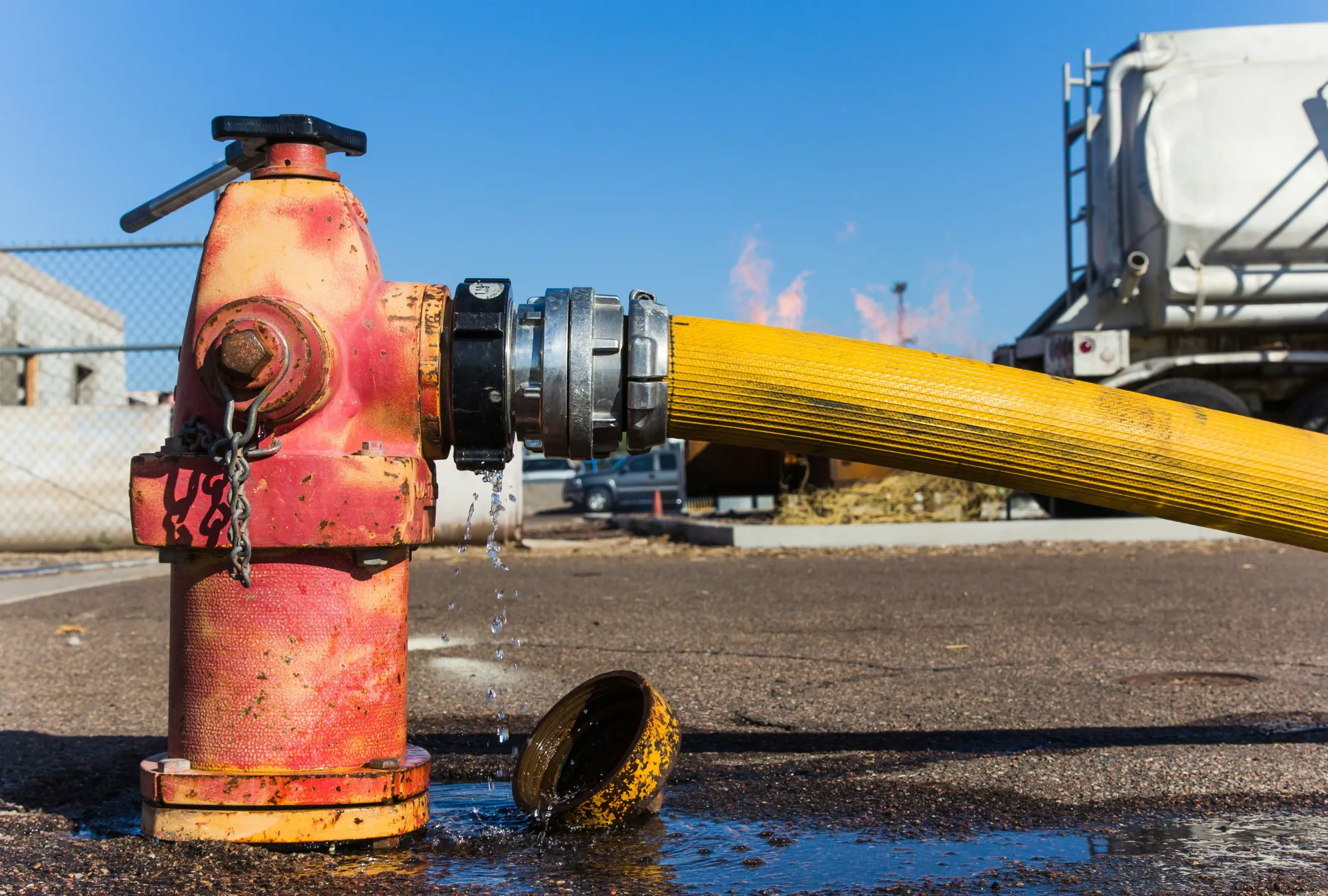

Fire hydrants are an important part of a community’s fire protection system, but simply having a hydrant nearby does not guarantee that it will provide enough water during an emergency. Regular fire hydrant flow testing helps determine whether a hydrant can deliver the pressure and water flow needed for effective firefighting. Two of the most important measurements during this testing are PSI (pounds per square inch) and GPM (gallons per minute).
Understanding these measurements can help property owners, facility managers, contractors, and municipalities identify potential problems before a fire emergency occurs.
What Is Fire Hydrant Flow Testing?
Fire hydrant flow testing is a process used to evaluate the performance of a fire hydrant and the water main supplying it. During a flow test, technicians measure water pressure and flow while the hydrant is operating.
The testing process can help identify whether the water system is providing adequate pressure and volume. It can also reveal issues such as restricted flow, damaged hydrant components, valve problems, or limitations within the water main.
Professional testing commonly looks at static pressure, residual pressure, and flow rate in GPM. These measurements provide useful information about how the hydrant performs under both normal and flowing conditions.
What Does PSI Mean in Fire Hydrant Testing?
PSI stands for pounds per square inch. In simple terms, PSI measures the pressure within the water system.
During fire hydrant testing, technicians may record static pressure before water begins flowing and residual pressure while water is flowing. Comparing these measurements helps provide a better understanding of how the water system responds when demand increases.
For example, a hydrant may show good pressure when no water is being used, but the pressure could drop significantly when the hydrant is opened. A substantial pressure change may indicate that the system needs further evaluation.
PSI is important because firefighting equipment needs sufficient water pressure to move water effectively through hoses, sprinkler systems, and other fire protection equipment.
What Does GPM Mean?
GPM means gallons per minute. Unlike PSI, which measures pressure, GPM measures the volume of water flowing through the hydrant over a specific period.
A hydrant can have strong pressure but still have limited available flow. That is why looking at both PSI and GPM gives a more complete picture of hydrant performance.
During a professional flow test, technicians measure the amount of water discharged from the hydrant and calculate the flow rate. The resulting GPM can help determine whether the water supply is adequate for the property's fire protection needs.
Why Are PSI and GPM Both Important?
PSI and GPM measure different things, but they work together when evaluating a fire hydrant.
PSI tells you about water pressure, while GPM tells you about water volume.
Looking at only one measurement can provide an incomplete picture. A hydrant may have acceptable pressure but inadequate flow, or it may produce substantial flow while experiencing a pressure drop that requires investigation.
This is why fire hydrant flow testing is an important part of maintaining a dependable fire protection system. Accurate testing provides measurable information rather than relying on visual inspection alone.
What Problems Can Fire Hydrant Flow Testing Identify?
Regular testing can help identify problems before they become serious. Depending on the results, testing may reveal:
- Low or inconsistent water pressure
- Insufficient water flow
- Damaged or restricted hydrant components
- Valve problems
- Issues affecting the water main
- Nozzle or cap problems
- Conditions that may require maintenance or repair
Finding these issues early can make it easier to schedule repairs and reduce the chance of discovering a hydrant problem during an emergency.
How Often Should Fire Hydrants Be Flow Tested?
Regular testing is an important part of fire hydrant maintenance. Your testing schedule may depend on applicable fire codes, local requirements, the type of property, and the condition of the water system.
Annual testing is commonly used as part of a fire hydrant maintenance program. The goal is to verify that hydrants continue to provide reliable pressure and flow and to identify maintenance needs before a failure occurs.
Keeping accurate records of testing results is also valuable. Comparing current PSI and GPM measurements with previous results can help identify changes in system performance over time.
What Happens After a Flow Test?
A flow test is only useful if the results are properly evaluated. If a hydrant does not perform as expected, the next step may involve a more detailed inspection.
Technicians can examine the hydrant and associated components to determine whether repairs or replacement are necessary. Components such as valves, nozzles, caps, and gaskets may require service or replacement depending on their condition.
Preventative maintenance can also include flushing and lubrication to help keep hydrants operational throughout the year.
Why Professional Fire Hydrant Flow Testing Matters
Fire hydrants need to work when they are needed most. Professional fire hydrant flow testing provides measurable information about pressure and water availability, helping property owners and facility managers make informed decisions about maintenance and repairs.
At Seadmok Water Construction, fire hydrant services include PSI and GPM testing, inspection, repair, replacement, and preventative maintenance across Maryland. Testing helps identify potential issues and keeps fire hydrants prepared for reliable performance.
Final Thoughts
PSI and GPM are two essential measurements used to understand fire hydrant performance. PSI measures water pressure, while GPM measures water flow. Together, they provide valuable insight into whether a hydrant and its supporting water system are performing as expected.
Regular fire hydrant flow testing in Maryland can help identify problems early, support preventative maintenance, and provide greater confidence that your fire protection system is ready when it matters most.


























Sign in to leave a comment.