
Outdoor and remote worksites can present fire risks that are different from those found inside conventional commercial buildings. Construction projects, industrial yards, agricultural locations, infrastructure sites, storage areas and temporary work zones may contain fuel, machinery, electrical equipment, packaging materials and other combustibles.
Because these locations can be spread across large areas, access to firefighting equipment is an important part of emergency planning. Choosing equipment based on the site layout, fire hazards and response requirements can help improve preparedness.
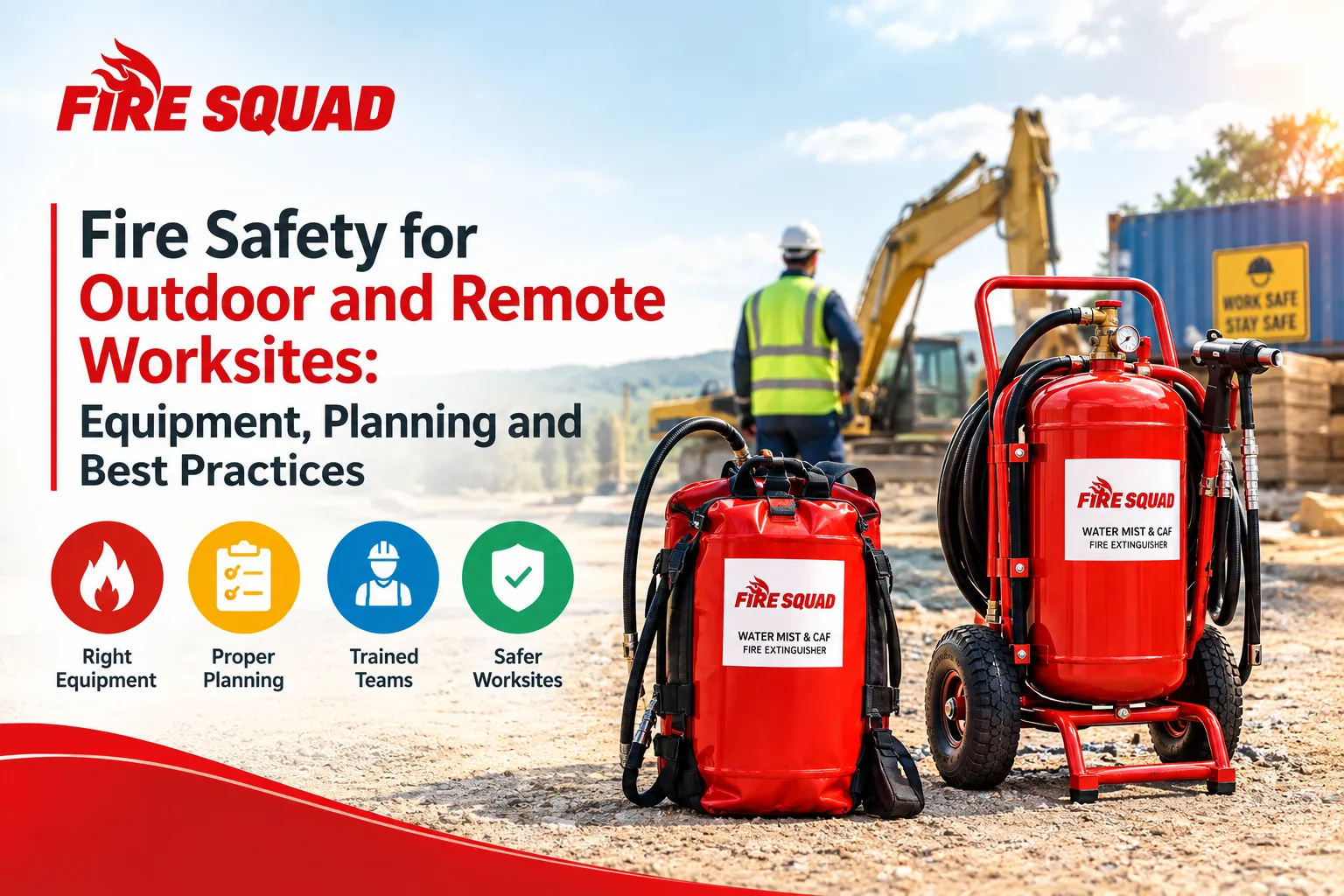
For locations where personnel need mobile firefighting equipment, a Watermist Backpack Fire Extinguisher can be considered for suitable applications where portability is important.
Why Outdoor Worksites Need Specific Fire Safety Planning
A fire at an outdoor worksite can spread quickly because emergency response may be affected by distance, weather, access roads and the availability of trained personnel.
Some common fire hazards include:
- Fuel and combustible liquids
- Temporary electrical connections
- Welding and hot-work activities
- Construction materials
- Packaging and waste
- Machinery and engines
- Gas cylinders
- Temporary storage areas
- Dry vegetation in certain environments
A fire risk assessment should identify these hazards before work begins and determine suitable control measures.
Common Causes of Worksite Fires
Hot work is one of the important areas requiring attention. Welding, cutting and grinding can generate sparks and high temperatures that may ignite nearby combustible materials.
Electrical faults are another concern. Temporary electrical installations, overloaded connections, damaged cables and poorly maintained equipment can contribute to fire risk.
Fuel storage and refuelling areas also require appropriate precautions. Combustible liquids should be stored and handled according to applicable safety requirements.
Good housekeeping is equally important. Accumulated waste, packaging and combustible materials can provide fuel for a developing fire.
Choosing Portable Firefighting Equipment
Fire extinguishers should not be selected simply according to size or price. The equipment needs to match the expected fire hazard.
Selection should consider:
- Type of combustible material
- Fire classification
- Area size
- Accessibility
- Required firefighting range
- Environmental conditions
- Number of trained users
- Existing firefighting infrastructure
For larger areas, mobile equipment may be useful because trained personnel can move it closer to an incident.
A Watermist Backpack CAFS 9 Litre Fire Extinguisher can be evaluated for applications where a portable backpack configuration and watermist/CAF technology are appropriate.
Fire Safety During Hot Work
Hot-work activities should be controlled through a documented procedure. Depending on the worksite, this can include a hot-work permit, removal of nearby combustible materials and dedicated fire-watch personnel.
Before welding or cutting begins:
- Inspect the work area
- Remove unnecessary combustible materials
- Protect nearby surfaces
- Keep suitable firefighting equipment accessible
- Check the surrounding area for hidden ignition risks
- Maintain fire watch where required
After the work is completed, the area should also be monitored for residual heat or smouldering materials.
Equipment Placement Matters
Having a fire extinguisher somewhere on a large worksite does not necessarily mean it is readily available.
Equipment should be positioned where personnel can reach it quickly without entering an unnecessary danger zone.
Large industrial or outdoor areas may also require mobile firefighting equipment. A Trolley Mounted Water Mist and CAF Fire Extinguisher may be considered for appropriate applications where equipment mobility and larger-scale response capability are required.
Training and Emergency Response
Equipment is only one part of fire preparedness. Workers should know how to raise an alarm, evacuate and report a fire.
Selected employees may receive practical training on extinguisher operation where appropriate. Training should also explain when not to fight a fire.
Workers should understand that evacuation takes priority when a fire is large, rapidly spreading, producing significant smoke or otherwise unsafe to approach.
Inspection and Maintenance
Portable firefighting equipment should be inspected and maintained according to manufacturer instructions and applicable requirements.
Regular checks can include:
- Physical condition
- Hose and nozzle condition
- Pressure-related components
- Accessibility
- Signs of damage
- Service status
- Mounting or trolley condition
Inspection records should be maintained as part of the site's fire safety program.
Conclusion
Outdoor and remote worksites require fire safety planning that considers site size, accessibility, combustible materials and emergency response time. Portable and mobile firefighting equipment can provide an important layer of protection when correctly selected and maintained.
A well-designed plan combines equipment, housekeeping, hot-work controls, employee training, inspection and emergency procedures.
Spectra Fire provides a range of fire safety equipment for different applications. Organizations should assess their specific hazards and select suitable equipment based on professional fire safety guidance.
Frequently Asked Questions
1. Why is fire safety important at outdoor worksites?
Outdoor worksites may contain fuel, machinery, electrical equipment and combustible materials while also having large distances between work areas. Proper planning can improve emergency preparedness.
2. What fire extinguisher should be used at a construction site?
There is no single extinguisher suitable for every construction site. Selection should depend on the site's specific fire hazards and applicable requirements.
3. Is portable firefighting equipment useful for remote locations?
Yes. Portable equipment can be particularly useful where fixed firefighting infrastructure is limited or where personnel need equipment that can be moved between work areas.
4. Should workers be trained to use fire extinguishers?
Appropriately selected employees can receive fire extinguisher training, but training should also emphasize evacuation and recognizing situations where firefighting is unsafe.
5. How often should fire extinguishers be inspected?
Inspection and servicing should follow manufacturer recommendations and applicable fire safety requirements, with additional checks whenever equipment may have been damaged or used.

























Sign in to leave a comment.