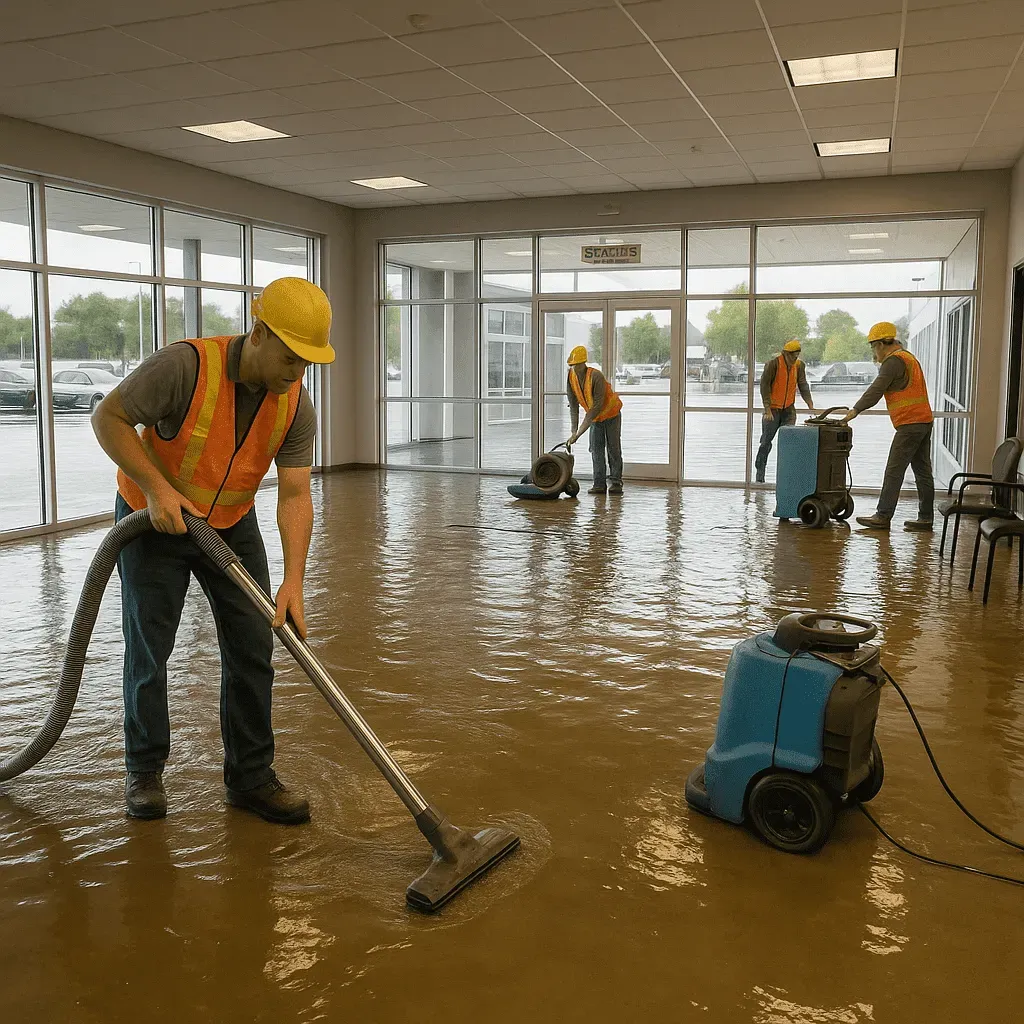
When water damage strikes a commercial property, most business owners focus on speed — how quickly the water can be removed and operations restored. But flood restoration is not just a race against time; it's also a compliance responsibility. In Ontario, several health and safety frameworks govern how water damage cleanup must be carried out, particularly in commercial and multi-tenant settings where workers, tenants, and customers are all potentially exposed to risk. Understanding these standards helps business owners choose the right restoration partner and avoid liability gaps that can surface long after the water has been extracted.
Why Compliance Matters in Flood Restoration
Flooding introduces more than surface-level damage. Standing water can carry contaminants, encourage microbial growth, and compromise electrical systems — all of which fall under recognized workplace safety obligations. A flood restoration project that skips proper hazard assessment or documentation can leave a business exposed to regulatory scrutiny, insurance disputes, or repeat damage. For property managers and commercial tenants across Toronto and the GTA, working with a restoration provider that understands these obligations is as important as the drying equipment itself.
The Occupational Health and Safety Act (OHSA)
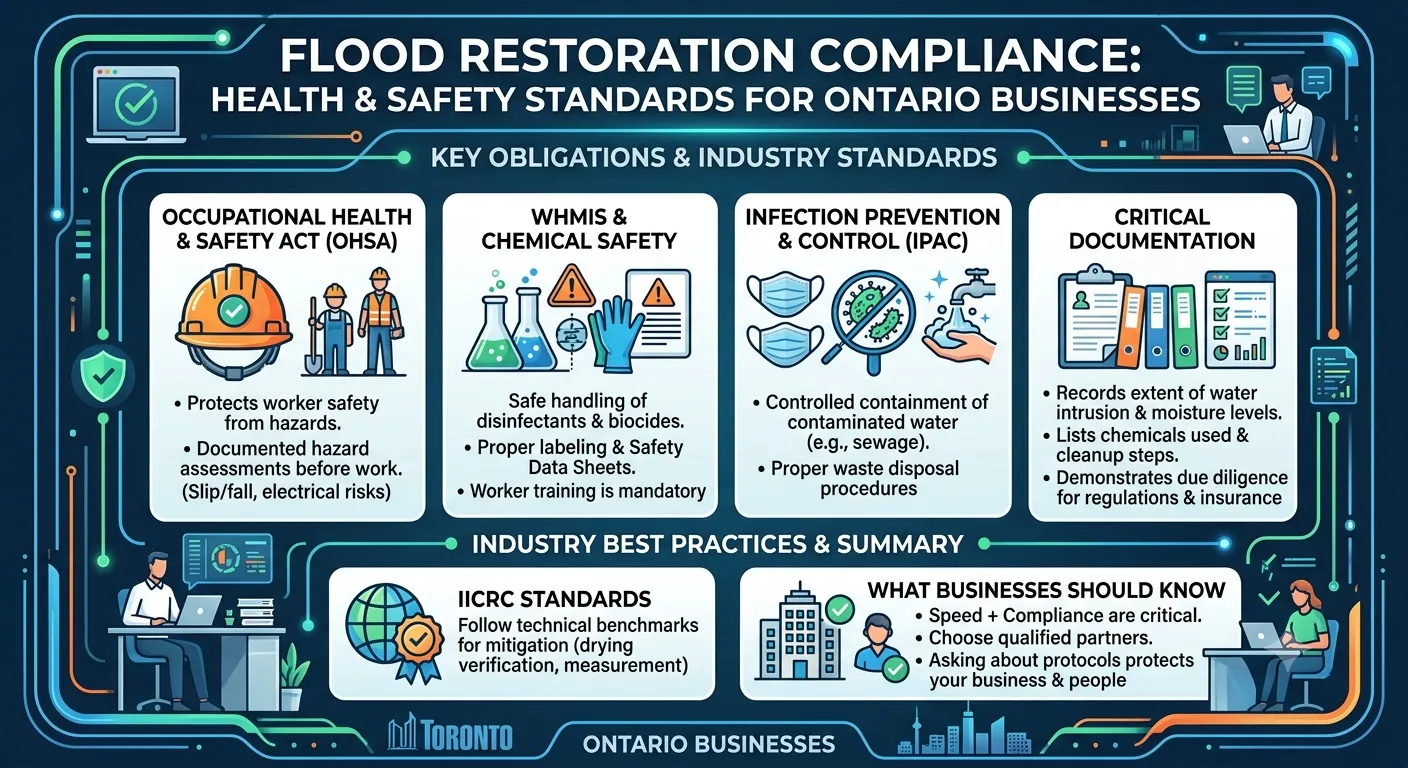
Ontario's Occupational Health and Safety Act (OHSA) is the foundational legislation for workplace safety in the province, and it applies directly to flood restoration work. OHSA places a general duty on employers — including restoration contractors and, in some cases, the property owner — to take reasonable precautions to protect workers from hazards. In a flood scenario, this includes assessing risks such as electrical exposure from water-damaged wiring, slip hazards on wet flooring, and potential structural instability in severely affected areas. A compliant flood restoration process typically begins with a documented hazard assessment before any cleanup crew enters the affected space.
WHMIS and Chemical Safety During Cleanup
Water damage restoration often involves disinfectants, biocides, and antimicrobial treatments to address contamination and prevent mould growth. Under Canada's Workplace Hazardous Materials Information System (WHMIS), any hazardous products used during flood restoration must be properly labelled, and workers handling them must have access to safety data sheets and appropriate training. For businesses in sectors like food service or healthcare-adjacent spaces, WHMIS compliance during restoration work is particularly important, since improper chemical handling can create secondary safety issues on top of the original flood damage.
Infection Prevention and Control (IPAC) Considerations
For businesses operating in sensitive environments — clinics, care facilities, or spaces with shared ventilation systems — Infection Prevention and Control (IPAC) principles may also factor into how flood restoration is carried out. Contaminated water, particularly from sewage backups, can introduce pathogens that require controlled containment and disposal procedures. While IPAC standards are most commonly associated with healthcare settings, the underlying principles of containment, controlled access, and proper waste handling are relevant whenever floodwater has mixed with biological contaminants in a commercial space.
Documentation: The Overlooked Compliance Step
Beyond the physical cleanup, thorough documentation is a compliance safeguard that many businesses overlook. A well-run flood restoration provider will typically document the extent of water intrusion, moisture readings, the chemicals used, and the steps taken to remediate the area. This record serves two purposes: it demonstrates due diligence under OHSA's general duty clause, and it supports insurance claims by providing a clear timeline of the damage and response. Businesses should ask their restoration provider what documentation is included as part of the flood restoration process before work begins.
Industry Standards Beyond Government Regulation
In addition to provincial and national legislation, the restoration industry itself follows recognized technical standards — most notably those published by the Institute of Inspection, Cleaning and Restoration Certification (IICRC), which sets benchmarks for water damage mitigation procedures. While these are not government regulations, many insurers and commercial clients expect flood restoration work to align with IICRC guidelines, particularly around moisture measurement, drying verification, and structural assessment. Choosing a provider familiar with both regulatory obligations and industry best practices reduces the chance of incomplete or non-compliant restoration work.
What This Means for Ontario Business Owners
For commercial property owners and managers, the takeaway is straightforward: flood restoration compliance is not optional, even when the pressure to reopen quickly is high. A restoration partner who understands OHSA obligations, WHMIS chemical handling, and the documentation expected by insurers can help a business avoid compounding a water damage event with a compliance failure. Asking the right questions upfront — about hazard assessments, chemical safety protocols, and record-keeping — is a practical way to protect both people and property during recovery.
At MCA Group, we bring more than 30 years of experience delivering compliant, thorough flood restoration services to businesses across Toronto and the Greater Toronto Area. Our team understands the health and safety obligations that come with commercial water damage, from proper hazard assessment to documented, standards-aligned cleanup.



























Sign in to leave a comment.