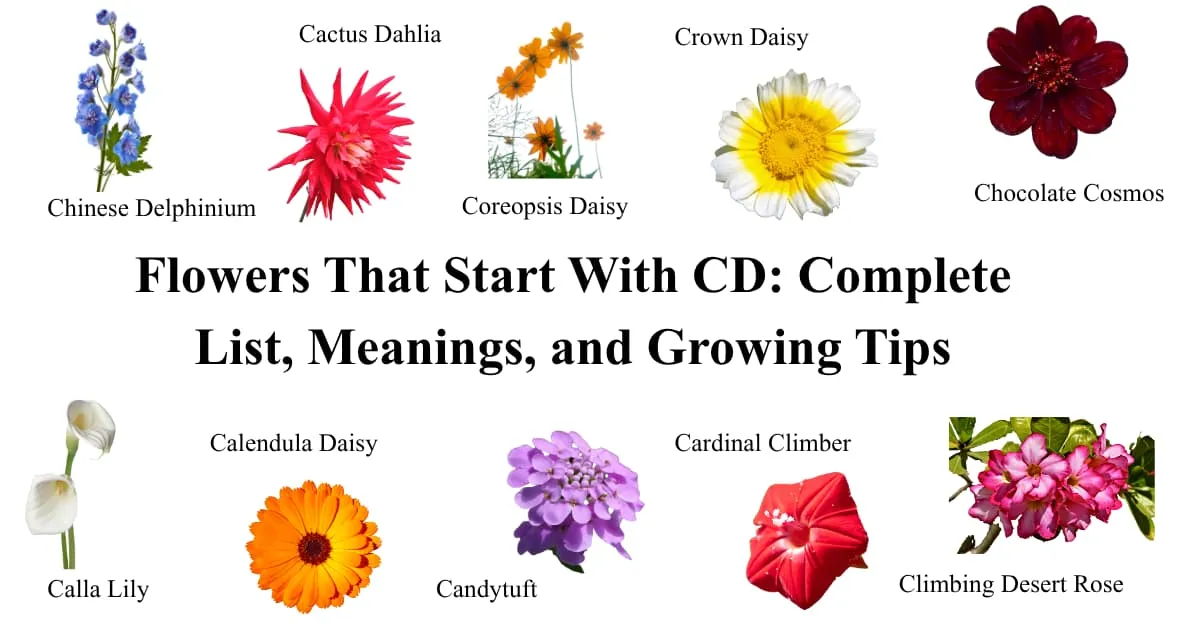

From colorful Cape Daisies to cheerful Crown Daisies and classic Common Dandelions, these flowers offer unique shapes, colors, meanings, and growing requirements. Whether you are creating an alphabetical flower list, searching for unusual flower names, or looking for new plants for your garden, this guide covers some of the most interesting CD flowers, along with their meanings and basic growing tips.
List of Flowers That Start With CD
Here are some flower names that start with CD:
Cape Daisy
Crown Daisy
Creeping Daisy
Common Dandelion
Corn Daisy
Because common names can vary by region, some flowers may have more than one accepted common name or may be listed under a different botanical name.
1. Cape Daisy
Cape Daisy is one of the best-known flowers beginning with CD. The name is commonly used for several daisy-like plants, including species in the genera Osteospermum, Dimorphotheca, Arctotis, and Ursinia. These plants are especially admired for their bright, colorful blooms.
Depending on the species or cultivar, Cape Daisy flowers may appear in white, pink, purple, yellow, orange, or lavender. They are popular in borders, containers, rock gardens, and sunny landscapes.
Cape Daisy Meaning
Cape Daisy is often associated with joy, beauty, optimism, and cheerfulness because of its bright daisy-like appearance. Daisies in general are traditionally connected with innocence and simplicity.
Growing Tips for Cape Daisy
Cape Daisies generally perform best in:
Full sun
Well-drained soil
Moderate watering
Warm growing conditions
Containers or flower borders
Many cultivated Cape Daisies prefer light, well-drained soil and a sunny position. Some varieties tolerate drought once established.
2. Crown Daisy
Crown Daisy (Glebionis coronaria) is another attractive flower starting with CD. It is also known by the older botanical name Chrysanthemum coronarium. The plant produces daisy-like flowers in combinations of yellow, white, and brown.
Crown Daisy is native to the Mediterranean region and is commonly grown as an annual. It can add a natural, cheerful appearance to flower beds, borders, and informal gardens.
Crown Daisy Meaning
Crown Daisy can symbolize happiness, freshness, and natural beauty. Its sunny flowers make it a fitting choice for gardens designed to create a bright and welcoming atmosphere.
How to Grow Crown Daisy
Crown Daisy is relatively easy to grow. It prefers:
Full sun
Well-drained soil
Sandy or light soil
Regular but moderate moisture
Spring sowing
The RHS recommends growing it in ordinary garden soil, with sandy, well-drained soil and full sun providing particularly suitable conditions.
3. Creeping Daisy
Creeping Daisy is a low-growing flowering plant valued for its spreading habit and small daisy-like flowers. One plant commonly known by this name is Mauranthemum paludosum, which produces white flowers with yellow centers.
Its compact growth makes it useful for smaller spaces, borders, containers, and areas where a low-growing floral display is desired.
Creeping Daisy Meaning
Like many daisy-type flowers, Creeping Daisy can represent innocence, simplicity, happiness, and new beginnings.
Growing Tips
Creeping Daisy generally prefers:
Full sun
Well-drained soil
Moderate moisture
Cool growing conditions
It can be grown from seed and may self-seed under suitable conditions. The plant is particularly useful as a cool-season flowering plant in warmer regions.
4. Common Dandelion
Common Dandelion (Taraxacum officinale) is one of the most recognizable yellow-flowering plants. Although many gardeners consider it a lawn weed, dandelions are flowering plants with ecological and cultural importance.
Write on Medium
The familiar yellow flower head is actually made up of many small individual flowers. After flowering, it develops into the familiar white, fluffy seed head that disperses seeds by wind.
Common Dandelion Meaning
Dandelions are often associated with hope, resilience, wishes, strength, and perseverance. Their ability to grow in many environments makes them a popular symbol of determination.
Growing Common Dandelion
Dandelions are extremely adaptable. They can grow in:
Lawns
Meadows
Fields
Roadsides
Garden areas
Disturbed soil
They develop a deep taproot and can flower from spring into fall in many regions.
If you intentionally grow dandelions, remember that they can spread quickly through seeds and may become difficult to control in lawns or cultivated beds.
5. Corn Daisy
Corn Daisy (Glebionis segetum), also called Corn Marigold, is a bright flowering annual from the daisy family. It produces attractive golden-yellow flower heads and can bring a sunny appearance to naturalistic gardens.
The plant is native to the Mediterranean region and commonly grows in open or disturbed habitats.
Corn Daisy Meaning
Corn Daisy can symbolize cheerfulness, warmth, energy, and abundance. Its golden flowers make it particularly attractive for summer-inspired garden designs.
How to Grow Corn Daisy
For good growth, provide:
Full sun
Open growing space
Well-drained soil
Moderate watering
Good air circulation
Corn Daisy can reach approximately 50–100 cm in height and produces daisy-like flower heads with golden ray and disc florets.
Why Grow Flowers That Start With CD?
Growing CD flowers can be a fun way to add variety to your garden while exploring unusual plant names. These flowers also offer different growth habits and garden uses.
Add Bright Garden Color
Cape Daisy, Crown Daisy, and Corn Daisy can provide attractive colors ranging from white and purple to bright yellow.
Create Natural-Looking Gardens
Daisy-type flowers work especially well in cottage gardens, wildflower areas, borders, and informal landscapes.
Attract Garden Wildlife
Many daisy-family flowers provide useful floral resources for insects and other pollinators. Choosing a variety of flowering plants can help create a more diverse garden environment.
General Growing Tips for CD Flowers
Although every plant has its own requirements, these simple tips can help you grow many flowers that start with CD successfully.
Choose the Right Sunlight
Most of the CD flowers discussed here prefer full sun. Check the specific plant’s requirements before planting.
Use Well-Drained Soil
Good drainage is important for many daisy-type flowers. Heavy, constantly wet soil can cause root problems.
Water According to Plant Needs
Avoid both extreme dryness and excessive watering. Young plants generally need more consistent moisture while establishing.
Remove Spent Flowers
Deadheading can improve the appearance of ornamental flowers and, depending on the species, may encourage additional flowering.
Give Plants Enough Space
Good spacing improves air circulation and allows plants to develop naturally without excessive competition.
Choosing the Best CD Flower for Your Garden
If you want colorful ornamental flowers, Cape Daisy is an excellent option.
For an informal or cottage-style garden, Crown Daisy and Corn Daisy can provide a cheerful natural display.
For low-growing flowers, Creeping Daisy is worth considering.
If you prefer a highly adaptable and familiar wildflower, Common Dandelion is an interesting choice, although it can spread aggressively.
Final Thoughts
The list of flowers that start with CD may be smaller than lists beginning with more common letter combinations, but it still includes several fascinating plants. Cape Daisy, Crown Daisy, Creeping Daisy, Common Dandelion, and Corn Daisy each offer distinctive flowers and different garden characteristics.
Whether you are searching for CD flower names, exploring flower meanings, or choosing plants for your garden, these flowers provide plenty of inspiration. Always check the botanical name and local growing conditions when selecting a plant, since common names can sometimes refer to multiple species.



















Sign in to leave a comment.