Forklift Laser Light vs Traditional Blue Spot Lights: What UK Safety Officers Should Know
Ask ten safety officers which pedestrian warning device they fitted last and you'll likely get a mix of answers — and a fair few of them will admit they chose based on habit rather than performance data. That's a costly way to specify safety equipment, particularly when the two dominant technologies behave so differently in real working conditions.
Blue spot projectors have been the default for over a decade. But a forklift laser light now offers a genuinely different visibility profile, and the two aren't interchangeable across every site type. If you're due an equipment refresh or reviewing your workplace transport risk assessment, understanding where each technology actually performs is worth more than following what's always been fitted.
Visibility Distance and Daylight Performance
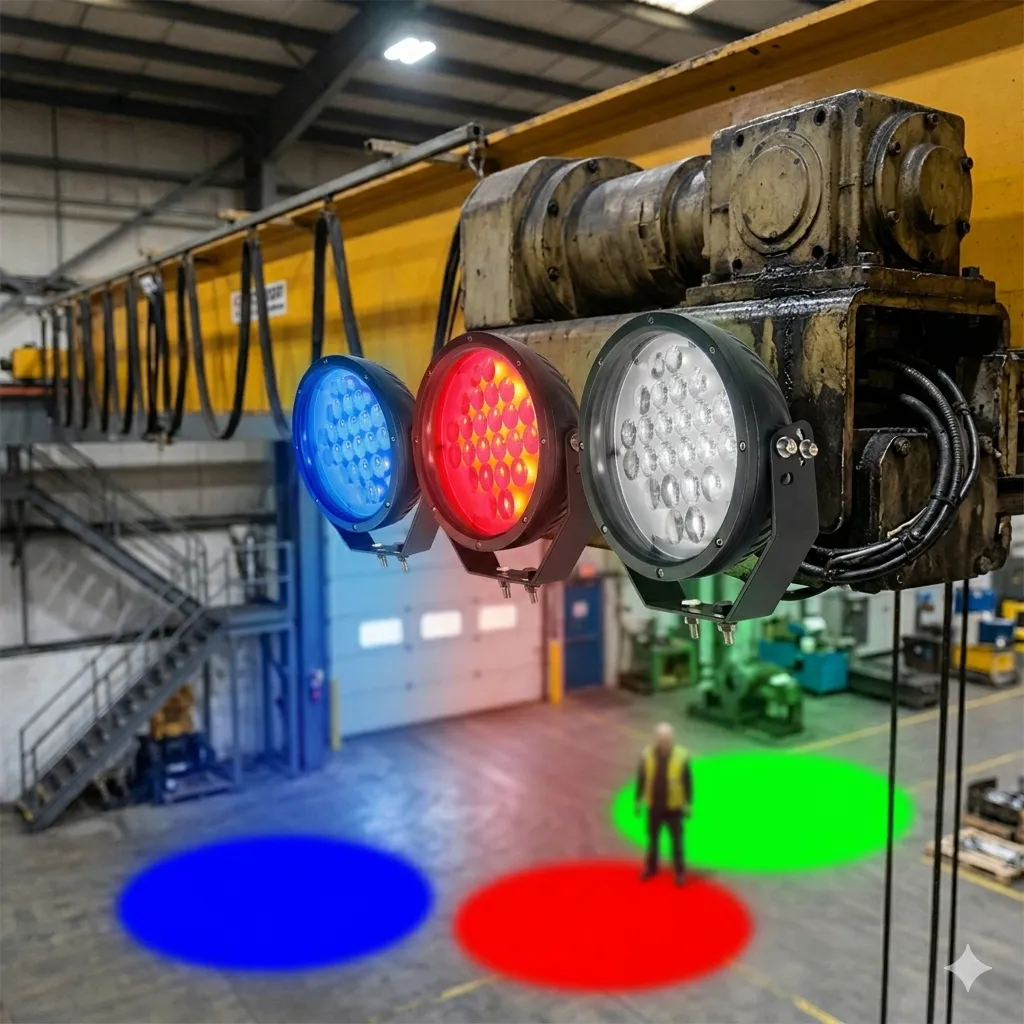
Blue spot lights project a single circular dot, typically visible at two to three metres ahead of the vehicle in good conditions. That distance shrinks considerably under bright warehouse lighting or near loading bay doors flooded with daylight, where the blue dot can wash out almost entirely.
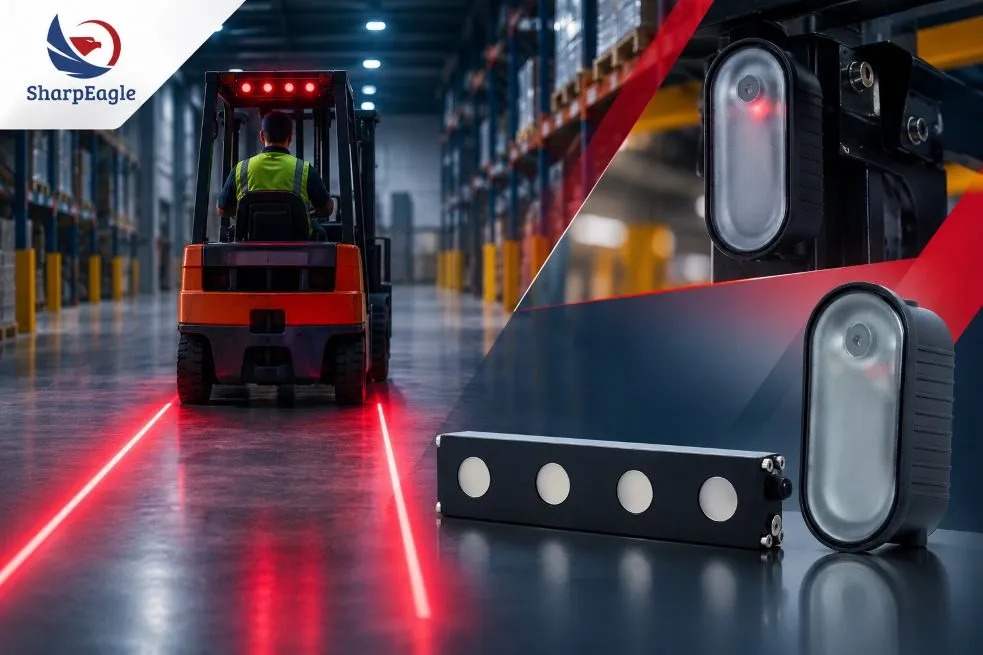
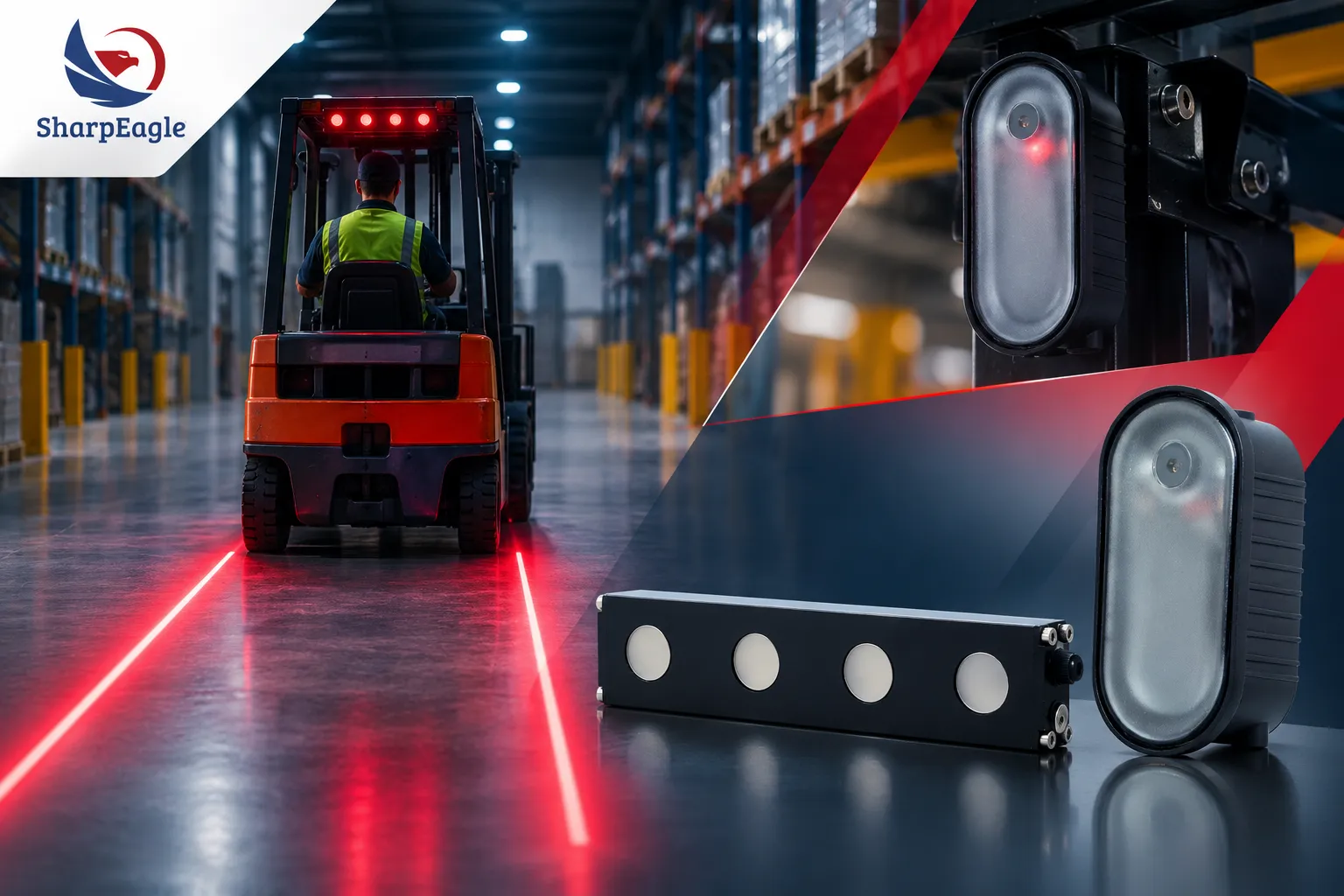
A forklift safety laser light, by contrast, projects a continuous line rather than a point, and line projection tends to hold up better against ambient light because the eye picks up a moving edge more readily than a static dot. On sites with large roof-lights or open loading bays — common across food distribution and automotive parts warehousing — this difference in daylight legibility is often the deciding factor during trials.
Glare is the other variable worth testing on-site rather than trusting a spec sheet. Reflective flooring, common in cold storage and pharmaceutical warehousing, can scatter both technologies unpredictably, so a short trial period before fleet-wide rollout is worth the time it costs.
Which Environments Favour Which Technology
Neither technology is universally superior — the right choice depends heavily on layout and lighting.
- Narrow aisle warehousing with tight turns benefits from line projection, since a laser light for forklift shows direction of travel, not just proximity.
- Open-plan distribution centres with wide aisles and lower daylight interference can still get solid performance from blue spot systems, particularly where budget is the primary constraint.
- Outdoor yards and loading bays, common across maritime terminals and oil and gas logistics sites, generally favour laser-line systems due to superior daylight cut-through.
- Cold storage facilities need whichever system has been tested against that site's specific reflective flooring, since both technologies can perform unpredictably there.
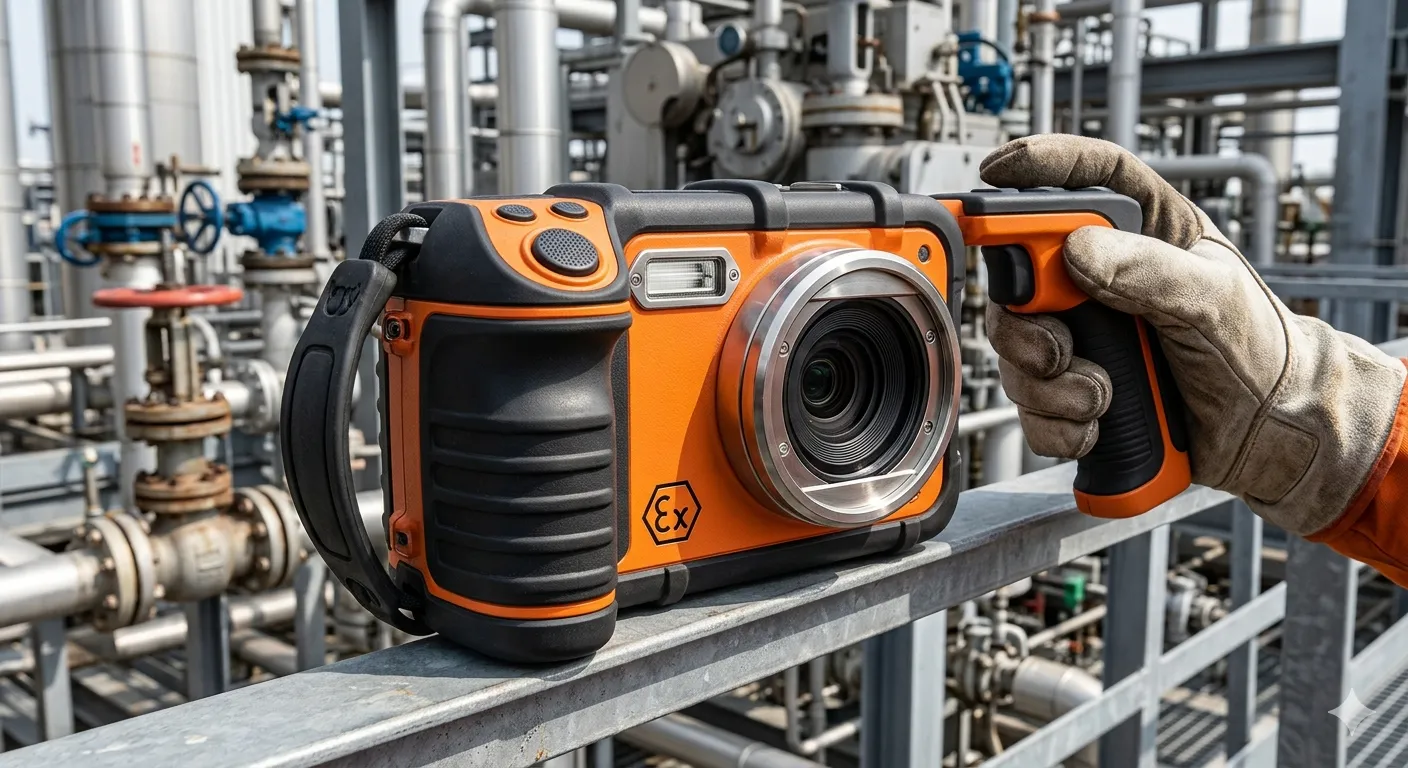
For sites operating near classified atmospheres, such as fuel storage areas covered under DSEAR or the ATEX Directive, the projection technology matters less than confirming the unit itself carries the correct rating for that zone — a detail that's easy to overlook when comparing visibility specs alone.
Cost and Maintenance Comparison
Blue spot units are generally the cheaper upfront purchase, and that's precisely why they remain common on cost-sensitive sites. But cost comparisons that stop at the purchase price miss the operational picture.
Line-projection units, including a Forklift Laser Guidance Light specified for aisle positioning, typically hold calibration for longer under vibration and knocks, which matters on sites running multi-shift operations with heavy fork usage. Blue spot lenses can degrade faster under constant exposure to dust and debris, particularly in manufacturing environments with airborne particulates, requiring more frequent cleaning and replacement to stay within PUWER inspection standards.
When you factor in replacement frequency and the labour cost of more regular maintenance checks, the total cost of ownership gap between the two technologies narrows considerably over a three-to-five-year fleet cycle.
Recommendations by Warehouse Layout Type
If you manage a narrow-aisle automated storage facility, prioritise line projection for its directional clarity. If your site is a high-turnover cross-dock with wide, well-lit aisles, blue spot may still deliver adequate performance at lower cost. Sites with mixed layouts — common across large regional distribution hubs in Yorkshire and the North West — often end up running both technologies in different zones, matched to local lighting and traffic conditions rather than a single fleet-wide standard.
Whatever you choose, document the rationale in your risk assessment. HSE inspectors respond far better to evidence of a deliberate, tested decision than to a device fitted simply because it was cheapest at procurement.
SharpEagle Forklift Laser Safety Lights Supplier UK
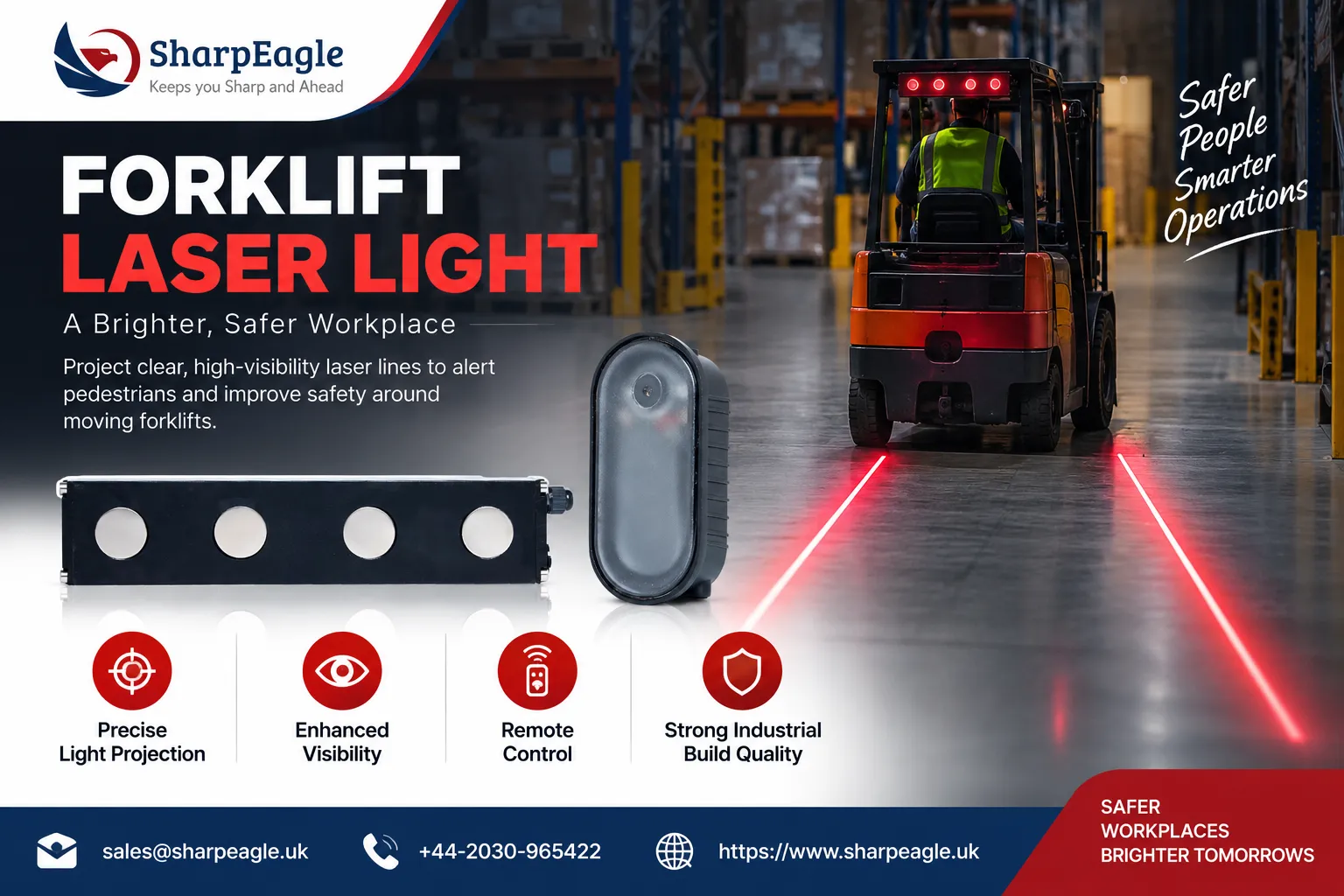
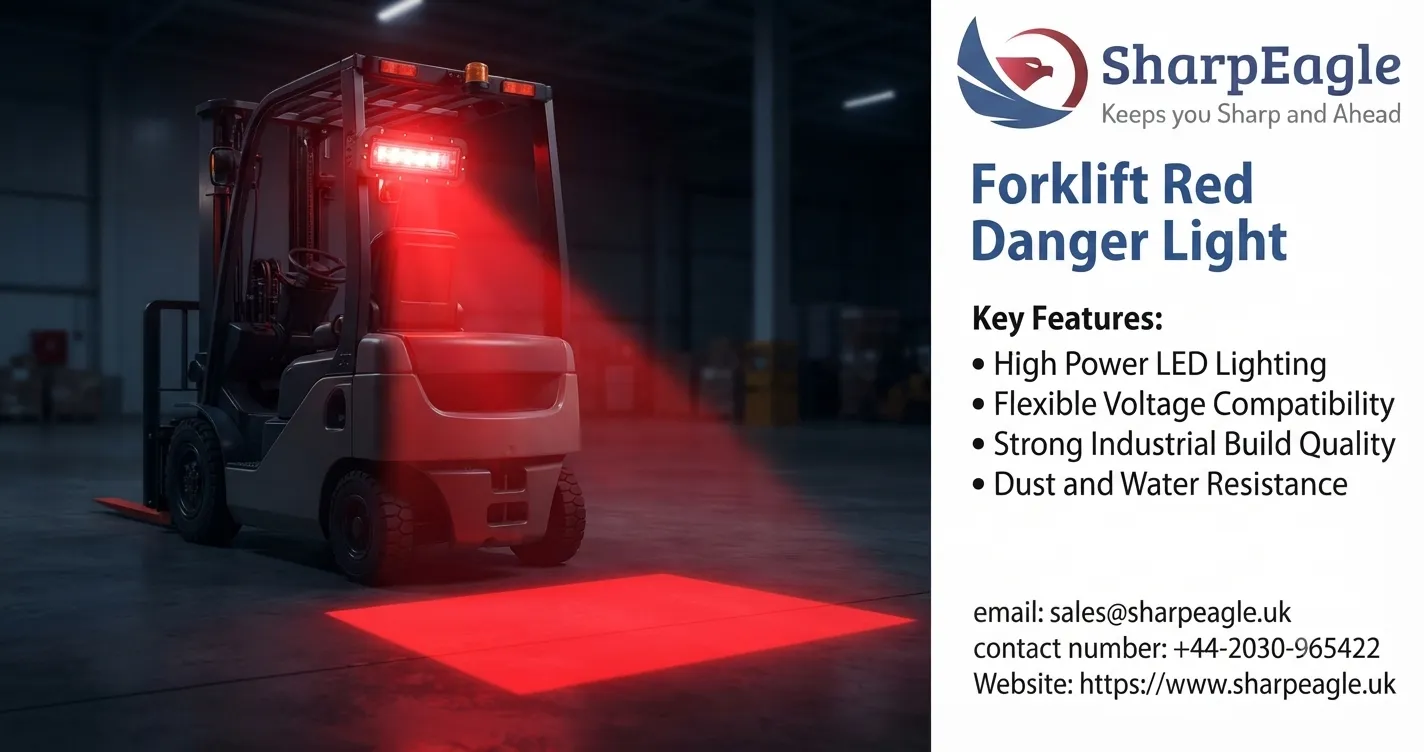
SharpEagle Technology supplies forklift laser safety lights engineered for the daylight and layout challenges UK sites actually face. Their range includes the Forklift Fork Laser Light for precise fork-tip visibility and the Forklift Laser Warning Light for general pedestrian alerting across varied site conditions.
Key features include:
- Durable optics designed to hold calibration under continuous multi-shift use
- Strong daylight cut-through for open bays and outdoor yards
- Retrofit compatibility across most forklift makes and models
- Consistent line projection for reliable fleet standardisation
Compare specifications on the Forklift Laser Light product page before your next equipment review.
Making the Right Call
As warehouse layouts grow more complex and daylight-heavy loading environments become the norm, the gap between blue spot and laser-line performance will only become more relevant to safety officers writing defensible risk assessments. Test both against your own site conditions rather than relying on assumptions. Contact SharpEagle Technology to arrange a comparison for your facility.





















Sign in to leave a comment.