

Walk up to any butcher’s counter and “fresh” feels like the safe choice. It sounds better, it looks better under the lights, and it carries a certain tradition. Yet some of the best steaks I have cooked came straight out of a freezer. The truth about fresh vs frozen beef is that neither wins every time. What matters is how the beef was frozen, how long it stayed that way, and how carefully you handle it afterwards, and that is what this guide walks through, from taste and texture to thawing and cooking.
What Is the Difference Between Fresh and Frozen Beef?
Fresh beef has never been frozen. It is bright red on the surface, firm and slightly dry to the touch, with a clean, mild smell, and it only lasts a few days in the fridge. Be aware that some counters display previously frozen steaks after thawing them, so ask your butcher if you are unsure. Frozen beef, by contrast, is held at around minus 18°C or colder, which halts spoilage and stretches its life to months. It comes in two forms: commercially flash-frozen steaks that are usually vacuum-sealed and beef frozen in a home freezer, and as you will see shortly, those two are not the same product.
| Factor | Fresh steak | Frozen steak |
| Shelf life | A few days in the fridge | Around 4 to 8 months |
| Taste and texture | Excellent when well handled | Close to fresh when frozen properly |
| Moisture | Retains more juice | May lose some during thawing |
| Price | Often higher | Often lower, especially in bulk |
Does Freezing Affect the Taste and Texture of Steak?
Beef is mostly water, and water expands as it turns to ice. Slow freezing forms large crystals that can damage muscle fibres, and when the steak thaws, some moisture escapes as drip. That pink liquid in the tray is flavour you will not get back, and less juice also means a weaker sear, because a wet surface steams before it browns.
The research is reassuring, though. Studies from Iowa State University and Kansas State University compared fresh and frozen beef steaks using trained panels and ordinary consumers, and the findings suggest frozen beef should not be dismissed on eating quality. Many consumers struggled to tell the two apart, although trained tasters may still pick up small differences. As for tenderness, freezing does not toughen steak by itself. That depends mostly on the cut, the animal, and any ageing, so a chewy frozen steak usually points to poor thawing or overcooking.
Fresh vs Frozen Steak: Head-to-Head Comparison
On flavour, well-frozen beef tastes very close to fresh, while long storage and freezer burn leave a stale, cardboard note. A steak frozen soon after butchering often beats a “fresh” one of unknown age. Fresh does keep the edge on juiciness, mainly because thawing releases drip, though flash-frozen steak thawed slowly in the fridge narrows the gap considerably. It also tends to have a slightly firmer bite, while steak frozen slowly or stored badly can feel a touch soft.
A dry surface browns well, so fresh steak patted dry gives a quick, deep crust, and thawed steak needs a thorough dab with kitchen paper first. Interestingly, America’s Test Kitchen found that steak cooked from frozen can brown nicely and cook more evenly, because the middle stays cooler while the outside sears. Nutrition is not a deciding factor, since protein, iron, and zinc are largely unaffected by freezing, and frozen steak is often cheaper, especially in bulk. You also thaw one portion at a time, which cuts waste.
Flash-Frozen vs Home-Frozen Steak
Commercial blast freezers drop the temperature very quickly, so ice crystals stay small and muscle fibres stay largely intact, and vacuum sealing keeps air away from the surface. Domestic freezers work more slowly, and the temperature wobbles every time you open the door, while steak left in a supermarket tray with air around it suffers from freezer burn sooner. When buying, look for tight vacuum packaging, no frost or ice crystals inside the pack, and no pool of frozen blood. The steak should be rock solid, because soft spots can mean it has thawed and been refrozen.
When Fresh Steak Is the Better Choice
Fresh suits thick, premium cuts such as ribeye or tomahawk, and any steak you plan to cook within a day or two. It is also the starting point for dry ageing, which is normally done on fresh, never-frozen beef. If you want to taste what that kind of beef is like, a good Steakhouse in Singapore that ages its own cuts is the easiest place to start, because the kitchen will usually tell you where the beef came from and how long it has hung. At home, a trusted butcher who knows the history of your beef is worth getting to know.
When Frozen Steak Is the Better Choice
Frozen makes sense for bulk buying, meal planning, online deliveries, and smaller households, and it helps where good fresh beef is expensive or hard to find. A well-packed flash-frozen steak is a far safer bet than a tired fresh one that has been sitting in the display for days, so do not assume the counter always wins.
How to Freeze Steak at Home and How Long It Keeps
Freeze steak on the day you buy it. Pat it dry, then vacuum seal it, or wrap it tightly in cling film and place it in a freezer bag with the air pressed out. Freeze single portions flat so they freeze quickly and thaw evenly, and write the cut and date on each bag. For best quality, steaks keep for around four to eight months, though flavour starts to decline after about four, and roasting joints last six to eight months. Beef held at a steady minus 18°C stays safe beyond this, but eating quality drops.
Do Steakhouses Use Fresh or Frozen Steak?
It varies. Many high-end steakhouses favour fresh, never-frozen Prime or dry-aged beef because it gives them control over ageing, cutting, and consistency, while others use frozen beef, especially for volume or budget cuts. Neither is automatically a mark of quality, so judge the steak, not the label.
Verdict: So, Which Is Better for Steak?
Choose fresh for dry-aged, premium cuts you will cook within days from a butcher you trust, and choose flash-frozen for bulk, convenience, and value. A badly frozen steak loses out to a good fresh one, but a good frozen steak usually beats a tired fresh one.
Conclusion
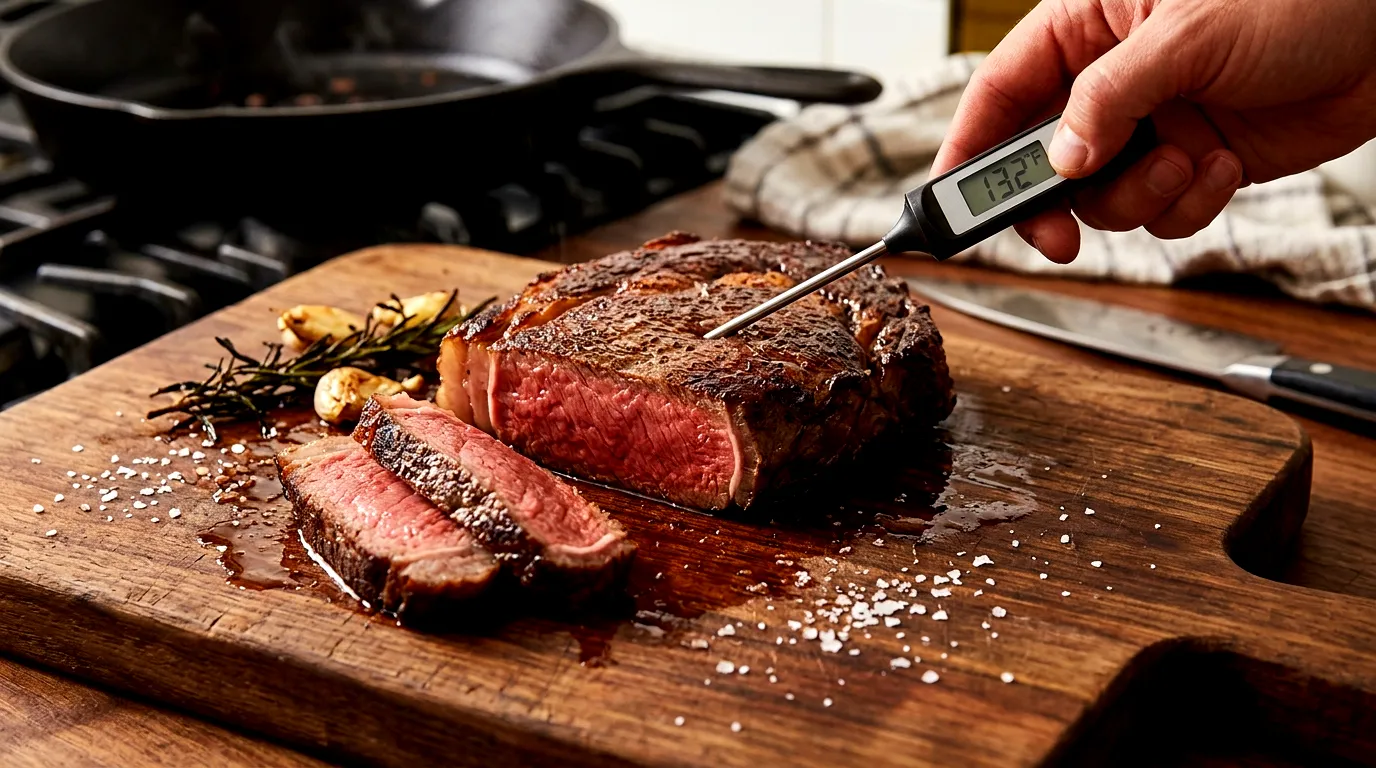
The fresh vs frozen beef debate rarely has a single winner, because the label on the pack matters far less than what happened to the steak before it reached your pan. A well flash-frozen ribeye, thawed slowly and seared in a properly hot pan, can sit comfortably beside a fresh one from the butcher, while a tired fresh steak that has spent days under the counter lights will often disappoint. Buy fresh when you want dry-aged or premium cuts and plan to cook within a couple of days, and keep good vacuum-packed steaks in the freezer for the evenings when life gets in the way. Whichever you choose, thaw it patiently, dry the surface well, and let a thermometer tell you when it is done. Get those few habits right, and you will cook a steak you are proud of, whatever form it arrived in.
FAQs
Is frozen steak as good as fresh steak?
It can be. Well flash-frozen and properly thawed steak is close to fresh in taste and texture.
Does freezing steak ruin the taste?
Not if it is packed well and eaten within a few months. Freezer burn and long storage cause most flavour problems.
Is it better to cook steak from frozen or thawed?
Thick cuts cook very well from frozen, while thin steaks are better thawed.
Is frozen beef less nutritious than fresh beef?
There is no meaningful difference in protein, iron, or zinc, and any vitamin loss is small.
Can you refreeze steak once it has been thawed?
If it was thawed in the fridge, you can refreeze it within a day or two, though quality will dip. Steak thawed in water or the microwave should be cooked first.
Why is frozen steak cheaper than fresh steak?
Often because suppliers can sell in bulk, store for longer, and waste less.






















Sign in to leave a comment.