From Bookkeeping to Tax Compliance: What Accounting Services in Malta Cover

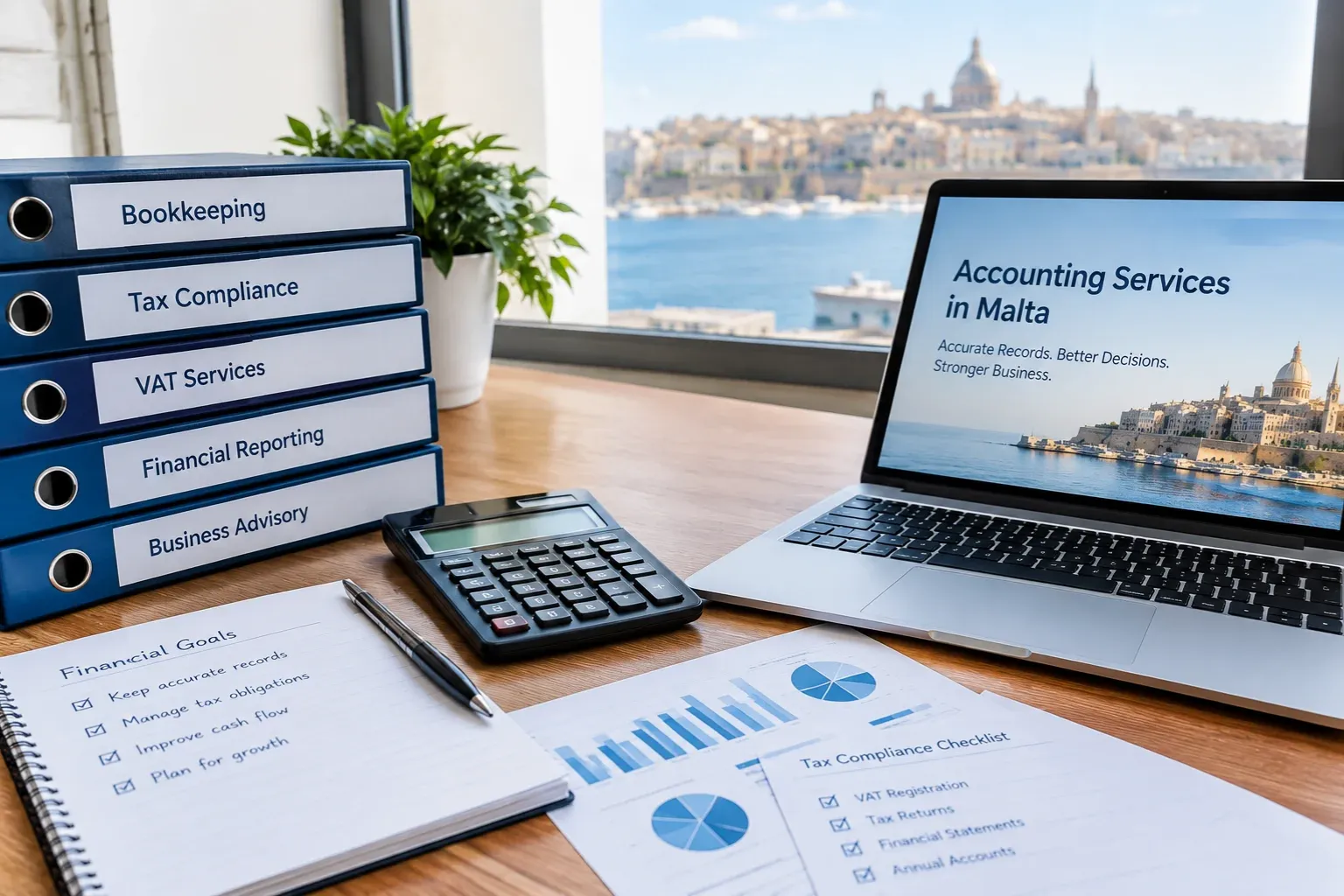
Many new business owners think accounting means filing a tax return once a year. In reality, it starts on day one and never really stops. Every invoice, payment, and payslip leaves a trail that the authorities may ask about later.
That is why accounting services in Malta cover far more than number crunching. They keep your records clean, your reports accurate, and your filings on time. This guide walks through each layer, from daily bookkeeping to tax compliance, so you know what to expect.
What Do Accounting Services Include?
Accounting services are the financial tasks that record, organise, report, and settle a company's money matters. For a Maltese business, this usually means bookkeeping, payroll, financial statements, VAT, and tax filings. Many firms add advisory work on top.
Think of it as a ladder. Each step depends on the one below it.
Bookkeeping: The Foundation
Bookkeeping is where everything begins. Your accountant records sales, expenses, and bank transactions, then matches them against receipts and invoices. When this happens every month, you always know where your business stands.
What Good Bookkeeping Looks Like
- Invoices and receipts filed and coded correctly
- Bank accounts reconciled every month
- Supplier and customer balances tracked
- Cloud software used, such as Xero or QuickBooks
Pro Tip: Send receipts weekly, not yearly. A shoebox of paper in March costs far more to sort than a folder updated every Friday.
Payroll and Employee Compliance
Once you hire staff, payroll joins the list. Someone has to calculate wages, social security contributions, and tax deductions. Those amounts must then be reported to the Maltese tax authorities.
Employers submit monthly Final Settlement System (FSS) payments and an annual reconciliation. Mistakes hurt twice, because employees notice and so do the authorities.
Financial Statements and Reporting
After the books are tidy, your accountant prepares financial statements. These include a profit and loss account, a balance sheet, and explanatory notes. Companies registered in Malta must file annual accounts with the Malta Business Registry, and most must have them audited.
Why These Reports Matter
Banks ask for them when you apply for a loan. Investors read them before committing money. They also guide your own decisions, like whether you can afford a new hire or a bigger office.
Tax Compliance: Where Accuracy Pays Off
Tax is the part most owners worry about, and for good reason. Deadlines are strict, and penalties and interest add up quickly. Reliable accounting services in Malta handle these filings so nothing slips through.
Common Filings Your Accountant Handles
- VAT returns, filed on a schedule that depends on your turnover
- Annual income tax returns for companies and self-employed individuals
- Provisional tax payments made during the year
- Shareholder tax refund claims after dividends are paid
Did You Know? Malta's headline corporate tax rate is 35%, but shareholders can often claim a refund once dividends are paid. That can bring the effective rate down a lot, which is why accurate calculations matter so much.
Beyond the Basics: Advisory and Business Support

Good accountants do not only look backward. They help you plan ahead. Typical support includes:
- Budgeting and cash flow forecasts
- Company setup and registration
- Tax planning for growth or expansion
- Help during audits or tax inspections
At Precision Point, we have seen that owners who meet their accountant every quarter, not just at year end, catch problems much earlier. A small gap in cash flow is easy to fix in April. By December, it can become a crisis.
How to Choose the Right Accounting Partner
Not every firm suits every business. When comparing accounting services in Malta, look for these things:
- A clear scope of work and transparent pricing
- Qualified, licensed professionals, ideally with Malta Institute of Accountants membership
- Experience in your industry, whether retail, iGaming, or professional services
- Modern cloud tools and quick, friendly communication
Common Mistakes to Avoid
Many owners pick the cheapest quote without checking what it includes. Others hand over documents at the last minute or assume the accountant will chase them. A good partnership works both ways.
Ready to Take Accounting Off Your Plate?
Running a business is hard enough without worrying about deadlines and spreadsheets. Let experts handle the numbers while you focus on growth.
Precision Point supports Maltese businesses with accurate, reliable, and easy-to-understand financial support. Visit precisionpointmalta.com, tell us what you need, and get a clear plan for your business. Reach out today and see how much lighter month-end can feel.
Frequently Asked Questions
1. What is the difference between bookkeeping and accounting?
Bookkeeping records daily transactions. Accounting goes further by analysing that data, preparing financial statements, and handling tax filings. Bookkeeping feeds accounting, so you need both.
2. Does a small business in Malta really need an accountant?
Yes, in most cases. Even small businesses face VAT rules, income tax returns, and filing deadlines. An accountant saves time and helps you avoid costly penalties.
3. How often should I meet my accountant?
Quarterly works well for most small and medium businesses. Fast-growing companies may prefer monthly check-ins. A year-end-only meeting is usually too late to fix problems.
4. Which documents should I give my accountant?
Share sales invoices, supplier bills, bank statements, payroll records, and contracts. Receipts for business expenses matter too. Organised, timely documents make everything faster and cheaper.
5. What happens if I miss a tax deadline in Malta?
You may face administrative penalties and interest on unpaid amounts. Repeated late filings can draw extra attention from the authorities. Contact your accountant quickly to limit the damage.





Sign in to leave a comment.