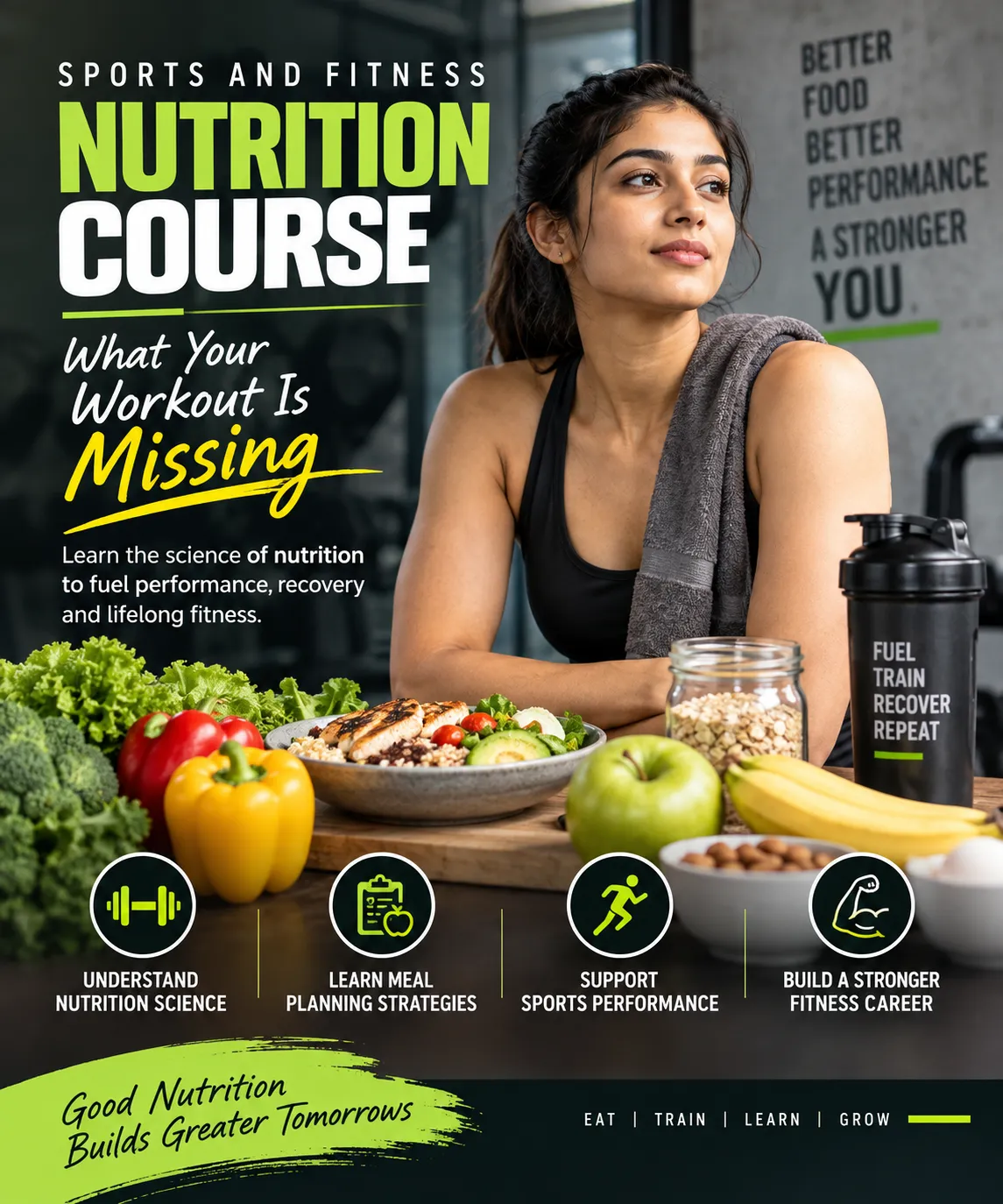

Fitness is no longer just about workouts, lifting weights, or counting steps. Today, people are becoming increasingly aware that nutrition plays a critical role in performance, recovery, body composition, energy, and long-term wellness. This growing awareness has created exciting opportunities for professionals who understand both fitness and nutrition.
A sports and fitness nutrition course can help aspiring fitness professionals develop the knowledge required to understand nutritional needs, create practical diet strategies, and support clients or athletes more effectively. Whether you want to work with gym clients, athletes, online fitness audiences, or wellness communities, learning sports nutrition can add a valuable dimension to your professional skill set.
The right education can take you beyond generic diet advice and introduce you to evidence-based concepts such as energy requirements, hydration, meal timing, supplementation, recovery nutrition, and sports-specific dietary planning.
Why Is Sports Nutrition Becoming So Important?
A workout plan is only one part of the fitness equation. Training creates the stimulus, while nutrition provides many of the resources required for adaptation and recovery.
Athletes and fitness enthusiasts may have different nutritional requirements depending on their:
- Training intensity
- Sport or activity
- Body composition
- Fitness goals
- Training phase
- Energy expenditure
- Recovery requirements
- Dietary preferences
This is why professionals need more than basic knowledge of calories and macronutrients.
A structured sports nutrition certification can introduce learners to the principles behind nutritional assessment, meal planning, hydration, supplementation, and performance-focused nutrition.
For fitness professionals, this knowledge can also improve communication with clients. Instead of simply saying "eat healthy," professionals can understand the reasoning behind different nutritional strategies and communicate them in a practical way.
What Do You Learn in a Sports and Fitness Nutrition Course?
A comprehensive sports and fitness nutrition course should combine nutritional theory with practical application. The objective is not simply to memorize nutrient definitions but to understand how nutrition can be applied in real-world fitness and sports environments.
A typical curriculum can cover areas such as:
1. Fundamentals of Nutrition
Students begin with the foundations of nutrition, including:
- Macronutrients and micronutrients
- Calories and energy balance
- Carbohydrates, proteins, and fats
- Vitamins and minerals
- Balanced diet principles
- Food sources and nutrient quality
These fundamentals create the foundation for more advanced sports nutrition concepts.
2. Nutritional Assessment
Understanding an individual's nutritional requirements is an important part of effective coaching.
Students can learn how to examine:
- Dietary habits
- Meal patterns
- Hydration
- Energy requirements
- Training schedules
- Lifestyle factors
- Nutritional history
This helps professionals move towards a more personalized approach rather than relying on one-size-fits-all diet plans.
3. Sports-Specific Nutrition Planning
Different sports and training styles can create different nutritional demands.
A sports nutrition certification may introduce learners to nutrition strategies related to:
- Strength training
- Endurance sports
- Bodybuilding
- General fitness
- Weight management
- High-intensity training
- Competition preparation
Understanding training phases can also help professionals consider how nutritional requirements may change throughout a training cycle.
4. Hydration and Recovery
Hydration and recovery are essential parts of sports performance.
Learners can explore:
- Hydration strategies
- Fluid requirements
- Recovery nutrition
- Post-workout nutrition
- Nutrient timing
- Energy replenishment
These concepts are particularly useful for fitness professionals who work closely with active clients.
5. Supplements and Their Responsible Use
Supplements are widely discussed within the fitness industry, but professionals need to approach them carefully.
A quality course can help students understand:
- Common sports supplements
- Supplement purposes
- Potential benefits and limitations
- Safety considerations
- Appropriate usage
- The importance of evaluating individual needs
The goal should be informed decision-making rather than promoting supplements as a replacement for a balanced diet.
Who Should Consider a Sports and Fitness Nutrition Course?
One of the biggest advantages of nutrition education is that it can complement several existing career paths.
A sports and fitness nutrition course can be relevant for:
- Personal trainers
- Strength and conditioning coaches
- Fitness instructors
- Sports professionals
- Athletes and fitness enthusiasts
- Wellness coaches
- Yoga professionals
- Nutrition students
- Health and fitness entrepreneurs
- Individuals planning a career in nutrition coaching
For personal trainers, adding nutrition knowledge can make client conversations more comprehensive. For fitness enthusiasts, it can turn personal interest into structured professional learning.
If your primary goal is to become a personal trainer, you can also explore a Personal Training Course to build exercise and coaching expertise alongside nutrition knowledge.
How Can Sports Nutrition Skills Support a Fitness Career?
The fitness industry is becoming increasingly diverse. Professionals are no longer limited to traditional gym-floor roles.
Nutrition knowledge can complement careers such as:
Personal Nutrition Coach
Professionals can work with fitness audiences to provide nutrition education and practical guidance within their qualifications and scope of practice.
Fitness & Wellness Coach
Combining exercise knowledge with nutrition education can help professionals take a more holistic approach to fitness coaching.
Online Fitness Professional
Digital platforms have created opportunities for professionals to provide educational content, consultations, coaching, and wellness programs online.
Gym or Sports Facility Professional
Gyms, sports clubs, and fitness facilities can benefit from professionals who understand the relationship between training, nutrition, and recovery.
Fitness Entrepreneur
Nutrition knowledge can also become part of a broader fitness business involving coaching, educational content, wellness programs, or online services.
For professionals interested in combining personal training with nutrition, a Personal Training + Sports Nutrition Combo Course can provide training across both areas.
What Makes a Good Sports Nutrition Course?
Choosing a course should involve more than looking at the certificate title. Prospective students should examine the curriculum, learning format, practical exposure, assessment structure, and relevance to their career goals.
Look for a program that includes:
- Evidence-based nutrition concepts
- Sports-specific nutrition
- Nutritional assessment
- Meal planning principles
- Hydration and recovery
- Supplement education
- Case studies
- Practical assignments
- Client communication
- Professional ethics
- Career-oriented learning
A strong sports nutrition certification should help learners understand how to apply knowledge rather than simply memorize theory.
For those who prefer flexible learning, an online format can also make professional education more accessible alongside work or other commitments.
Why Add Nutrition Knowledge to Your Fitness Skill Set?
Imagine a client who trains five days a week but struggles with recovery, energy, or consistency.
Training alone may not address every factor influencing that person's progress. Nutrition, sleep, hydration, stress, and lifestyle can all contribute to the overall picture.
That is where multidisciplinary knowledge becomes valuable.
Nutrition education can help fitness professionals:
- Communicate more confidently with clients
- Understand dietary habits
- Develop practical nutrition strategies
- Discuss recovery more effectively
- Understand sports supplementation
- Create educational fitness content
- Expand their professional skill set
However, professionals should always work within their education, certification, and applicable legal scope, particularly when dealing with medical conditions or clinical nutrition.
Start Building Your Nutrition Career
The fitness industry rewards professionals who continue learning.
If you are passionate about fitness and want to understand what happens beyond the workout floor, a sports and fitness nutrition course can be a meaningful step toward expanding your knowledge.
A structured program can give you a foundation in nutrition science, nutritional assessment, sports-specific planning, hydration, recovery, supplementation, and professional communication.
Whether you are starting your fitness career or already working with clients, nutrition education can help you develop a broader perspective on performance and wellness.
Ready to Take the Next Step?
For aspiring fitness professionals: Build nutrition knowledge that complements your fitness training.
For personal trainers: Add nutrition expertise to create a more complete coaching approach.
For athletes and fitness enthusiasts: Learn the science behind fueling training, recovery, and performance.
For career changers: Turn your interest in fitness and nutrition into structured professional learning.
Explore the Sports Nutrition Course and discover how structured nutrition education can support your next career move.
Frequently Asked Questions
1. What is a sports and fitness nutrition course?
A sports and fitness nutrition course teaches the principles of nutrition as they relate to physical activity, exercise, sports performance, recovery, and general fitness. Topics can include energy requirements, macronutrients, hydration, meal planning, supplementation, and nutritional assessment.
2. Who can enroll in a sports nutrition course?
Such courses can be suitable for personal trainers, fitness professionals, athletes, wellness coaches, students, and fitness enthusiasts. Eligibility requirements can vary between programs.
3. Is sports nutrition useful for personal trainers?
Yes. Nutrition education can complement personal training by helping trainers understand clients' dietary habits, recovery requirements, hydration, and performance-related nutrition concepts.
4. Can I study sports nutrition online?
Yes. Online sports nutrition programs are available and can provide flexible learning for students, working professionals, and fitness practitioners.
5. What career opportunities can sports nutrition training support?
Depending on qualifications, scope of practice, and local regulations, sports nutrition education can support roles involving fitness nutrition coaching, wellness education, sports nutrition support, online fitness coaching, and nutrition-focused fitness services.
6. Is a sports nutrition certification enough to become a clinical dietitian?
No. A sports nutrition certification and clinical dietetics are different professional pathways. Individuals interested in clinical nutrition should follow the relevant accredited academic and professional requirements applicable to their location.
Conclusion
Nutrition is becoming an increasingly important part of modern fitness and sports performance. For professionals who want to go beyond exercise instruction, a Understanding the Basics of Sports Nutrition
The Importance of Macronutrients in Athletic Performance
Micronutrients: The Unsung Heroes of Fitness
Key Components of a Sports Nutrition Course
How to Choose the Right Nutrition Course for You
Real-World Applications: Nutrition in Sports Training
Success Stories: Athletes Who Transformed Their Performance
Future Trends in Sports Nutrition Education
can provide valuable knowledge about fueling, recovery, hydration, supplementation, and personalized nutrition strategies.
With the right curriculum and practical learning approach, sports nutrition certification can complement existing fitness skills and help professionals build a broader foundation for careers in the fitness and wellness industry.
If you are ready to strengthen your knowledge and explore new opportunities, now is the time to turn your interest in fitness nutrition into a structured professional skill.



























Sign in to leave a comment.