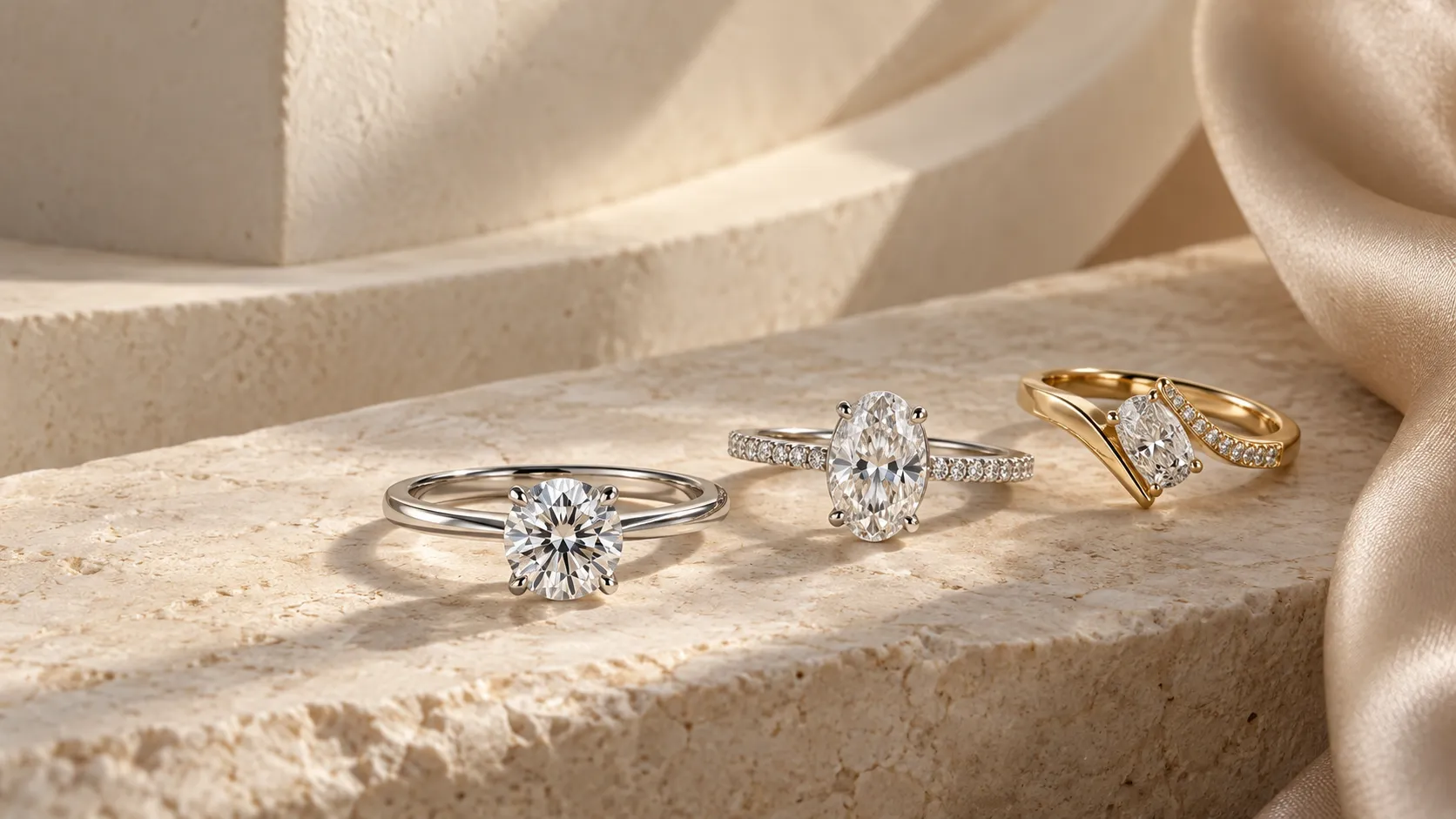


An engagement ring has to do more than look beautiful in a photograph. It becomes part of the wearer’s daily life, so its design must balance meaning, personal style, comfort, and practicality. The most suitable choice may be a timeless solitaire, a detailed halo, a sleek geometric setting, or a ring that combines classic elements with a contemporary profile.
Understanding the main engagement ring styles makes the selection process more manageable. It also helps couples look beyond temporary trends and focus on the design details that will continue to feel personal over time.
Why Solitaire Engagement Rings Remain Popular
A solitaire features one central stone as the clear focal point. Its visual simplicity allows the diamond’s shape and proportions to stand out without competition from additional stones or elaborate decoration.
The solitaire is often considered traditional, but small design decisions can give it a distinctly modern character. A slim band creates a delicate appearance, while a wider band adds structure. The number and style of prongs influence how open or enclosed the setting looks. The height of the stone also changes both the appearance and practicality of the ring.
Solitaire designs are generally easy to coordinate with wedding bands because their uncluttered structure leaves room for different pairings. Couples comparing this classic style can explore the solitaire jewellery collection from La Marquise to see how a single central diamond can be presented through varied settings and proportions.
Diamond Shapes and Their Visual Effect
The shape of the centre diamond has a major influence on the ring’s personality. It affects how the stone reflects light, how it sits across the finger, and how the complete design feels.
Round diamonds create a balanced, familiar look that suits both minimal and detailed settings. Oval stones provide a softer, elongated outline, while marquise shapes create a more distinctive pointed silhouette. Pear-shaped diamonds combine rounded and tapered elements, giving the ring a graceful sense of direction.
Emerald-cut diamonds have long, clean facets and a rectangular profile. Their structured appearance works naturally with architectural settings and understated bands. Cushion shapes feel softer, while princess and other square cuts introduce sharper geometry.
There is no universally superior shape. The right one is the shape that appeals to the wearer and sits comfortably within the intended setting.
Halo and Diamond-Accented Designs
A halo arrangement surrounds the centre stone with smaller diamonds. This adds detail around its outline and produces a more decorative appearance than a solitaire. The shape of the halo may closely follow the centre stone or create a contrasting frame.
Diamond-set shoulders extend the brilliance along the band while keeping the centre stone clearly defined. These accents can be restrained or more prominent, depending on how much surface of the band is covered.
The key is visual balance. If the centre stone has an unusual shape, too much surrounding detail may make its outline harder to appreciate. A simpler halo or lightly accented band can preserve the stone’s identity while still adding texture.
Three-Stone and Multi-Stone Rings
Three-stone engagement rings place a central diamond between two supporting stones. This creates a wider composition across the finger and allows more opportunity for contrast.
The side stones may repeat the centre shape for symmetry or use different shapes to frame it. Tapered or smaller side stones can guide attention towards the centre, while similarly sized stones produce a bolder horizontal arrangement.
Multi-stone designs may use clusters or carefully spaced diamonds to create an expressive silhouette. These rings often feel more individual than a conventional solitaire, but they should still have a clear focal point. Without visual hierarchy, several stones can make the setting appear busy.
Contemporary and Geometric Engagement Rings
Modern engagement rings often experiment with negative space, asymmetry, mixed stone shapes, open forms, and sculptural bands. These features can make a ring feel current without relying on excessive decoration.
An offset stone or angled setting introduces movement. Split bands add structure around the centre, while bezel-inspired settings create a clean outline around the diamond. Some designs use geometric details to give a traditional stone shape a sharper, more architectural presentation.
Contemporary does not necessarily mean dramatic. A small change in proportion or setting can give a familiar engagement ring a fresh identity. The broader engagement jewellery collection from La Marquise offers a relevant place to consider how refined craftsmanship and modern styling can work together.
Choosing the Right Metal
Metal colour changes how the diamond and the complete ring are perceived. White metal creates a cool, continuous look beside white diamonds. Yellow gold introduces warmth and provides a clear contrast around the setting.
The wearer’s existing jewellery can guide the decision, but it does not have to determine it completely. Someone who usually wears yellow gold may still prefer a white-metal engagement ring, especially if they are comfortable mixing metals. A wedding band or two-tone jewellery can later connect the different colours.
Beyond appearance, the width and finish of the band deserve attention. A high-polish surface feels sleek and reflective, while textured details may create a more individual look. The band should also feel substantial enough for regular wear without appearing heavy on the hand.
Consider Setting Height and Daily Comfort
A raised setting can make the centre stone more prominent and may allow a straight wedding band to sit closely beside the engagement ring. It can also catch more easily on clothing or gloves.
Lower-profile settings sit closer to the finger and may suit someone with an active routine. The trade-off is that certain wedding bands might not sit completely flush, depending on the shape of the setting.
Before choosing, consider the wearer’s work, hobbies, and everyday habits. Someone who frequently works with their hands may value a secure, smooth profile. Comfort should be assessed alongside appearance, not treated as a secondary concern.
Plan for the Wedding Band
An engagement ring does not need to be purchased as part of a matching set, but thinking about the future wedding band can prevent pairing difficulties.
Straight bands work naturally with many solitaires. Rings with low baskets, wide halos, or unusual outlines may require a curved or contoured band. A diamond wedding band can add brilliance, while a plain metal band provides contrast and keeps attention on the engagement ring.
The two rings should feel comfortable together and should not press awkwardly against one another. Their widths, heights, and metal colours can coordinate without being identical.
Get the Ring Size Right
Accurate sizing affects comfort, security, and how the ring sits on the hand. A correctly fitted ring should move over the knuckle with slight resistance and rest comfortably at the base of the finger without constant rotation.
Finger size can vary with temperature and time of day. Measuring under normal conditions and checking more than once can provide a more reliable result. La Marquise provides a practical jewellery size guide for comparing ring measurements before ordering.
Select a Design With Lasting Personal Value
Trends can provide inspiration, but an engagement ring should reflect the wearer rather than a passing aesthetic. Look at the jewellery they already choose, the shapes they prefer, and how much detail feels natural to them.
A classic solitaire may be ideal for someone who values simplicity and versatility. A halo or three-stone design can suit a preference for greater brilliance, while a geometric setting may appeal to someone drawn to modern, distinctive forms.
The strongest engagement ring choice is not defined by one shape or style. It is the design that feels meaningful, fits comfortably, and continues to look like the wearer long after the proposal.






















Sign in to leave a comment.