

Professional services firms rarely struggle to generate interest. Someone searches for exactly the kind of help they need, lands on your website already partly convinced, and fills out an enquiry form. The intent is there. The interest is real. The problem is what happens next.
Most of the leak in a professional services funnel does not happen at the top. It happens in the gap between a completed enquiry and a confirmed consultation - a gap that most firms do not track carefully because the lead still shows up as a lead in whatever system is managing it. The form was filled in. The box is ticked. What actually happened to that person afterward is a different question, and most firms cannot answer it with any precision.
This article covers where the friction sits, why it costs more than most firms realise, and what a genuinely frictionless consultation booking process looks like in practice.
The Leak Is Not Where Most Firms Think It Is
The default assumption is that conversion problems live in the ad copy or the landing page. Those things matter, and improving them is worthwhile. But for most professional services businesses, the bigger drop-off happens after someone has already decided they are interested.
A prospect who fills out an enquiry form at 9 pm on a Tuesday is at peak intent at that moment. If the next thing they receive is a "we will be in touch shortly" message, and an actual human follows up the next morning at 10 am, that is somewhere between 12 and 13 hours for their interest to cool, for a competitor to respond faster, or simply for life to get in the way. By the time the callback comes, the person who was ready to book a consultation is now busy and mildly inconvenienced.
The fix is not complicated. A professional services funnel that sends a booking link in the immediate confirmation - before anyone on the team has even seen the enquiry - converts a higher share of that intent into booked consultations than one that routes through manual follow-up. The prospect can pick a time while they are still in the mindset that led them to fill in the form.
Self-scheduling is not just a convenience feature. It is a conversion mechanism.
Why the First Call Feels Like Starting Over
The second major friction point is the consultation itself - specifically, how it begins.
A prospect spends time filling out an enquiry form describing what they need, their situation, their timeline, and what they have already tried. They arrive at the consultation expecting to continue that conversation. Instead, the first ten minutes are spent re-answering the same questions the form already covered.
That experience signals something worse than inefficiency. It signals that nobody read what they wrote. For a professional services firm selling trust and expertise, that is exactly the wrong signal to send at the first substantive interaction.
A CRM for professional services that pulls form responses, prior engagement history, and any enrichment data into a single view before the call starts changes this completely. A consultation that opens with a specific reference to what the prospect described in their enquiry - "you mentioned you are looking to restructure before the end of the financial year, tell me more about what is driving that timeline" - lands entirely differently than one that opens with a generic qualification script.
The prospect feels heard before the conversation has properly started. That matters.
The Follow-Up Gap That Loses Winnable Deals
Not every consultation ends with an immediate decision. In professional services, that is expected. Engagements involve meaningful spend, ongoing relationships, and decisions that often involve more than one person. A prospect who says "let me think about it" or "I need to discuss it with my business partner" is not saying no. They are saying not yet.
The firms that win these deals consistently are the ones that stay in contact through the decision window in a way that feels relevant rather than pushy. A follow-up that references the specific conversation - the problem that was discussed, the approach that was outlined, the question that was left open - reads as attentiveness. A generic "just checking in" reads as a chase.
Most firms follow up once, immediately after the consultation, and then go quiet. If the prospect does not respond to that first message, the deal quietly stalls. It never formally closes. It just stops moving, and six months later the firm finds out through a mutual contact that the person signed with someone else.
A structured follow-up sequence built into the professional services funnel - spaced over two to three weeks, referencing the actual consultation, stopping automatically when the prospect responds - keeps warm deals warm without requiring anyone to remember to send a message.
What a Frictionless Funnel Actually Looks Like Stage by Stage
The stages are not complicated. The discipline is in making each handoff happen automatically rather than depending on someone remembering.
Enquiry submitted. Instant confirmation sent. Booking link included in that confirmation, not in a follow-up. The prospect can schedule while their interest is at its peak.
Consultation booked. Automated reminder sent the day before. A second reminder the morning of. No-show rates drop significantly when reminders are timed well - not too early to be forgotten, not so last-minute that rescheduling is difficult.
Pre-call preparation. Form responses and any prior engagement history pulled into a single view. The consultant starts the call knowing who they are speaking to and what that person said they needed.
Consultation held. Outcome logged immediately - decision made, follow-up needed, not a fit. Each outcome triggers the appropriate next action without anyone having to decide what that action should be.
Post-consultation follow-up. Automated sequence for anyone who did not decide on the call. Each touch references the conversation. The sequence pauses when the prospect responds. Deals that are still warm do not get dropped because the week got busy.
The Difference This Makes Day to Day
A prospect fills out an enquiry form at 8 pm. A confirmation and booking link arrive within seconds. They book a Thursday slot. A reminder goes out Wednesday afternoon and Thursday morning. The consultant opens the call already knowing what was written in the form and what questions to ask to move the conversation forward.
The consultation goes well. The prospect wants a few days. A follow-up lands four days later referencing the specific problem that was discussed. That follow-up is what closes the deal - not because it was clever, but because it was there when a manual process would have gone quiet.
That is the practical difference between a consultation booking process built around automation and one built around memory. The former is consistent. The latter is only as reliable as the person having the best week.
Getting the Funnel Right
If your firm's enquiry-to-consultation process still depends on someone remembering each step - who to follow up with, when to send the reminder, what the prospect said in their form - the cost of that dependency shows up in your conversion rate, even if it is not easy to see exactly where.
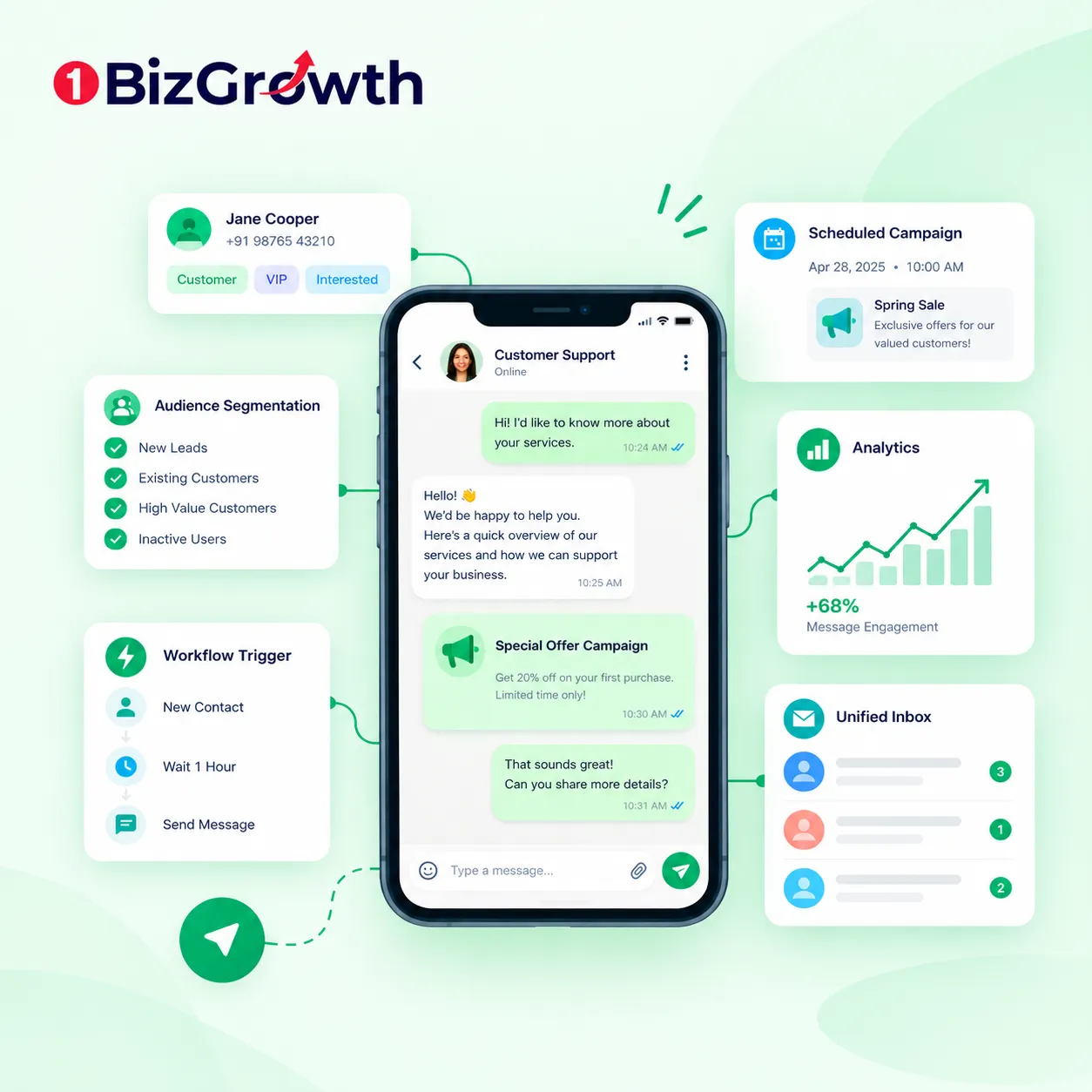
OneBizGrowth is built for professional services firms that want to manage the full funnel from a single platform. Enquiry capture, instant consultation booking, pre-call context, outcome tracking, and structured follow-up - all connected through a CRM for professional services designed to make the handoffs between each stage automatic rather than manual. If you want to see what that looks like for a firm your size, get in touch for a walkthrough.






















Sign in to leave a comment.