

Mumbai's commercial real estate market is evolving. Businesses are rethinking their office requirements, flexible workspace operators are expanding their presence, and Global Capability Centres (GCCs) continue to influence demand for commercial offices across India.
For companies planning an office move or expansion, these changes raise important questions. Which Mumbai locations deserve attention? Are businesses choosing flexible workspaces over traditional leases? And what does growing demand mean for office availability and rental costs?
Understanding the latest office space trends in Mumbai can help businesses make more informed decisions about where and how they work.
1. Mumbai's Office Market Continues to Attract Businesses
Mumbai remains an important commercial real estate market, supported by its financial services industry, corporate headquarters, consulting firms and technology businesses.
According to Cushman & Wakefield's Q3 2026 Mumbai Office MarketBeat report, the city recorded 3.9 million sq. ft. of office leasing during the quarter. Leasing for the first nine months of 2026 reached 14.6 million sq. ft., a record for the period. Net absorption stood at 1 million sq. ft. in Q3, while the reported vacancy rate declined to 8.33%.
These figures indicate continued demand for commercial offices, although activity varies between locations and industries.
For businesses, this means office planning requires more than identifying available space. Companies should consider building quality, employee commute times, access to clients and the total cost of occupancy before selecting a location.
2. Flexible Workspaces Are Becoming a Bigger Part of Office Planning
One of the notable office space trends in Mumbai is the growing role of flexible workspaces.
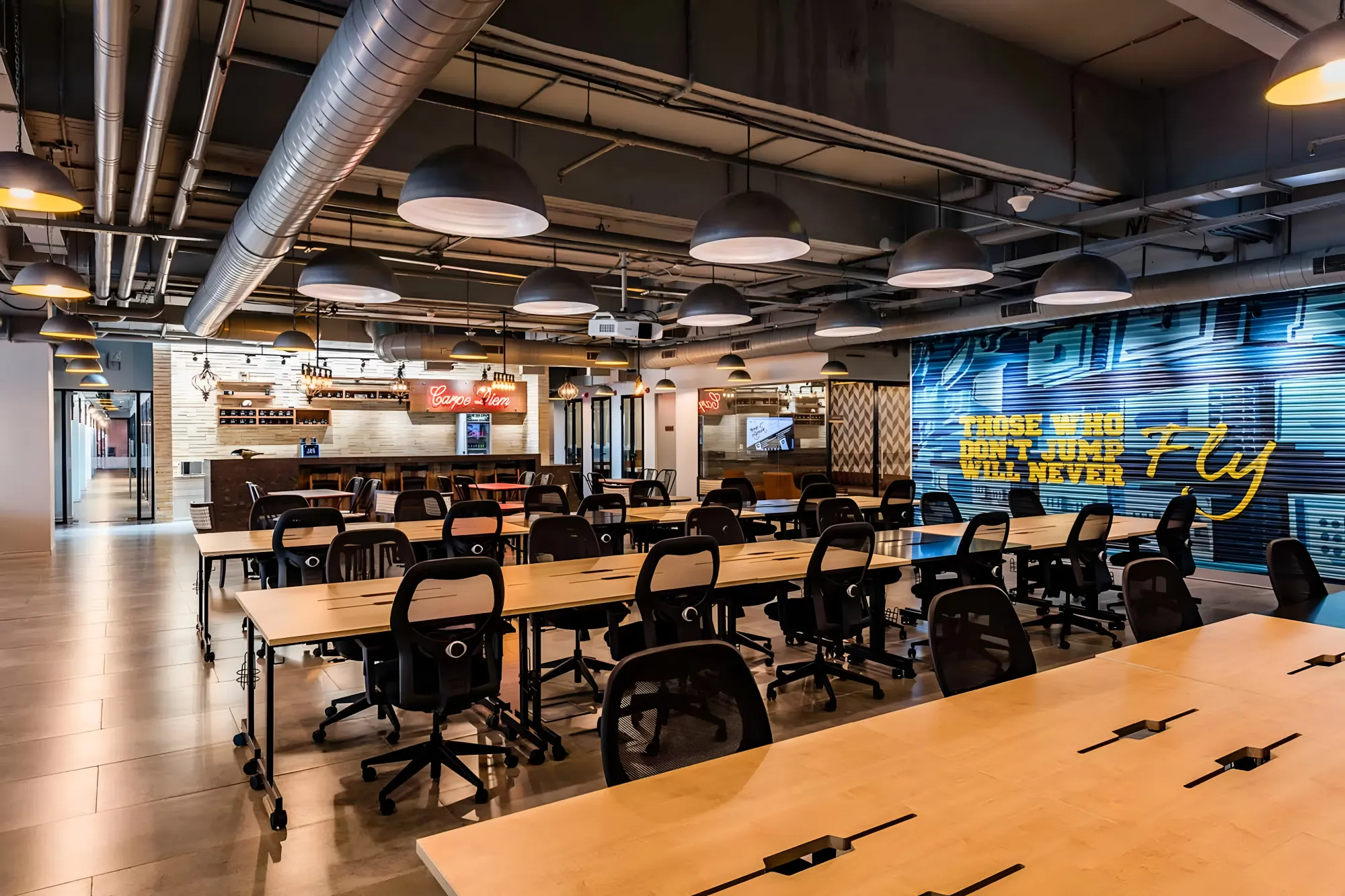
Traditional office leases can require substantial upfront investment, long-term commitments and responsibility for fit-outs, maintenance and other operational requirements. Coworking spaces and managed offices offer an alternative for businesses that want a furnished workspace with greater flexibility.
National market data highlights the scale of this shift. Cushman & Wakefield reported that flexible workspace operators leased 8.4 million sq. ft. across India's leading office markets in H1 2026, accounting for approximately one-fifth of total office leasing activity. The segment recorded its highest-ever half-year leasing volume at that point.
Flexible workspace options can benefit different types of businesses:
- Startups can establish an office without independently managing the entire setup.
- Small and medium-sized businesses can access private cabins and shared facilities.
- Established companies can use managed offices for expansion or project teams.
- Distributed teams can explore workspaces closer to employees or clients.
Flexible workspaces are not necessarily cheaper in every situation. Their value depends on team size, membership terms, location and the facilities included. Businesses should compare the total cost against a conventional lease before making a decision.
3. GCCs Are Influencing Commercial Office Demand
Global Capability Centres have become an important part of India's commercial real estate story.
GCCs are offshore centres established by multinational companies to perform functions such as technology development, analytics, finance, research, engineering and business operations. Their requirements can range from specialised work environments to large corporate offices.
According to Cushman & Wakefield's Q3 2026 India office market report, GCCs leased 9.1 million sq. ft. across the country's leading office markets during the quarter, representing 42% of total leasing activity.
Mumbai is part of this broader demand landscape. Its financial services ecosystem, established corporate base and access to professional talent make it relevant for businesses evaluating office locations.
However, GCC requirements vary considerably. Some need large, conventional offices with customised infrastructure, while others may consider managed workspaces for particular teams or expansion requirements.
For commercial property owners and workspace operators, this creates opportunities to serve companies with different space, technology and operational needs.
4. Businesses Are Comparing More Mumbai Office Locations
Office location decisions increasingly involve balancing business requirements against rental costs, accessibility and employee convenience.
Mumbai's commercial market includes several established office districts, each serving different needs.
Bandra-Kurla Complex (BKC) is a prominent choice for financial services firms, multinational companies and businesses seeking a premium corporate address.
Andheri East attracts businesses looking for access to the airport, major roads and established commercial developments.
Powai offers a developed business environment that may suit technology companies, startups and established teams.
Lower Parel has a mix of commercial developments and corporate offices, making it worth considering for businesses seeking a central Mumbai presence.
Goregaon and Malad provide additional options for companies serving Mumbai's western suburbs.
Thane and Navi Mumbai are also relevant to businesses operating across the wider Mumbai Metropolitan Region.
These locations are not interchangeable. The right choice depends on the company's budget, employee commute patterns, client base and office requirements.
Businesses should compare specific buildings and available workspaces rather than assuming that an entire locality will offer the same costs or facilities.
5. Rental Costs and Availability Require Closer Attention
Another important trend is the relationship between office demand, available supply and rental movements.
JLL's Q2 2026 Mumbai office market report recorded 1.69 million sq. ft. of gross leasing during the quarter. The report also noted that overall vacancy declined to 10.8%, its lowest level in 16 years, as net absorption outpaced new supply. Gross rents increased by 3.4% year-on-year.
These figures refer to a different reporting period and methodology from Cushman & Wakefield's Q3 report, so they should not be directly combined. Together, however, the reports highlight the importance of monitoring market conditions when planning an office move.
For businesses searching for office space in Mumbai, a practical approach includes:
- Comparing current rental quotations across shortlisted locations.
- Checking whether the quoted rent includes maintenance and other charges.
- Evaluating deposits, fit-out expenses and contractual commitments.
- Confirming the availability of suitable office configurations.
- Reviewing lease escalation clauses and renewal conditions.
A lower advertised rent does not automatically translate into a lower overall occupancy cost. Businesses should calculate the full financial commitment before signing an agreement.
6. Managed Offices Offer an Alternative to Conventional Leasing
Managed offices sit between conventional office leasing and shared coworking arrangements.
Businesses typically receive a dedicated workspace, with some combination of furnishings, maintenance and operational services provided by the operator. Depending on the agreement, the space may also be customised to reflect the company's branding and working requirements.
This model can appeal to businesses that need privacy and a defined office environment but want to reduce the effort involved in setting up and managing a conventional office.
For example, a company opening a new Mumbai office may compare a managed workspace with a traditional lease. The decision would depend on the required number of seats, expected occupancy period, customisation needs and total cost.
Managed offices are not automatically more economical than conventional offices. Their potential advantage lies in the combination of operational support, setup convenience and contractual flexibility.
Companies should review the services included, minimum commitment, expansion options and exit conditions before selecting a provider.
7. Office Quality and Employee Experience Matter
Office decisions involve more than rental rates and square footage. Businesses also need to consider how a workspace supports employees and daily operations.
Important considerations include:
Connectivity: Employees should be able to reach the office through practical commuting routes.
Technology infrastructure: Reliable internet, power backup and appropriate security systems are essential for many businesses.
Meeting facilities: Companies that regularly meet clients or conduct interviews should check the availability of suitable meeting rooms.
Building management: Maintenance, access controls, housekeeping and visitor management can affect everyday operations.
Workspace configuration: Open work areas, private cabins and meeting spaces should match the team's working style.
Expansion potential: Businesses should consider whether the workspace can accommodate future changes in headcount.
These requirements vary across industries. A financial services company may prioritise security and privacy, while a growing startup may place greater emphasis on flexibility and expansion.
Choosing an office based on operational needs can help businesses avoid paying for facilities they do not use or committing to a workspace that quickly becomes unsuitable.
What Do These Trends Mean for Businesses Looking for Office Space in Mumbai?
The changing commercial real estate landscape gives businesses more factors to consider when selecting an office.
Traditional leasing remains relevant for companies that need long-term control over a dedicated workplace. Coworking spaces can suit individuals and smaller teams, while managed offices may appeal to businesses seeking a dedicated setup with operational support.
GCC expansion and demand from established corporate occupiers also make it important to monitor market conditions, building availability and rental movements.
Before making a decision, businesses should:
- Define their current and anticipated seat requirements.
- Identify locations that work for employees and clients.
- Compare conventional offices, coworking spaces and managed offices.
- Calculate the total cost of occupancy.
- Review contract terms and the scope for future expansion.
Businesses can explore Flexo's office and coworking space resources to research workspace options and understand different commercial locations before shortlisting suitable offices.
Final Thoughts
Mumbai's commercial real estate market is being shaped by several developments, including continued office leasing activity, growing interest in flexible workspaces and demand from GCCs.
These trends do not mean that every business should move to a coworking space or that every commercial district will experience the same growth. Instead, they highlight the importance of matching office decisions to business requirements.
For companies planning an expansion or relocation, the priorities remain practical: location, connectivity, facilities, flexibility and total occupancy cost.
Understanding these office space trends in Mumbai can help businesses evaluate their options more carefully and choose a workspace that supports their current operations and long-term plans.





















Sign in to leave a comment.