

The way people manage laundry has changed considerably over the years. What was once a simple routine involving manual poles and floor-standing racks can now include motorised systems, adjustable drying heights, lighting, airflow features, and smart controls.
For Singapore homeowners, this evolution is particularly relevant because compact living spaces require practical solutions that do more with less.
The Problem With Traditional Arrangements
A conventional drying setup can take up valuable space in a service yard. When several loads are being dried at once, clothes can dominate the area and make movement more difficult.
Manual systems can also require repeated reaching and lifting. For occasional laundry, this may not seem significant. For households washing clothes several times a week, however, these small inconveniences can become part of an everyday routine.
A New Generation of Drying Solutions
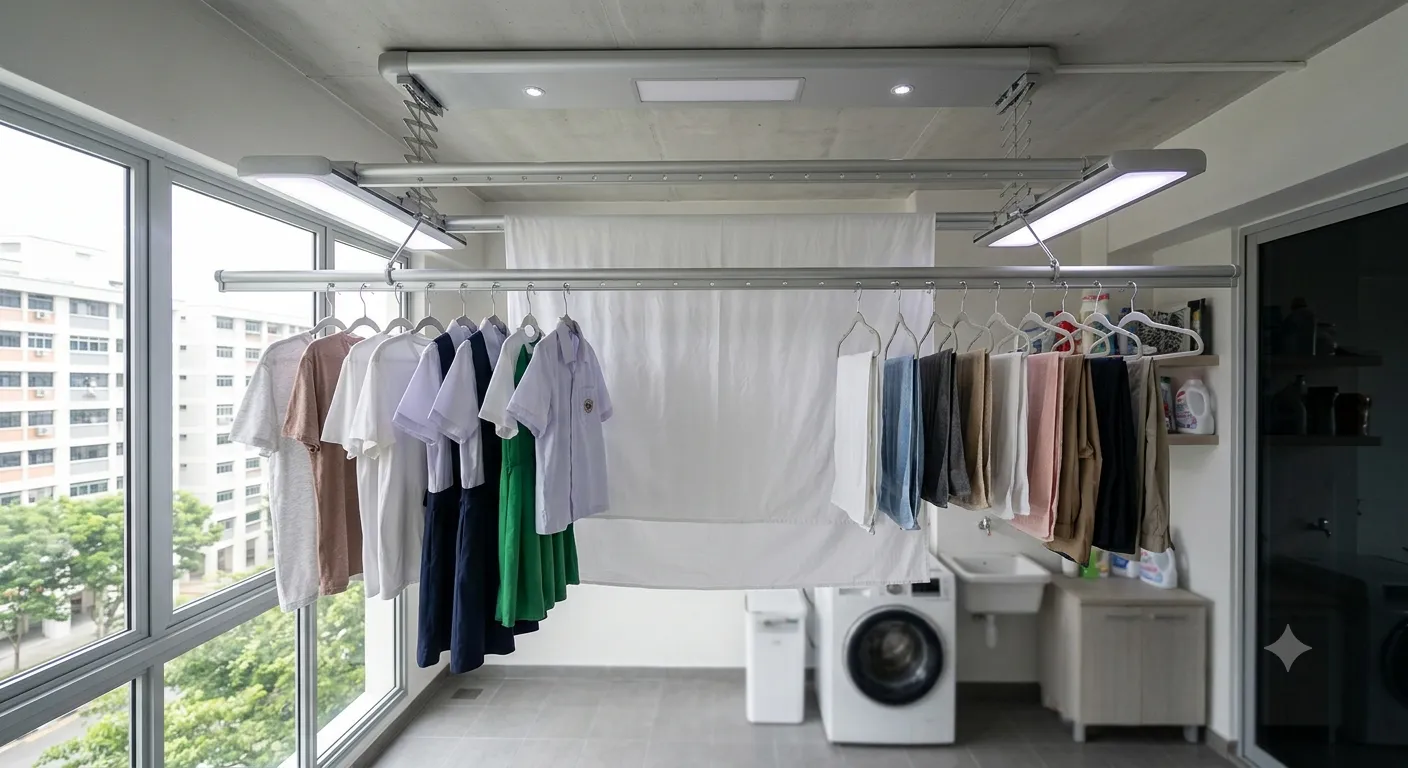
The modern Good Living laundry rack is designed around a different concept. Instead of treating the rack as a basic frame for hanging clothes, contemporary systems can become part of a home's overall space-management strategy.
Ceiling-mounted designs make use of vertical space while leaving more room underneath. Motorised movement can also make the rack easier to raise and lower when loading or removing laundry.
Why Ceiling Space Makes Sense
Floor space is valuable in almost every Singapore home. It may be needed for storage, cleaning, movement, or other household activities.
The ceiling, however, often remains underused.
A ceiling-mounted drying system can take advantage of this unused area. When the rack is raised, the lower portion of the service yard remains more accessible.
Convenience Beyond Automation
Automation is useful, but it is not the only consideration.
Homeowners should also look at drying capacity, construction quality, operating noise, safety features, lighting, airflow, and control options.
The best solution is one that combines several useful features without making the laundry area unnecessarily complicated.
Designing Around Family Needs
Laundry requirements vary from household to household.
A single resident may need limited drying capacity, while a family with children may regularly handle large loads. The number of people in the household, washing frequency, garment types, and available drying space should all influence the choice.
Thinking about these factors before purchasing can prevent an undersized or unsuitable system.
The Importance of Airflow
A smart drying area should also consider the local climate.
Singapore's humidity means that airflow can play an important role in the drying process. Garments should have enough space around them to allow air to circulate.
Some advanced systems also incorporate fans or warm-air functions, providing additional drying support when natural conditions are less favourable.
Safety Should Never Be an Afterthought
Motorised equipment requires proper installation and safe operation.
The ceiling should be assessed before installation, and the system should be suitable for the available structure and clearance. Features such as obstacle detection and stable movement can provide additional convenience.
Professional installation is especially useful when the system requires precise positioning.
A Small Upgrade With Everyday Benefits
Home improvements do not always need to involve major renovations. Sometimes, improving one frequently used part of the home can make daily life noticeably easier.
A better drying setup can reduce clutter, improve accessibility, free floor space, and make laundry more manageable.
As Singapore homes become increasingly space-conscious, modern drying systems demonstrate how everyday household tasks can benefit from thoughtful design and technology.
For More Details Visit Website - https://www.goodliving.sg/























Sign in to leave a comment.