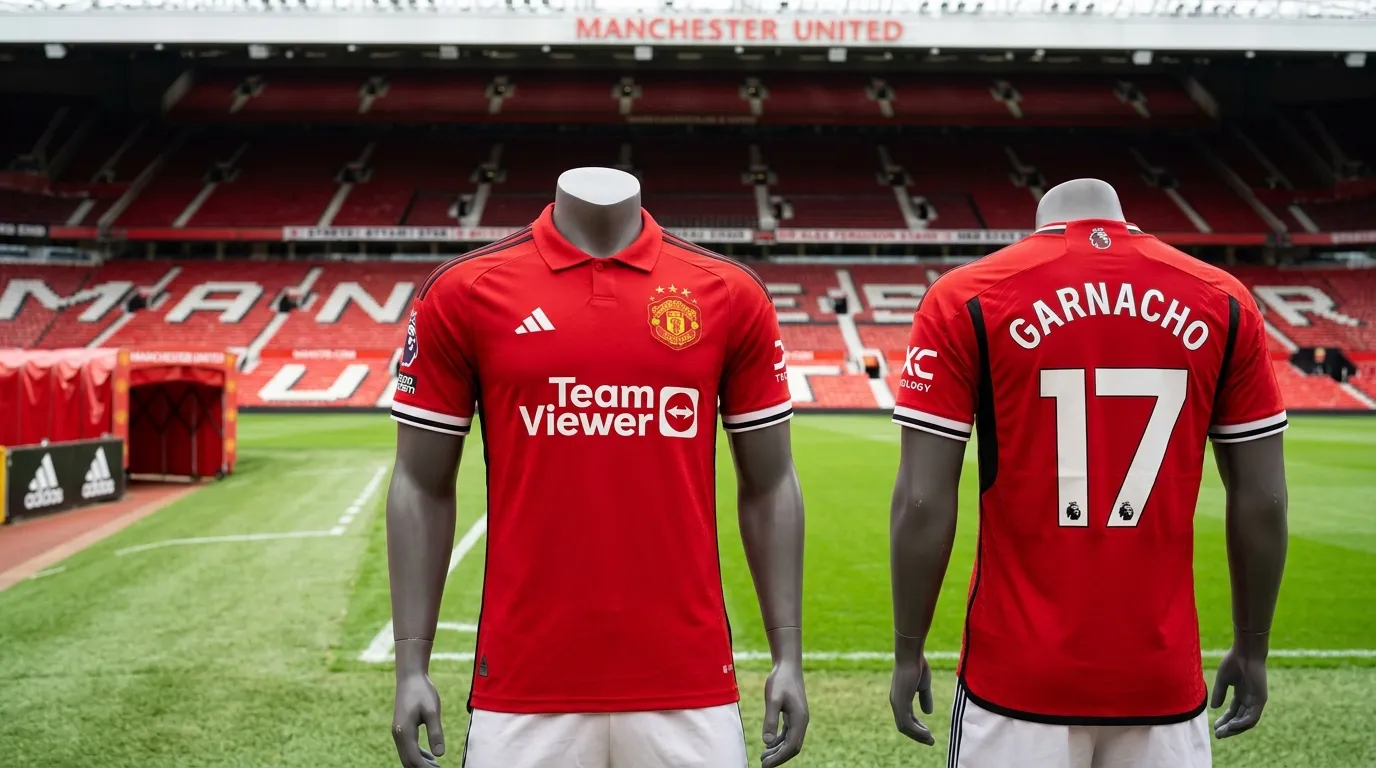

The global sports apparel market, valued at USD 361.7 billion in 2025, is on an impressive growth trajectory, expected to reach USD 539.9 billion by 2032 with a CAGR of 6.0% . At the heart of this expansion lies the iconic soccer jersey, a garment that represents team identity, national pride, and athletic excellence. Whether you're supplying grassroots teams in Spain, elite clubs in Italy, or streetwear brands in the UK, the demand for high-quality soccer jerseys in 2026 presents a remarkable manufacturing opportunity. This guide provides the essential playbook for becoming a premier soccer jersey manufacturer, blending tradition with innovation.
Material Selection: The Cornerstone of Performance
Every great soccer jersey begins with the right fabric. In 2026, performance-driven materials are non-negotiable . The modern game demands jerseys that can withstand high-intensity play while keeping athletes cool, dry, and comfortable. The industry standard is high-grade performance polyester, often blended with elastane (spandex) for enhanced stretch and recovery . This synthetic fabric excels at moisture-wicking, pulling sweat away from the skin and allowing it to evaporate quickly .
For manufacturing a "select" level jersey—one engineered for competitive play—look for lightweight knits ranging from 130-160 GSM (grams per square meter) . These fabrics provide superior breathability, while micro-perforations or mesh paneling can enhance airflow further . For colder climates or training kits, a heavier fabric of 180+ GSM may be used, sacrificing some breathability for durability . Manufacturers must also consider the growing market demand for sustainability, with recycled polyester now a prominent choice for major brands and clubs . As brands shift towards eco-friendly materials, offering recycled options is no longer a differentiator but a necessity . A polyester/elastane blend with 4-6% stretch is ideal for a competition kit, ensuring freedom of movement and shape retention.
Design and Customization: Forging Team Identity
A soccer jersey is a powerful canvas for team identity. In the modern market, customization is not a luxury; it's a core requirement. Teams and brands want apparel that reflects their unique story, from specific color palettes and intricate crest placements to player names and numbers . The most effective manufacturing method for achieving this in 2026 is dye-sublimation printing . This process uses heat and pressure to infuse dye directly into the polyester fibers, creating a permanent, vibrant bond . The result is a design that will never crack, peel, or fade, outlasting traditional screen-printed jerseys by a significant margin .
Sublimation also offers unparalleled creative freedom, allowing for all-over patterns, unlimited colors, and complex gradients without adding weight or stiffness to the fabric . This technology is particularly important for balancing cost and quality. As one manufacturer notes, "The limitation is often your imagination and the factory's digital printing capabilities" . For a premium, classic feel, high-density embroidery or tackle twill (sewn-on fabric patches) remain popular choices for crests and logos, offering a substantial feel favored by professional teams . A successful manufacturer offers a comprehensive customization platform, allowing customers to become co-creators and upload logos, choose fonts, and visualize their jersey in real-time.
Production Process: From Concept to Field
Transforming a design into a physical jersey is a complex, multi-stage process. The journey begins with fabric preparation, where custom-printed polyester rolls are cut into specific pattern pieces—front panels, back panels, sleeves, and collars. The core of modern production is the sublimation assembly . The design is printed onto transfer paper and then applied to the fabric sections with precision heat and pressure. The fabric is then cut and sewn together by skilled workers . This stage is critical; stitching must be robust enough to withstand the game's physicality, with reinforced seams in high-stress areas like the shoulders and underarms. For jerseys with player numbers, a backing tape or sublimated panel prevents ink bleed-through to the skin . The final product then undergoes a thorough quality inspection to ensure color accuracy, consistent sizing, and flawless stitching .
A key challenge for manufacturers is navigating Minimum Order Quantities (MOQs). While a custom sublimation order often requires 300-500 pieces per style, stock programs with lower MOQs are available for simpler customizations . The typical lead time from approved sample to FOB (Free on Board) is 6-10 weeks, factoring in fabric sourcing, cutting, sewing, decoration, and quality control . Manufacturers should also be prepared for trends like the "relaxed, athletic fit" and the demand for versatile pieces that can transition from training to travel and casual wear . By mastering these production realities, a manufacturer can deliver a product that meets both performance and business expectations.
Conclusion
Becoming a prominent soccer jersey manufacturer in 2026 is a journey built on a foundation of quality, innovation, and a deep understanding of the sport's culture. It demands a focus on high-performance materials like moisture-wicking polyester and sustainable recycled options. It requires mastery of customization technologies like sublimation, which offers vibrant, durable, and creative design possibilities. Finally, it necessitates a dedication to a precise and efficient production process that delivers a top-tier product on time. In an era where the global sports apparel market is booming, the opportunity for brands to make their mark on the pitch is immense.
Frequently Asked Questions
How do I choose the right fabric for a performance soccer jersey?
Performance jerseys typically use 100% polyester or a polyester/elastane blend (e.g., 92% PES, 8% EL) with moisture-wicking properties . Look for a lightweight fabric (140-160 GSM) with micro-perforations for breathability. If you're considering a fan or training jersey, a heavier polyester knit (180-220 GSM) offers more durability for casual settings . The choice depends on whether the jersey is intended for high-intensity match play or everyday wear.
What is dye-sublimation printing and why is it popular for soccer jerseys?
Dye-sublimation is a printing technique where heat and pressure are used to infuse dye directly into the fabric fibers, creating a permanent bond . It is popular because it allows for all-over, vibrant designs that will not crack, peel, or fade, even after repeated washing . It also offers unlimited color options and complex patterns at no extra cost per color . However, it requires a high-polyester fabric and typically has higher minimum order quantities .
What is the typical lead time for a custom soccer jersey order?
For a custom order with a complex design, the typical lead time from final sample approval to shipment is between 8 and 12 weeks . This process involves fabric sourcing, cutting and sewing, decoration, and final quality control. Some manufacturers offer "rush jobs" for a premium, but this may sacrifice quality . A reliable factory will communicate a clear timeline with key stages like sample creation, material sourcing, and production.
How can I verify a factory's quality before placing a large order?
Always request and inspect physical samples: a fabric swatch (lab dip) to verify color, a printed strike-off on the actual fabric to confirm print quality, and a pre-production sample (PP sample) of the full garment . Look for marks of quality like 8-10 stitches per inch on seams, bar-tacking at stress points, and perfect alignment of logos and designs . A factory's certifications, such as OEKO-TEX Standard 100 for material safety and ISO 9001 for quality management, are also strong indicators of reliability .























Sign in to leave a comment.