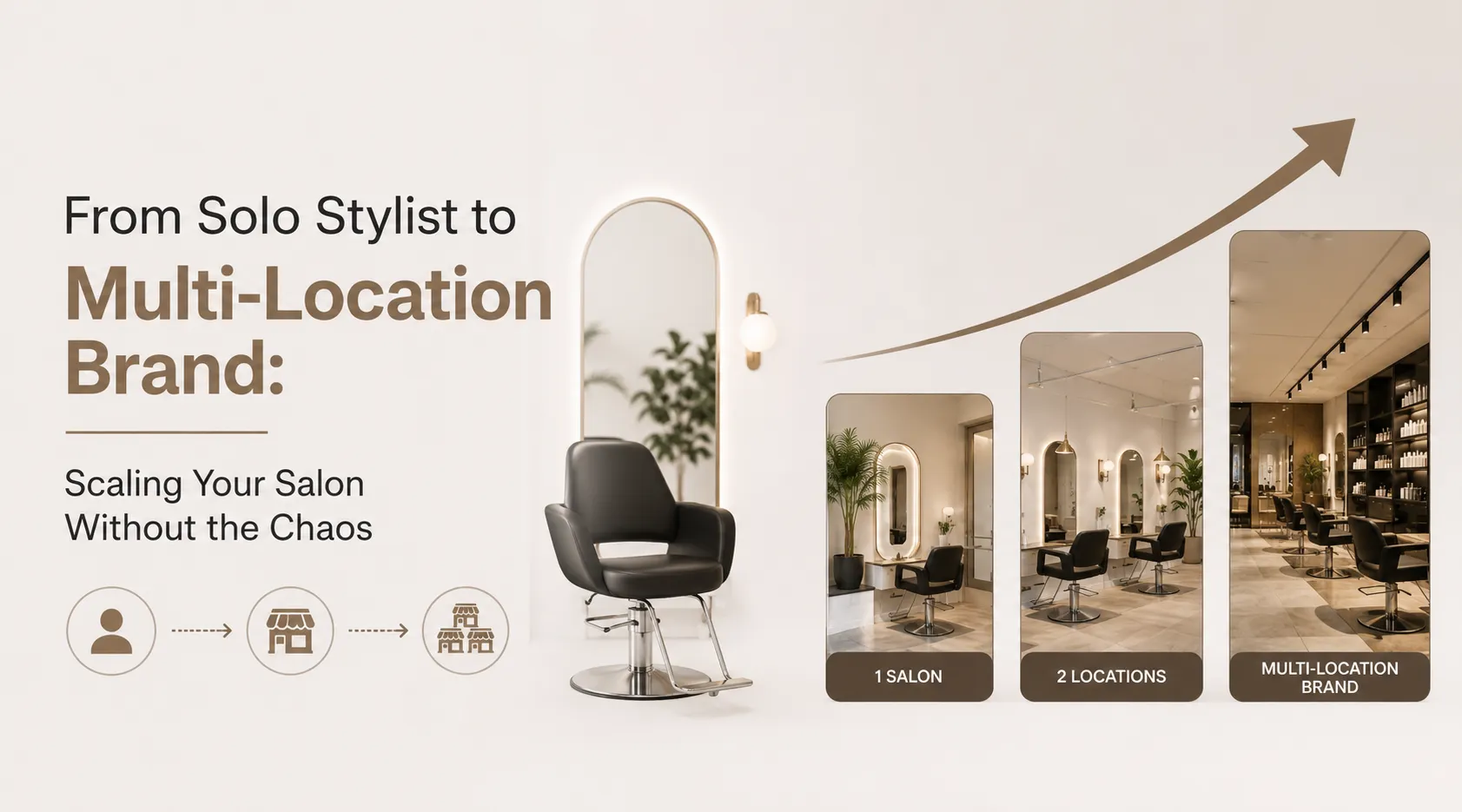

Every salon owner remembers the early days. One chair, one calendar, one person doing everything from cutting hair to answering the phone. It works because you can hold the whole business in your head. Then growth happens, and suddenly you can't.
That's the moment most salon owners hit a wall. Not because they lack talent or ambition, but because the systems that worked for one location start breaking the second you add a second chair, a second stylist, or a second address. Scaling a salon isn't just about doing more of the same thing. It's about rebuilding how the business runs so it doesn't depend entirely on you.
The Hidden Cost of Growing Without Structure
A solo stylist can survive on sticky notes, a paper diary, and a good memory. A growing salon can't. Once you have staff, multiple service lines, or more than one location, informal systems start costing you money in ways that are easy to miss.
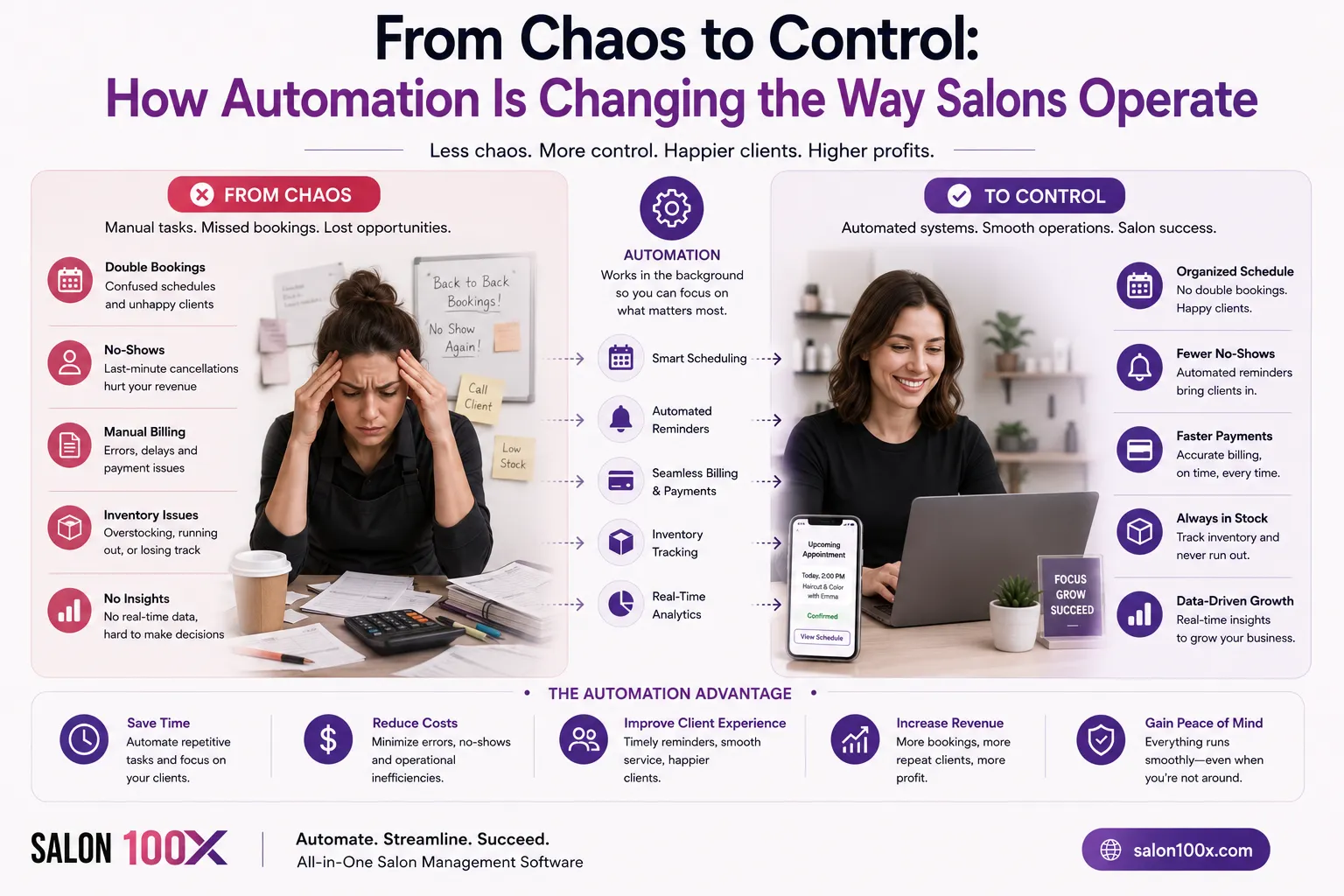
Missed bookings pile up because there's no single calendar everyone can see. Client history gets lost between stylists, so the personal touch that built your reputation starts to fade. Billing becomes a mess of spreadsheets and manual invoices. And without real time reporting, you're making decisions based on gut feeling rather than actual numbers.
None of this happens overnight. It creeps in gradually, one missed appointment or double booked slot at a time, until the chaos feels normal. That's usually the point where owners start searching for proper salon management software UK wide, realizing that spreadsheets and instinct can only carry a business so far.
Systems Before Scale
Here's a principle worth remembering: you don't scale a salon and then fix the systems. You fix the systems, then scale. Trying to expand on top of broken processes just multiplies the problems across every new location.
Think about what a second location actually demands. You need one calendar that shows availability across every branch, not five separate diaries. You need client records that follow the customer wherever they book, not files trapped in one stylist's memory. You need staff schedules and commission tracking that don't require a spreadsheet marathon every payday. And you need financial reporting that tells you, in real time, which location is thriving and which one needs attention.
This is exactly where platforms like Salon100x earn their keep. Instead of stitching together a booking app, a separate CRM, and a standalone accounting tool, everything lives in one system. That single source of truth becomes the backbone that lets a business grow without falling apart at the seams.
What Changes When You Add a Second Location
Opening a second branch feels like a milestone, and it is. But it also changes the nature of the business in ways many owners don't expect.
Suddenly you're not managing a team, you're managing teams. You're not tracking one till, you're tracking multiple revenue streams that need to be compared side by side. You're not remembering regulars by face, you're relying on data to make sure a client who visits the London branch gets the same experience as one who visits the Manchester branch.
This is where multi location visibility becomes non negotiable. A good system lets you check occupancy, revenue, and staff performance across every site from a single dashboard, rather than calling each manager for updates. It also means promotions, loyalty programs, and pricing can stay consistent brand wide instead of drifting into inconsistent local versions.
Owners who get this right treat their second location like a test of the system, not just a test of demand. If the software can handle two locations smoothly, it can usually scale to five or ten with the same logic applied.
Client Experience Doesn't Have to Suffer
One of the biggest fears owners have when scaling is losing the personal touch that made the business successful in the first place. A solo stylist knows every client's preferences by heart. How do you keep that feeling once there are fifteen staff members across three sites?
The answer is data, used well. A proper CRM captures preferences, past treatments, allergies, and even small details like a client's favorite stylist or preferred appointment time. When that information travels with the client rather than staying locked in one person's head, any staff member at any location can deliver a consistent, personal experience.
This matters even more for businesses that offer clinical or aesthetic treatments, where accuracy and record keeping carry real weight. Medspas in particular need software that goes beyond bookings and handles consent forms, treatment history, and compliance requirements properly. That's a big reason so many clinics search specifically for Salon Management Software for Medspas, rather than settling for generic scheduling tools built for haircuts and manicures alone.
Automation Is What Makes Scale Sustainable
Growth without automation just means more manual work spread across more people. That's not scaling, that's stress multiplication.
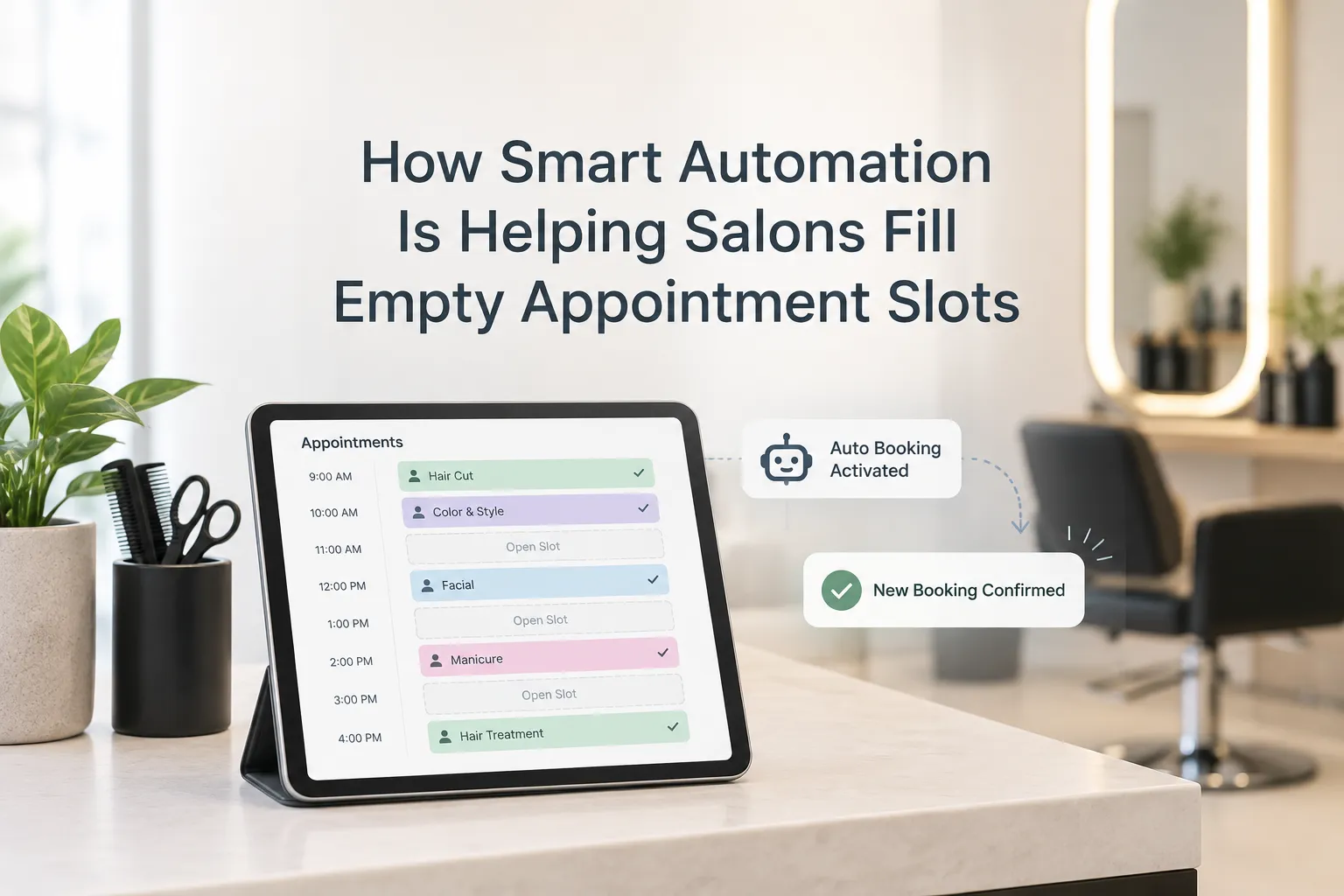
The businesses that expand smoothly are usually the ones that let technology absorb the repetitive tasks. Automated reminders cut down on no shows without anyone lifting a phone. Waitlists fill cancelled slots automatically. Marketing messages go out based on client behavior instead of manual list building. Staff commissions calculate themselves instead of eating up an afternoon every payday.
None of this replaces the human side of the business. It protects it. Every hour saved on admin is an hour a manager can spend training staff, improving service quality, or thinking about where the next location should open.
Staffing Gets Harder Before It Gets Easier
Hiring is another area where solo instincts stop working. When it was just you, training meant showing someone your own habits. Once you have a team spread across locations, you need documented processes, clear commission structures, and a way to track performance that doesn't rely on you personally watching every shift.
Owners who scale successfully tend to build simple playbooks early: how bookings are confirmed, how client notes are logged, how retail products are recommended. These playbooks matter more than they sound, because they're what let a new hire in a second location perform close to the standard set by your original team. Software that tracks staff schedules, attendance, and commissions in one place removes a lot of the guesswork, and it gives managers real numbers to coach with instead of vague impressions.
Building a Brand, Not Just a Bigger Business
There's a difference between having three salons and having a salon brand. Three salons are just three separate operations that happen to share a name. A brand means consistency: same booking experience, same client data standards, same reporting, same quality control, no matter which door a client walks through.
Getting there requires the right foundation from day one. That's why so many ambitious owners choose to consolidate around one platform early, rather than waiting until the chaos forces their hand. The transition from solo stylist to multi location brand isn't really about opening more doors. It's about building a business that runs well whether you're in the room or not.
Scaling will always come with challenges, but chaos doesn't have to be one of them. With the right systems in place, growth becomes something you can plan for and control, not something you're constantly reacting to.

























Sign in to leave a comment.