
Global FRP Cooling Tower Market: Strategic Trends and Commercial Opportunities Through 2032
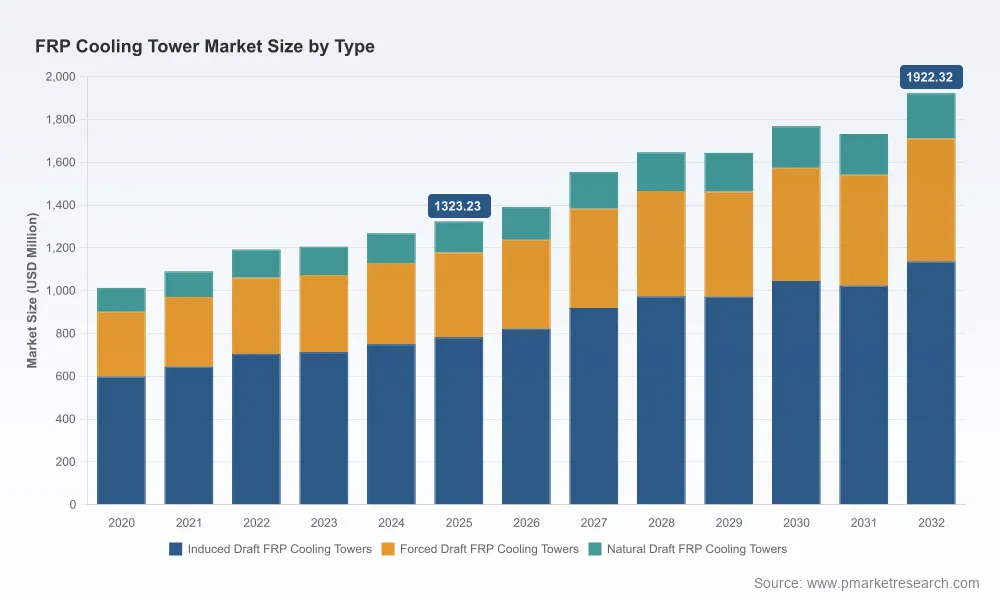
The worldwide FRP cooling tower market has evolved into a critical infrastructure segment where material science, regulatory pressure, and industrial energy demands converge. Over the historical period from 2020 to 2025, the market expanded from approximately 1,012.45 million USD to 1,323.23 million USD, reflecting a compound annual growth rate of 5.48 percent. The trajectory continues through the forecast window extending to 2032, with revenue projections reaching 1,922.32 million USD. This growth is not merely a function of industrial capacity expansion; it reflects a structural shift toward corrosion-resistant, lightweight polymer construction that addresses long-standing operational pain points in thermal management.
Despite the positive trajectory, the industry stands at a inflection point shaped by three interconnected challenges. First, raw material volatility introduces margin uncertainty. Glass fiber prices in the United States reached approximately 1,482 USD per metric ton in the first quarter of 2026 outlook, while Chinese benchmarks sat near 1,413 USD per metric ton. These input costs directly influence pultruded FRP manufacturing economics, forcing producers to balance specification compliance with cost control. Second, the regulatory environment is becoming increasingly prescriptive. Environmental permits for chemical processing facilities now explicitly reference multiple FRP cooling tower cells for process brine cooling and emissions control, while fire and seismic certifications carry greater weight in industrial procurement criteria. Third, end-user expectations are shifting from basic thermal rejection to integrated energy optimization. Facilities are no longer purchasing cooling towers as standalone equipment; they are evaluating lifecycle efficiency, water consumption, and compatibility with broader decarbonization roadmaps.
These dynamics reshape how the market is structured. Concentration remains moderate, with the top three players holding roughly 21.45 percent of revenue and the top five capturing approximately 32.88 percent. Such a fragmented landscape leaves ample room for differentiation through certification portfolios, regional service networks, and application-specific engineering. The market size data provides a useful backdrop, but the strategic story lies in how manufacturers navigate material economics, compliance complexity, and performance expectations simultaneously.
Key Drivers Reshaping the FRP Cooling Tower Landscape
Technological innovation in composite construction is one of the most consequential drivers. Pultruded FRP profiles have matured to the point where factory-assembled modular designs can deliver energy efficiency improvements of 12 to 15 percent under high-humidity conditions compared with traditional materials. This advantage aligns directly with industrial energy optimization goals, where cooling systems often represent a substantial share of site electricity consumption. Innovations in epoxy-coated FRP fan blades, belt-drive configurations, and lightweight corrosion-resistant geometries are reducing maintenance intervals while preserving thermal performance across demanding environments.
The policy and regulatory environment is amplifying adoption in specific end-use segments. Industrial facilities operating under strict environmental permits increasingly require equipment that can be explicitly integrated into process cooling configurations and emissions control strategies. Permitting documents for chemical operations now reference multiple FRP cooling tower cells for brine cooling and related process streams, signaling that compliance architecture is becoming a procurement criterion rather than an afterthought. At the same time, facility-level risk management standards are elevating the importance of certifications covering fire, storm, and seismic performance. Modular FRP designs that secure these approvals reduce loss exposure and streamline insurance and operational risk assessments for large industrial sites.
Demand-side behavior is also evolving. Large consumers in power generation, HVAC, chemical and petrochemical processing, food and beverage production, and oil and gas are prioritizing systems that combine durability with operational efficiency. The semiconductor sector illustrates this shift well. Continued rollout of high-efficiency cooling tower fans featuring FRP blades and epoxy coating has contributed to measurable electricity savings in fabrication facilities, reinforcing a broader trend where cooling equipment is evaluated through the lens of total site energy intensity rather than initial capital cost. This mindset favors solutions that can be standardized across multiple units while still accommodating application-specific airflow and water management requirements.
Supply chain and cost structure dynamics are influencing competitive positioning. The global fiberglass market is projected to grow from approximately 12.5 billion USD in 2026 to 21 billion USD by 2036 at a 5.3 percent CAGR, driven by demand in composites for industrial applications including cooling towers. This broader composites expansion suggests that raw material suppliers are investing in capacity and formulation improvements that can benefit downstream FRP equipment manufacturers over time. At the same time, regional price differentials in glass fiber create strategic choices around sourcing, localized production, and specification optimization. Manufacturers that can align resin systems and reinforcement strategies with regional cost realities while maintaining performance certifications are better positioned to protect margins without compromising competitive differentiation.
Competitive Landscape and Leadership Strategies
The competitive field combines established full-service manufacturers with regional suppliers that compete on delivery speed, cost efficiency, and application breadth. Several profiles illustrate how differentiation is being built in practice.
Worldwide FRP Bridge Market
- Tower Tech specializes in modular FRP cooling towers with pultruded FRP construction, emphasizing energy efficiency gains of up to 40 percent, water savings, and certifications including FM Approvals for fire, storm, and seismic performance across industrial and HVAC applications. Its strategy centers on combining performance claims with third-party certifications that reduce risk for large facility operators.
- Delta Cooling Towers is one of the oldest full-service fiberglass water cooling tower manufacturers, producing circular FRP cooling towers in multiple models for various business sizes. Its positioning emphasizes low maintenance, energy efficiency, and lightweight corrosion-resistant design, appealing to buyers seeking proven product lines with broad applicability.
- Indian manufacturers such as Gold Cooling Towers, World Cooling Towers, Perfect Cooling Towers, Global Refrigeration & Equipments, and Vincitore Edutechnologies compete across a wide range of industrial requirements. Their strengths include prompt delivery, ISO-certified quality management, CTI-aligned design practices, and broad model coverage spanning induced draft, forced draft, crossflow, and counterflow configurations. This breadth allows them to serve diverse industrial buyers while maintaining price competitiveness.
- Hebei Yiyang Environmental Protection Equipment represents the Chinese manufacturing base for FRP products including cooling towers and related components, supporting industrial applications where regional supply chain proximity and component availability are important considerations.
Recent developments highlight how competitive advantage is being reinforced. In February 2025, Tower Tech highlighted fire certification for factory-assembled FRP designs, a notable milestone given that FM Global approvals for fire, storm, and seismic performance are critical for FRP modular cooling towers in industrial settings to reduce loss exposure. In the regulatory space, a March 2026 permit issuance from the Arkansas Department of Environmental Quality referenced multiple tail brine FRP cooling tower cells for chemical processing operations, underscoring how environmental compliance documentation increasingly specifies FRP cooling infrastructure for process brine cooling and emissions control. On the efficiency side, TSMC’s ongoing implementation of high-efficiency cooling tower fans with FRP blades and epoxy coating has contributed to electricity savings in semiconductor fabs, demonstrating how advanced blade and coating solutions can translate into measurable operational benefits at scale.
Worldwide FRP Fiber Optic Cable Market
The market structure is simultaneously consolidating and fragmenting. Larger players with certification depth, service coverage, and modular design capability are well placed to win in industrial and regulated environments where risk reduction and performance consistency carry premium value. Regional manufacturers continue to compete effectively where delivery speed, customization flexibility, and cost sensitivity matter most. New entrants and mid-tier suppliers can gain traction by focusing on narrow application segments, strengthening certification portfolios, or offering hybrid configurations that combine FRP durability with specific airflow and water management features. The strategic question for each participant is whether to compete on broad applicability or on differentiated performance credentials that align with high-stakes industrial procurement criteria.
Future Trends and Commercial Implications
Over the next three to five years, one clear trend is the acceleration of certified modular FRP designs in industrial procurement. As fire, storm, and seismic approvals become more central to risk management and insurance considerations, equipment that carries recognized certifications will increasingly command preference in large-scale projects. This trend creates opportunities for manufacturers that can standardize modular assemblies while maintaining the flexibility to meet site-specific performance and compliance requirements.
A second trend is the convergence of cooling tower selection with broader energy and water efficiency programs. Facilities are likely to favor solutions that contribute measurable savings in fan power, water consumption, and maintenance exposure, especially where humidity conditions amplify the performance gap between FRP and conventional materials. This creates commercial openings for suppliers that can quantify operational benefits, provide integrated fan and drive configurations, and support lifecycle planning rather than one-time equipment sales.
A third trend involves raw material and supply chain adaptation. With fiberglass demand expanding across industrial composites and regional price differentials persisting, manufacturers that develop resilient sourcing strategies and optimize resin-and-reinforcement combinations will be better equipped to manage cost pressure without sacrificing specification integrity. Regional production footprints, localized component supply, and strategic inventory management may become more important as buyers seek to reduce lead-time variability and exposure to input-cost swings.
These trends carry both opportunity and uncertainty. Regulatory expectations can tighten further, especially in chemical and process-intensive environments, creating demand for equipment that is explicitly referenced in permits and operational compliance frameworks. At the same time, raw material volatility, certification lead times, and competition from alternative materials or hybrid cooling technologies could compress margins for players that lack differentiation. Companies that anticipate these pressures and align product strategy with compliance and efficiency priorities will be best positioned to capture growth as the market advances toward 2032.
PW Consulting
Strategic Implications for Decision-Makers
Manufacturing leaders should prioritize certification depth and modular design capability as core differentiators. Expanding FM approvals coverage, aligning product lines with CTI-aligned performance expectations, and developing application-specific configurations for process cooling and high-humidity environments can strengthen competitive positioning. Equally important is raw material strategy: building flexible sourcing arrangements and optimizing reinforcement specifications can help protect margins while preserving durability and compliance credentials.
Investors evaluating the sector should look beyond headline market size and focus on structural advantages that sustain pricing power. Certification portfolios, regional service capacity, energy-efficiency differentiation, and exposure to regulated end-use segments are indicators of resilience. Companies that can demonstrate measurable operational savings and reduced loss exposure are more likely to retain advantage as procurement teams increasingly weigh lifecycle performance alongside upfront cost.
Procurement and engineering teams should treat FRP cooling tower selection as a multiphase evaluation rather than a commodity purchase. Prioritizing solutions with recognized fire, storm, and seismic certifications, verifying performance under site-specific humidity and load conditions, and aligning equipment choices with broader energy and water efficiency targets can reduce operational risk and improve long-term total cost outcomes. Suppliers that can provide clear documentation, standardized modular options, and application-specific support are more likely to deliver reliable integration into complex industrial environments.
For a more detailed view of segment-level dynamics, regional demand patterns, application-specific growth drivers, and company-level strategic positioning, the full research report provides deeper segmentation data and customized recommendations designed to support investment, production, and procurement decisions.
For detailed analysis of this topic, please visit the official page: Worldwide FRP Cooling Tower Market
Lacy Lee
Senior Marketing Manager
[email protected]
PW Consulting: www.pmarketresearch.com

























Sign in to leave a comment.