Gas vs Electric Geysers: Which Is Better for Your Home?

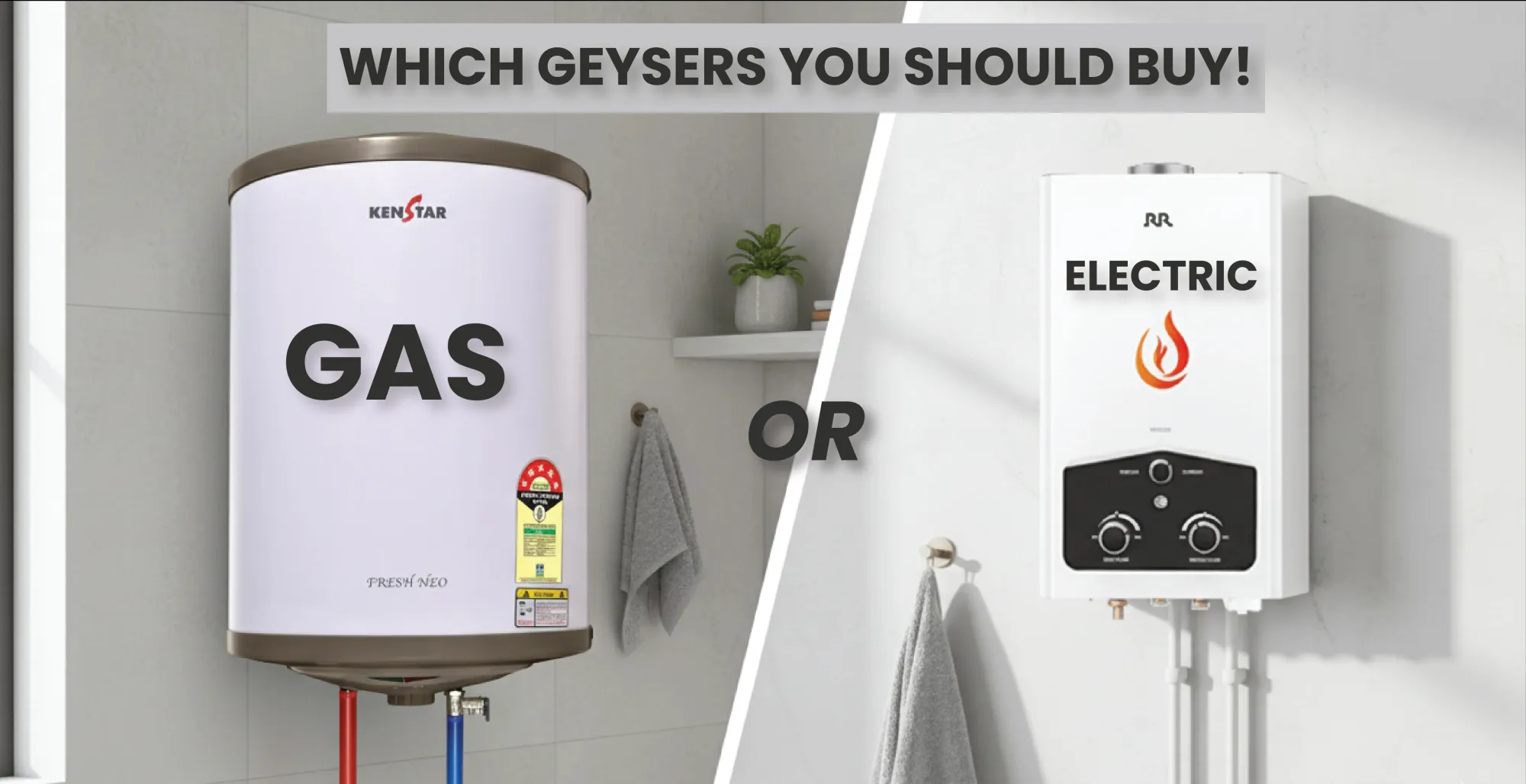
Choosing the right geyser can affect your monthly utility bills, comfort, and home safety. In Pakistan, many households face a common question: should they buy a gas geyser or an electric geyser? Both options can provide hot water for daily use, but they differ in cost, performance, installation, and safety.
The right choice depends on your home's needs, local gas supply, electricity rates, and budget. Let us compare both options to help you decide which geyser is better for your home.
How Do Gas and Electric Geysers Work?
Before you compare their costs and benefits, it helps to understand how each type of water heater works.
How Does a Gas Geyser Work?
A gas geyser uses natural gas or LPG to heat water through a burner. Many instant gas geysers heat water as it passes through the unit. They can provide hot water without a large storage tank.
Some gas models also use a storage tank. These units heat a set amount of water for later use. Gas geysers can be a good choice for homes with a reliable gas supply. However, they need proper ventilation and safe exhaust arrangements.
How Does an Electric Geyser Work?
An electric geyser uses an electric heating element to heat water. Instant electric models heat water as it flows through the unit. Storage electric geysers heat water inside an insulated tank.
A storage model can keep water hot for later use. However, its performance depends on tank capacity, heating power, and the amount of hot water your family needs.
Gas vs Electric Geyser: Key Differences
Both types have clear benefits, but their suitability depends on your home and daily routine.
| Factor | Gas Geyser | Electric Geyser |
| Initial cost | Depends on the model and installation | Depends on capacity and electrical requirements |
| Running cost | Depends on gas rates and consumption | Depends on electricity rates and power use |
| Heating | Instant models heat water on demand | Instant models heat water as it flows; storage models heat a tank |
| Energy supply | Requires a suitable gas supply | Requires a reliable electrical supply |
| Safety | Needs ventilation and gas leak precautions | Needs proper earthing and electrical protection |
| Maintenance | Burner, gas lines, and exhaust need inspection | Heating element, thermostat, and tank may need inspection |
| Best suited for | Homes with reliable gas supply | Homes with reliable electricity and suitable wiring |
The table offers a general comparison. Actual costs and performance vary by model, household usage, and local utility rates.
Which Geyser Is Cheaper to Run?
The gas vs electric geyser running cost is a key factor for most households. However, neither option is always cheaper. Your monthly expense depends on fuel prices, appliance efficiency, and daily hot water use.
A gas geyser may cost less to operate if gas rates are favourable and the supply is reliable. However, low gas pressure and frequent load shedding can reduce its convenience. Some households may also need LPG, which can have a different cost.
An electric geyser can cost more to run under certain electricity tariffs. Its energy use depends on the heating element's power, the time it runs, and the amount of water you heat. A well-insulated storage tank can reduce heat loss.
To compare both options, check your current gas and electricity rates. Also, consider how many people use hot water each day. This will give you a more useful estimate than the purchase price alone.
Gas vs Electric Geyser: Which Is Safer?
Safety should be a major part of your decision. Both types can work safely when installed and maintained correctly.
Gas Geyser Safety
Gas geysers need proper ventilation and safe exhaust arrangements. Poor combustion can produce carbon monoxide, a dangerous gas that has no colour or smell. Gas leaks can also create serious risks.
Always use a qualified installer. Arrange regular checks of the burner, gas connections, and exhaust system. Never ignore signs of a gas leak or poor combustion.
Electric Geyser Safety
Electric geysers do not produce combustion gases inside the home. However, faulty wiring, poor earthing, or damaged parts can cause electric shocks.
A qualified electrician should install the unit with suitable wiring and circuit protection. Residual current protection can help reduce the risk of electric shock. Extra care is necessary in bathrooms and other wet areas.
Which Geyser Is Better for Different Households?
The best option depends on your home's conditions and hot water needs.
- Homes with a reliable gas supply: A gas geyser can be a practical choice if the installation meets all safety requirements.
- Homes with low gas pressure: An electric geyser may offer more reliable service if the electricity supply is stable.
- Large families: Compare storage capacity, recovery time, and hot water demand. A small unit may not meet everyone's needs.
- Small households: A suitable instant model or a small storage geyser may meet daily needs without excess capacity.
- Homes with limited ventilation: An electric geyser may be a better option than a gas unit in an unsuitable space.
Remember that a large family may need a higher-capacity storage geyser, regardless of its energy source.
What Should You Consider Before Buying a Geyser?
Before you buy a gas or electric geyser in Pakistan, review these important factors:
- Family size: Estimate how much hot water your household uses each day.
- Utility supply: Check the reliability of gas and electricity in your area.
- Monthly budget: Compare estimated running costs with the purchase price.
- Installation space: Make sure the unit fits and meets all safety requirements.
- Heating capacity: Choose a suitable tank size or heating power for your needs.
- Maintenance and warranty: Check service options and the availability of spare parts.
These factors can help you avoid a poor purchase and reduce future expenses.
Final Verdict: Gas or Electric Geyser?
So, which is better, a gas geyser or an electric geyser? The answer depends on your household. A gas geyser may suit a home with a reliable gas supply and proper ventilation. An electric geyser may be a better choice where gas supply is unreliable or unavailable.
Compare the running cost, heating capacity, safety features, and installation needs before you decide. The best geyser is not always the cheapest model. It is the one that meets your family's hot water needs and fits your budget over the long term.


Sign in to leave a comment.