

You close your study room door, boot up your laptop, and check your test series dashboard. Maybe you graduated last summer, or maybe you left a campus placement offer on the table to give this exam everything you have. Then a YouTube thumbnail or an anxious Telegram thread hits your feed: “Massive Changes in GATE CSE Eligibility 2027 – Droppers Beware!”
Your heart sinks. After spending six months balancing Discrete Mathematics, Operating Systems, and revision schedules, wondering if you are even allowed to sit for the paper is terrifying.
Rumors spread fast in the engineering community, especially around eligibility rules, hidden age caps, and attempt limits. The anxiety is real, but the panic is unnecessary. Let’s look at the actual regulatory framework for GATE CSE Eligibility 2027, clear out the noise, and address what changes and what doesn't for dropper candidates.

Understanding GATE CSE Eligibility 2027: The Raw Facts
Every cycle, rumors surface suggesting that the organizing IIT will introduce an age ceiling or bar graduates who took consecutive drop years.
The official notification guidelines maintained across IIT organising bodies remain unequivocal: GATE CSE Eligibility 2027 maintains open access for degree holders.
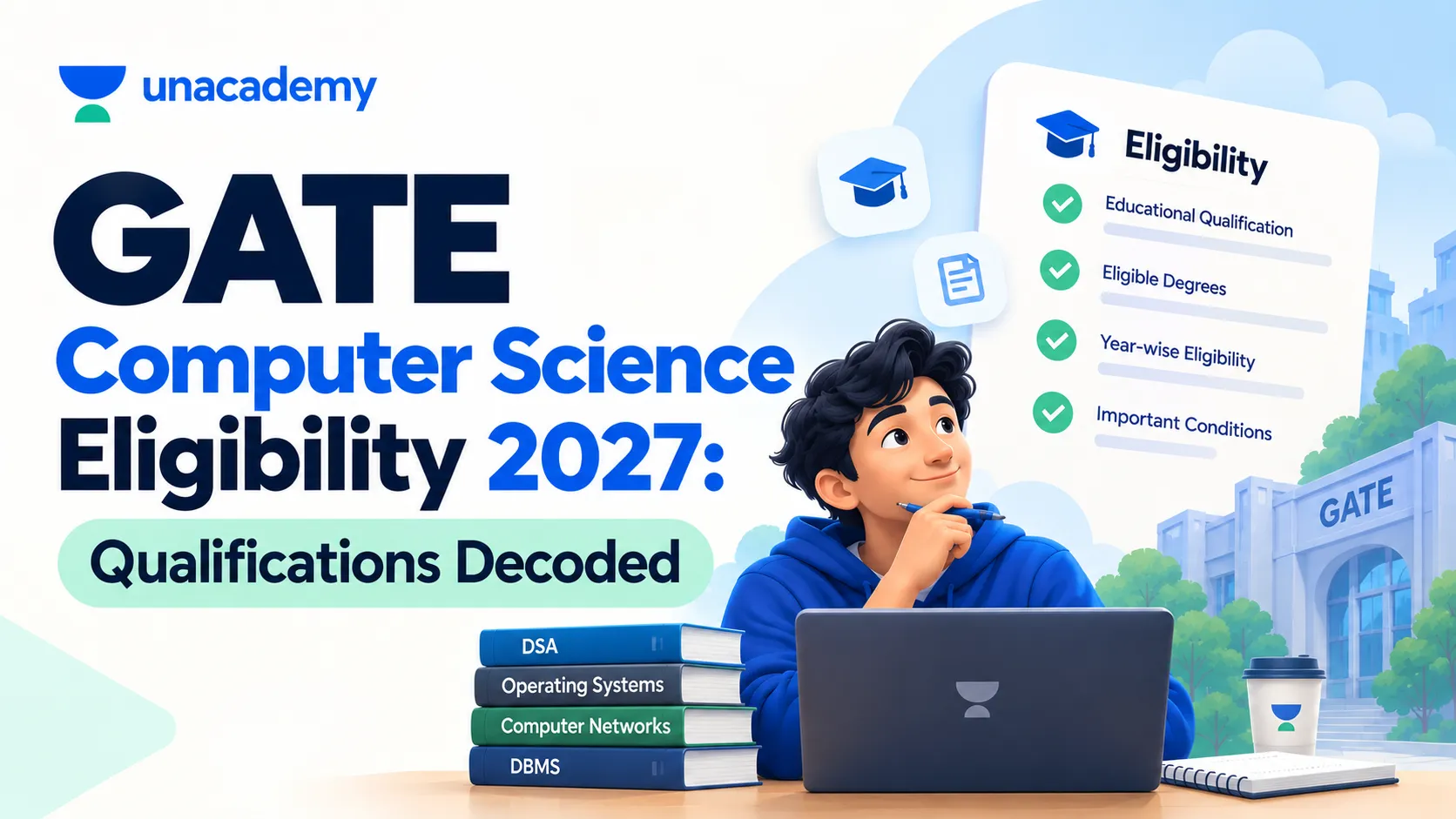
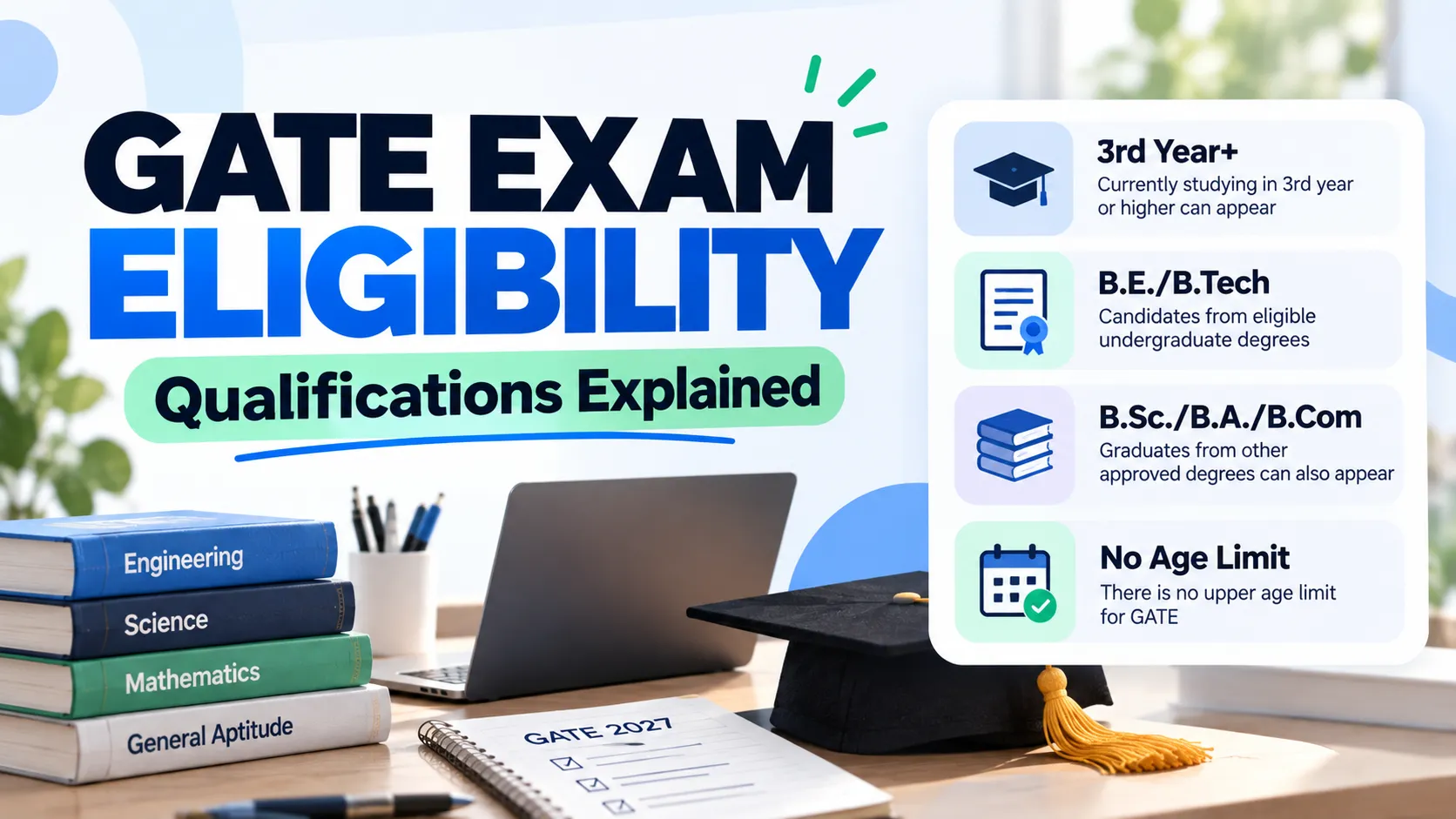
Undergraduate Status: You are eligible if you have already completed your degree (B.E., B.Tech, MCA, M.Sc, or equivalent) or are currently studying in your 3rd year or higher.
Discipline Neutrality: Candidates with backgrounds in CSE, IT, ECE, Electrical, or allied disciplines can appear for the Computer Science (CS) paper.
Graduation Timeline: It does not matter whether you graduated in 2026, 2024, or 2020. As long as your degree is from a recognized government university or institute, you are cleared to register.
| Parameter | Official Rule for 2027 |
|---|---|
| Minimum Academic Marks | None required to sit for the examination |
| Current Enrollment Level | 3rd year onwards or graduated |
| Paper Code | CS (Computer Science and Information Technology) |
| Qualifying Degrees | B.E. / B.Tech / MCA / M.Sc / Equivalent |
The Real Story Behind the GATE CS 2027 Age Limit and Attempt Limit
One of the most persistent searches every season is for the GATE CS 2027 age limit. Droppers often worry that turning 24, 26, or 30 will disqualify them.
The truth is straightforward: there is no upper or lower age limit to write the GATE CS examination.
Similarly, you do not have to worry about a GATE CS 2027 attempt limit. Whether this is your first attempt right out of college, your second attempt after a focused drop, or your fourth attempt while working full-time, the portal will accept your application without penalty.
The GATE organizing committee treats your score purely as an objective measure of technical aptitude. They do not maintain a scorecard deduction policy based on past attempts or gap years.
Where the "Big Shock" Actually Lies for Droppers
If the exam board imposes neither an age cap nor an attempt cap, why do droppers feel caught off guard every year?
The shock doesn't stem from exam hall eligibility. It hits during post-exam admissions and recruitment, where separate bodies apply their own criteria:
1. The Post-GATE Institutional Cutoffs (COAP & CCMT)
While you need no minimum marks to take the exam, securing admission into an M.Tech program at premier institutes (IITs, IISc, NITs) requires meeting their specific graduation score thresholds. Most IITs enforce a strict minimum of 60% aggregate or 6.5 CGPA (with standard relaxations for reserved categories) in your qualifying degree. Writing the exam with a 58% aggregate is permissible, but participating in subsequent counseling rounds might not be.
2. PSU Recruitment Restrictions
If you took a drop to secure a role in a Public Sector Undertaking through GATE, here is where age caps truly apply:
IOCL, ONGC, NTPC, and BARC set their own age thresholds (often 26 to 28 years for general category applicants).
- PSU selection boards strictly examine your date of birth, regardless of your GATE score.
3. The Changing Landscape of Two-Paper Combinations
In recent cycles, candidates have been allowed to opt for two papers. For CS aspirants, combining CS with Data Science and Artificial Intelligence (DA) has become popular. The real surprise for droppers is the expanding competitive pool: direct CS students now routinely share competitive space with engineers from other branches attempting interdisciplinary papers.
Real Candidate Experiences
Arjun M. – 1st Year Dropper (Now at IIT Kharagpur):
"I lost two weeks in August after reading a forum thread claiming third-party droppers would have their normalization percentiles reduced. It was complete fiction. When the registration portal opened, it took five minutes with my provisional certificate to get approved. Don't waste your energy chasing forum speculation."
Pooja S. – 2nd Year Dropper & Self-Taught Programmer:
"My biggest fear wasn't writing the test; it was my two-year gap. In the IIT interviews for MS programs, nobody criticized the gap itself. They asked direct questions about my project work, my understanding of memory management, and why my solution ran in O(n^2) instead of linear time. Know your core subjects, and the gap takes care of itself."
Things You Should Know Before Dropping a Year for GATE CS
Before committing another year solely to test preparation, keep these practical factors in mind:
Document Readiness: Keep your degree certificate or provisional degree certificate ready. If you haven't received your final degree certificate yet, an official provisional document from your college registrar works without issues.
Name & Identity Consistency: Ensure your name on your Aadhaar card or passport matches your 10th-grade passing certificate and degree transcripts character-for-character. Mismatched identity details cause actual verification rejections, not your dropper status.
The "Mental Fatigue" Factor: Dropping is less about syllabus coverage and more about managing isolation. Without the natural structure of college classes or an office, you need an immovable routine for revisions and mock analysis.
- Alternative Coding Backups: Keep your foundational coding skills sharp alongside your theoretical GATE prep. Solving problems on data structures and algorithms ensures your software engineering fundamentals stay interview-ready.
Frequently Asked Questions
Is there any change in GATE CSE Eligibility 2027 for college dropouts or candidates with study gaps?
No. Study gaps, drop years, or past academic backlogs cleared before admission do not disqualify you from taking the exam. You only need an approved qualifying degree or proof of enrollment in the 3rd year or higher.
What is the GATE CS 2027 age limit for general category candidates?
There is no age limit for any category. Candidates of any age can register and appear for the exam.
Has an official GATE CS 2027 attempt limit been introduced recently?
No. The conducting authority enforces no attempt limit. You can appear for the examination as many times as you choose.
Can final-year students and droppers choose two papers simultaneously?
Yes. Subject to the official paper combination list released by the conducting IIT, candidates can write both the Computer Science (CS) paper and a designated secondary paper such as Data Science and Artificial Intelligence (DA).
What minimum marks do I need in B.Tech to qualify for GATE Computer Science eligibility 2027?
There is no minimum percentage requirement in your undergraduate degree simply to sit for the GATE exam. However, IITs and NITs typically require a minimum of 60% or 6.5 CGPA during the admission counseling phase.
Grounded Takeaway
The actual hurdle for droppers is rarely administrative paperwork or sudden eligibility bans. The challenge is maintaining discipline over hundreds of days of solitary study, mastering the standard syllabus, and avoiding score-killing negative marks on exam day.
If you fulfill the educational qualification, you have a seat at the table. Step away from sensationalized forum alerts, focus on your weak areas across core systems and algorithms, and keep your attention on what you can control: your preparation and your test execution.


























Sign in to leave a comment.