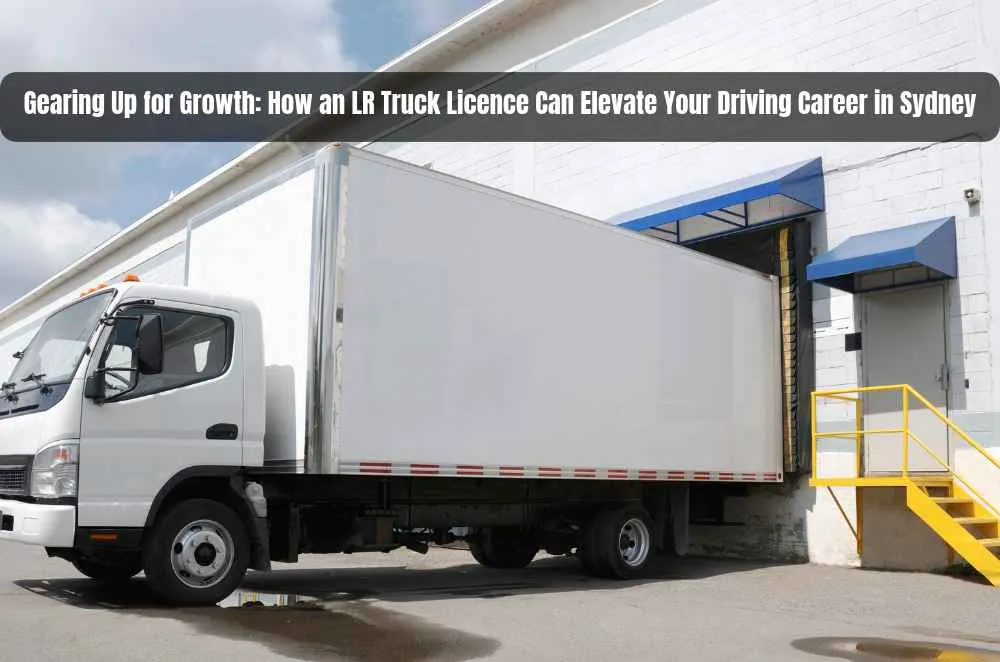

Sydney’s courier and logistics scene has changed fast; parcels, pallet drops and trade supplies now flow seven days a week. Car-based delivery drivers often hit a ceiling the moment a job calls for a vehicle heavier than 4.5 tonnes. Stepping up to an LR truck licence is the natural next move, opening doors to small rigid trucks and expanded earning potential without the jump straight into heavy vehicles.
What Sets an LR Licence Apart from a Car Licence
Moving from a standard C-class licence to Light Rigid gives you legal clearance to drive vehicles up to 8 tonnes GVM and buses seating up to 12 adults. That seemingly small bump in capacity covers most furniture trucks, refrigerated city units and popular cab-over tippers used by trades. Because Sydney councils and delivery bays already struggle with tight streets, employers prize drivers who can manoeuvre a rigid truck confidently without blocking traffic.
A classroom theory session clarifies load restraint, weight distribution and the extra braking distance required once a vehicle passes the 4.5 tonne mark. On-road assessment focuses on selecting the right gears before inclines like the South Dowling Road flyover instead of relying on power to drag through the climb. These foundations prevent costly gearbox wear and reduce downtime for operators.
Early in your search you’ll notice course structures vary; some schools cram everything into one day while others split theory and practical over a weekend. Choosing a well-structured LR truck licence course means you leave with not just the photo card, but solid habits employers recognise.
The Hidden Advantages for Everyday Work
Less Downtime From Vehicle Swaps
Courier fleets often juggle bookings by slotting smaller jobs into larger trucks when the van allocation is exhausted. Drivers limited to C-class end up sitting out those runs. Holding an LR ticket means dispatch can hand you the keys to whatever is available, keeping you earning rather than waiting.
Access to Council and Utility Contracts
Many local government tenders specify a minimum truck class because equipment such as cherry pickers or line-marking rigs sit on LR chassis. Private contractors need a pool of licence-ready staff to meet contract KPIs. Showing LR on your resume slips you into that shortlist.
Reduced Fatigue Risk Compared with Heavy Vehicles
An LR truck still feels familiar to anyone who has spent time in a van. You sit higher but the cabin ergonomics, pedal effort and short-throw gearbox mirror what you know. For long shifts winding between Bondi, Parramatta and the Northern Beaches, that comfort matters. You upgrade earning power without the learning curve of a Roadranger gearbox or sleeper cab logistics.
Is Now the Right Time to Upgrade?
Fuel excise changes and e-commerce volumes make 2026 a sweet spot. Businesses are refreshing rigid fleets to meet Euro VI emissions rules, and they need drivers immediately. Waiting until you “have to” upgrade could mean scrambling for assessment dates while vacancies fill. Instead, treat the licence as an investment that pays off the moment a higher-paying shift appears.
Below is a quick comparison of typical Sydney delivery roles and how an LR licence changes the equation:
| Delivery Scenario | Vehicle Usually Supplied | Car Licence Outcome | LR Licence Outcome |
| Bulky flat-pack furniture to high-rise apartments | 6-tonne tail-lift truck | You can’t take the job | Eligible and more likely to score repeat shifts |
| Office relocations on weekends | 7.5 tonne pantech | Must pair with another driver | Can operate solo and invoice full rate |
| Trade supplies to construction sites with rough access | Cab-over tipper 7 tonne GVM | Restricted due to weight | Qualified, plus better traction and clearance |
| Community sports team outings | 12-seat mini-bus | Not permitted | Fully licensed, including passenger endorsement |
The takeaway is straightforward: the LR ticket moves you from “maybe” to “yes” on work that pays a premium for flexibility.
Common Misconceptions that Hold Drivers Back
Plenty of capable motorists delay the upgrade because of myths that circulate in depot lunchrooms. Let’s clear up a few:
- “I’ll need to relearn manual from scratch.” If you test in an automatic LR truck, your licence shows an auto restriction only for heavy vehicles. You still keep full manual rights for cars. Schools can supply either transmission so you control what appears on your card.
- “Insurance jumps the moment you hold a rigid ticket.” Personal car premiums stay unchanged. Commercial vehicle cover is arranged by the fleet owner, not the individual driver, unless you’re an owner-driver with your own truck.
- “Work diaries apply as soon as I drive anything over 4.5 tonnes.” The fatigue regulation threshold is 12 tonnes GVM or driving a bus over 12 seats outside 100 km radius. LR work around Sydney metro rarely triggers the national diary requirement.
Understanding these finer points steels your confidence when the supervisor tosses you the keys to a new Isuzu with a power-tailgate.
Training Formats and What to Expect on Assessment Day
Core training blocks follow a rhythm: theory, vehicle familiarisation, closed-circuit manoeuvres, then a city loop test. Expect low-speed figure-eights between witches’ hats, reversing into a loading bay outline and controlled hill starts on a gradient such as the Barton Street ramp in St Peters.
Assessors watch mirror checks, indicator discipline and road positioning at multi-lane intersections like Parramatta Road and James Ruse Drive. Forgetting to select a lower gear before a descent scores heavier penalties than a slight roll in a hill start because runaway weight poses the bigger safety risk. Arrive rested and treat every mirror sweep as non-negotiable.
Staying On-Side with NSW Regulations
Final third of the process is post-licence compliance: understanding mass limits and daily inspection logs. The Transport for NSW LR licence requirements page remains your source of truth for any rule tweaks, especially axle weight reforms due later in 2026. Bookmark it and revisit every quarter; roadside officers expect professional drivers to know the latest allowances on steering, drive and trailer groups.
Keeping paperwork tidy not only avoids fines but also reassures fleet managers that you treat their vehicles with the same respect they do. That reputation turns a one-off shift into a season of steady bookings.
Where a Smart Career Step Leads
Sydney’s logistics operators value reliability above all else. An LR truck licence signals you’re ready to shoulder bigger loads, handle narrow laneways without panel damage and tick every compliance box—without demanding the pay grade of a heavy-rig veteran. It’s the sweet spot between versatility and complexity, and it grows more valuable each time courier volumes spike.




























Sign in to leave a comment.