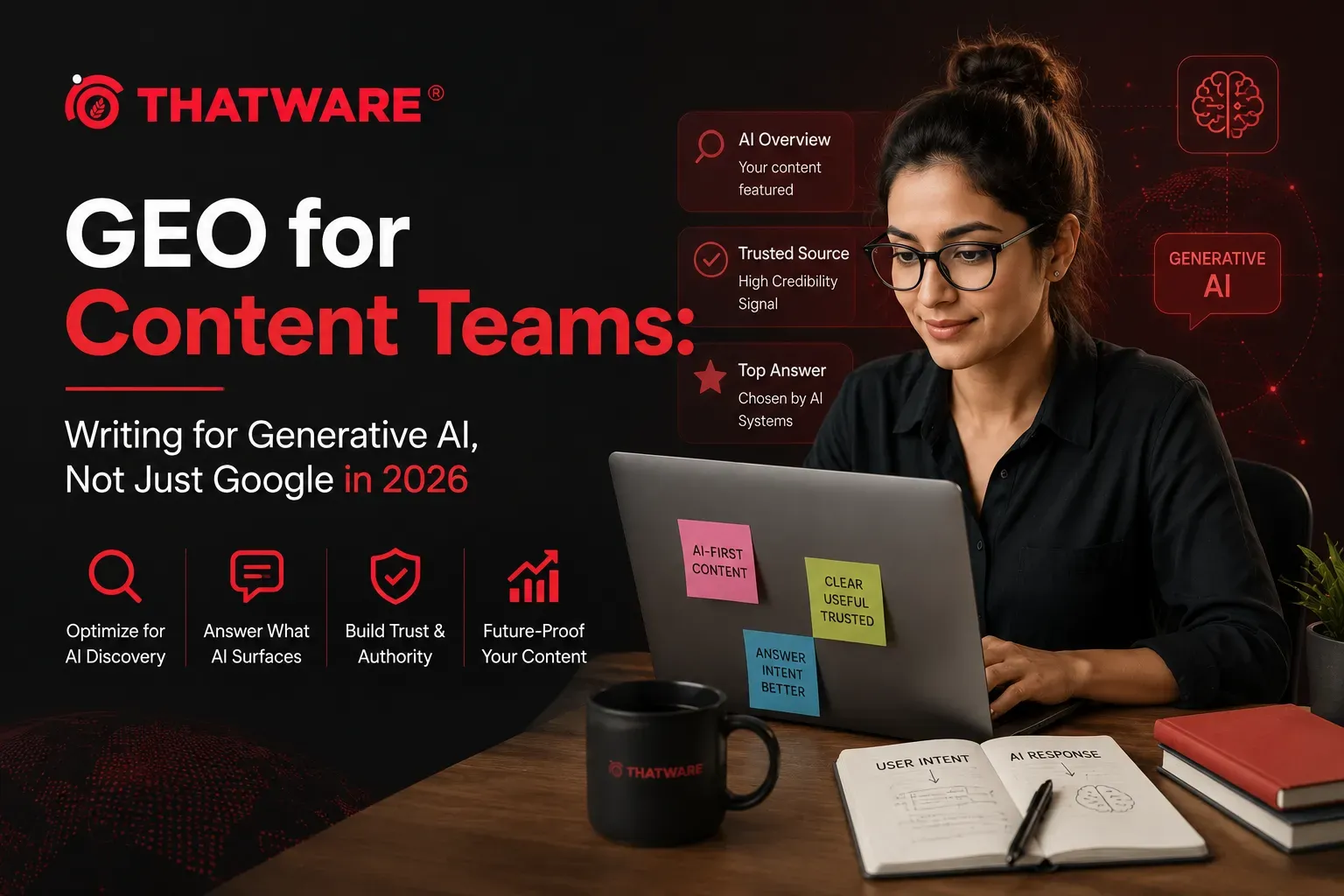

Content marketing has long followed a familiar process. Editorial teams identify target keywords, analyze search intent, review top-ranking pages, create more comprehensive content, optimize on-page elements, and wait for rankings to improve. This approach has been refined over the years and continues to deliver strong results in traditional search environments.
However, the search landscape in 2026 looks very different from what it did just a few years ago. A significant portion of online discovery now happens through AI-generated responses rather than conventional search engine result pages. Platforms such as ChatGPT, Perplexity, and Google's AI-generated answers often provide users with complete responses before they even click a website link.
For brands and publishers, this creates a new challenge. If your content is not being referenced by AI systems, it may remain invisible to a growing segment of your audience. At Thatware LLP, we help businesses understand this shift and adapt their content strategies for the emerging era of Generative Engine Optimization (GEO).
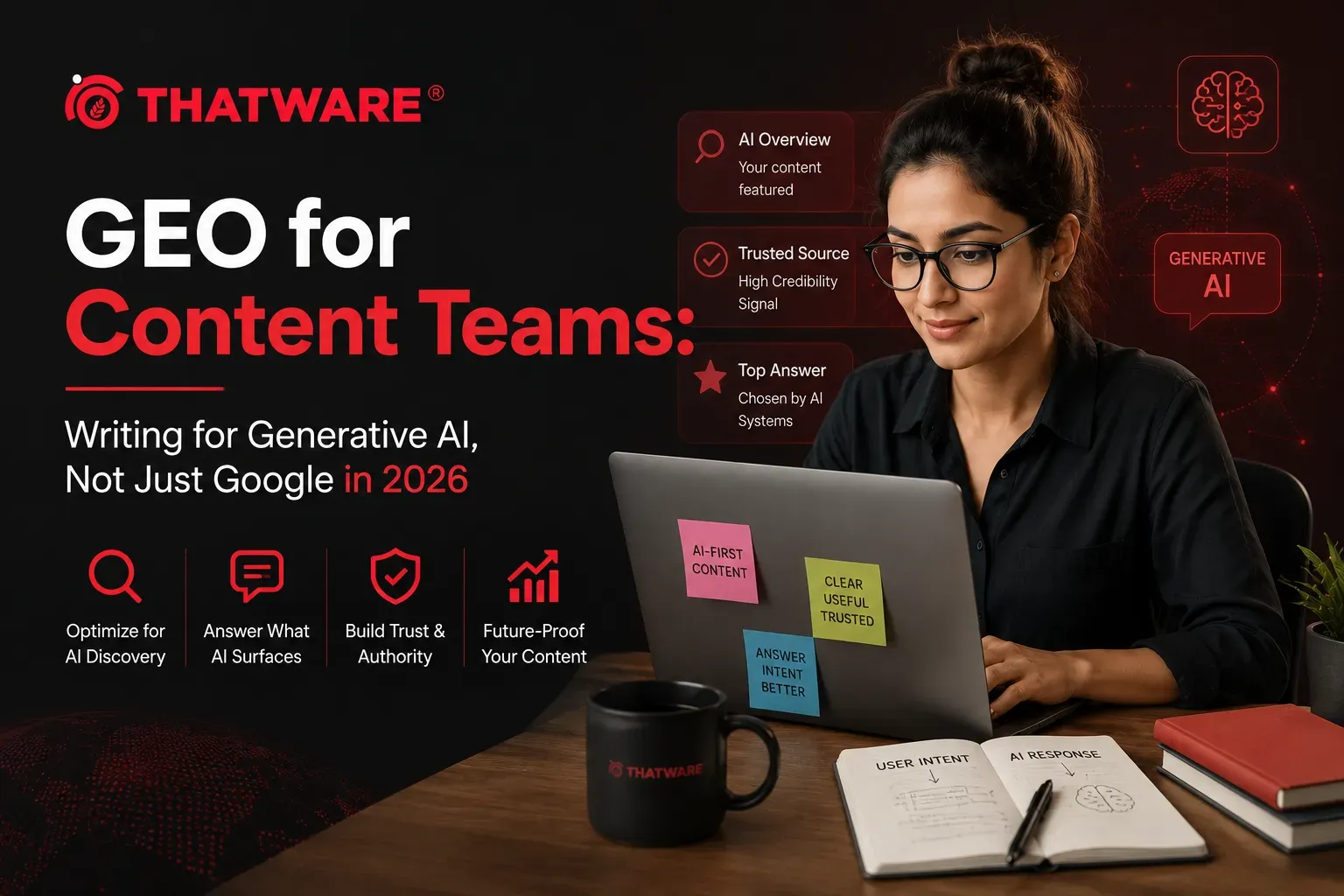
The Shift from Ranking to Referencing
Traditional SEO focuses on one primary question: how can content rank higher for a specific query? Success is measured through rankings, traffic, and click-through rates. While these metrics remain important, AI-powered search introduces a different objective.
The new question becomes: how can content be referenced when an AI system answers a user's question? Success is no longer limited to page rankings. Instead, it involves whether your content, insights, research, or expertise appear within AI-generated responses.
This shift requires content teams to think beyond optimization tactics. Rather than producing another version of existing content, brands must create information that deserves to be cited. Original research, unique frameworks, expert perspectives, detailed explanations, and valuable insights become far more important. Thatware LLP encourages organizations to focus on creating assets that offer genuine value rather than simply competing for rankings.
Creating Content That AI Systems Prefer
AI models typically extract information that is clear, structured, and easy to verify. Content containing specific facts, research findings, and authoritative claims is more likely to be referenced than vague or generalized statements.
For example, a statement supported by data and attribution carries significantly more value than broad observations. AI systems often prioritize content that demonstrates credibility through evidence, transparency, and expertise. This makes original research and proprietary insights powerful assets for modern content strategies.
Another important factor is clarity. Well-structured definitions, comprehensive explanations, and direct answers to common questions help AI systems understand and extract information efficiently. FAQ sections, educational guides, and resource pages often perform well because they mirror the way AI tools generate responses. At Thatware LLP, content strategies are designed to maximize both human readability and AI accessibility.
The Growing Importance of Author Authority
One area often overlooked by content teams is the influence of the author behind the content. Modern AI systems evaluate not only what is written but also who created it.
Content published under anonymous profiles or generic team bylines may carry less authority compared to articles written by recognized subject matter experts. Author credibility has become an increasingly valuable trust signal in AI-driven search environments.
Organizations should invest in building strong author profiles, detailed contributor pages, and transparent expertise signals. Professional credentials, industry experience, certifications, and published work all contribute to stronger authority. Thatware LLP recommends treating author entities as strategic assets because they play a critical role in establishing trust within AI-powered search ecosystems.
Content Maintenance and Distribution Matter More Than Ever
Creating new content is important, but maintaining existing content can often produce faster GEO results. AI systems frequently favor updated and relevant resources over outdated materials, even when older content was originally more comprehensive.
Regular content audits allow organizations to refresh statistics, update recommendations, improve examples, and align information with current industry trends. These updates strengthen content relevance and increase the likelihood of AI citations. Proper schema implementation and accurate update signals further support visibility in AI-driven retrieval systems.
Distribution is equally important. Content that remains isolated on a company website has limited influence compared to content that earns mentions across industry publications, news outlets, forums, and trusted third-party websites. At Thatware LLP, we emphasize that successful GEO requires both content creation and strategic amplification. The most valuable content is often the content that others reference, discuss, and share.
Building a GEO-Ready Content Workflow
Content teams preparing for 2026 should incorporate AI-focused planning into their editorial workflows. Before creating new content, review how AI platforms currently answer relevant questions. Identify information gaps, citation opportunities, and areas where your expertise can add value.
Structured data should be considered during content planning rather than after publication. Additionally, organizations should proactively develop author entities and monitor AI citation visibility alongside traditional SEO metrics.
The future of content marketing is not about abandoning proven SEO principles. Instead, it involves expanding those principles to meet the demands of AI-powered search. At Thatware LLP, we believe that the brands most likely to succeed are those that combine expertise, clarity, authority, and strategic GEO implementation. Writing for AI is ultimately an extension of writing well—creating content that is so valuable, credible, and informative that both people and intelligent systems naturally choose to reference it.
#strategicgeoimplementation
#geo
#geoservices
#aiseo
#geoforcontent






















Sign in to leave a comment.