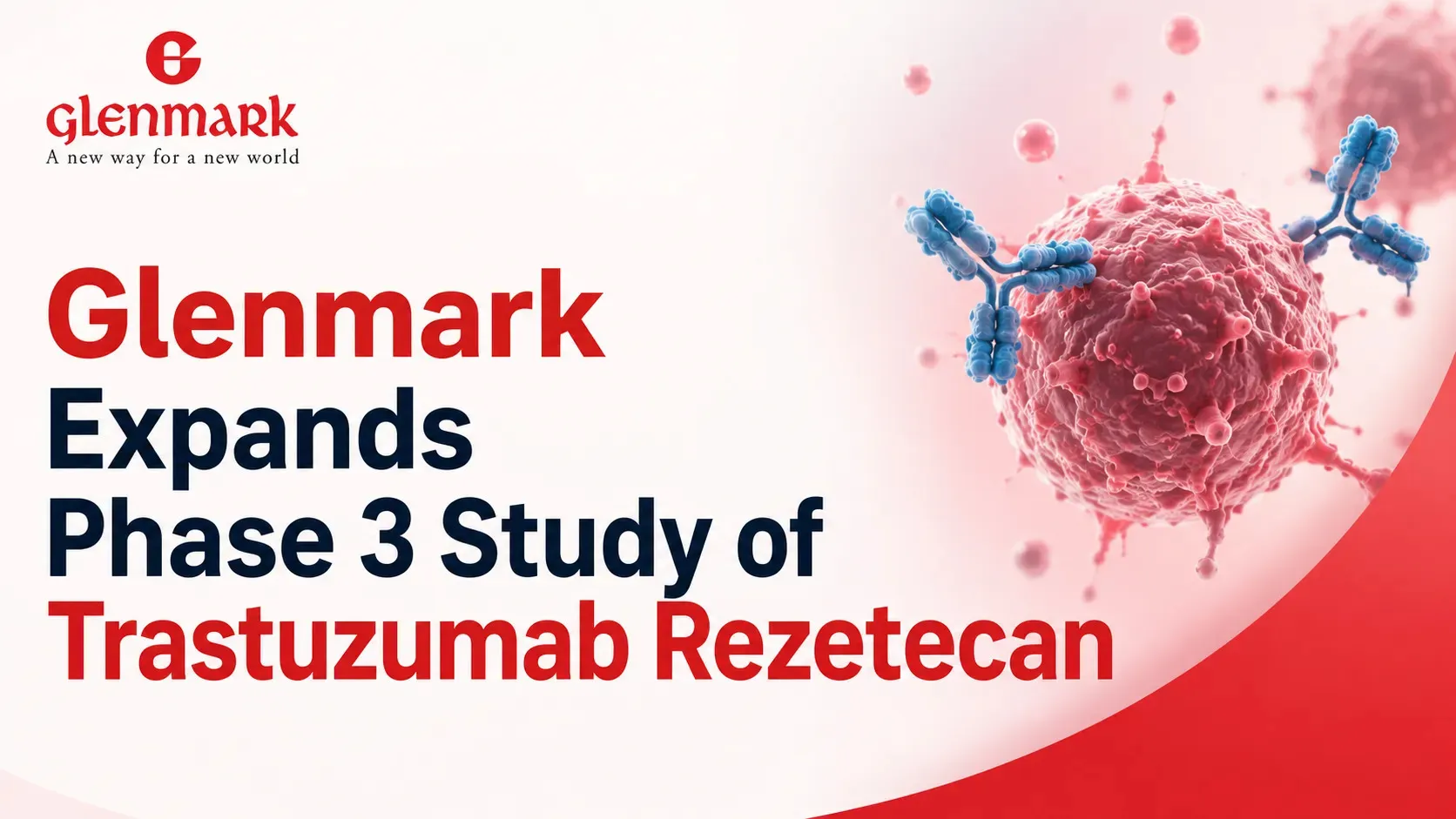

The fight against cancer continues to advance through research and innovation, and Glenmark has recently announced an important milestone in its oncology journey.
The pharmaceutical company is expanding its multi-country Phase 3 clinical trial for Trastuzumab rezetecan (SHR-A1811), an investigational HER2-targeted antibody-drug conjugate (ADC) being studied for patients with platinum-resistant ovarian cancer (PROC).
For patients facing this difficult-to-treat form of ovarian cancer, developments like these represent hope for better treatment options in the future.
India Becomes the First Country to Begin Patient Enrollment
One of the biggest announcements is that India has become the first country within Glenmark's licensed markets to receive regulatory approval for the Phase 3 study extension.
Following approval from the Drugs Controller General of India (DCGI), patient enrollment is now set to begin. Glenmark also intends to expand the study into Australia and South Korea, pending regulatory approvals, helping researchers collect clinical data from a broader range of patients.
Why Platinum-Resistant Ovarian Cancer Needs New Treatments
Ovarian cancer continues to be one of the most challenging cancers affecting women worldwide.
Although platinum-based chemotherapy has long been considered a standard treatment, many patients eventually experience recurrence and become resistant to these medicines. Once platinum resistance develops, available treatment options become much more limited, making continued research critically important.
This is why pharmaceutical companies and researchers continue investing in targeted therapies that may provide new hope for patients whose disease no longer responds to conventional treatments.
Understanding Trastuzumab Rezetecan
Trastuzumab rezetecan is part of a newer generation of cancer treatments known as antibody-drug conjugates (ADCs).
Rather than delivering treatment broadly throughout the body, ADCs are engineered to recognize specific proteins—in this case, HER2—that are present on certain cancer cells. Once attached, the therapy delivers a powerful anti-cancer agent directly to the tumor, making treatment more targeted than traditional chemotherapy.
Researchers hope this precision-based approach can improve effectiveness while reducing unnecessary impact on healthy tissue.
A Global Research Collaboration
The international Phase 3 study is aligned with the ongoing parent clinical trial conducted in China by Jiangsu Hengrui Pharmaceuticals.
The collaboration follows an exclusive licensing agreement signed in 2025, allowing Glenmark to develop and commercialize Trastuzumab rezetecan across multiple international markets outside selected territories.
By expanding the study internationally, researchers expect to generate stronger clinical evidence across diverse patient populations, an important step in supporting future regulatory submissions and broader patient access.
Looking Toward the Future
Clinical research often takes years before new therapies become widely available, but every successful milestone moves medical science one step closer to better treatment options.
The launch of patient enrollment in India and the planned expansion into additional countries demonstrates Glenmark's continued investment in oncology innovation and precision medicine.
If the trial delivers positive outcomes, Trastuzumab rezetecan could become an important treatment option for patients living with HER2-expressing platinum-resistant ovarian cancer—an area where effective therapies remain limited today.
We'll certainly be watching how this research progresses over the coming years.
For more information about Glenmark Pharmaceuticals, its oncology pipeline, and ongoing clinical research, visit https://www.glenmarkpharma.com/.
What are your thoughts on the growing role of targeted therapies and antibody-drug conjugates in cancer treatment? Share your perspective in the comments below.



























Sign in to leave a comment.