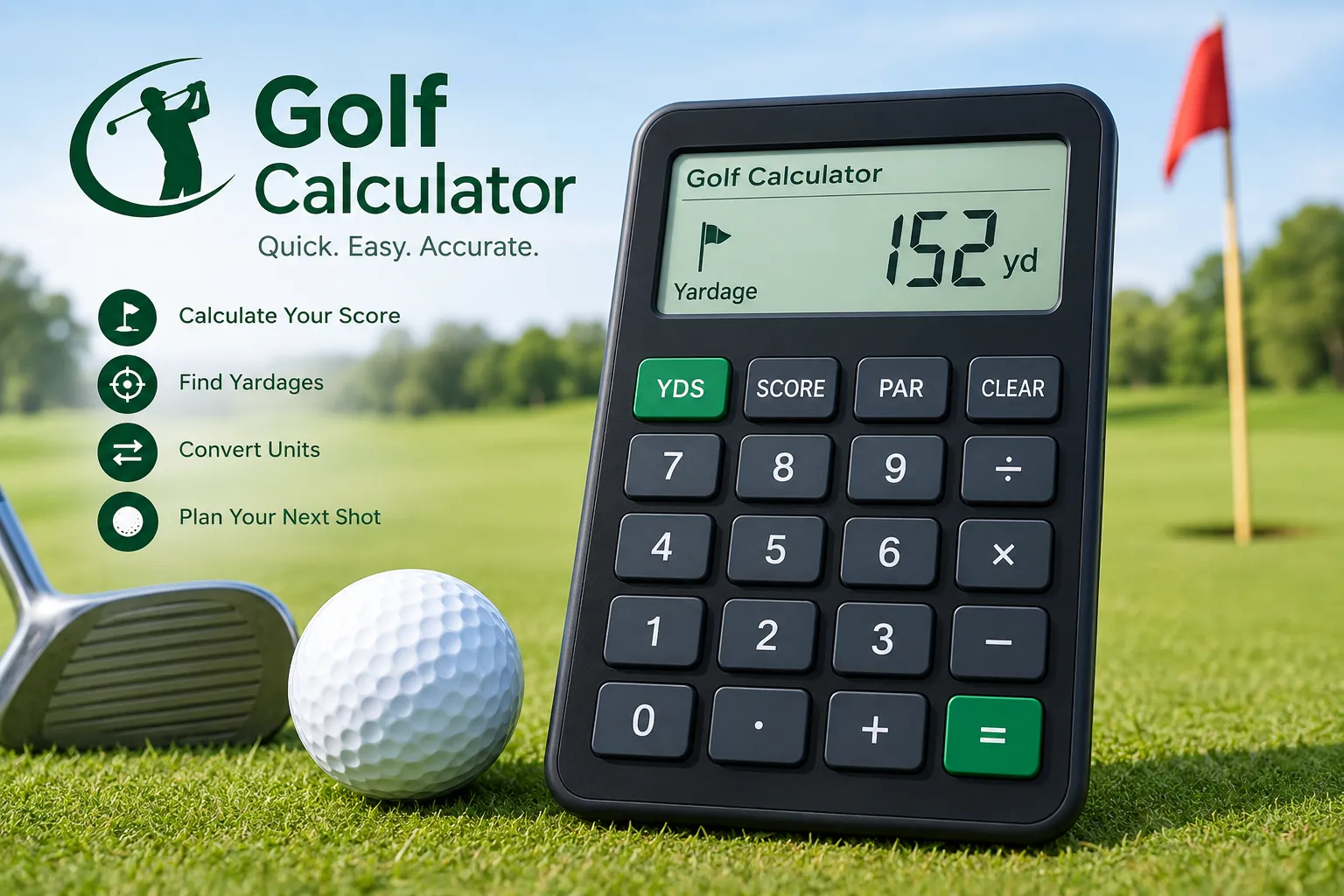

A golf calculator turns your scores, course rating, and slope rating into numbers you can actually use — your handicap index, your course handicap, or a full breakdown of how you played. Here's how it works and how to pick a good one.
So What Is a Golf Calculator, Really?
If you've ever tried to work out your handicap by hand after a round, you already know why these tools exist. You're juggling your score, the course rating, the slope rating, and a formula that's easy to mess up if you're tired or just want to get to the clubhouse.
A golf calculator does that math for you. Plug in your numbers, and it spits back an accurate result in seconds — no spreadsheet, no guesswork, no "close enough." Whether you're a weekend player who just wants to know if you're improving or a club regular chasing a lower index for competition, it's one less thing to think about.
What Can a Golf Calculator Actually Do?
Most golf calculators are built around the World Handicap System (WHS), which is the standard nearly every club and course uses today. Depending on which calculator you're using, it can figure out:
- Your handicap index based on recent rounds
- Your course handicap for a specific set of tees
- Your score differential for a single round
- Your expected Stableford points
Some go beyond the basics and track things like greens in regulation, fairways hit, and sand saves — giving you a clearer picture of where your game actually breaks down, not just what you shot.
Why Bother Using One
You could do this math yourself. Most people don't, because it's tedious and the numbers change depending on the course. A calculator keeps things consistent, which matters more than it sounds like it would — it means you can compare a round at your home course to one you played on vacation and actually trust the comparison.
It also matters for fairness. If you're playing in a club competition, handicaps built on real formulas (not rough estimates) mean the match is actually even. And if you track your rounds over time, patterns start to show up — maybe your handicap's been creeping down for months, or maybe your putting is what's really costing you strokes, not your drives.
How to Pick a Good One
Not all golf calculators are created equal. A few things worth checking before you rely on one:
- It's free and doesn't ask for an account. You shouldn't need to sign up just to check your handicap.
- It follows WHS formulas, not some simplified version that only gets you in the ballpark.
- You can enter course rating and slope manually. This is what makes a calculator work for any course in the world, not just a handful of preset ones.
- It covers other formats if you play them — Stableford, Scramble, 4BBB. Not essential, but a nice bonus if you play in mixed formats regularly.
- It works well on your phone. Most golfers check their numbers standing in the parking lot after 18 holes, not later at a desk.
The Bottom Line
A golf calculator takes numbers that don't mean much on their own — a raw score, a course rating, a slope number — and turns them into something you can actually use to track your game. No manual math, no second-guessing whether you did the formula right. Just enter your numbers and get a result you can trust, round after round.
Whether you're getting your first handicap index or you've been chasing a lower number for years, a reliable calculator makes tracking progress simple and keeps every comparison honest.
FAQ
What is a golf calculator used for? It converts your scores and course data — rating, slope, and so on — into results like your handicap index, course handicap, or score differential, using the official WHS formulas.
Are golf calculators actually accurate? Yes, as long as the tool follows official WHS formulas and you've entered the correct course rating and slope rating for the round.
Do I need an account to use one? No. Most free golf calculators work without any signup — you just enter your numbers and get your result.
Can I use a golf calculator for any course? Yes. As long as the calculator lets you manually enter course rating and slope rating, it'll work for any rated course anywhere in the world.
How many rounds do I need before I get a handicap? You can get an initial handicap index with just three rounds. A fully established handicap typically uses your best differentials from your most recent 20 rounds.
























Sign in to leave a comment.