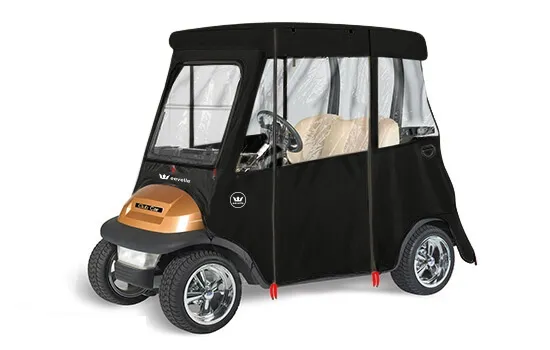

A cover that doesn’t fit right causes more problems than most people expect. It can shift or come loose in the wind, or let water collect in the folds after a storm. From a distance, it looks like it’s doing its job, but a cover that's even a little too loose lets in more than you'd think- like rain at the seams, wind wearing down the fabric against the frame, a cover that should've lasted five years wearing out in two.
Getting a good fit isn't complicated, but it takes a bit more than grabbing whatever's labeled "fits most carts." It really comes down to three things: knowing your cart's exact measurements, choosing a fabric that holds its shape over time, and paying attention to a few hardware details that are easy to overlook. Here's what to look for when buying a golf cart club cover.

Why Fit Matters
A loose cover can move more than it should in windy conditions, increasing friction between the fabric and the cart, frame, or accessories. Over time, repeated movement may contribute to fabric wear. The gaps around the outer edges also allow rain, dust, and debris to seep in, thus diminishing the real protection offered.
A properly fitted golf cart cover can help keep rain off the seats and reduce the amount of water, dust, and debris reaching exposed areas of the cart. A good fit can also reduce excess fabric folds where moisture may collect. The goal is a cover that sits securely around the cart rather than simply hanging over it.
Start With Your Cart's Dimensions
Before comparing golf cart club covers, it helps to know your cart's exact specs. Passenger count is the first factor; 2-, 4-, and 6-passenger carts all differ in length and shape. Roof style matters as well, since short-roof and long-roof models can look similar in photos but cover different amounts of space.
Measure the length, width, and height from the roof to the ground. If your cart is lifted or has an extended top, a standard cover likely won't work; those setups usually need a size built specifically for them. If you typically leave clubs or bags mounted on the cart, it's worth measuring with them in place, since they can affect the fit.
Universal vs. Custom-Fit Covers
If you have your measurements, once you know that, then you will probably have to choose between a universal cover or a custom, exact-fit cover.
If you don't have a clear idea about your cart's exact model, you should consider the universal cover because it is more flexible and less expensive. This compromise leads to a looser overall fit.
Custom or exact-fit golf cart club covers are built to match a specific brand and model, which means they sit tighter and typically hold up better over time. If your cart is parked outside regularly, the tighter fit is usually worth the extra cost. If it's mostly stored in a garage and only covered occasionally, a universal option is often enough.
Fabric Affects Fit Too
Material plays a bigger role in long-term fit than people usually realize. Standard polyester is lightweight and affordable, and it holds up reasonably well against sun and rain, but it can stretch slightly over time and lose some of its snugness. Higher-grade fabrics, like Sunbrella or marine-grade materials, tend to hold their shape longer, resist fading and mildew better, and maintain a better fit over the years.
Look for elasticized hems and a sewn-in shock cord at the bottom edge, which help the cover stay cinched even as the fabric stretches slightly with use. Breathability is also worth checking. A golf cart club cover can be snug and still trap moisture underneath if there's no airflow, which can lead to mold even with a good fit.
Features Worth Looking For
A few hardware details make a noticeable difference in how well a cover stays in place:
- Elastic corners that pull the bottom edge snug
- J-hooks or straps that help anchor the cover in wind
- A zippered panel for access without removing the entire cover
- Vents that reduce trapped moisture and wind lofting
- Reinforced seams that hold up under repeated wind pressure
None of these features are especially noticeable on their own, but together they're often the difference between a cover that lasts several seasons and one that needs replacing after one.
Common Mistakes to Avoid
The most common mistake is guessing at size instead of measuring. A cover that "looks about right" often isn't. Another frequent issue is overlooking the difference between short-roof and long-roof models, which can appear similar online but provide different coverage.
Also keep in mind that "universal" does not imply one size fits all; there is still a range to test. Those items such as mirrors, windshields, or a lifted suspension can also impact fit, even if the cart itself is within the listed dimensions.
Confirm the Fit Before You Buy
When purchasing a custom-fit cover, be sure to verify that the brand, model, and year are the same as those being ordered. Rather than just looking at the category, compare your measurements with the ones listed. Customer reviews and photos can also be helpful here as well, as they may illustrate the fit of the cover in real life, not in a staged product photo. If anything is unclear, reaching out with your exact measurements is usually the simplest way to avoid ordering the wrong size.
Conclusion
Choosing the right golf cart club cover comes down to accurate measurements, a fabric that holds up over time, and a few hardware details that keep everything secure. Getting those details right helps ensure the cover provides practical protection when your cart is exposed to rain, sun, and wind. Skipping any of these steps usually means replacing the cover sooner than expected.























Sign in to leave a comment.