

A golf course begins long before the first tee is constructed. It starts with understanding the land, climate, water availability, soil, and the type of golfing experience a project is expected to provide. In India, these considerations become particularly important because golf developments can be located in regions with very different terrain and weather conditions. Effective Golf Course Design India therefore combines creative course planning with practical site management.
Starting With the Land
Every golf course has its own natural character. Some sites contain rolling terrain, while others are relatively flat. Certain locations may have existing trees, natural water bodies, or interesting changes in elevation that can become valuable parts of the layout.
Instead of treating the entire site as a blank canvas, designers can study its existing features and determine how they can contribute to the course. This approach may reduce excessive earth movement while giving the finished layout a stronger connection with its surroundings.
Topographic surveys, soil investigations, drainage studies, and environmental assessments provide important information before the detailed design begins.
Creating a Balanced Layout
A good golf course should offer variety throughout the round. Players should encounter different hole lengths, directions, hazards, landing areas, and approaches to greens.
The positioning of tees, fairways, bunkers, water features, and greens affects both strategy and visual character. Designers also need to consider how golfers move from one hole to the next. Long or confusing transitions between holes can affect the overall experience.
The layout should provide options for golfers with different abilities. Multiple teeing areas can allow the same hole to play differently depending on the player's skill and preferred level of challenge.
Climate and Turf Selection
India's diverse climate has a direct influence on golf course planning. Temperature, rainfall, humidity, sunlight, and seasonal changes can affect turf performance and maintenance requirements.
Choosing appropriate turf varieties is therefore an important part of the design process. Turf should be considered based on factors such as water consumption, local growing conditions, recovery ability, and expected playing quality.
A course that looks attractive immediately after construction still needs to perform consistently during different seasons. Turf planning should therefore be connected with irrigation, drainage, maintenance, and agronomic requirements.
Irrigation Should Be Planned Early
Water is one of the major operational considerations for any golf development. Irrigation planning should begin during the design stage rather than being treated as a separate construction activity.
The irrigation system needs to account for tees, fairways, greens, roughs, landscaped areas, and other planted zones. Water sources and storage facilities should also be evaluated.
Efficient irrigation can help provide consistent turf conditions while controlling unnecessary water consumption. Technology such as automated controls and weather-based irrigation management can also be considered where appropriate for the project.
Drainage and Rainwater Management
Heavy seasonal rainfall can create challenges for golf courses in several parts of India. Poor drainage can result in saturated playing surfaces, erosion, turf deterioration, and delays in maintenance activities.
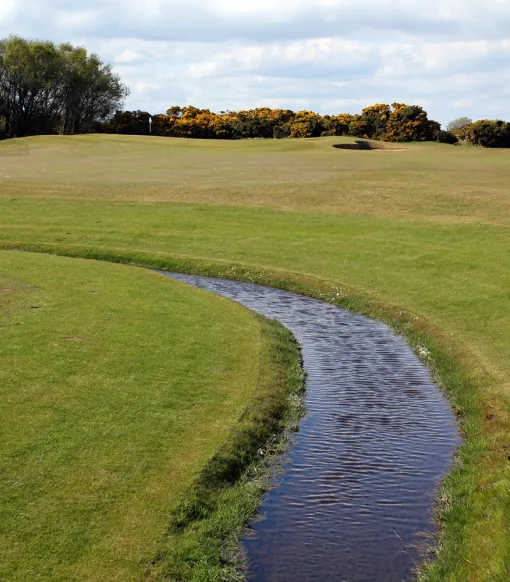
Golf Course Design India should therefore incorporate surface and subsurface drainage based on the site's conditions. Slopes, collection areas, drainage channels, ponds, and outlets need to work together.
Rainwater can also be incorporated into the broader water-management strategy. Properly planned storage areas may support irrigation requirements while becoming natural visual elements within the course.
Designing With Maintenance in Mind
The appearance of a golf course is only one part of its success. Long-term maintenance should influence decisions made during design.
The location of bunkers, slopes around greens, planted areas, maintenance access routes, irrigation components, and turf zones can all affect future operating costs. A visually impressive feature that requires excessive maintenance may create difficulties for the operator.
For this reason, designers should consider how mowing, irrigation, drainage inspection, landscaping, and equipment movement will be handled after construction.
Technology and Modern Golf Course Planning
Technology has become increasingly useful in golf course development. Digital terrain models, surveying equipment, geographic information systems, irrigation software, and construction documentation can support more accurate planning.
Three-dimensional modelling can help project stakeholders understand how proposed holes will look across the site. It can also assist in reviewing grading, visibility, drainage paths, and relationships between different course features before construction begins.
These tools support decision-making while still keeping the fundamental characteristics of the land at the centre of the design.
Working With the Right Professionals
Golf course development usually involves several disciplines. Golf architects, civil engineers, irrigation specialists, agronomists, landscape professionals, environmental consultants, and construction teams may all contribute to a project.
Coordination between these professionals is important because decisions in one area can affect another. For example, changes in grading may influence drainage and irrigation requirements, while changes in turf selection can affect water demand and maintenance.
Final Thoughts
A successful Golf Course Design India project is built around careful planning rather than appearance alone. Understanding the site, creating a balanced playing layout, managing water, selecting suitable turf, planning drainage, and considering future maintenance can all contribute to a more practical development.
The strongest golf course concepts are those that work with the land and respond to local conditions while giving golfers an engaging experience. With detailed planning and coordination, the design stage can establish a solid foundation for construction and long-term course management.























Sign in to leave a comment.