

High in the rain forests of equatorial Africa, something heavy lands on a tree trunk. It is not a bird or a bat. It is a beetle, and a large male can outweigh a house sparrow. The six recognized Goliathus species rank among the largest insects on Earth.
Named for the biblical giant, Goliathus beetles are built on a heroic scale. Males reach 6 to 11 centimeters, while females run smaller at 5 to 8. Males also wear a Y-shaped horn on the head, which works like a pry bar.
The cast list is short: albosignatus, cacicus, goliatus, kolbei, orientalis, and regius. Several subspecies and color forms are only partly described, so the family tree is still being sorted out. All live in Africa's tropical forests.
Where the Weight Is Won
Most of the heft is gained long before adulthood. Flower beetle larvae live in decaying plant matter and soil, and Goliath grubs can swell to roughly 100 grams. That is about twice the weight of the adult they become.
Growth is slow. Even in captivity, the largest grubs need several months to finish the job.
A Short, Sweet Adult Life
Adults trade the grub's diet for sugar. They feed on tree sap and ripe fruit, and males use the horn to lever rivals off a good feeding spot. Females have a wedge-shaped head that helps them burrow when it is time to lay eggs.
Flight holds a surprise. Like other flower beetles, they take off with the wing covers closed, unfolding only the hindwings through a notch in each cover. Telling the Goliathus species apart mostly means reading those covers, since color and pattern vary while the black-striped shield behind the head is shared.
Strong claws on every leg let them climb trunks with ease.
Adults sit out the dry season and reappear when the rains return. In captivity they live about a year.
Counting What Remains
Hard numbers are scarce. Researchers writing in the Journal of Insect Conservation in 2023 interviewed communities in Liberia and Ivory Coast about local Goliath beetles. Everyone who knew the beetles agreed they were declining, especially Goliathus cacicus. Deforestation and international trade were named as the main drivers.
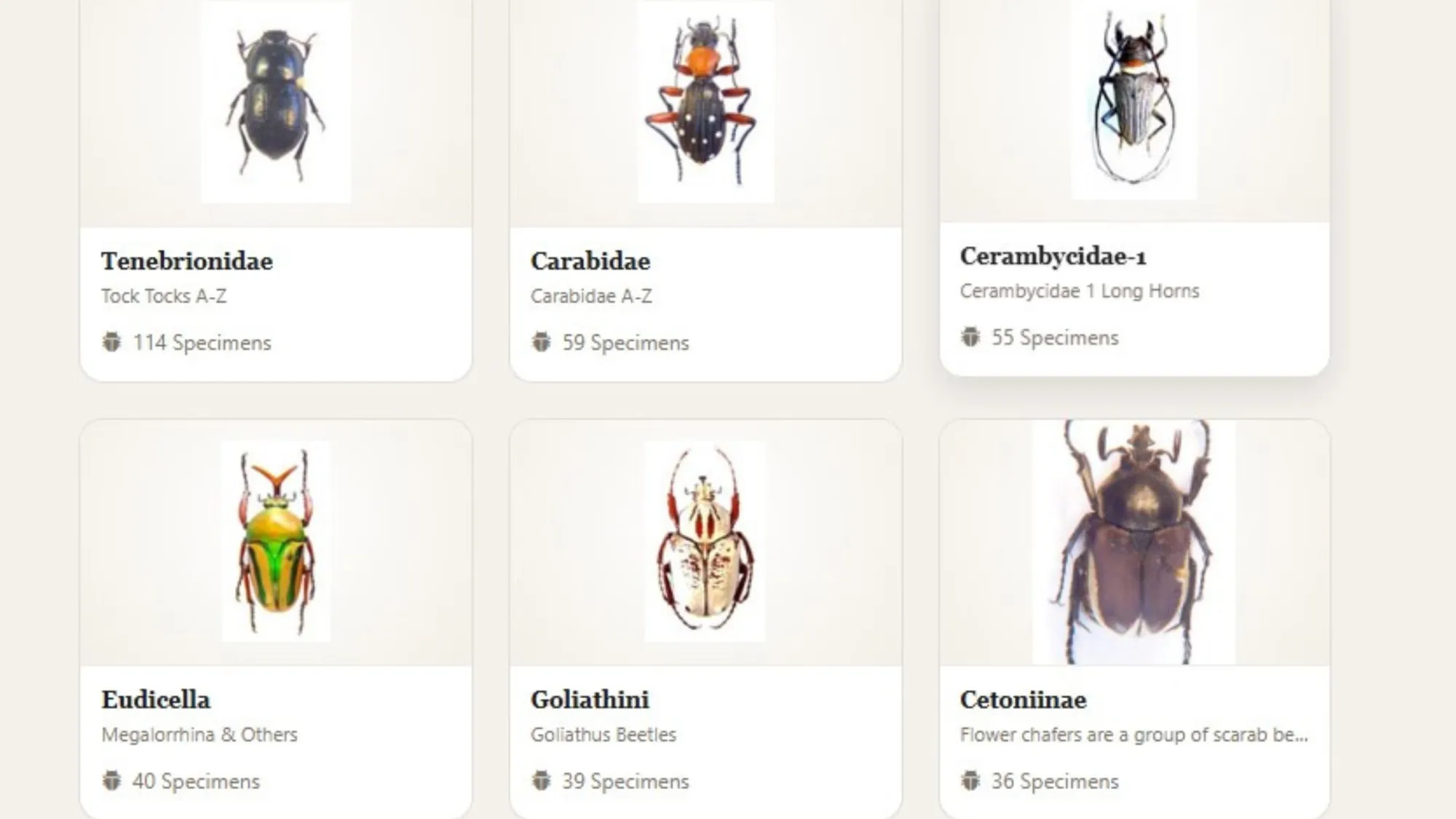
The authors also noted that many museum specimens are old and poorly labeled. That blurs the picture of where each species still lives. Open, well-documented collections such as the Beetles of Africa catalog, curated by Colin R. Owen, help close that gap by keeping locality records in public view. Over-collecting for the pet trade and climate change add pressure, and the genus has not yet been evaluated for the IUCN Red List.
Why the Giants Still Matter
Seeing a Goliath in the wild is a privilege few will have. Understanding how the Goliathus species live, and where they are slipping away, is something anyone can share. Giants this size are easy to admire, even from a distance. They are harder to protect, and protection begins with paying attention.






















Sign in to leave a comment.