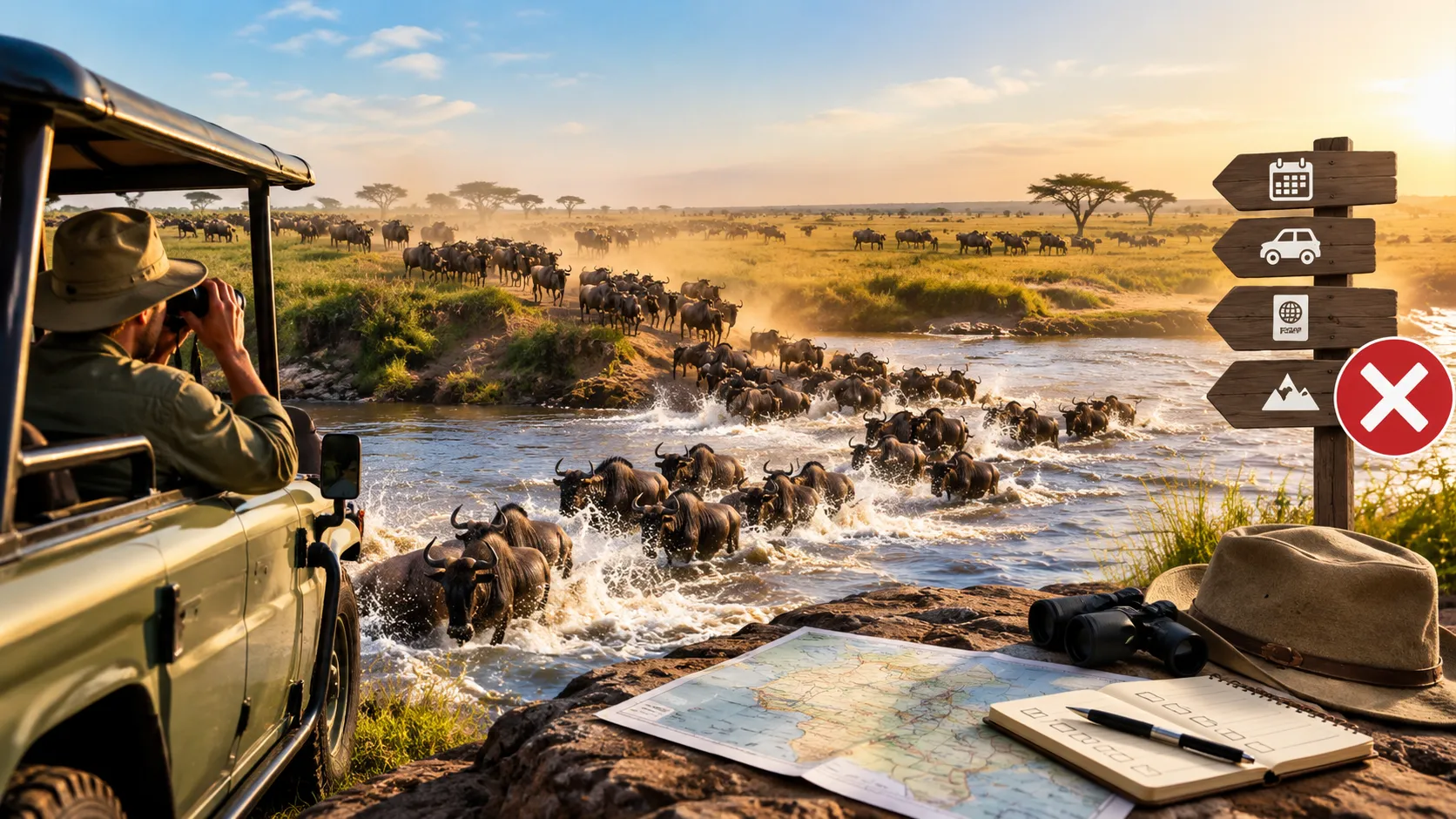

A safari centred around the great wildebeest migration can be an unforgettable way to experience one of Africa’s most remarkable wildlife spectacles. Thousands of wildebeest, along with zebras and other grazing animals, move through the Serengeti and Maasai Mara ecosystems in search of fresh grass and water. However, seeing the migration is not simply a matter of arriving at a destination on a particular date. Careful planning can make a major difference to the quality of the experience.
1. Assuming the Migration Happens on an Exact Schedule
One of the most common planning mistakes is treating the migration like a fixed annual event with predictable dates. Although the general migration cycle follows seasonal patterns, the movement of the herds depends heavily on rainfall, water availability, and grazing conditions.
For example, river crossings may occur at different times from one year to another. Travelers should therefore use typical seasonal patterns as a guide rather than expecting the same experience on the same calendar date every year.
2. Choosing Travel Dates Based Only on River Crossings
The famous Mara River crossings receive considerable attention, but they represent only one part of the migration cycle. Focusing exclusively on river crossings can cause travelers to overlook other fascinating stages of the journey.
Calving season, large herd movements across open plains, predator activity, and the gradual movement between grazing areas can all provide excellent wildlife-viewing opportunities. Before booking, consider what type of experience you want rather than choosing dates based solely on photographs of river crossings.
3. Booking Accommodation Too Late
Popular safari areas can become busy during peak migration periods. Lodges, camps, and other accommodations in prime wildlife-viewing locations may have limited availability, particularly during highly sought-after months.
Waiting until the last minute can also limit your choice of location. Booking well in advance gives travelers more opportunities to select accommodation that matches their budget, preferred comfort level, and desired proximity to wildlife areas.
4. Staying in Only One Location
The herds are constantly moving, so staying in one location for an entire trip can reduce the chances of seeing different stages of the migration. A well-planned itinerary may include multiple areas depending on the season.
Some travelers prefer combining different regions of the Serengeti, while others may include Kenya's Maasai Mara. The right choice depends on travel dates, available time, and the wildlife experiences you hope to see.
5. Underestimating Travel Distances
Safari destinations can look relatively close on a map, but actual travel times may be longer than expected because of road conditions, wildlife sightings, weather, and conservation-area restrictions.
Trying to fit too many destinations into a short itinerary can result in spending excessive time travelling instead of enjoying the safari. A slower itinerary with enough time in each area often provides a more relaxed experience.
6. Focusing Only on the Wildebeest
The migration is named after wildebeest, but these animals are not the only reason the spectacle is so impressive. Zebras, gazelles, elephants, giraffes, lions, cheetahs, hyenas, and other wildlife can also be encountered during a safari.
Predators often follow migrating herds because large concentrations of prey create feeding opportunities. Paying attention to the entire ecosystem can make the experience much more rewarding.
7. Ignoring Weather and Seasonal Conditions
Weather can influence both wildlife movements and safari conditions. Travelers should research expected temperatures, rainfall, road conditions, and seasonal characteristics before packing.
Lightweight clothing, sun protection, comfortable footwear, binoculars, and suitable camera equipment can all be useful. It is also wise to prepare for cooler mornings and evenings, particularly when travelling on early game drives.
8. Expecting Every Day to Deliver a Dramatic Sighting
Wildlife is unpredictable. Even during the great wildebeest migration, there is no guarantee that a particular herd will cross a river or that a dramatic predator encounter will happen on a specific day.
Patience is an important part of safari travel. Some days may involve spectacular sightings, while others may be quieter. Spending several days in a wildlife area generally gives you more opportunities to observe natural behaviour.
9. Choosing a Safari Without Considering Sustainability
Responsible tourism is increasingly important in wildlife destinations. Travelers should consider how safari operators manage vehicle numbers, interact with wildlife, support local communities, and protect natural habitats.
Organisations such as Wildebeest Sightings can help travelers think beyond simply checking a migration sighting off a bucket list and appreciate the broader ecological importance of the journey.
10. Not Leaving Enough Time for the Experience
Trying to experience the migration in just one or two rushed days can create unnecessary pressure. Wildlife sightings depend on nature, not a timetable. Allowing several days provides more flexibility and increases the opportunity to experience different landscapes and animal behaviours.
Final Thoughts
Planning a migration safari requires realistic expectations, flexible timing, and an understanding of how wildlife responds to seasonal conditions. Avoiding common mistakes such as relying on exact migration dates, booking too late, rushing between destinations, or focusing only on river crossings can lead to a more enjoyable trip.
Most importantly, remember that the great wildebeest migration is a natural process rather than a scheduled performance. With thoughtful planning and patience, travelers can experience not only the famous herds but also the remarkable ecosystem that makes their journey possible.



















Sign in to leave a comment.