Gregory Dolphin Explores Personal Spirituality Beyond Organized Christianity

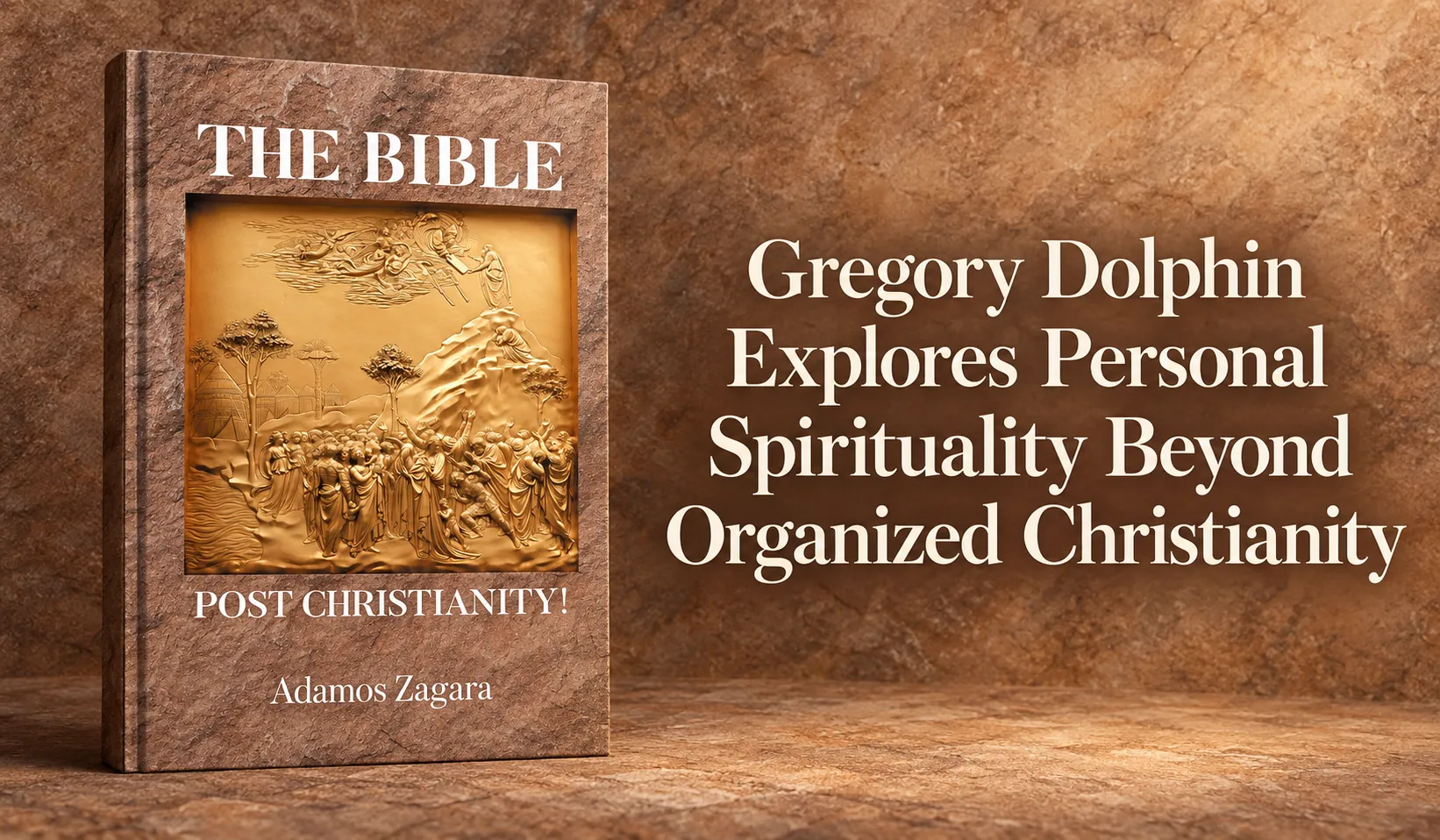
The Bible – Post Christianity! asks whether morality, spiritual curiosity, and a sense of connection can continue when organized Christianity carries less authority.
Gregory Dolphin looks beyond institutional religion in The Bible – Post Christianity!, exploring what people may build when inherited religious structures no longer answer their questions.
The book is sharply critical of organized Christianity, but Dolphin does not present spiritual life and organized religion as the same thing. Throughout the manuscript, he distinguishes between what he calls the Creator of all things and the biblical “Lord” he believes is portrayed in many narratives involving punishment, warfare, jealousy, and territorial conflict.
That distinction allows him to ask a different question from the one readers might expect.
If a person stops accepting the Bible as unquestionable authority, must that person also abandon morality, wonder, reflection, or any belief in a higher creative force?
Dolphin’s answer is no.
In the chapter “No Bible – What Then?” he considers traditions including Hinduism, Buddhism, Taoism, Confucianism, and Zoroastrianism. These examples are not presented as replacement religions readers are expected to adopt. Instead, Dolphin uses them to show that people around the world have developed moral, philosophical, and spiritual systems without depending on the Christian Bible.
The book also challenges the idea that ethical behavior requires religious supervision. Dolphin argues that compassion, cooperation, responsibility, and care for others are human capacities that can exist with or without formal religious membership. He points to ordinary moral behavior among people who are not religious and asks why decency should be treated as the exclusive product of a religious institution.
For Dolphin, removing an external authority does not remove responsibility. It increases it.
If individuals can no longer explain their behavior by saying they were simply following a religious command, they must think more carefully about consequences, fairness, empathy, and the kind of communities they want to help create.
The later chapter “New Beginnings” turns that argument inward. Dolphin describes his own gradual effort to reconsider beliefs learned in childhood and offers readers a picture of spiritual independence as a process rather than a dramatic break.
Education comes first. Dolphin encourages people to study religious history, encounter different traditions, compare claims, and examine the fears or habits that may keep inherited beliefs in place.
Meditation and personal reflection also appear as possible tools. Dolphin describes quiet mental focus as a way to reduce noise, observe the self, and create room for personal contemplation. In the context of the book, meditation represents a form of direct experience that does not require an institution to authorize it.
The future Dolphin imagines is therefore not empty.
People would still face grief, mortality, love, responsibility, uncertainty, and the search for meaning. They would still form families, communities, friendships, and ethical commitments. They might simply approach those experiences without assuming that one sacred text or institution holds final authority over every answer.
The Bible – Post Christianity! is intentionally provocative, but its later chapters are also constructive. Dolphin wants readers to understand that losing certainty does not have to mean losing purpose.
Central to that vision is freedom of inquiry. Dolphin does not ask readers to exchange Christianity for a new compulsory philosophy. He argues that people should be free to explore meaning through study, nature, reflection, science, community, or a personal understanding of the Creator. Just as importantly, they should allow others the same freedom. The book closes that circle by treating disagreement as something people can manage without hostility, provided they remain willing to listen, verify claims, and take responsibility for their conclusions.
About the Book
The Bible – Post Christianity! explores biblical history, ancient traditions, organized Christianity, institutional power, education, morality, and personal spirituality. The work combines personal reflection with historical discussion and invites readers to examine what they believe and why they believe it.
About the Author
Gregory Dolphin draws on decades of personal study and life experience. His background described in the manuscript includes military service, manufacturing, engineering, and continuing interests in religion, history, science, and human development. He is also the author of Man, God, and the Man-gods of Antiquity.
Media Contact:
Author: Adamos Zagara
Amazon: The Bible — Post Christianity!
https://www.instagram.com/adamos_zagara/





Sign in to leave a comment.