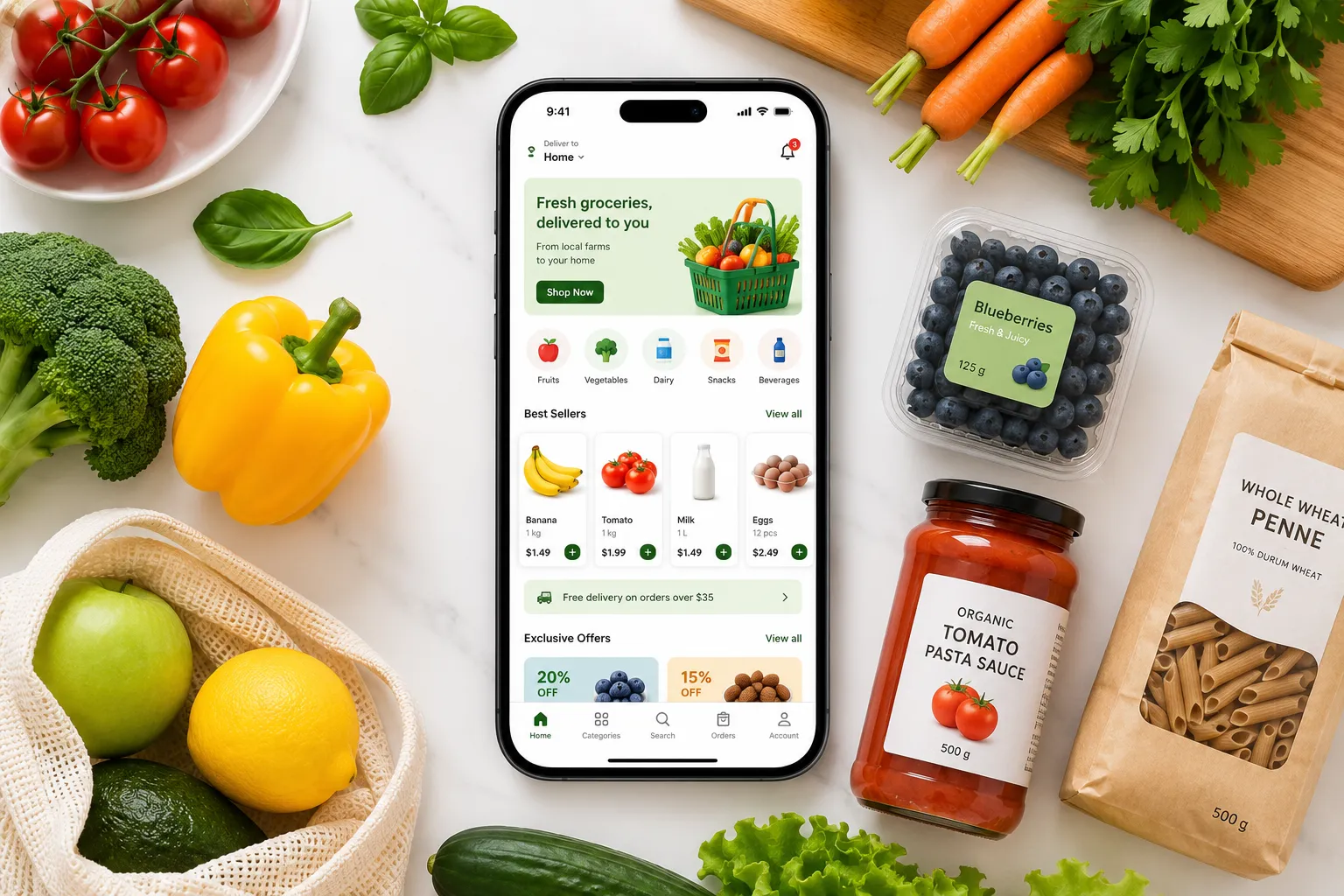
Grocery delivery apps have moved from a convenience for urban professionals to a core shopping channel for millions of households. The shift did not happen overnight, and it was not driven by one company. It happened because the underlying technology finally caught up with the logistics problem.
If you are building one, evaluating competitors, or trying to understand where the market is headed, this guide breaks down how these apps actually work and what separates the ones that scale from the ones that stall. Grocery delivery apps are mobile or web platforms that let users browse a store's inventory, place an order, and receive groceries at home, usually within one to two hours. They connect customers to personal shoppers or warehouse fulfillment systems, with real-time tracking, payment processing, and dynamic inventory at the core.
What Are Grocery Delivery Apps and How Do They Actually Work?
Grocery delivery apps function as a three-sided marketplace: the customer places an order, a picker or driver fulfills it, and the store or warehouse supplies the inventory. The coordination between all three sides in near-real-time is what makes them technically complex.
There are two main fulfillment models:

- Store-based picking: A shopper enters a physical retail location, collects items from the shelves, and delivers directly. Instacart uses this model.
- Dark store or micro-fulfillment: Orders are fulfilled from a dedicated warehouse not open to the public. Gopuff and many rapid-delivery apps use this. It is faster but requires significant infrastructure investment.
Most grocery delivery platforms layer several systems on top of this: inventory syncing with store or warehouse stock, route optimization for delivery drivers, substitution logic for out-of-stock items, and a customer-facing app that makes all of that invisible.
What Features Do Grocery Delivery Apps Need to Function at Scale?
The customer-facing experience is only one layer. What runs underneath determines whether the app can handle thousands of simultaneous orders without breaking.
Customer app features:
- Real-time product search with accurate inventory counts
- Item substitution preferences and out-of-stock notifications
- Live order tracking from picker assignment to doorstep
- Flexible delivery windows or express delivery slots
- Multiple payment methods including wallets and saved cards
Picker or driver app features:
- Optimized pick lists organized by store aisle layout
- Push notifications for new assignments
- Route navigation with estimated arrival times
- In-app communication with the customer for substitution approvals
Backend and admin features:
- Inventory sync with POS or store systems (real-time or near-real-time)
- Dynamic pricing and promotional rules
- Surge detection and driver dispatch logic
- Order analytics and fulfillment rate reporting
Missing any of these in production leads to the two failure modes that kill user retention: inaccurate inventory and slow or mis-routed deliveries.
How Do Grocery Delivery Apps Handle Real-Time Inventory?
This is one of the hardest problems in the space. Physical retail inventory is imprecise. Items get picked up and returned. Shelves run low before the system reflects it. Damaged goods never get scanned out properly.
Most platforms handle this through a combination of methods:
| Method | How It Works | Accuracy Level |
|---|---|---|
| POS integration | Inventory pulled directly from the store's point-of-sale system | Medium |
| Manual catalog updates | Store teams update stock levels periodically | Low |
| Picker feedback loops | Pickers flag out-of-stock items and the system updates in real time | High |
| Predictive stocking models | ML models estimate what is likely on shelf based on historical data | High |
The apps that have solved this best, like Instacart, have trained their inventory models using millions of pick sessions over years. A new app starting from scratch should plan for a messy first six to twelve months of inventory accuracy and build substitution UX that does not frustrate customers when items are unavailable.
What Technology Stack Do Grocery Delivery Apps Use?
There is no single stack that every app uses, but the pattern across production-grade platforms looks consistent.
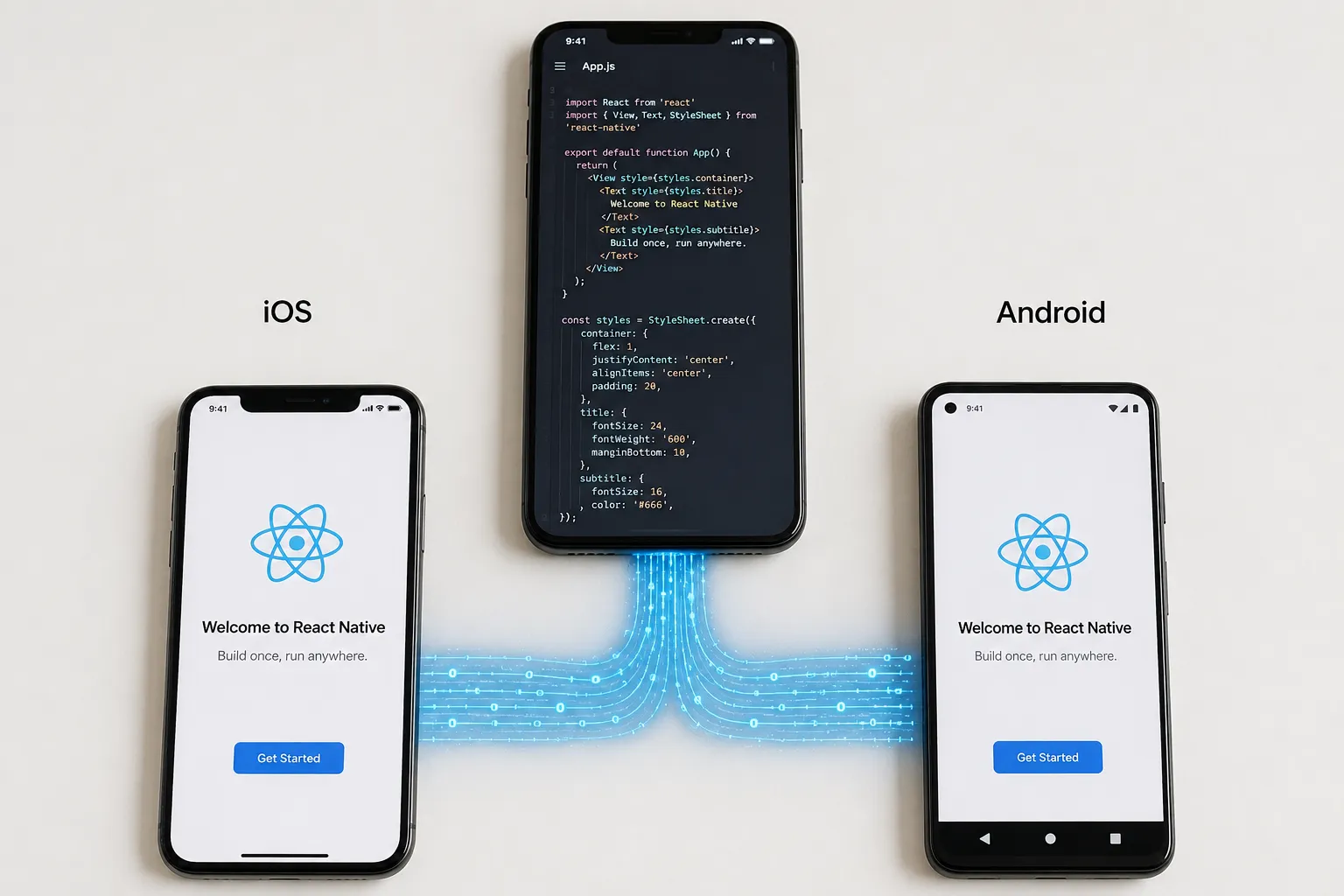
Mobile layer: React Native or Flutter for cross-platform apps. Native iOS and Android are justified only if the team is large enough to maintain two codebases in parallel.
Backend: Node.js or Python for API services, with microservices separating order management, inventory, notifications, and payments. Monoliths work at low scale but create bottlenecks under real delivery volumes.
Real-time layer: WebSockets or push notification services for live order tracking. Firebase Realtime Database works at low scale; dedicated solutions like Pusher or custom socket servers handle higher loads.
Mapping and routing: Google Maps Platform for customer-facing tracking, combined with routing APIs like Route4Me or custom optimization layers for driver dispatching.
Payments: Stripe or Braintree for card processing. Most apps also integrate Apple Pay, Google Pay, and buy-now-pay-later options for checkout conversion.
Database: PostgreSQL for transactional data, Redis for session and cache layers, and a time-series or event store for delivery tracking data.
At Apptage, when we scope delivery app projects, the database and real-time architecture decisions come up early. Getting them wrong at the design stage creates refactoring work that is expensive to fix post-launch.
What Are the Different Business Models for Grocery Delivery Apps?
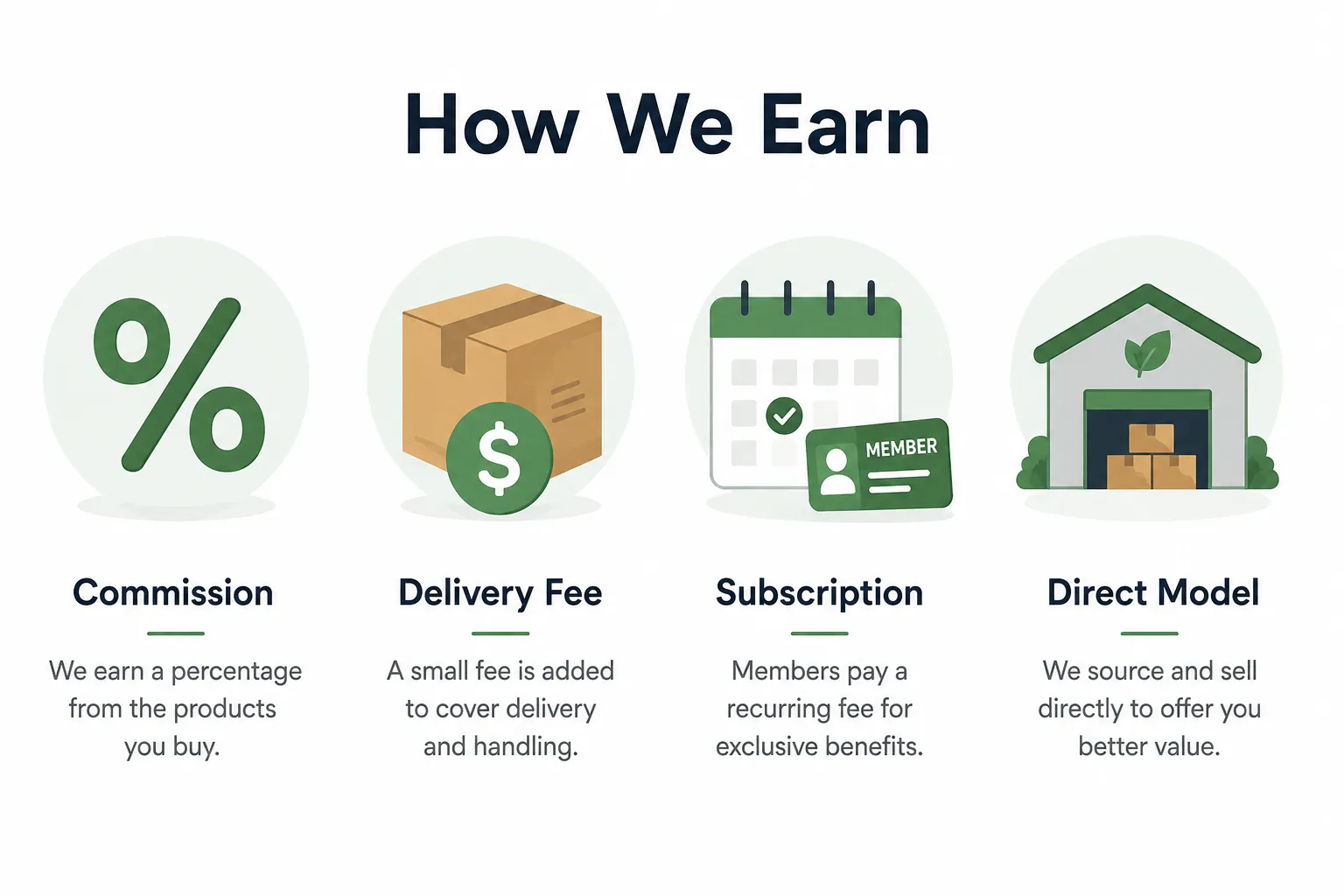
The business model drives the product decisions more than most founders expect upfront.
Commission-based: The app takes a percentage of each order from the retailer partner. Instacart's retail model works this way. It requires partnerships with stores and integration into their inventory systems.
Delivery fee model: Customers pay a flat or variable fee per delivery. Simple to implement, but price-sensitive customers churn when fees feel high relative to order size.
Subscription model: A monthly or annual fee covers unlimited or discounted deliveries. Instacart+, Amazon Fresh Prime, and DoorDash DashPass all use this. It drives retention and predictable revenue but requires volume to justify the economics.
Direct-to-consumer: The app owns the inventory and operates its own dark stores. Gopuff and Getir use this. Margins are tighter, but pricing control is higher. It requires significant upfront capital.
Most sustainable apps combine a delivery fee structure with an optional subscription tier. The subscription converts occasional users into habitual ones.
How Long Does It Take to Build a Grocery Delivery App?
Timeline depends heavily on the scope of the MVP versus a full feature set.
| Scope | Estimated Timeline | What It Includes |
|---|---|---|
| Basic MVP | 3 to 5 months | Customer app, basic picker app, payment, order tracking |
| Mid-tier launch | 5 to 8 months | Full customer and picker apps, real-time inventory, substitution logic, analytics dashboard |
| Full-scale platform | 8 to 14 months | Multi-store support, ML inventory, subscription model, driver app, enterprise integrations |
These estimates assume a focused team. Scope creep, delayed partner integrations, and inventory API complexity are the most common reasons timelines slip. Building the driver and picker apps often takes as long as the customer-facing product because the real-time coordination logic is complex.
What Are the Biggest Technical Challenges in Grocery Delivery App Development?
The technology problems are solvable. The operational ones are where most apps underestimate the difficulty.
- Inventory accuracy at scale: Real-time sync with physical retail is genuinely hard. Plan for degraded accuracy and build substitution flows accordingly.
- Last-mile optimization: Route efficiency directly affects delivery cost per order. A bad routing implementation can make unit economics negative even at decent volume.
- Order batching logic: Letting one picker handle multiple simultaneous orders without one order going cold or late requires careful logic.
- Surge handling: Weekend mornings and holiday periods create demand spikes that stress every part of the system at once. Load testing before launch is not optional.
- Regulatory complexity: Alcohol delivery, prescription items, and age-gated products require verification layers that vary by region.
None of these are unsolvable, but they require teams that have built in this domain before. The failure patterns in on-demand logistics apps are predictable enough that experienced teams can engineer around them from the start. For a broader look at what delivery app architecture involves, this guide on building delivery apps covers the tech patterns in more detail.
How Do Grocery Delivery Apps Retain Users After the First Order?

Acquisition is expensive in this space. The economics only work if customers order repeatedly.
What drives repeat usage:
- Accuracy: Customers who receive wrong or substituted items without being notified do not come back
- Speed: Hitting the promised delivery window consistently matters more than the window being short
- Catalog quality: Breadth and freshness of available products drives whether users make large orders or split their shop between apps
- Personalization: Reorder lists, "your usuals," and smart search reduce friction for returning users significantly
- Loyalty mechanics: Points, credits, or membership pricing make switching feel costly
The subscription model is the most reliable retention lever once volume justifies it. Converting a user to a paid membership drops monthly churn by 40 to 60 percent in most consumer delivery categories.
Frequently Asked Questions
How much does it cost to build a grocery delivery app? A basic MVP typically ranges from $40,000 to $80,000 depending on team location and scope. A full-featured platform with multi-store support, subscription functionality, and driver dispatch logic runs $120,000 to $300,000 or more. Ongoing infrastructure and maintenance costs are separate.
What is the difference between a grocery delivery app and a food delivery app? The core mechanics are similar but grocery delivery apps involve larger order sizes, more complex substitution logic, heavier inventory management, and picking workflows that take longer than restaurant order preparation. The picker experience is also more involved than a restaurant handoff.
Do grocery delivery apps need to integrate directly with supermarket POS systems? Not always. Catalog and inventory can be managed manually or through middleware APIs. Direct POS integration gives better real-time accuracy but requires retailer cooperation and technical access that is not always available, especially with independent stores.
What is a dark store model and is it better? A dark store is a fulfillment warehouse not open to the public. It gives the app operator full control over inventory and picking speed. It is faster and more predictable than store-based picking but requires capital to set up and carry inventory. It works well for high-density urban markets with consistent demand.
How does real-time tracking work in grocery delivery apps? Drivers share their GPS location through the driver app at regular intervals. The customer app polls the backend for location updates and renders them on a map. The system also sends push notifications at key milestones: order accepted, picking started, order en route, order delivered. The stack typically uses WebSockets for live updates and a mapping SDK for the visual layer.
Building a grocery delivery app that works in practice is a different problem than building one that looks good in a prototype. The real complexity is in the operational coordination, not the UI.
If you are scoping a grocery delivery or on-demand commerce platform and want a realistic read on what it takes to build and ship it, talk to Apptage's team — we can walk through your requirements and tell you what the actual build looks like.























Sign in to leave a comment.