
The Strategist’s View: Worldwide Guanidine Isothiocyanate Market Trends and Commercial Opportunities
Market Snapshot and Core Challenges
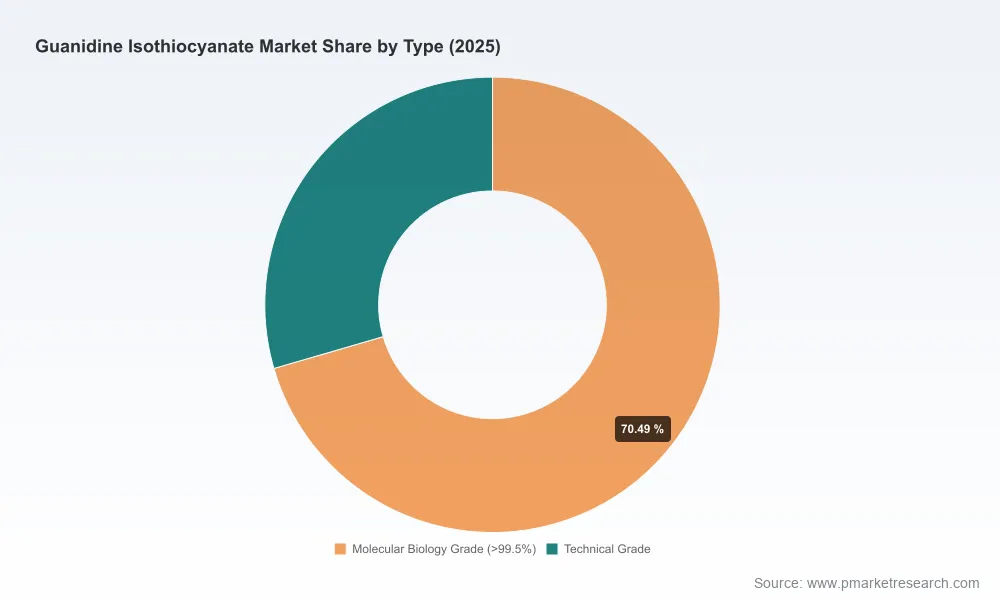
The global guanidine isothiocyanate market has moved through a phase of measured expansion over the past five years, with revenue climbing from approximately $172.5 million in 2020 to an estimated $218.5 million in 2025. The trajectory reflects a compound annual growth rate of roughly 6.1 percent through 2032, which would place the market near $330.6 million by the end of the forecast horizon. This pace is neither explosive nor stagnant; it signals a mature specialty chemical segment that is expanding in step with downstream demand for nucleic acid workflows, diagnostic reagent formulation, and protein denaturation applications. The growth pattern is consistent with an industry that is consolidating its technical base while broadening into adjacent life sciences and clinical diagnostic channels.
MS Resin (SMMA) Market
Behind the headline numbers, the market is navigating a set of structural challenges that will shape how value is captured over the next several years. The first challenge is the tension between purity expectations and manufacturing economics. Molecular biology grade material, which commands a premium, requires stringent control of impurities, residual solvents, and particulate matter, while technical grade volume depends on cost-efficient synthesis and reliable bulk logistics. Manufacturers that cannot align process capability with the right grade mix risk margin compression or share loss to competitors with tighter quality systems. The second challenge is regulatory and safety complexity. The substance falls under REACH hazard classifications that require explicit handling, labeling, and waste management protocols, and laboratory guidance has increasingly emphasized tailored disposal procedures for guanidine thiocyanate-containing liquid waste. Compliance is no longer a back-office function; it directly affects operational design, customer procurement criteria, and the ability to serve regulated environments. The third challenge is the shifting configuration of global supply. Feedstock availability, regional production capacity, and logistics constraints can create short-term volatility that changes the economics of bulk procurement. Buyers are responding by demanding more predictable lead times, batch consistency, and transparency on synthesis routes, which raises the barrier for undifferentiated suppliers.
Taken together, these pressures point to a market that is moving from price-led competition toward capability-led competition. Companies that can demonstrate reproducible grade standards, regulatory literacy, and dependable supply are in a stronger position to retain and expand customer relationships, while those competing primarily on unit cost face a narrowing path to sustainable differentiation.
Key Drivers Shaping Market Trajectory
A handful of interconnected forces is pulling the market forward and redrawing the rules of engagement for participants.
Technical Innovation and Purity Migration
Innovation in this segment is increasingly defined by process control and grade reliability rather than by the molecule itself. Suppliers are investing in manufacturing environments that reduce contamination risk, support consistent assay performance, and simplify customer qualification. One notable example is the production of guanidine thiocyanate in enzyme-free, animal-free, hormone-free settings, with packaging and specification documentation designed to support pharmaceutical and biotech RNA purification applications. This type of environment matters because downstream users in diagnostics and therapeutics are under growing pressure to document reagent provenance and to minimize variability in extraction and purification workflows. As a result, innovation is shifting toward batch-to-batch consistency, clearer impurity profiles, and documentation that can travel with the product through customer quality reviews.
Regulatory and Safety Frameworks as Commercial Filters
Regulatory expectations are becoming a competitive filter rather than a simple compliance checkbox. REACH classification and associated hazard statements influence how the material is stored, transported, handled in the laboratory, and disposed of after use. At the same time, laboratory competency guidance has begun to specify handling requirements for guanidine thiocyanate-containing waste from diagnostic procedures, reflecting a broader push toward standardized laboratory practice. For suppliers, this creates an opportunity to differentiate through safety data quality, packaging choices, and customer support that reduces the operational burden on laboratories. For buyers, regulatory clarity affects supplier selection because non-compliant or poorly documented material introduces avoidable risk into regulated workflows.
Demand-Side Shifts in Life Sciences and Diagnostics
On the demand side, the pull is coming from the continued importance of nucleic acid isolation and protein denaturation in research, clinical testing, and diagnostic development. Laboratories are not simply buying reagent; they are buying workflow reliability. Higher throughput environments, more complex sample types, and a preference for reagents that integrate cleanly into established extraction protocols all increase the value of high-purity grades. At the same time, technical grade demand persists where the priority is volume, cost control, and suitability for less sensitive applications. The practical effect is that demand is bifurcating by performance requirements, and buyers are becoming more selective about matching grade to use case rather than purchasing a single generic material for all purposes.
PW Consulting
Supply Chain Configuration and Cost Structure
Cost structure is being reshaped by feedstock dynamics and regional manufacturing footprints. The synthesis of guanidine thiocyanate relies on guanidine derivatives and thiocyanate sources, which means that raw material availability, process efficiency, and site-level production capability directly influence margin and responsiveness. Some suppliers are building or positioning bulk inventory close to key end markets to reduce lead-time risk, while others are emphasizing scale and purity at the expense of flexibility. Trade classification also remains relevant to cross-border movement, with specific tariff treatment affecting landed cost and supply planning for international buyers. In this environment, supply chain resilience is becoming part of the product value proposition: customers are willing to pay for predictability when it protects critical workflows.
1,3-butylene Glycol (CAS 107-88-0) Market
Competitive Landscape and Leading Strategies
The market features a mix of globally active suppliers, specialty life sciences companies, and regional manufacturers with export-oriented capabilities. This composition creates a competitive landscape in which differentiation comes from grade positioning, manufacturing standards, documentation depth, and supply reliability rather than from the commodity chemistry alone.
Strategic Positioning Among Leading Suppliers
The competitive field can be understood as three overlapping strategic postures. First, there are global suppliers with broad reagent portfolios and established life sciences brands. Their advantage lies in customer reach, application support, and the ability to place guanidine isothiocyanate within wider molecular biology and purification ecosystems. Grades positioned for bioresearch and purification workflows are often bundled with broader product narratives that help laboratories standardize around trusted vendors. Second, there are suppliers emphasizing GMP-aligned or pharma-facing manufacturing. In this group, the value proposition is documentation rigor, controlled production environments, and explicit suitability for pharmaceutical and biotech applications. Updated specification sheets and manufacturing descriptions that confirm controlled conditions, assay parameters, and impurity data are not purely technical details; they are part of the commercial argument for customers who need auditable quality. Third, there are manufacturers and exporters focused on scale, regional availability, and flexible bulk supply. Their positioning often centers on packaging range, accessible inventory, and competitive economics for technical and mid-grade requirements. This allows them to serve customers where volume and cost matter more than specialty branding.
Where Differentiation Is Actually Won
In practice, differentiation is being decided by three capabilities. The first is the ability to match the grade to the application with credible documentation. Molecular biology and molecular diagnostics users increasingly expect purity levels, packaging options, and supporting data that reduce qualification friction. The second is operational transparency around safety and waste handling. As laboratory guidance and regulatory frameworks sharpen expectations, suppliers that make handling and disposal easier for the end user gain a practical advantage in procurement decisions. The third is supply predictability. Customers in diagnostics and life sciences are willing to favor suppliers that reduce the risk of disrupted workflows, even if that choice requires trade-offs elsewhere. Bulk availability, clear inventory visibility, and dependable delivery can therefore be as important as unit price.
Market Evolution and the Entry Question
The landscape is evolving through a combination of consolidation among established players and continued entry by regional and export-focused manufacturers. Incumbents are strengthening their position by aligning grades with regulated workflows and broadening technical support. Newer entrants often compete by offering flexible volumes, accessible pricing, and increasingly credible purity claims. The most interesting tension is that the market is not simply becoming more concentrated or more fragmented; it is becoming more segmented by grade fidelity and application trust. In that environment, a supplier can grow without dominating the entire market if it owns a specific combination of purity, documentation, and regional service. The risk for larger players is over-indexing on breadth without enough depth in the highest-value grade segments. The risk for smaller players is competing only on price while lacking the quality systems and documentation needed to enter stricter application areas.
Future Outlook: Three Trends to Watch
Looking ahead to the 2026 to 2032 window, three trends are likely to define how the market grows and where commercial value accrues.
Trend One: Purity and Documentation Become Default Expectations
Over the next few years, customer expectations around grade clarity, impurity control, and supporting documentation are likely to become more common across a broader share of the market. What is now a premium requirement in certain pharma and diagnostics workflows will increasingly influence purchasing decisions in adjacent research and testing contexts. Companies that can supply well-characterized material with clear specifications will have an easier time retaining customers and expanding into higher-value applications, while those with inconsistent documentation will face greater qualification friction. The commercial opportunity here is to treat specification quality and transparency as growth enablers, not just regulatory outputs.
Trend Two: Supply Predictability Will Be Priced Into Procurement Decisions
As laboratories and diagnostic operators place greater emphasis on workflow continuity, supply reliability is likely to carry more weight in sourcing decisions. This could encourage stronger inventory positioning, closer alignment between production and demand centers, and an increased willingness to lock in dependable supply relationships. The opportunity is for suppliers to design commercial offerings around predictability, such as consistent batch availability, clearer lead-time expectations, and packaging choices that reduce handling variability. The risk is that periods of feedstock or logistics stress may reward scale and preparedness unevenly, potentially reshaping regional competitive dynamics.
Trend Three: Safety, Handling, and Waste Management Will Shape Channel Adoption
The market is likely to see continued attention to laboratory handling practices and waste management requirements, especially where guanidine thiocyanate is used in diagnostic and regulated settings. This creates a strategic opening for suppliers that can reduce the operational burden through clearer safety materials, responsible packaging, and support for compliant disposal practices. It also introduces uncertainty, because evolving laboratory standards and regulatory expectations can change procurement requirements faster than product chemistry does. Suppliers and buyers that monitor these requirements proactively will be better positioned than those treating them as peripheral concerns.
Actionable Implications for Decision-Makers
For manufacturers, the priority is to align grade strategy with the applications that are willing to pay for reliability. That means investing in the documentation, process control, and safety communications that make qualification easier, while preserving a credible technical-grade pathway for volume-driven demand. The strategic question is not whether to compete on purity or cost, but how to design a portfolio that prevents the most profitable segments from being commoditized.
For investors, the relevant signal is that demand growth is tied to downstream life sciences and diagnostic activity, but margin capture depends on grade positioning and supply reliability. The most attractive exposure is likely to come from participants that can defend differentiated quality, serve regulated workflows with credible documentation, and manage feedstock and logistics risk without excessive cost volatility.
For procurement and sourcing leaders, the practical move is to evaluate suppliers against more than price. Batch consistency, specification transparency, handling support, and lead-time reliability can reduce hidden operational risk in nucleic acid and protein workflows. Shortlisting should include how easily a supplier can support qualification, safety compliance, and predictable replenishment, especially where laboratory continuity matters.
Given the pace of change in grade expectations, regulatory context, and supply configuration, decision-makers benefit from current, segment-level intelligence that connects market size and growth with supplier capabilities and application demand. More granular data on regional demand patterns, grade economics, and the competitive posture of leading vendors can sharpen sourcing, investment, and product strategy decisions beyond what headline figures alone can support.
For detailed analysis of this topic, please visit the official page: Worldwide Guanidine Isothiocyanate Market
Lacy Lee
Senior Marketing Manager
[email protected]
PW Consulting: www.pmarketresearch.com




















Sign in to leave a comment.