
Quick Summary
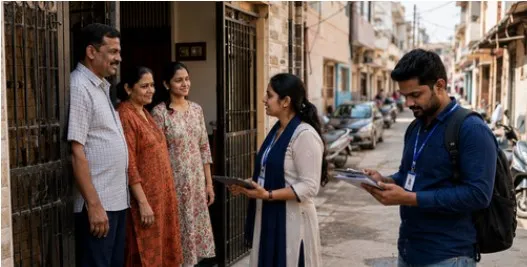
Door to door surveys remain one of the most reliable ways to capture authentic voter sentiment in Gujarat's diverse political landscape. Unlike phone polls or social media analytics, field-based surveys allow campaign teams to speak directly with voters, understand local issues, and build accurate constituency profiles. This blog explores why door to door surveys matter in Gujarat, how they're conducted, and how professional campaign management support from teams like LEADTECH can turn raw ground data into a winning strategy.

Why Ground-Level Surveys Matter in Gujarat's Political Landscape
Gujarat is not a single, homogenous political market. It is a mosaic of urban centers like Ahmedabad and Surat, industrial belts, tribal regions in the east, and coastal constituencies with entirely different economic priorities. A single narrative or state-wide message rarely resonates equally everywhere. This is precisely where a Gujarat Door to Door Survey conducted by experienced teams like LEADTECH becomes indispensable.
When field volunteers knock on doors, they aren't just collecting yes-or-no answers. They're gathering nuanced information about local grievances, infrastructure gaps, employment concerns, and the emotional undertone of a household's political leaning. This kind of granular data simply cannot be replicated through digital surveys or television polling, both of which tend to skew toward urban, tech-savvy, or vocal segments of the population while missing rural and semi-urban voices that often decide election outcomes in Gujarat.
What Makes Door to Door Surveys Different from Other Research Methods
Phone surveys are fast but shallow. Social media sentiment analysis is loud but often unrepresentative of the actual voting population. Door to door surveys, on the other hand, offer three distinct advantages:
Direct human interaction builds trust. Voters are more likely to share honest opinions face-to-face than through an automated call or an online form. This trust factor is especially important in Gujarat, where community and personal relationships heavily influence political conversations.
Booth-level accuracy is another major benefit. A well-executed survey doesn't just tell you what the district thinks; it tells you what a specific booth, ward, or even street thinks. This level of granularity allows campaign teams to allocate resources precisely where they're needed instead of spreading efforts thin across an entire constituency.
Real-time issue mapping happens naturally during these interactions. Field teams often uncover hyperlocal issues, a broken road, a delayed water connection, a factory closure, that never make it into news coverage but weigh heavily on how people vote.
The Process Behind an Effective Door to Door Survey
A structured survey isn't just about sending volunteers out with clipboards. It typically follows a systematic approach:
First, constituency segmentation divides the area into manageable zones based on demographics, past voting patterns, and population density. This ensures no pocket of voters is overlooked.
Second, trained field teams are deployed with standardized questionnaires designed to capture both quantitative data (party preference, satisfaction levels) and qualitative insights (specific complaints, aspirations, undecided voter reasoning).
Third, data digitization converts handwritten or app-based survey responses into structured datasets that can be analyzed for patterns, trends, and anomalies.
Finally, actionable reporting translates all that raw information into strategic recommendations, which candidates and party workers can use to fine-tune messaging, prioritize outreach, and address voter concerns before election day.
From Data to Strategy: The Bigger Picture
Collecting survey data is only half the battle. The real value emerges when that data feeds into a broader, well-coordinated campaign strategy. This is where working with an experienced campaign management company in Gujarat like LEADTECH makes a measurable difference.
A professional campaign management partner doesn't just crunch numbers, they translate survey findings into concrete action plans. For instance, if a door to door survey reveals that unemployment is the dominant concern in a particular taluka, a skilled campaign team can craft targeted messaging, organize local town halls on job creation, and brief the candidate on talking points specific to that region. Similarly, if certain booths show a high percentage of undecided voters, campaign managers can prioritize additional outreach, volunteer visits, or community engagement events in those exact areas.
This integration between ground research and strategic execution is what separates campaigns that merely gather information from campaigns that actually win votes with that information.
Common Challenges in Conducting Surveys Across Gujarat
Gujarat's geographic and cultural diversity does present real challenges for survey teams. Language variations across regions, from Gujarati dialects to Hindi-speaking migrant populations in industrial hubs, require multilingual field staff. Rural accessibility in areas like Kutch or the tribal belts of Dahod and Chhota Udepur can slow down survey timelines due to distance and infrastructure limitations. There's also the challenge of voter fatigue; in high-profile constituencies, residents may already have been surveyed multiple times by different parties, leading to shorter or less engaged responses.
Experienced survey teams address these challenges by training local, region-specific volunteers who understand cultural nuances and can build rapport quickly, rather than relying on outsiders unfamiliar with the local context.
Building a Data-Driven Campaign Culture
The shift toward evidence-based campaigning is gaining momentum across Indian politics, and Gujarat is no exception. Parties and candidates who rely on assumptions or outdated voter lists risk misreading the electorate entirely. A structured door to door survey, when combined with professional analysis and campaign planning, creates a feedback loop: survey, strategize, engage, and re-survey to measure impact.
This cyclical approach ensures that campaign messaging stays relevant right up to polling day, rather than being locked in based on assumptions made months in advance.
Conclusion
In a state as politically complex and regionally varied as Gujarat, guesswork is not a viable campaign strategy. Door to door surveys provide the authentic, granular insight that no other research method can match, giving candidates a genuine understanding of what voters actually care about. But surveys alone aren't enough. Pairing that ground-level data with skilled campaign management ensures every insight translates into a real, actionable strategy. For candidates and parties serious about connecting with Gujarat's electorate, investing in professional survey and campaign management support from a trusted partner like LEADTECH isn't optional, it's essential for building trust and winning elections.
























Sign in to leave a comment.