


If you live in Pune, you probably know what monsoon does to hair.
The scalp feels oilier. Hair stays damp longer. Dandruff may become more noticeable. And suddenly, the amount of hair you see in the shower or on your comb seems higher than usual.
The natural reaction is to blame the rain.
But that isn't always the correct explanation.
Monsoon conditions can make some scalp and hair problems more noticeable, but persistent hair shedding can have several other causes. Before changing your shampoo every few days or buying another hair supplement, it helps to understand what might actually be happening.
Start by figuring out whether it is shedding or breakage
This is one of the simplest things people overlook.
Hair shedding happens when a hair leaves the follicle as part of its normal growth cycle.
Hair breakage is different. The hair shaft snaps somewhere along its length.
Wet hair is easier to tangle and more vulnerable to mechanical stress. Rough towel drying, aggressive combing and tight hairstyles can therefore make breakage worse during the rainy season.
So if you are seeing lots of short, broken pieces of hair, the problem may not be the same as excessive shedding from the roots.
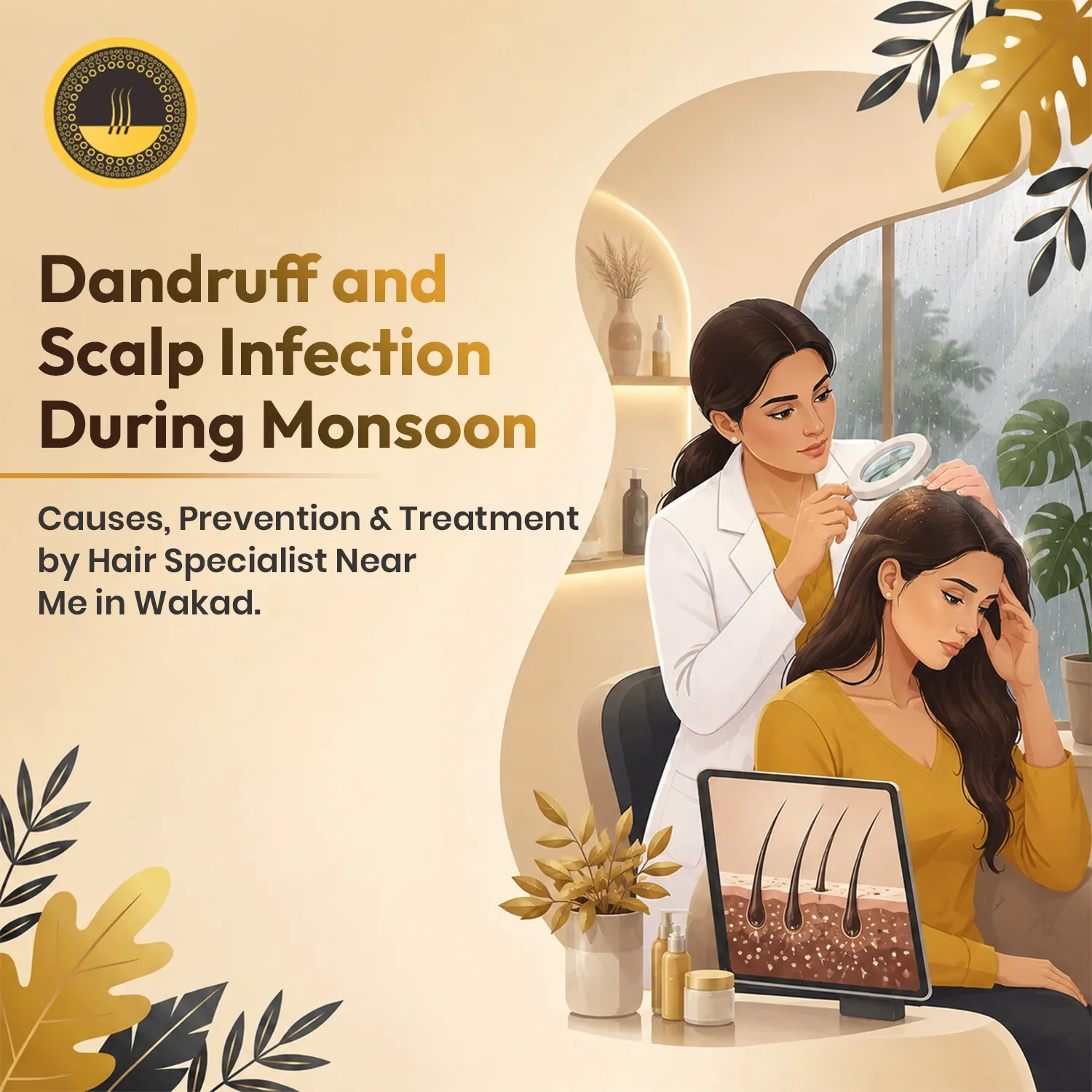
Your scalp can also become more difficult to manage
Humidity and sweating can make the scalp feel greasy.
When sweat, oil and product residue build up, people who are already prone to dandruff or scalp irritation may experience more flaking and itching.
Scratching an itchy scalp repeatedly is not a good solution. It can increase irritation and contribute to further hair damage.
Persistent dandruff, significant redness, swelling, crusting or localized hair loss should be evaluated rather than treated as a routine seasonal problem.
Don't assume the weather caused every episode of hair fall
Hair shedding can have a delayed relationship with its trigger.
For example, telogen effluvium can occur after a significant physical or emotional stressor. High fever, illness, surgery, major stress, rapid weight loss and restrictive diets are among the factors that may be relevant.
The shedding may become noticeable later.
That means someone can experience increased hair fall during monsoon even though the trigger occurred months earlier.
Nutrition can also matter. Inadequate protein intake and certain nutritional deficiencies may contribute to excessive shedding. That does not mean everyone with hair fall should start taking supplements. Finding an actual deficiency or relevant cause is more useful than guessing.
A simpler monsoon hair routine
You don't need a shelf full of products.
Start with the basics:
- Dry your hair gently after getting wet in the rain.
- Avoid vigorous towel rubbing.
- Don't sleep with soaking-wet hair.
- Be careful when detangling damp hair.
- Avoid tying wet hair tightly.
- Reduce unnecessary heat styling.
- Keep your helmet interior clean and dry.
- Maintain adequate protein and balanced nutrition.
- Avoid crash diets.
- Address persistent dandruff or scalp irritation appropriately.
These habits can reduce avoidable hair damage. They won't treat every medical cause of hair loss, which is why persistent symptoms shouldn't be ignored.
When is hair fall worth investigating?
A few strands on your comb are not necessarily a reason to panic.
More attention is warranted when hair fall becomes persistent, sudden or progressively worse.
Watch for:
- A widening hair part
- Receding hairline
- Visible thinning
- Patchy areas of hair loss
- Localized broken hairs
- Persistent dandruff or itching
- Redness or inflammation
- Pain, crusting or swelling
If these problems continue, a dermatologist can assess the scalp and hair-loss pattern and determine whether further evaluation is appropriate.
For readers in Wakad who want to understand the issue in more detail, this guide to monsoon hair fall causes and treatment in Wakad explains the possible causes, warning signs and treatment considerations in greater depth.
What about hair fall treatment in Wakad?
There is no single treatment that works for every person experiencing increased hair fall.
Dandruff, scalp infections, telogen effluvium, pattern hair loss, nutritional problems and hair-shaft damage can have completely different causes.
The logical approach is to identify the cause before deciding on treatment.
If you are looking for hair fall treatment in Wakad, Regain Clinic Wakad provides dermatological evaluation for hair fall, hair thinning, dandruff and scalp concerns.
Further reading: Monsoon Hair Fall Causes & Treatment in Wakad





























Sign in to leave a comment.