

Halloween is often associated with pumpkins, candy, costumes, and spooky parties, but the real meaning of Halloween reaches much deeper than modern celebrations suggest. Its story stretches back more than 2,000 years, connecting ancient seasonal traditions, Christian observances, folklore, immigration, and American popular culture. October 31 became a symbolic night between seasons and traditions—a time when people reflected on death, welcomed community, and embraced the mysterious. Understanding where Halloween came from makes today’s familiar rituals feel surprisingly meaningful.

What Is the Real Meaning of Halloween?
To understand the real meaning of Halloween, it helps to look beyond the candy aisle and costume parties. Halloween developed through layers of cultural history rather than emerging from one single tradition. Its deepest roots are commonly connected with Samhain, an ancient Gaelic seasonal festival associated with the end of harvest and the beginning of winter. Later, Christian observances surrounding All Saints’ Day and All Souls’ Day became intertwined with existing seasonal customs. The result was a complex tradition in which ideas about remembrance, the supernatural, seasonal change, community, and storytelling gradually merged. The Library of Congress describes Halloween as a festival shaped by the mingling of Christian and pre-Christian traditions.
Halloween and the Meaning of October 31
October 31 carries significance because it is the evening before November 1, traditionally associated with All Saints’ Day, or All Hallows’ Day. The name Halloween developed from “All Hallows’ Eve,” meaning the evening before All Hallows’ Day.
Long before modern Halloween parties, the seasonal transition itself mattered. Harvest was ending, winter was approaching, and darkness lasted longer. In Gaelic traditions, Samhain marked this transition and became associated with supernatural folklore and the boundary between the living and the dead. However, historians caution that details about ancient Samhain beliefs are not always certain because surviving evidence is limited. Smithsonian Magazine
Halloween Is More Than a “Scary Holiday”
Calling Halloween simply a holiday about fear misses much of its cultural history. Costumes, masks, fires, food, storytelling, and later trick-or-treating all reflect different stages of its development.
That is why Halloween can simultaneously feel eerie, playful, nostalgic, and communal. It gives people permission to explore frightening imagery while turning fear into entertainment. Today, the holiday is celebrated widely, particularly in the United States, and has also become increasingly global. Research Guides
How Did Halloween Begin?
The history of Halloween is best understood as a cultural journey rather than a straight line. Imagine an autumn evening centuries ago: the harvest is ending, winter is approaching, and communities gather around firelight. Over generations, religious observances, folklore, migration, and popular culture reshape those older customs. Eventually, those traditions travel across the Atlantic and evolve into the Halloween familiar today.
Samhain provides one important foundation, but it is inaccurate to suggest that every modern Halloween tradition comes directly from ancient Celtic practice. Some customs developed much later, especially in medieval Europe and the United States. The Library of Congress notes that Halloween emerged from the interaction of pre-Christian and Christian traditions, while Smithsonian research traces modern trick-or-treating through several historical stages. Research Guides
From Samhain to All Hallows’ Eve
Samhain was associated with the end of the harvest and the beginning of the darker half of the year. Historical sources connect it with bonfires, costumes, food, and beliefs about supernatural beings. Yet many popular stories about ancient Samhain are folklore rather than firmly documented historical fact. Smithsonian Magazine
As Christianity spread through Celtic regions, November 1 became associated with All Saints’ Day. The evening before became All Hallows’ Eve, eventually shortened to Halloween. The Library of Congress describes this process as a blending of traditions rather than a simple replacement of one holiday by another. Research Guides
From European Customs to American Halloween
Halloween changed dramatically after Irish and Scottish immigrants brought related customs to North America during the 19th century. In the United States, Halloween gradually became more community-centered and secular.
Trick-or-treating illustrates that transformation particularly well. Earlier European traditions included “souling,” in which people went from house to house offering prayers for the dead in exchange for food. Later forms of costumed visiting evolved, and the phrase “trick-or-treat” emerged in the United States during the 20th century. The custom expanded significantly after World War II as candy became widely available and suburban neighborhoods created ideal environments for door-to-door celebrations. Smithsonian Magazine
What Do Halloween Traditions Really Mean?
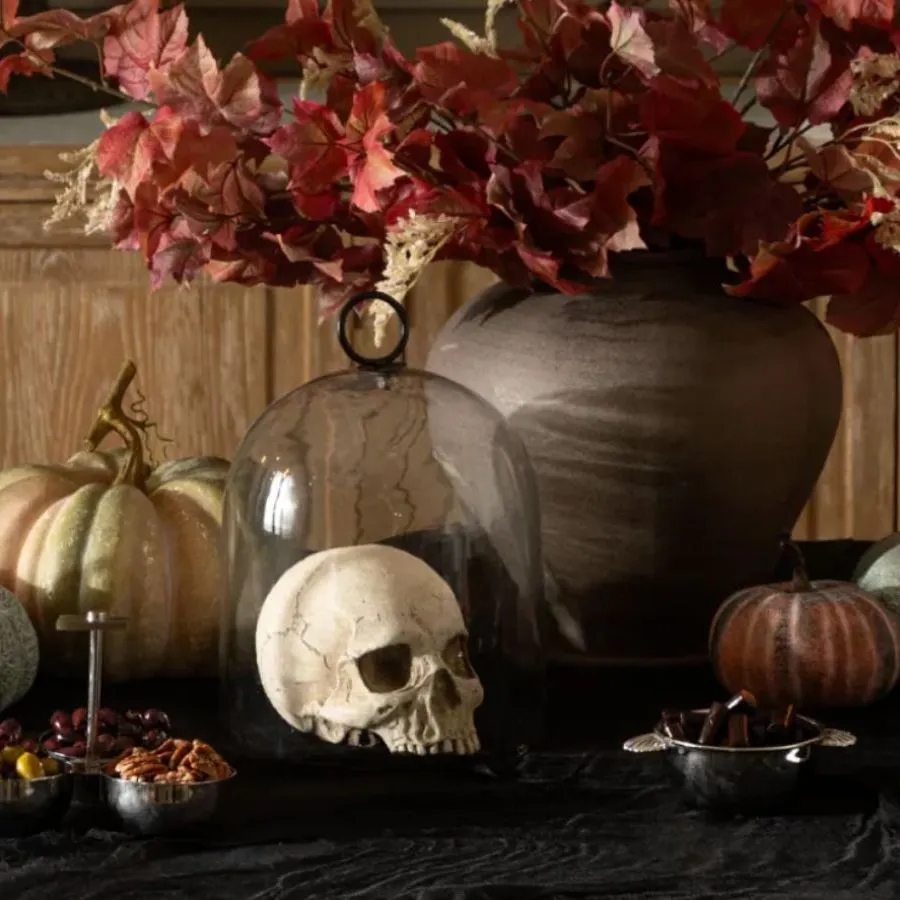
Walk through a Halloween neighborhood today and you might see glowing pumpkins, skeletons, witches, ghosts, and children carrying candy buckets. Each image has its own story. Some traditions have ancient or medieval connections, while others are distinctly modern. Together, they demonstrate how Halloween continually reinvents itself without losing its fascination with mystery and transformation.
The most recognizable symbols—jack-o’-lanterns, costumes, ghosts, and trick-or-treating—are therefore better understood as evolving pieces of folklore. Their meanings have changed over centuries, but they continue to create a shared atmosphere around October 31. The Library of Congress
Why Do We Carve Jack-o’-Lanterns?
The glowing pumpkin is perhaps Halloween’s most recognizable symbol, but pumpkins were not the original material used for traditional Celtic lanterns. In Ireland and Scotland, people carved turnips and other root vegetables, sometimes creating frightening faces.
The practice became associated with the legend of Stingy Jack, a figure in Irish folklore whose wandering spirit was said to carry a carved lantern. When Irish immigrants arrived in America, pumpkins offered a larger and easier-to-carve alternative. Over time, the pumpkin jack-o’-lantern became a defining American Halloween symbol. Smithsonian Magazine
Why Do People Wear Halloween Costumes?
Costumes have deep roots in Halloween folklore. Historical accounts connect disguises with the idea of supernatural beings appearing during the seasonal transition associated with Samhain. Medieval European customs also contributed to later forms of dressing up and visiting homes.
Eventually, the meaning shifted. Costumes became less about protection from spirits and more about play, imagination, humor, and identity. Today, dressing up allows children and adults alike to temporarily become something—or someone—completely different.
Why Do We Say “Trick or Treat”?
The phrase captures the playful negotiation at the center of modern Halloween. But its history is more complicated than simply asking for candy.
Earlier traditions involved people visiting homes to request food in exchange for prayers or performances. Other customs involved mischievous behavior. Modern trick-or-treating combined elements of these traditions and became firmly established in American culture during the 20th century. Smithsonian Magazine
That evolution explains something fascinating about Halloween: the “trick” and the “treat” are both part of its cultural DNA.
Is Halloween a Religious Holiday Today?
Halloween has religious roots and connections to Christian observances, but contemporary celebrations vary greatly. For some people, October 31 is primarily a cultural or secular holiday involving costumes, parties, decorations, and children’s activities. Others may observe its Christian connections through All Saints’ Day or related traditions.
It is also important not to confuse Halloween with Día de Muertos. The two traditions have distinct histories, even though both can involve remembrance of the dead and occur around the same time. The Library of Congress specifically describes Día de Muertos as having Indigenous Mexican roots that later interacted with Catholic observances. The Library of Congress
As Halloween continues to evolve, its enduring appeal may come from this unusual combination of history and imagination. What began as seasonal and spiritual traditions became folklore, then community entertainment, and eventually a global cultural phenomenon.
So when October 31 arrives, the pumpkins and candy are only the surface. The real meaning of Halloween lies in its long story of transition: harvest becoming winter, ancient customs meeting Christianity, European traditions crossing the Atlantic, and old fears becoming modern fun.
Understanding that history does not make Halloween less magical. If anything, it makes the flickering jack-o’-lantern, the strange costume at the door, and the excited knock for candy feel like small pieces of a much bigger story.
Ready to bring that story into your celebration? Explore our Halloween-inspired decorations and seasonal designs to create a festive atmosphere that blends timeless Halloween symbolism with your own style.
Explore more: https://inkinaction.com/gifts-for-holidays/halloween/
Address: 928 E 102nd St, Los Angeles, CA 90002, United States
Mail: [email protected]
Follow us for more updates:


















Sign in to leave a comment.