

A handwoven Banarasi saree is more than an elegant piece of Indian clothing. It is the result of patience, skill, design, and generations of weaving knowledge coming together on a loom. Known for its luxurious appearance, detailed motifs, rich silk textures, and distinctive zari work, the Banarasi saree has remained one of India's most admired traditional textiles.
But what makes a handwoven Banarasi saree different from an ordinary silk saree? The answer lies in the process. Instead of being produced simply for uniformity, handwoven sarees carry the individual character of the weaving process. Small variations in texture, motif placement, and surface appearance can become part of the personality of the saree.
For shoppers searching for an authentic handwoven Banarasi saree, understanding the craft can make the buying experience much more meaningful. Sacred Weaves brings attention to this connection between traditional craftsmanship and contemporary saree shopping, helping customers discover Banarasi designs that celebrate the heritage of Indian weaving.

What Is a Handwoven Banarasi Saree?
A handwoven Banarasi saree is traditionally created on a handloom by skilled artisans. The weaving process involves carefully arranging threads and creating patterns through controlled movements of the loom.
Unlike mass-produced fabrics, handloom weaving requires considerable attention throughout the production process. The artisan works with the structure of the fabric, yarns, motifs, and decorative elements to create the final textile.
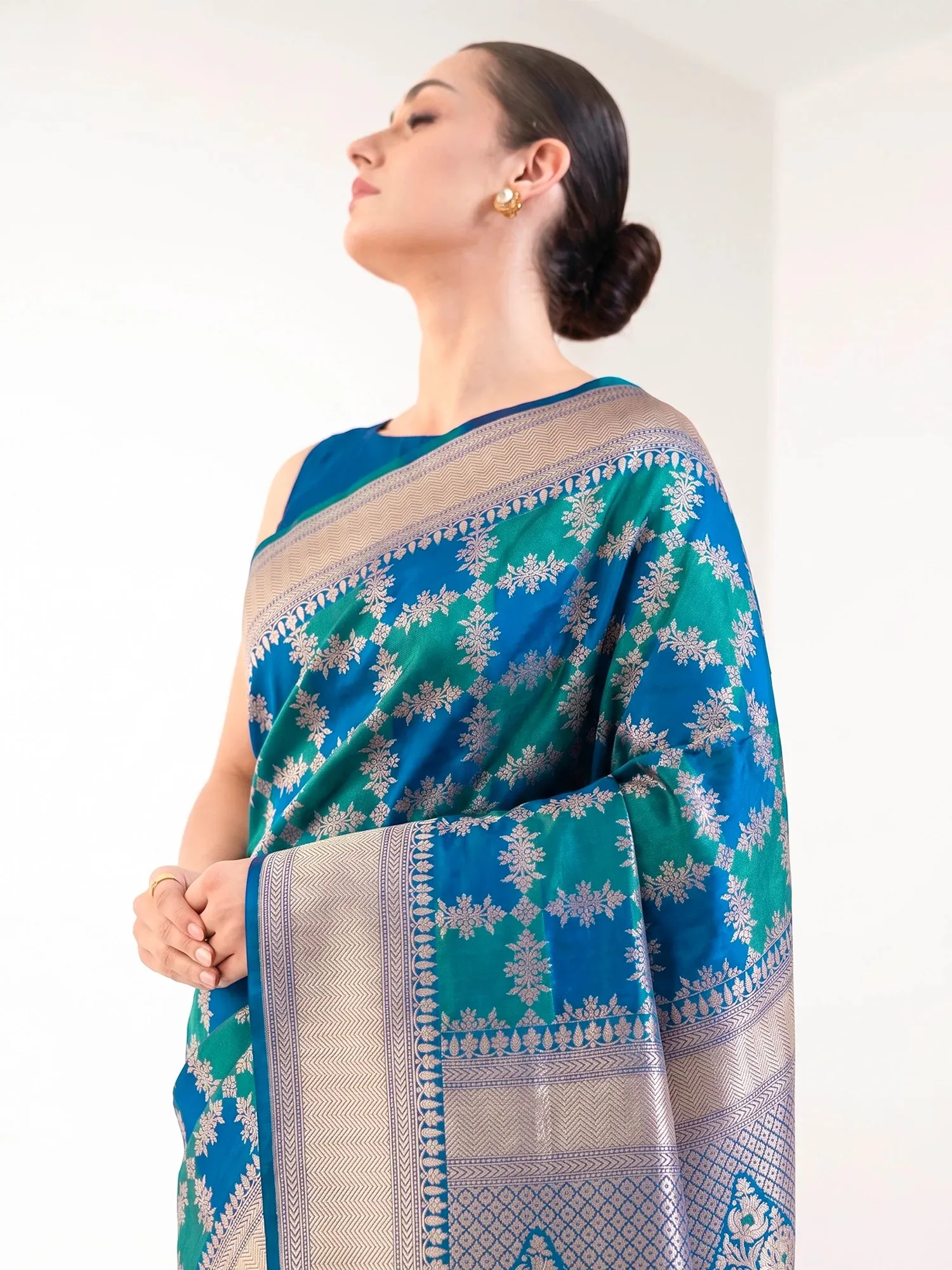
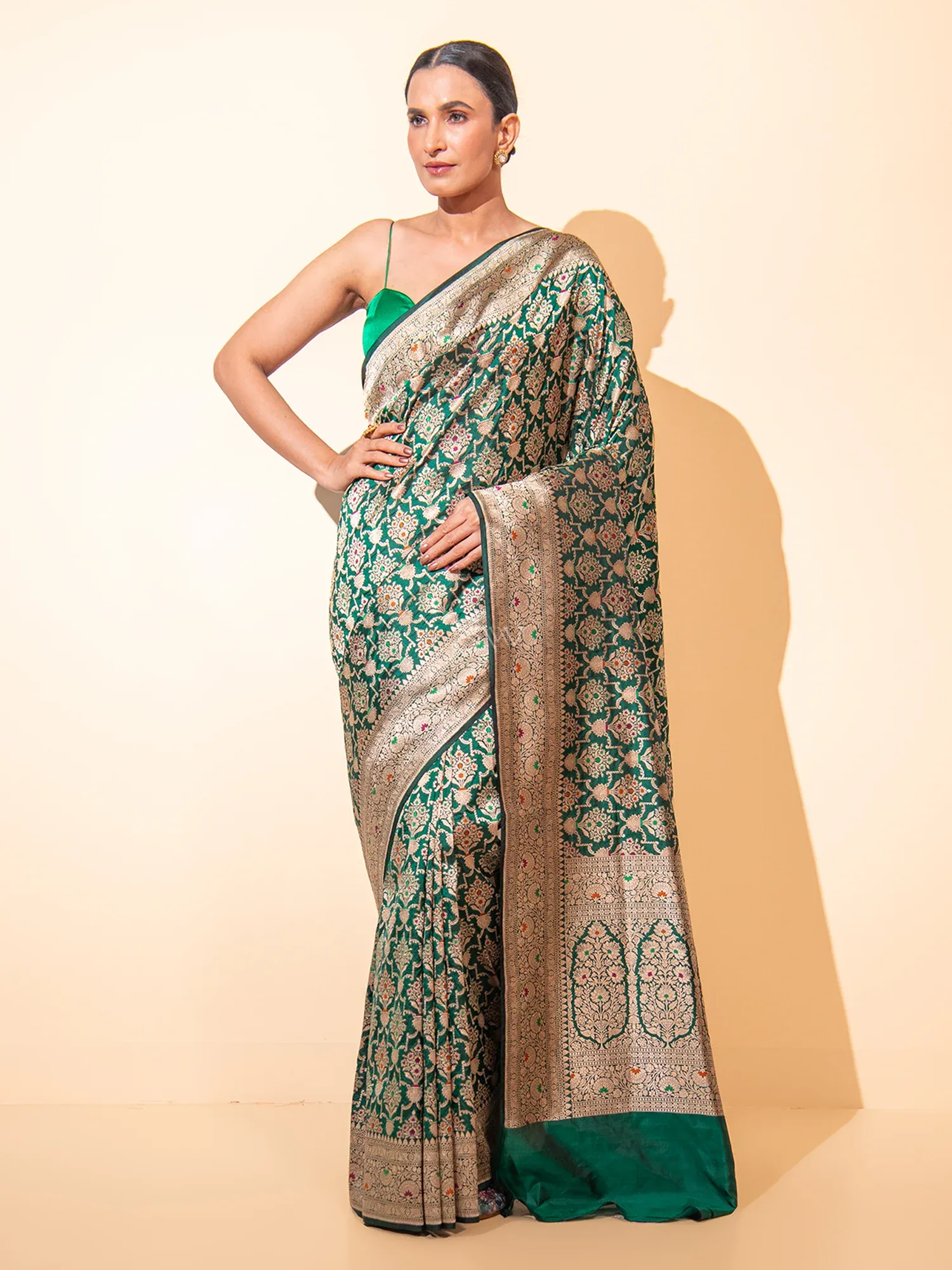
Banarasi sarees are particularly recognised for their elaborate patterns. Depending on the design, a saree may feature floral arrangements, paisleys, vines, geometric details, traditional motifs, or intricate borders.
The combination of silk and decorative weaving can create a surface that looks luxurious without needing excessive embellishment.
Why Handwoven Banarasi Sarees Are Special
The appeal of a handwoven Banarasi saree comes from several elements working together.
1. Artisan Craftsmanship
A handwoven saree reflects the skill of the person or team responsible for creating it. The weaving process demands concentration and consistency, particularly when detailed patterns are involved.
This makes each saree more than a finished fashion product. It represents hours of specialised craftsmanship.
2. Distinctive Texture
Handwoven textiles can have a character that feels different from highly uniform machine-produced fabrics. The texture, drape, and visual depth of a saree can contribute significantly to how it looks when worn.
A beautifully woven Banarasi saree often changes appearance depending on lighting and movement, allowing its motifs and zari details to become more noticeable from different angles.
3. Traditional Motifs
One of the most recognisable characteristics of Banarasi weaving is its decorative vocabulary.
Common design influences include:
- Floral motifs
- Paisley patterns
- Vines and leaves
- Jali-inspired arrangements
- Traditional borders
- Geometric compositions
- Zari detailing
Modern collections may reinterpret these elements through contemporary colours, lighter designs, or minimal patterns.
How Is a Handwoven Banarasi Saree Made?
The making of a Banarasi saree is a multi-stage process rather than a single weaving step.
First, the design concept is developed. The artisan or designer determines the overall appearance, including the border, body, pallu, and decorative motifs.
The yarns are then prepared for weaving. The loom needs to be carefully arranged so that the warp and weft threads can interact correctly.
During weaving, the artisan gradually builds the fabric while incorporating the planned motifs and decorative elements. When zari is part of the design, it must also be integrated carefully to create the desired visual effect.
The complexity of the pattern can influence the amount of time and concentration required to complete the saree.
This craftsmanship is one of the reasons why a handwoven Banarasi silk saree can hold such strong cultural and aesthetic value.
Handwoven vs Machine-Made Banarasi-Inspired Sarees
Not every saree featuring Banarasi-style motifs has been made through traditional handloom weaving.
Machine production can reproduce patterns efficiently and create highly consistent fabrics. Such sarees can be attractive and accessible, but they do not necessarily represent the same weaving process as a traditional handwoven textile.
When shopping for an authentic handwoven Banarasi saree, buyers should pay attention to the product description, weaving details, fabric information, craftsmanship, and seller transparency.
The goal is not simply to find a saree that looks like Banarasi weaving. It is to understand what was actually used to create the fabric.
How to Identify a Good Handwoven Banarasi Saree
For someone purchasing a Banarasi saree online, knowing what to look for is important.
Examine the Fabric
Look for detailed information about the fabric composition and weaving method. A transparent product description should clearly communicate what the saree is made from.
Study the Motifs
Traditional Banarasi designs often have considerable detail. Look at the border, pallu, and body pattern rather than judging the saree only by its overall colour.
Check the Zari Details
Zari can dramatically influence the appearance of a Banarasi saree. Depending on the design, it may be subtle or richly incorporated throughout the fabric.
Consider the Drape
A saree should not only look beautiful in photographs; it should also work comfortably when draped. The fabric's weight, texture, and fall are important considerations.
Ask About Craftsmanship
When purchasing a handwoven saree, customers should feel comfortable asking questions about its origin, weaving process, fabric, and care requirements.
Choosing the Right Handwoven Banarasi Saree for a Wedding
Banarasi sarees are naturally associated with weddings and celebrations because their rich textures and detailed designs can create a sophisticated traditional appearance.
For a bride, a richly woven saree with elaborate zari may work beautifully for major wedding functions.
For wedding guests, lighter designs can offer an elegant balance between traditional style and comfort.
Colour is another important consideration. Deep red, wine, maroon, emerald, royal blue, pink, gold, and traditional red tones can create a classic festive appearance. At the same time, pastel and muted shades can give the Banarasi saree a more contemporary personality.
The best choice ultimately depends on the occasion, jewellery, personal style, and desired level of embellishment.
Handwoven Banarasi Sarees for Modern Fashion
Traditional does not have to mean old-fashioned.
Contemporary fashion has introduced Banarasi textiles to new generations through modern styling. A handwoven saree can be paired with a structured blouse, minimalist jewellery, statement earrings, a contemporary clutch, or even a simpler hairstyle.
For daytime occasions, softer colours and less elaborate designs can create a refined look.
For evening celebrations, metallic zari, deeper colours, and statement jewellery can make the saree more dramatic.
This versatility is one reason Banarasi sarees continue to remain relevant beyond traditional ceremonies.
Styling Ideas for a Handwoven Banarasi Saree
Classic Traditional Look
Pair a richly woven Banarasi saree with traditional jewellery, a neatly styled bun, and classic footwear. This combination works particularly well for weddings and cultural celebrations.
Minimalist Look
Choose a saree with controlled zari detailing and pair it with understated jewellery. This approach allows the weaving itself to become the focal point.
Contemporary Wedding Look
A handwoven Banarasi saree can be styled with a modern blouse featuring a structured neckline, statement sleeves, or a contemporary silhouette.
Festive Evening Look
Choose a rich colour with metallic detailing and combine it with statement earrings and a simple hairstyle. The result can be festive without appearing overly complicated.
Why Buy a Handwoven Banarasi Saree Online?
Online shopping has changed how customers discover traditional Indian textiles. Instead of being restricted to local stores, shoppers can explore different colours, designs, fabrics, and weaving styles from home.
For buyers outside Varanasi or India, online platforms can also make traditional Indian craftsmanship more accessible.
However, online buyers should shop carefully. High-quality product photographs, detailed descriptions, clear fabric information, transparent policies, and customer support can make a significant difference.
A platform specialising in traditional textiles should help customers understand what they are buying rather than relying solely on attractive photographs.
What Makes Sacred Weaves Different?
Sacred Weaves focuses on bringing traditional Indian textile craftsmanship closer to modern shoppers. Its collection is designed around the beauty of Banarasi weaving, with options for customers looking for sarees and other traditional Indian outfits.
The emphasis is on discovering pieces that combine heritage with contemporary shopping convenience.
For customers who want to understand a saree before purchasing it, personalised product interaction can also make the experience more informative. Live video shopping can allow shoppers to view a product more closely and understand details such as colour, texture, border work, and overall appearance before making a decision.
This type of shopping experience can be particularly useful when buying a detailed handwoven saree online, where photographs may not always communicate the full character of the fabric.
How to Care for a Handwoven Banarasi Saree
A handwoven saree deserves careful storage and handling.
Avoid keeping it in damp conditions and protect it from prolonged exposure to direct sunlight. When storing a silk Banarasi saree, folding it carefully and changing the fold periodically can help reduce long-term stress on particular areas of the fabric.
For cleaning, follow the care instructions provided for the specific textile. Delicate silk and zari work may require professional cleaning rather than ordinary washing.
After wearing the saree, allow it to air briefly before storing it. Keeping the fabric clean, dry, and protected can help preserve its appearance for years.
Is a Handwoven Banarasi Saree Worth Buying?
For someone who appreciates traditional craftsmanship, a handwoven Banarasi saree can be much more than an occasional fashion purchase.
It can become part of a wedding wardrobe, a festive collection, or even a family heirloom. The combination of craftsmanship, design, cultural history, and versatility gives these sarees a lasting appeal.
The value of a saree should not be judged only by its price or the amount of decoration. The quality of the fabric, intricacy of weaving, craftsmanship, authenticity, and finishing all contribute to the overall experience.
Frequently Asked Questions About Handwoven Banarasi Sarees
What is a handwoven Banarasi saree?
A handwoven Banarasi saree is a saree traditionally produced using handloom weaving techniques associated with the Banarasi textile tradition. It can feature silk fabric, detailed motifs, borders, pallu designs, and zari work.
Are handwoven Banarasi sarees suitable for weddings?
Yes. Their rich appearance, detailed weaving, and traditional character make them popular choices for bridal wear, wedding guests, receptions, and other festive occasions.
How can I choose a handwoven Banarasi saree online?
Check the fabric information, weaving details, product photographs, design description, seller transparency, care instructions, and customer support before purchasing.
Are all Banarasi sarees handwoven?
No. Banarasi-inspired designs can also be produced using machines. Buyers should check the product information carefully if handwoven craftsmanship is important to them.
Can Banarasi sarees be worn for modern occasions?
Absolutely. A handwoven Banarasi saree can be styled traditionally or paired with contemporary blouses, minimalist jewellery, and modern accessories.
Where can I buy an authentic handwoven Banarasi saree?
Customers can explore specialised Indian textile stores such as Sacred Weaves, where traditional sarees can be discovered alongside information designed to make online shopping easier and more informed.
Final Thoughts
A handwoven Banarasi saree tells a story through its fabric. Its beauty comes not only from silk, colour, zari, or motifs but from the craftsmanship involved in bringing those elements together.
For today's shopper, understanding that craftsmanship makes the purchase more meaningful. Instead of choosing a saree only because it looks beautiful in a photograph, buyers can consider its fabric, weaving process, design, occasion, comfort, and care requirements.
From a traditional wedding ceremony to a contemporary celebration, the handwoven Banarasi saree continues to adapt without losing its identity. It represents a meeting point between India's textile heritage and modern fashion.
For those looking to explore this tradition online, Sacred Weaves offers an opportunity to discover Banarasi sarees with a focus on craftsmanship, design, and a more informed shopping experience. Whether you are searching for a wedding Banarasi saree, a timeless silk piece, or an elegant handwoven addition to your wardrobe, choosing thoughtfully can turn a beautiful saree into something far more lasting—a piece of Indian craftsmanship to cherish and wear for years.



















Sign in to leave a comment.